


Acknowledgement By Employee For Salary Received




Try Before you Buy Download Free Sample Product
 Impress Your
 Audience
 100%
100% Editable
 Save Hours
 of Time


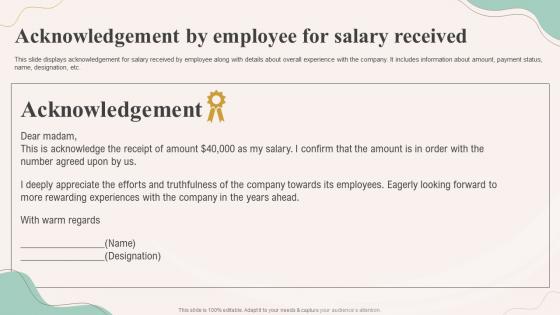
This slide displays acknowledgement for salary received by employee along with details about overall experience with the company. It includes information about amount, payment status, name, designation, etc.
People who downloaded this PowerPoint presentation also viewed the following :
Acknowledgement By Employee For Salary Received with all 6 slides:
Use our Acknowledgement By Employee For Salary Received to effectively help you save your valuable time. They are readymade to fit into any presentation structure.





FAQs for Acknowledgement By Employee
Make sure you get their full name and job title down first. Then the actual salary amount - whether that's hourly, monthly, or annual. Don't skip the effective date either, that's crucial. Pay frequency matters too (weekly, biweekly, whatever). Honestly, I'd also spell out any performance stuff tied to it because that can get messy later. Both of you sign and date it obviously. Oh, and keep a copy for HR while they get the original. Trust me, you'll thank yourself when questions come up down the road.
Honestly, just be straight up about what you're sharing and why. Skip the corporate BS - people hate trying to figure out what their actual paycheck means. Include everything: base pay, bonuses, what's getting taken out, when it all kicks in. I've seen too many confusing salary letters that just make people more stressed. Also make it easy for them to ask questions without having to email three different people. Set up something simple where they can hit up HR or their manager directly. Nobody wants to play phone tag when they're worried about their money, you know?
Dude, you've gotta ask your employees what they actually want to hear about salary stuff. Most managers just wing it and end up saying the wrong things at the wrong times. Your team might want written confirmation instead of just a quick chat, or maybe they're dying to know how their raise compares to market rates. I swear, some people are way more nervous about money conversations than you'd think. Survey them once a year about how they prefer salary talks to go down. Then actually listen to what they say - don't just file it away somewhere. It'll change how you time these conversations and what details you include.
Honestly, just go digital with this stuff. Your HR software probably already has acknowledgment features you're not using - check there first before buying anything new. Digital signatures are way faster than chasing down paper forms, and you can actually track who's done what instead of wondering if someone lost their copy. The automatic reminders are clutch too, especially since people always forget these things. I mean, dealing with dozens of employees and deadlines gets messy fast. Everything gets stored in one spot, so you're not digging through files later. Way less headache than the old paper shuffle.
Just make sure the document says it's only confirming current pay - not creating new promises about future salary or job security. Honestly, this stuff can get messy legally if you're not careful. The language should be clear that you're just acknowledging what they make now, nothing more. Check your state's wage transparency rules too since some have weird requirements about salary disclosures. I'd definitely run the template by legal before rolling it out everywhere, especially if you've got employees in different states. Keep the wording simple and stick to facts only.
Honestly, once a year is the bare minimum but more often is way better. Most places just do it during annual reviews, which is fine I guess, but quarterly check-ins work great too. The main thing is being consistent about it - people need to actually understand what they're making and why it might've changed. Don't just email some generic form either. Make it personal and explain what the numbers actually mean. I always set calendar reminders because I'm terrible at remembering this stuff otherwise. And definitely leave room for questions afterward - there's always someone who'll be confused about something.
Honestly, acknowledging salary changes quickly makes such a difference for morale. People feel valued when you confirm their raise went through - nobody wants to awkwardly ask their boss "hey, did that promotion actually happen?" Trust me, I've been there and it's the worst. It reduces so much anxiety around money stuff. Quick confirmation shows you're on top of things and actually care about their financial situation. Even something simple works - just shoot them a message within a couple days. Your team will definitely appreciate it, and it's way easier than dealing with confused/stressed employees later.
Dude, people stick around when they actually feel paid fairly - it's that simple. Most won't bolt for like 10% more somewhere else if they know you value them. Honestly, I've seen this work so well when managers just mention it during reviews or even random check-ins. Be specific though - don't just say "we pay you well." Tell them WHY their salary matches what they bring to the table. Oh, and bring it up yourself instead of waiting for them to corner you about raises. That proactive stuff hits different.
Dude, this totally depends on where your people are. Germans and Scandinavians want all the details - like, give them spreadsheets and they're happy. But in Japan or other parts of Asia? Way more formal acknowledgments with respectful language work better. Timing's huge too. Some cultures only want salary talks during official review periods, not random Tuesday emails. And definitely check if they prefer face-to-face over written stuff - that varies a ton by region. Honestly, just ask your regional HR folks what actually works in each location. They'll know if people want casual emails or formal documents. Way easier than guessing and getting it wrong.
Easiest way? Send out anonymous surveys asking if people actually understand how their salary gets decided. The answers will be brutal but helpful. Check your retention rates too - are good people bailing over pay complaints? That's your smoking gun right there. Pay attention to how many salary questions HR fields after those acknowledgment meetings. Higher engagement scores post-review are obviously good signs. I'd also track how fast people accept offers versus trying to negotiate. Honestly though, just eavesdrop on break room conversations about fairness. People don't sugarcoat it when they're pissed about compensation.
Don't be inconsistent - that's the big one. Some people get proper documentation, others just hear "yep, got it." Super messy. Always confirm the effective date and benefit changes too, not just the salary number. My old manager once sent salary details to the wrong person... awkward doesn't even cover it. Document everything because HR will definitely ask for records later. Honestly, just create a template or checklist and stick to it every single time. Makes your life way easier.
Yeah so most companies just build this into their regular performance review cycles - like when you do your annual or twice-yearly reviews. That's when you'd sign off on salary bumps, bonuses, whatever. Smart timing since everything's already being documented anyway. Outside of that, definitely ask for acknowledgment forms when you get merit increases or promotions that happen randomly. Oh and here's the thing - don't let those review conversations just hang there without getting something in writing afterward. I've seen too many people get burned by that. Always grab written confirmation of compensation stuff discussed in meetings.
Honestly, salary acknowledgment is pretty smart for D&I stuff. It makes pay decisions way more transparent, which gets people talking about equity - and that's when you spot problems. You can track if certain groups keep getting lowballed on offers or raises, then actually fix it. People respect companies that are upfront about fair pay too. The trick is building in demographic tracking so you can see patterns clearly. I mean, what's the point of collecting data if you can't use it to make things better? It's basically showing employees you're not just talking about fairness - you're doing something about it.
So it really depends on your industry. Tech companies usually go digital - employees just click "accept" on HR platforms. Healthcare's way more strict about getting actual signatures because of all their compliance stuff. Finance does quarterly reviews with tons of paperwork (they're crazy thorough, honestly). Manufacturing relies on union agreements and standard forms. Startups? Half the time they just shoot you an email and that's it lol. You'll want to match whatever regulatory requirements you have with keeping things simple for employees. I'd peek at what your competitors are doing, then maybe add one extra documentation step just to be safe.
Dude, fair pay is everything for keeping people motivated. When your team feels like their salary actually matches what they bring to the table, they'll bust their ass for you. It's basic psychology - people need to feel valued, right? Without that recognition, they'll just coast or start updating their LinkedIn. Honestly, I've seen it happen so many times. The productivity difference is night and day between teams who feel appreciated vs those who don't. Just be transparent about how raises work and your whole compensation approach. People respect honesty about money stuff.
-
Every time I ask for something out-of-the-box from them and they never fail in delivering that. No words for their excellence!
-
“I've always gotten excellent slides from them and the customer service is up to the mark.”