

Powerpoint-Präsentationsfolien des Mitarbeiterleistungsbeurteilungsprozesses





Try Before you Buy Download Free Sample Product
 Impress Your
Audience
 100%
Editable
 Save Hours
of Time


Eine Mitarbeiterleistungsbeurteilung ist eine systematische Bewertung der Arbeitsleistung und der Erfolge einer Person, die darauf abzielt, Stärken und Schwächen zu identifizieren, Ziele zu setzen und Feedback für die zukünftige berufliche Entwicklung zu geben. Holen Sie sich unsere aufschlussreiche Vorlage für den Mitarbeiterleistungsbeurteilungsprozess. Zunächst wird der Unternehmensüberblick beschrieben, einschließlich der Mitarbeiter des Unternehmens, des traditionellen Ansatzes und der wichtigsten Probleme, mit denen das Unternehmen konfrontiert ist. Darüber hinaus zeigt dieses Personaldeck Herausforderungen, denen man sich während einer Leistungsbeurteilung gegenübersieht, zusammen mit Lösungen zur Bewältigung solcher Herausforderungen. Die Strukturierung des Prozesses der Mitarbeiterleistungsbeurteilung und die Dokumentation der Planung der Prozessbeurteilung werden ebenfalls in diesem PPT behandelt. Darüber hinaus werden in diesem Leistungsmanagement-Modul Richtlinien für Leistungsbeurteilungsgespräche ausgearbeitet. Darüber hinaus zeigt unsere Präsentation der Bewertungskriterien die Auswirkungen der Implementierung von Mitarbeiterleistungsbeurteilungen. Schließlich werden ein Dashboard und ein Tracker-Blatt hervorgehoben, um die HR-Leistung zu messen. Passen Sie diese zu 100 % bearbeitbare Vorlage mithilfe unseres hochqualifizierten Forschungs- oder Designteams an. Jetzt zugreifen.
People who downloaded this PowerPoint presentation also viewed the following :
Inhalt dieser Powerpoint-Präsentation
Folie 1 : Diese Folie stellt den Mitarbeiterleistungsüberprüfungsprozess vor.
Folie 2 : Diese Folie zeigt die Agenda der Präsentation.
Folie 3 : Diese Folie enthält das Inhaltsverzeichnis.
Folie 4 : Diese Folie hebt den Titel für die weiter zu behandelnden Themen hervor.
Folie 5 : Diese Folie zeigt Einblicke in die Belegschaft der Organisation.
Folie 6 : Diese Folie zeigt den traditionellen Ansatz, der für die Leistungsbeurteilung verwendet wird.
Folie 7 : Diese Folie hebt die wichtigsten Probleme hervor, mit denen die Organisation konfrontiert ist.
Folie 8 : Diese Folie zeigt die Überschrift für die als nächstes zu besprechenden Komponenten.
Folie 9 : Diese Folie beschreibt die Notwendigkeit der Implementierung des Mitarbeiterleistungsbeurteilungsprozesses.
Folie 10 : Diese Folie stellt die Schlüssellösungen dar, um die Herausforderungen des Leistungsmanagements anzugehen.
Folie 11 : Diese Folie enthält den Titel für die Ideen, die in der folgenden Vorlage behandelt werden sollen.
Folie 12 : Diese Folie veranschaulicht die Reihe von Schritten zur Umsetzung der Mitarbeiterleistungsbeurteilung in der Organisation.
Folie 13 : Diese Folie zeigt die spezifischen Ziele, Handlungsschritte und die verantwortliche Person für die Überprüfung der Mitarbeiterleistung.
Folie 14 : Diese Folie zeigt die Stellenbeschreibung des Mitarbeiters.
Folie 15 : Diese Folie zeigt die wichtigsten Bewertungsparameter jeder Abteilung, die zur Messung der Mitarbeiterleistung verwendet werden.
Folie 16 : Diese Folie zeigt die Liste der Kompetenzen zur Bewertung der Mitarbeiterleistung.
Folie 17 : Diese Folie zeigt die Kriterien für die Mitarbeiterleistungsbewertung.
Folie 18 : Diese Folie wird fortgesetzt Bereitstellung von Leistungsbewertungen für Mitarbeiter.
Folie 19 : Diese Folie erläutert das Selbstbewertungsformular, das vom Mitarbeiter selbst ausgefüllt wird.
Folie 20 : Diese Folie zeigt den von den Mitarbeitern ausgefüllten Selbstbewertungsbogen.
Folie 21 : Diese Folie zeigt das Gesamtleistungs-Feedback-Formular, das die Arbeits-, Funktions- und zwischenmenschlichen Fähigkeiten der Mitarbeiter misst.
Folie 22 : Diese Folie zeigt die Feedback-Gesprächsmatrix.
Folie 23 : Diese Folie zeigt die Dimensionen positives und konstruktives Feedback.
Folie 24 : Diese Folie setzt das Feedback-Formular zur Mitarbeiterleistung fort.
Folie 25 : Diese Folie zeigt die Überschrift für die weiter zu diskutierenden Ideen.
Folie 26 : Diese Folie zeigt die verschiedenen Arten von Beurteilungen, die im Mitarbeiterleistungsbeurteilungsprozess durchgeführt werden.
Folie 27 : Diese Folie veranschaulicht die wichtigsten Methoden, die bei der Bewertung der Mitarbeiterleistung gemäß den Bedürfnissen und Anforderungen verwendet werden.
Folie 28 : Diese Folie zeigt die Verantwortlichkeiten von Managern und Mitarbeitern bei der Leistungsbeurteilung.
Folie 29 : Diese Folie enthält den Titel für die als nächstes zu besprechenden Komponenten.
Folie 30 : Diese Folie beschreibt die Best Practices, die bei der Einleitung des Prozesses zur Überprüfung der Mitarbeiterleistung befolgt werden.
Folie 31 : Diese Folie gibt die Überschrift für die weiter zu behandelnden Themen an.
Folie 32 : Diese Folie erläutert die Auswirkungen der Mitarbeiterleistungsbeurteilung in der Organisation.
Folie 33 : Diese Folie setzt den Einfluss der Mitarbeiterleistungsbeurteilung in der Organisation fort.
Folie 34 : Diese Folie zeigt den Titel für die als nächstes zu diskutierenden Themen.
Folie 35 : Diese Folie zeigt das Dashboard zur Mitarbeiterleistungsbeurteilung.
Folie 36 : Diese Folie zeigt das Mitarbeiterleistungs-Tracker-Blatt.
Folie 37 : Dies ist die Symbolfolie, die alle im Plan verwendeten Symbole enthält.
Folie 38 : Diese Folie dient zur Darstellung einiger zusätzlicher Informationen.
Folie 39 : Diese Folie zeigt die Schlüsselbewertungen für die Mitarbeiterleistung.
Folie 40 : Diese Folie zeigt die Ziele und Zielsetzungen für den Mitarbeiterleistungsbeurteilungsprozess.
Folie 41 : Diese Folie zeigt die Schlüsselkompetenzen für die Leistungsbeurteilung von Mitarbeitern.
Folie 42 : Diese Folie zeigt die Verantwortlichkeiten des Managers bei der Mitarbeiterleistungsbeurteilung.
Folie 43 : Dies ist die 30 60 90-Tage-Planfolie für eine effektive Planung.
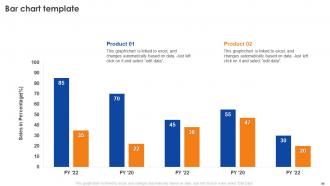
Folie 44 : Diese Folie repräsentiert die Balkendiagrammvorlage.
Folie 45 : Dies ist die Trichterfolie.
Folie 46 : Dies ist die Lupenfolie.
Folie 47 : Diese Folie zeigt das Kreisdiagramm.
Folie 48 : Diese Folie enthält die Haftnotizen für Erinnerungen und Fristen.
Folie 49 : Dies ist die Folie des Venn-Diagramms.
Folie 50 : Diese Folie zeigt die Mind Map.
Folie 51 : Diese Folie zeigt das lineare Diagramm.
Folie 52 : Dies ist die Folie des Organigramms.
Folie 53 : Dies ist die Dankesfolie für die Bestätigung.
Employee Performance Review Process Powerpoint-Präsentationsfolien mit allen 58 Folien:
Verwenden Sie unsere Powerpoint-Präsentationsfolien für den Mitarbeiterleistungsbeurteilungsprozess, um Ihnen effektiv dabei zu helfen, wertvolle Zeit zu sparen. Sie sind gebrauchsfertig und passen in jede Präsentationsstruktur.
-

Employee Performance Review Process
-
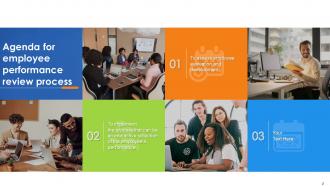
Agenda for employee performance review process
-
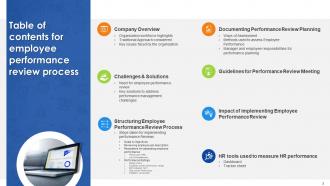
Table of contents for employee performance review process
-
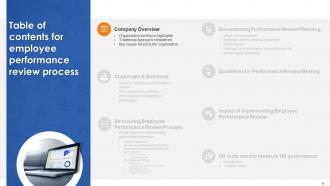
Table of contents for employee performance review process
-
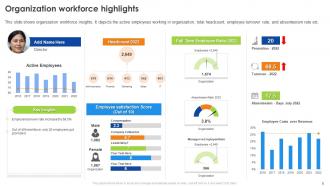
Organization workforce highlights
-
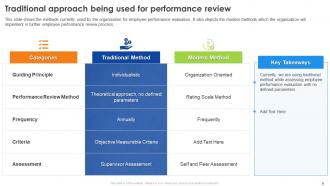
Traditional approach being used for performance review
-
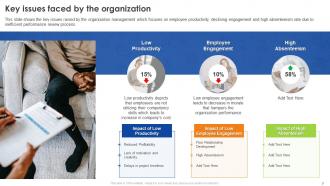
Key issues faced by the organization
-
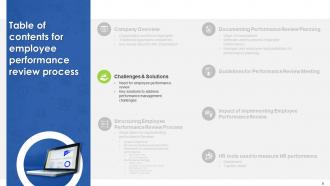
Table of contents for employee performance review process
-
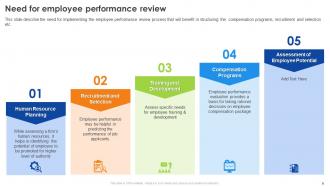
Need for employee performance review
-
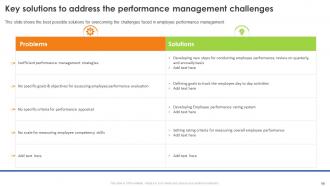
Key solutions to address the performance management challenges
-
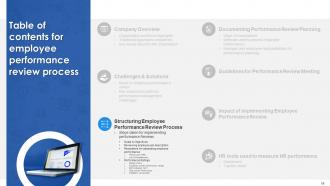
Table of contents for employee performance review process
-
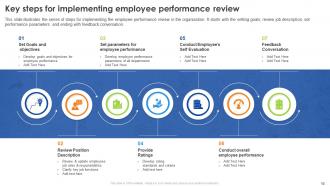
Key steps for implementing employee performance review
-
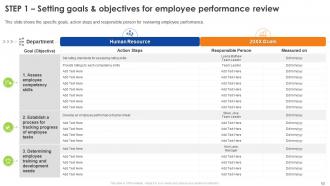
STEP 1 Setting goals objectives for employee performance review
-
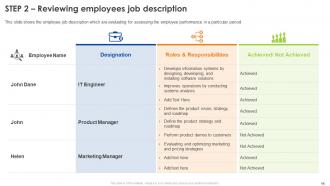
Reviewing employees job description
-
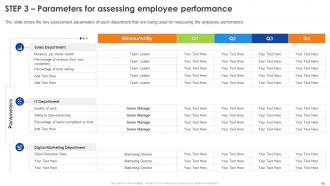
Step 3 Parameters for assessing employee performance
-
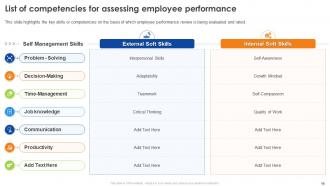
List of competencies for assessing employee performance
-
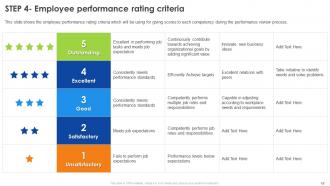
Employee performance rating criteria
-
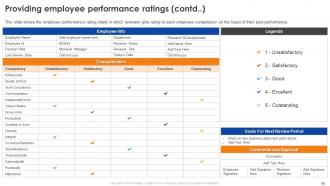
Providing employee performance ratings contd
-
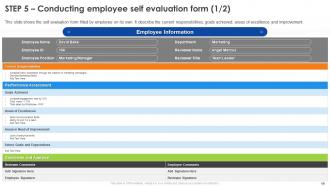
STEP 5 Conducting employee self evaluation form 1 2
-
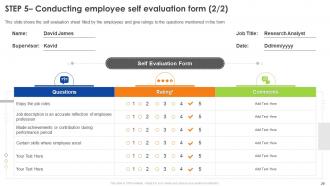
Step 5 Conducting employee self evaluation form 2 2
-
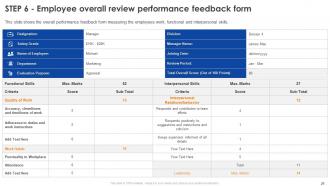
Employee Overall Review Performance Feedback Form
-
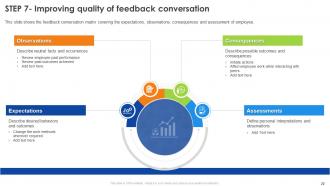
Step 7 Improving quality of feedback conversation
-
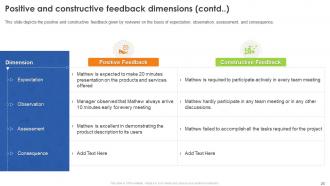
Positive and constructive feedback dimensions contd
-
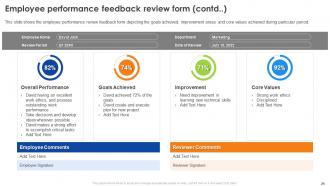
Employee performance feedback review form contd
-
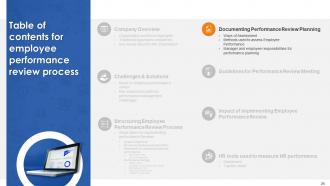
Table of contents for employee performance review process
-
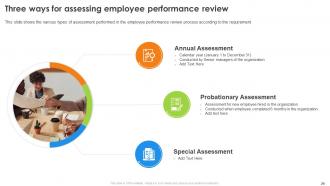
Three ways for assessing employee performance review
-
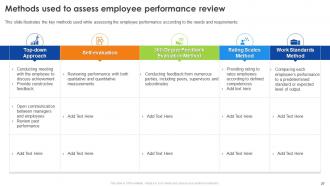
Methods used to assess employee performance review
-
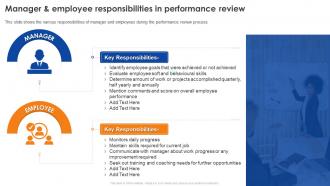
Manager employee responsibilities in performance review
-
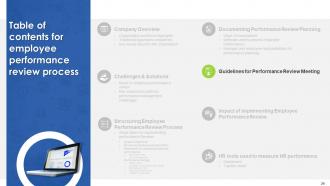
Table of contents for employee performance review process
-
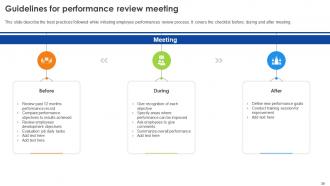
Guidelines for performance review meeting
-
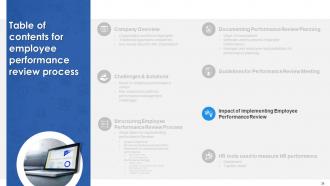
Table of contents for employee performance review process
-
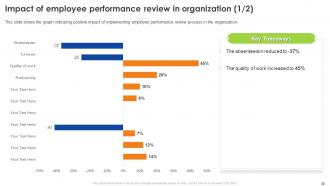
Impact of employee performance review in organization 1 2
-
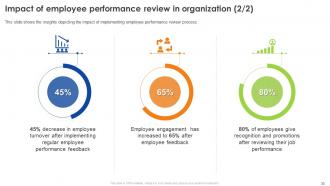
Impact of employee performance review in organization 2 2
-
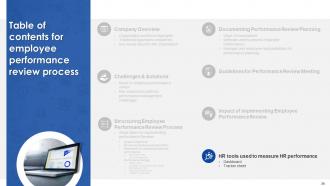
Table of contents for employee performance review process
-
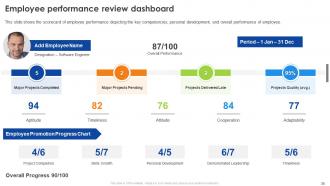
Employee performance review dashboard
-
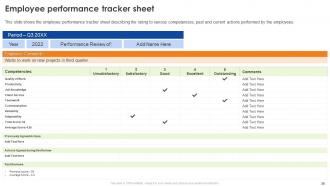
Employee performance tracker sheet
-
Icons slide employee performance review process
-

Additional Slides
-
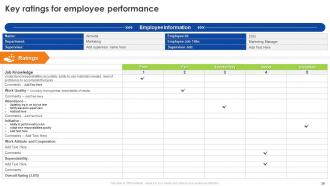
Key ratings for employee performance
-
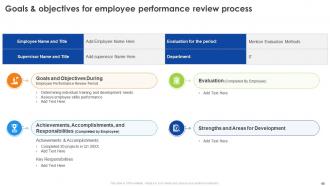
Goals objectives for employee performance review process
-
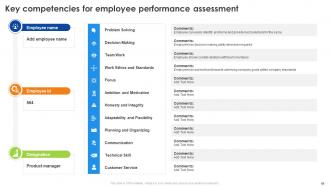
Key competencies for employee performance assessment
-
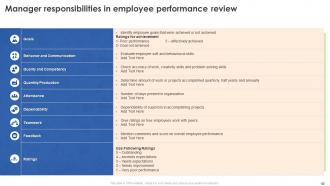
Manager responsibilities in employee performance review
-
Employee Performance Review Process
-
Bar chart template
-
Funnel
-
Magnifying glass
-
Circular diagram
-
Post it notes
-
Employee Performance Review Process
-

Mind map
-
Linear diagram
-
Organization chart
-

Thank You for watching
-

-

-

-

-

FAQs for Employee Performance Review Process
Mix quantitative stuff with qualitative metrics that actually connect to what they do day-to-day. Goal achievement is obvious, but I'd also look at work quality and how well they communicate with the team. Problem-solving ability is huge - that's honestly what makes someone stand out. Basic things like showing up on time matter more than people think. Also track if they take initiative or try learning new skills. The key is tailoring it to their actual job instead of copy-pasting some generic list. Just make sure you can realistically measure whatever you pick, or the whole review turns into guesswork.
Document specific stuff they actually did, not just "seems like a team player" nonsense. I learned this the hard way - keep notes throughout the year so you're not trying to remember everything from March when review time hits. Use the same criteria for everyone in similar roles, which honestly should be obvious but apparently isn't always. Getting input from other managers or peers helps too, especially if you don't work super closely with someone. Oh, and check your own biases first. Sounds cheesy but it matters. The whole thing works better when you stick to facts and examples rather than gut feelings.
Look, self-assessments are basically your chance to control the narrative before your boss does. Highlight your wins and be upfront about challenges you faced. Show you're aware of where you can grow - managers love that self-awareness stuff. Think of it as prep work that actually pays off during your review meeting. Your manager's gonna use what you write to guide the whole conversation anyway. Oh, and don't be modest to a fault here. You gotta advocate for yourself because nobody else will. Be honest but definitely don't undersell what you've accomplished this year.
Okay so here's what works - get super specific instead of vague stuff like "communicate better." Like, "when you cut off Sarah twice in Tuesday's meeting, it threw off our whole presentation." I always do the sandwich thing where you mention something they're actually good at first, then the criticism, then end positive. People tune out otherwise, which is annoying but whatever. Stick to what you actually saw happen, not like personality judgments. Ask what they think too. Oh and don't just leave them hanging - give them one concrete thing to work on next week, not some impossible "be better" goal.
Don't be vague with your feedback - that's useless for everyone. Also avoid only talking about what happened last month instead of the whole review period. Watch out for letting one amazing project blind you to other problems (or one bad thing overshadow good work). I totally winged my first few reviews and it was awkward as hell. Come with specific examples and actual data. The kiss of death? Making it about personality instead of what they actually did or how they acted. Jot down your main points beforehand so you don't ramble and can give them something actionable.
Quarterly is probably your best bet honestly. Annual reviews are basically worthless - way too much time passes and people forget what even happened. You could do monthly for new people or if someone's struggling, but that'll drive you crazy pretty quick. With quarterly, there's enough time to actually see if things are improving, but the feedback still feels relevant. I mean, you can always grab coffee with people in between for quick check-ins anyway. I'd start there and see how it goes - you can always tweak it later if your team needs something different.
Start with your company's big goals and break them down by role. When you're doing the review, show them how their daily work connects to those bigger objectives - like if you want better customer satisfaction, explain how their response times actually move that needle. Most managers totally skip this part, which is crazy to me. Set 2-3 concrete goals that tie back to company priorities. Be super specific about what success looks like and check in every quarter. It's really just connecting dots for people, but it makes a huge difference.
Honestly, communication training should be your first move. Learn how to give feedback that doesn't make people want to quit on the spot - I've seen way too many managers botch this. Active listening is huge too. SMART goals are pretty standard for goal-setting, and bias training keeps things fair across your whole team. Don't skip documentation either since you'll need paper trails later. Most companies have internal workshops, or you could do external courses. I'd start with basic performance management, then tackle whatever specific stuff you're struggling with most.
Honestly, tech makes performance reviews so much less painful. Real-time tracking means you're not trying to remember what someone did last spring - which, let's be real, nobody can do accurately. Analytics help spot trends early too. The automated reminders alone are worth it because manual tracking is just brutal. Pick something that actually fits how your team works though, not just the fanciest option. Otherwise people won't use it consistently and you're back to square one.
Honestly, regular one-on-ones work great, plus those quick project check-ins. Monday or Asana are solid for tracking goals too. Monthly touchpoints hit that sweet spot - not too much pressure but keeps things moving. Write down wins and problems as they happen though! Trust me, you'll blank on half the good stuff come review time. Some people swear by spreadsheets for metrics, others go full dashboard mode. Pick whatever you won't abandon after two weeks. Oh, and set a weekly reminder to actually update things - otherwise it just becomes another forgotten system gathering digital dust.
Honestly, reviews work way better when you focus on growth instead of just grading people. Have actual conversations about where they want their career to go - none of that boring checkbox stuff. People get way more engaged when they understand how their work fits into the bigger picture. Give them feedback they can actually use, not vague comments. Ask what kind of support they need (and then actually follow through - can't stress this enough). When employees feel like you're genuinely invested in developing them, that's when you'll see real motivation kick in.
So here's what works for me - put those follow-up meetings on the calendar literally right after you finish the review conversation. Monthly or quarterly depending on what you talked about. People seriously forget everything within like a week otherwise, it's wild. Write down action items with actual deadlines so nobody can claim confusion later. I always tell my team to just come bug me between meetings if they hit roadblocks or whatever. The trick is making it feel like you're in their corner, not watching them like a hawk. Oh and document everything - trust me on this one.
Oh man, this is so real. Had a teammate once who seemed totally checked out during reviews, but turns out he was just being respectful according to his culture - felt awful about that misread! Different backgrounds mean "initiative" or "work-life balance" can mean totally opposite things. Someone from a hierarchical culture might never brag about wins or push back on feedback. Others expect way more directness than you're probably giving. Try asking open-ended questions and give people multiple ways to share their thoughts. Makes such a difference honestly.
Drop the formal checklist approach. Ask stuff like "what's been energizing you lately?" instead of boring work questions. Share your own struggles first - it's crazy how much that helps people actually open up. Listen way more than you talk, and when they mention something interesting, dig deeper before jumping to solutions. Honestly, regular check-ins throughout the year work so much better than those awkward annual reviews. Makes it feel like an actual conversation instead of some corporate interrogation. Oh, and ditch any script you're using. People can smell that fake stuff from a mile away.
Honestly, performance reviews are like hidden treasure for figuring out your team's development needs. Look for patterns in the feedback - what skills keep coming up as gaps? Who's crushing it and ready for bigger challenges? Then actually do something with that info instead of filing it away forever. Sarah might need some leadership coaching, while Mike could use technical training. The best part is you can build real development plans from this data rather than guessing what people need. I mean, you're literally getting a roadmap handed to you. Turn those conversations into action items and watch your team level up.
-
What a stunning collection of customizable templates! Really a time-saver..
-
Unique research projects to present in meeting.