

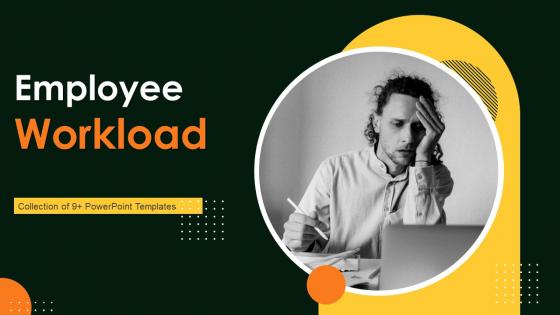
Employee Workload Powerpoint Ppt Template Bundles




Try Before you Buy Download Free Sample Product
 Impress Your
 Audience
 100%
100% Editable
 Save Hours
 of Time


Our Employee Workload Powerpoint Ppt Template Bundles are topically designed to provide an attractive backdrop to any subject. Use them to look like a presentation pro.
People who downloaded this PowerPoint presentation also viewed the following :
Employee Workload Powerpoint Ppt Template Bundles with all 27 slides:
Use our Employee Workload Powerpoint Ppt Template Bundles to effectively help you save your valuable time. They are readymade to fit into any presentation structure.
-
Employee Workload
-
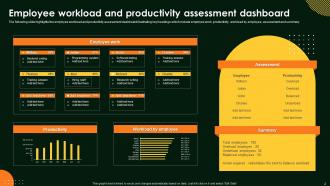
Employee workload and productivity assessment dashboard
-
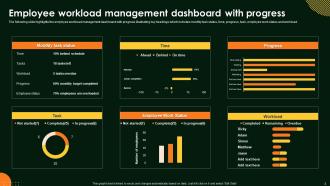
Employee workload management dashboard with progress
-
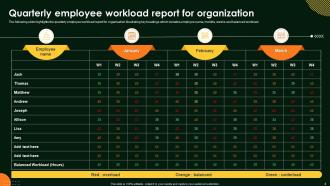
Quarterly employee workload report for organization
-
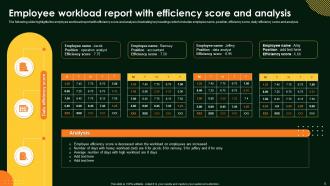
Employee workload report with efficiency score and analysis
-
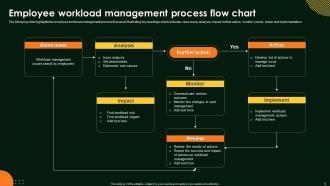
Employee workload management process flow chart
-
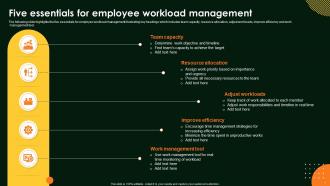
Five essentials for employee workload management
-
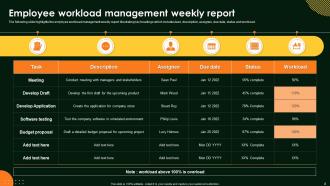
Employee workload management weekly report
-
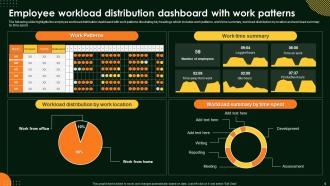
Employee workload distribution dashboard with work patterns
-
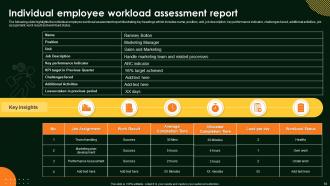
Individual employee workload assessment report
-
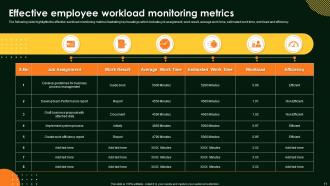
Effective employee workload monitoring metrics
-

Ways to manage employee workload in organization
-
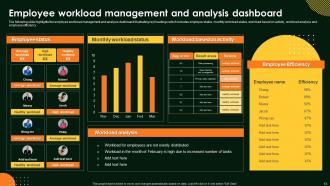
Employee workload management and analysis dashboard
-
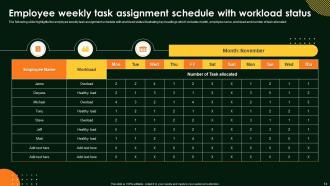
Employee weekly task assignment schedule with workload status
-
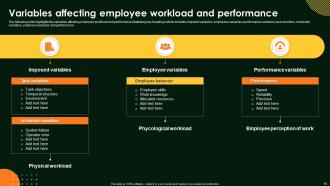
Variables affecting employee workload and performance
-
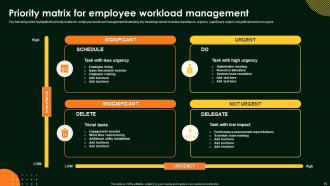
Priority matrix for employee workload management
-
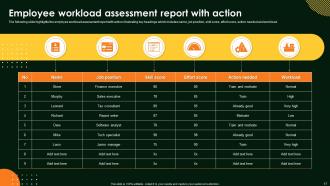
Employee workload assessment report with action
-
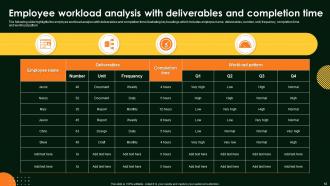
Employee workload analysis with deliverables and completion time
-
Corporate employee workload scheduling icon
-
Employee workload assessment report icon
-

Employee workload management dashboard icon
-
Thank You for Watching
-

-

-

-

-

FAQs for Employee Workload Powerpoint
Ugh, it's usually the same culprits honestly. Companies are understaffed but still pile on work. Your priorities change daily because leadership can't make up their minds. Technology was supposed to help but now you're drowning in Slack notifications and pointless meetings. Plus nobody knows what their actual job is anymore - everything's "other duties as assigned" which basically means you get blamed for everything. Oh, and managers who think every project can be done yesterday. Seriously though, track your time for like a week. You'll be shocked how much gets wasted on random stuff you didn't even realize.
Honestly, these tools are game-changers for figuring out who's drowning vs who can take on more stuff. You get this real-time view of everyone's capacity and deadlines - no more guessing if Sarah's actually busy or just says she is (we all know a Sarah). Bottlenecks become super obvious, so you can move things around before anyone has a meltdown. Plus stakeholders finally get realistic timelines instead of wild promises. Just start by dumping all your current assignments into whatever system your team's already using. The visibility alone will probably shock you.
Honestly? Just ask your people how they're feeling. Sure, you can stare at spreadsheets all day, but your team will straight up tell you if they're drowning or twiddling their thumbs. I do quick check-ins during one-on-ones - literally just "how's your bandwidth right now?" Works every time. Anonymous surveys help too, especially for the stuff people won't say to your face. Three simple questions monthly and you'll catch workload problems way before anyone burns out or quits. The numbers show what's happening, but feedback shows you the why behind it all.
Honestly, overloaded teams are a disaster waiting to happen. Productivity tanks, mistakes pile up, and people burn out fast. I've seen it happen - it's like watching a slow-motion car crash. But here's the thing: underworked employees get just as disengaged because they're bored out of their minds. You want that sweet spot where work is challenging but doable. Check in with your team regularly about how they're feeling workload-wise. Trust me, catching stress early beats dealing with turnover later.
Track what everyone's actually doing for a week or two first - most managers are clueless about this tbh. Look at complexity too, not just task count. Five quick emails aren't the same as building a presentation from scratch. Have regular check-ins because some people won't say they're drowning until it's too late. Mix up who gets the good projects vs the boring stuff. Nobody should be stuck doing data entry forever while Sarah gets all the creative work. Set up an easy way for people to say "I'm at capacity" and don't ignore them when they do.
Honestly, start by figuring out what's eating up most of your team's time - that's where you'll get the biggest win. Automated email responses are clutch for customer service stuff. Project management tools can track deadlines so you don't have to babysit everyone (though some people still need babysitting, let's be real). Data entry and scheduling software saves hours. Chatbots handle the basic customer questions that come up 500 times a day. Don't go crazy trying to automate everything at once though. Pick one or two things that'll make the biggest difference and go from there.
Look for the obvious stuff first - they're always exhausted, getting headaches, or catching every bug going around. But honestly, the behavior changes are usually more telling. They'll snap at people over nothing, start missing deadlines (which isn't like them), or just completely check out of conversations. I've noticed people withdraw from the team too, like they're barely participating in meetings or avoiding the break room entirely. Oh, and suddenly they're calling in sick way more often. If you're seeing a bunch of these signs together, definitely talk to them about their workload before they completely burn out.
Track their hours first - that's the obvious one. But honestly? Just ask people straight up in your one-on-ones. You'll get way more real info than any survey. Look at overtime patterns too, plus how many deadlines they're missing. I'd throw in a quick 1-10 workload survey to start. Also watch sick days and turnover - burnt out people bail or get sick more. Oh, and project completion rates are telling. Mix the hard numbers with actual conversations though. Sometimes people say they're fine but the data shows they're drowning.
Yeah, there's totally an inverse thing going on there. When your workload gets crazy, job satisfaction just tanks. You know that sweet spot where you feel challenged but not drowning? That's what you want. Too little and you're bored out of your mind. Too much and hello burnout city. Honestly, I think most managers don't realize how quickly that balance can tip. Once you cross into overwhelming territory, everything becomes miserable. If you're feeling swamped right now, maybe talk to your boss about redistributing some stuff or at least getting more realistic deadlines?
Honestly, flexible work is a game-changer for burnout. When people can work during their peak hours, they're way more productive - like, some people are morning people, others hit their stride at 2pm. Remote work cuts out that soul-crushing commute (which is huge), and compressed schedules are surprisingly popular. Four-day weeks? Yes please. The real magic happens because employees feel like they actually control their time instead of being chained to a desk from 9-5. I'd definitely ask your team what would help them most - you might be surprised by their answers.
Honestly, start tracking real hours with something like Toggl - not those BS estimates everyone makes up. Have regular check-ins where you actually ask people how swamped they are. Weekly planning beats those marathon quarterly meetings that everyone zones out during anyway. Set up a simple dashboard so you can see who's drowning before they hit their breaking point. The trick is making it feel like you're helping them, not watching their every move. Share the data back with your team and use it to shift work around when someone's overloaded. Makes a huge difference.
Honestly, cross-training is a lifesaver when things get crazy busy or someone calls out sick. You know how it is - suddenly only one person knows the invoicing system and they're on vacation. Super annoying. Train a few people on the same stuff so you can shuffle tasks around. Your team won't panic when workloads spike because others can actually help out instead of just watching someone drown. Most people dig learning new things anyway - keeps work from getting stale. I'd start with whatever process causes the biggest nightmare when someone's out. Maybe pick two critical things max and get backup people trained on those first.
Dude, workload issues are seriously brutal for keeping people around - like we're talking 50% higher turnover in some places. Your team gets constantly slammed, they burn out quick and bounce for somewhere with better balance. Stress kills job satisfaction, messes with their health, makes them feel totally undervalued. Quality work becomes impossible when you're drowning, which honestly just crushes people's professional confidence. If you're noticing signs of overload, redistribute stuff or get more help ASAP. Trust me, way cheaper than replacing good employees who just couldn't take it anymore.
Ugh yeah, heavy workloads are brutal for your mental health. Your brain gets stuck in that constant stress mode and honestly? It's exhausting. I've watched people on my team go through this when everything hits at once - you start getting anxious, can't sleep properly, and eventually just feel totally drained. The worst part is you never get time to actually recover. Burnout becomes inevitable. If you're feeling irritable or emotionally wiped out, definitely talk to your manager about shifting some stuff around. Your mental health isn't worth destroying over work deadlines.
Honestly, the biggest thing is asking about actual workload, not just "how's the project going?" Make it safe for people to say they're swamped without looking bad at it. I always bring this up in one-on-ones now. Also - and this one's huge - don't send emails at midnight unless you want your team thinking that's normal. When someone's overwhelmed, try asking "what should we drop?" instead of just adding more stuff. People need to know they can actually admit when they're drowning, you know?
-
I can always count on your designs for my professional needs. I believe I found a one-stop-shop for PPTs.
-
Awesome use of colors and designs in product templates.