Engagement And Communication Plan Development Timeline

Rating:
90%
Engagement And Communication Plan Development Timeline Engagement And Communication Plan Development Timeline
Slide 1 of 6

or

Favourites Favourites

Try Before you Buy Download Free Sample Product

Audience Impress Your
Audience
Editable 100%
Editable
Time Save Hours
of Time
The Biggest Sale is ending soon in
0
0
:
0
0
:
0
0
Rating:
90%
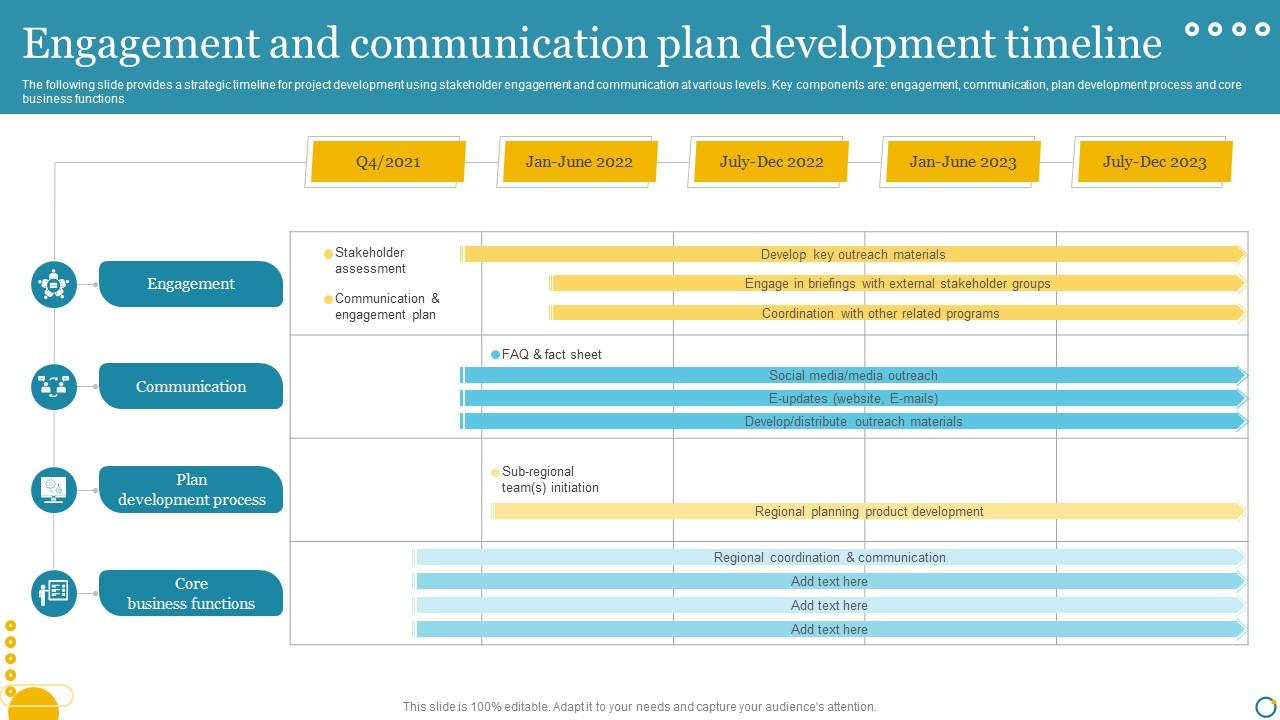
The following slide provides a strategic timeline for project development using stakeholder engagement and communication at various levels. Key components are engagement, communication, plan development process and core business functions. Presenting our well structured Engagement And Communication Plan Development Timeline. The topics discussed in this slide are Engagement, Communication, Development. This is an instantly available PowerPoint presentation that can be edited conveniently. Download it right away and captivate your audience.

FAQs for Engagement And Communication

Your engagement plan needs five things. Start with clear milestones - kickoff dates, stakeholder reviews, final deliverables. Map out when you'll communicate (weekly check-ins work great). Identify decision points where you need approval before moving ahead. Here's what I learned the hard way: always pad your timeline because literally everything takes longer than you think. Also set up feedback loops and revision cycles upfront. Oh, and make sure everyone knows their role - nothing's worse than people assuming someone else is handling something. That's honestly where most projects go sideways.

Honestly, you've gotta think about who wants to hear from you and how often. VIPs? They expect those weekly check-ins and personal touches. But your regular email subscribers will probably unsubscribe if you hit them daily - trust me, I've watched that train wreck happen. Monthly works way better for them. B2B folks need way more time to make decisions than B2C customers do, so plan longer sequences. Also think about where people are in their journey with you. Oh, and definitely survey a few people from each group first to make sure you're not totally off base before you commit to anything.

Honestly, I'd go with whatever your team already has access to first - why pay for new stuff when you don't have to? Asana and Trello are pretty solid for visual tracking, and your team can actually see what's happening in real-time. Monday.com is decent too. If you're into detailed planning (which I totally get), Smartsheet or Microsoft Project have those satisfying Gantt charts with all the dependencies mapped out. Google Sheets works fine for basic stuff though - sometimes simple is better. The real trick is picking something everyone will actually use, not just install and forget about.

Honestly, milestones are like having a GPS for your project instead of just wandering around hoping you'll get there eventually. They break down your timeline into actual checkpoints you can track. When something goes sideways (and it will), you'll catch it early rather than panicking at the last minute. Plus they keep everyone on the same page about what "done" looks like at each stage. I'd pick maybe 3-5 really crucial moments that'll make or break your project's success. Without them you're basically flying blind, which never ends well in my experience.

Look, stakeholder feedback is honestly your best reality check when you're planning timelines. People will tell you straight up if your deadlines are nuts or if there's competing stuff you didn't know about. I've watched so many projects totally bomb because someone just ignored the warning signs early on. Regular check-ins work way better than that one-and-done approach most people do. Their input catches bottlenecks and dependencies you'll definitely miss on your own. Plus resource constraints - they know what's actually available better than you do. Trust me, listening to these concerns upfront saves you from that awkward conversation later where everything's behind schedule.

Honestly, I'd check it every 2-3 weeks if possible. Monthly feels too long - stuff moves way too fast and you'll end up playing catch-up. Stakeholder priorities flip constantly, random issues come up, and sometimes you realize an activity needs double the time you planned. Set a calendar reminder for like 30 minutes every few weeks. Treat it seriously - review what's actually working vs what's flopping, then tweak things for the next stretch. Being ahead of problems beats scrambling to fix them later. Trust me on this one.

Oh man, timeline planning is brutal. People always think everything will go perfectly - spoiler alert, it won't. Build in way more buffer time than feels reasonable, like 20% extra minimum. Also don't save all your stakeholder meetings for the end because that's just asking for chaos. Map out your dependencies early too... nothing sucks more than realizing you're waiting on legal approval before design can even start. And honestly? Factor in holidays and people's vacations because they'll definitely pop up at the worst times. Trust me on this one.

Honestly, visuals are a game changer for timelines - people just absorb images way faster than walls of text. I usually throw in color coding for different project phases and little icons for major activities. Progress bars are clutch too for showing where you're at. Gantt charts might sound boring but they're actually perfect for this stuff since you can see task dependencies right away. Your stakeholders will spot the critical milestones and potential problems without having to read through everything. Seriously, just adding some simple graphics makes such a difference in how quickly everyone gets it.

Track your participation rates and response times first - that's the easy stuff. Goal completion and whether you're actually hitting deadlines matter way more though. I'd also watch stakeholder satisfaction scores since those people love to complain later if you don't. The tricky part is measuring team morale and communication quality, but honestly those predict if your project's gonna crash and burn better than spreadsheet metrics. Oh, and don't obsess over tracking everything daily - monthly check-ins work fine for course corrections.

Honestly, you gotta sync up your engagement stuff with the actual project timeline right from the start. Figure out when the big decisions are happening, then schedule backwards from there. I've watched so many teams do amazing stakeholder work that lands like a week before go-live - totally pointless and everyone gets pissed. Build in extra time for feedback rounds because stuff always takes longer than you think. My rule of thumb? Get your final engagement results to leadership at least two weeks before they need to make calls. Otherwise they can't actually do anything with what people told you, and that defeats the whole purpose.

Get that timeline out ASAP, even if it's rough. Gantt charts are nice but honestly a simple bullet list with dates works fine too. Highlight which parts affect each person directly - nobody wants to be blindsided by delays that mess up their own work. Don't just email it though, do a quick walkthrough meeting. You'll catch all the "wait, what about..." questions before they become headaches later. Oh and build in buffer time because something always goes sideways. Set up regular check-ins to adjust as needed.

Okay so first thing - pad your timeline by like 20-30% right from the beginning. Stakeholders will definitely mess with your plans (they always do), so just expect it. Every couple weeks, set up checkpoints where you can step back and see if you need to change course. I'd do rolling timelines instead of hard deadlines where possible. Figure out what's actually flexible vs what absolutely can't move. Oh and keep a backup list of "nice-to-have" stuff you can cut if things get crazy. The key is telling your team about changes early so nobody gets caught off guard.

Look, realistic deadlines are what separate actual project plans from total pipe dreams. Your team will hit their targets when they're achievable, which builds momentum with everyone involved. I've learned this the hard way - aggressive timelines just create chaos and missed deliverables. Honestly, it's exhausting. Buffer time is your friend here. Add about 20% to whatever you first estimate, then factor in your team's bandwidth and whatever else they're juggling. Random issues always pop up anyway, so you might as well plan for them upfront instead of scrambling later.

Look at your past campaign data first - that's gold for timing everything. I always check open rates and click-through stuff from the last 6-12 months to see when people actually engage. Tuesday mornings might kill it while Friday afternoons are dead, you know? Map out those patterns and plan your touchpoints around the high-engagement windows. Seasonal trends matter too, plus any weird industry-specific quirks your audience has. Honestly feels like cheating once you figure out the rhythm. Pull those engagement metrics and you'll spot the obvious patterns pretty fast.

Mix up how you reach out to people - surveys, coffee chats, emails, actual phone calls. Nobody wants the same boring format every single time. Touch base every 2-3 weeks (set a calendar reminder or you'll totally forget). Share wins constantly, even tiny ones. Momentum matters way more than people think. Give stakeholders actual roles in decisions so they feel invested. I swear, making people feel like they own part of the process is half the battle. Be consistent with timing but switch up your approach. Short calls work better than long emails sometimes.

Ratings and Reviews

90% of 100
Review Form
Write a review
Most Relevant Reviews
  1. 80%

    by Donte Duncan

    Great experience, I would definitely use your services further.
  2. 100%

    by Colby Coleman

    Helpful product design for delivering presentation.

2 Item(s)

per page: