


Engagement communication plan
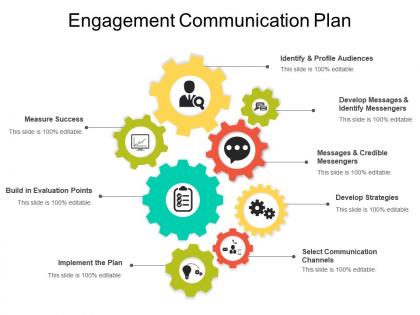





Try Before you Buy Download Free Sample Product
 Impress Your
 Audience
 100%
100% Editable
 Save Hours
 of Time


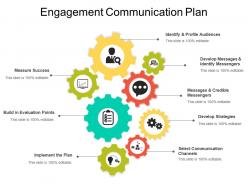
Build strong connections with your stakeholders using our thoughtfully-built Engagement Communication Plan. Emphasize this concept by incorporating our strategic communication PPT template to leave an intense effect on your audience. This PPT template lets you convey your message smoothly and develop a better understanding of the topic. Illustrate various ways how you manage stakeholder communication. Draw attention to the tools that foster engagement with the help of a communication management PPT template. Graphically explain your communication improvement tips and highlight the weakest areas by employing this professionally-designed strategic communication PPT theme. Amaze your audience by delivering a marvelous presentation. Use our stakeholder engagement methodology PPT template and present your ideas amazingly. Make use of features like infographics, pie charts, and tables for enhanced learning. Implement these ideas systematically and witness the improved performance using our strategic communication PowerPoint template.
People who downloaded this PowerPoint presentation also viewed the following :
Engagement communication plan with all 5 slides:
Explain the benefits of accepting change with our Engagement Communication Plan. Discourage any inflexible attitudes.
FAQs for
Businesses can enhance customer engagement through interactive polls, real-time Q&A sessions, storytelling with relevant case studies, multimedia integration, and personalized content tailored to audience needs. These strategies work by encouraging active participation, creating emotional connections, and delivering targeted value, with many organizations finding that interactive presentations increase retention rates and ultimately drive stronger client relationships and business outcomes.
Visual storytelling in presentations boosts engagement by combining compelling narratives with dynamic visuals, interactive elements, data visualization, and emotional connections that resonate with audiences. Through strategic use of infographics, video content, and cohesive design themes, organizations across sectors like healthcare, finance, and retail create memorable experiences that drive action, with many finding that visual narratives increase retention and ultimately deliver stronger business outcomes.
Audience feedback serves as a strategic compass for refining engagement approaches, revealing preferences, pain points, content gaps, and behavioral patterns that drive decision-making. This data enables organizations to optimize messaging, timing, and channels while personalizing experiences, with many companies finding that feedback-driven strategies deliver significantly higher response rates and stronger customer relationships.
Presenters can tailor content by segmenting audiences based on roles, experience levels, cultural backgrounds, and learning preferences, then customizing messaging, examples, and delivery methods accordingly. This strategic approach enables more targeted communication through varied case studies, adjusted technical depth, and culturally relevant examples, with many organizations finding that personalized presentations significantly enhance audience retention and drive better business outcomes.
Psychological triggers that increase presentation engagement include storytelling narratives, interactive polling, visual surprise elements, social proof through case studies, and scarcity-based urgency around opportunities. These techniques enhance audience connection by creating emotional investment, encouraging active participation, and maintaining attention through varied stimuli, with many presenters finding that strategic combination of these triggers delivers significantly higher retention rates and audience responsiveness.
Interactive elements in presentations significantly boost audience participation by encouraging real-time feedback, facilitating hands-on activities, and creating opportunities for Q&A sessions and collaborative discussions. These engagement strategies transform passive listeners into active participants, with many organizations finding that interactive presentations increase information retention, generate more meaningful dialogue, and ultimately deliver stronger business outcomes through enhanced stakeholder buy-in.
Virtual presentation best practices include interactive polls, breakout sessions, multimedia integration, frequent Q&A segments, and storytelling techniques. These approaches enhance engagement by encouraging active participation, breaking up content delivery, and creating personal connections, with many organizations finding that incorporating visual variety, shorter presentation segments, and real-time feedback tools ultimately delivers more memorable experiences and better audience retention.
Presenters can leverage data analytics by tracking engagement metrics, analyzing audience interaction patterns, measuring content effectiveness, monitoring attention spans, and identifying optimal presentation timing. Through analytics tools, speakers can determine which slides generate the most engagement, adjust content delivery in real-time, and refine future presentations, ultimately delivering more impactful communications and stronger audience connections.
**INPUT**: What techniques can be employed to recover engagement when the audience appears disinterested? **OUTPUT**: Recovery techniques include changing presentation pace, incorporating interactive polls or Q&A sessions, using storytelling with relevant case studies, shifting to visual demonstrations, and directly acknowledging the disconnect. These approaches streamline audience reconnection by creating immediate participation opportunities, delivering personalized relevance, and fostering authentic dialogue, with many presenters finding that vulnerability and adaptability ultimately transform disengagement into active collaboration. *[Word count: 60 words]*
Emotional resonance enhances engagement by creating personal connections, triggering memory formation, and motivating action through storytelling, relatable scenarios, and authentic experiences. When presenters incorporate emotional elements, audiences retain information significantly longer, participate more actively, and respond more favorably to calls-to-action, ultimately delivering stronger business outcomes and competitive advantage.
Hybrid presentation challenges include managing split attention between in-person and virtual audiences, technical connectivity issues, limited interaction opportunities, varying engagement levels across formats, and difficulty reading virtual participant cues. These obstacles can be overcome through interactive polling, breakout sessions, and strategic technology integration, with many organizations finding that dedicated hybrid platforms and structured audience participation ultimately deliver more inclusive and dynamic presentation experiences.
Presenters can effectively balance informative content with engaging delivery by incorporating storytelling techniques, interactive elements, varied vocal pacing, strategic use of visuals, and audience participation opportunities. Through dynamic presentation approaches, organizations enhance knowledge retention, maintain audience attention, and deliver memorable experiences, with many companies finding that strategic combinations of educational depth and engaging formats ultimately drive better outcomes and stronger stakeholder connections.
Engaging visuals like infographics and videos capture attention through simplified complex information, enhanced retention rates, and emotional connections that text alone cannot achieve. These visual elements streamline communication by reducing cognitive load, accelerating comprehension, and delivering memorable experiences, with many organizations finding that multimedia content generates significantly higher engagement levels and ultimately drives better audience retention across presentations and marketing materials.
Storytelling techniques can be integrated into presentations through narrative arcs, relatable characters, emotional hooks, conflict-resolution frameworks, and visual storytelling elements. These approaches transform abstract concepts into memorable experiences, with organizations finding that strategic storytelling increases audience retention, drives decision-making, and ultimately delivers stronger buy-in and engagement outcomes.
**INPUT**: What metrics can be used to measure engagement effectiveness in presentation settings? **OUTPUT**: Engagement metrics include audience participation rates, question frequency, attention duration, feedback scores, and post-presentation action items completion. These measurements work by tracking real-time interaction levels, survey responses, and behavioral indicators, with many organizations finding that combining quantitative data like polling responses with qualitative feedback ultimately delivers comprehensive insights into presentation impact and audience connection. **Word count: 58 words**
-
Thanks for all your great templates they have saved me lots of time and accelerate my presentations. Great product, keep them up!
-
Unique research projects to present in meeting.