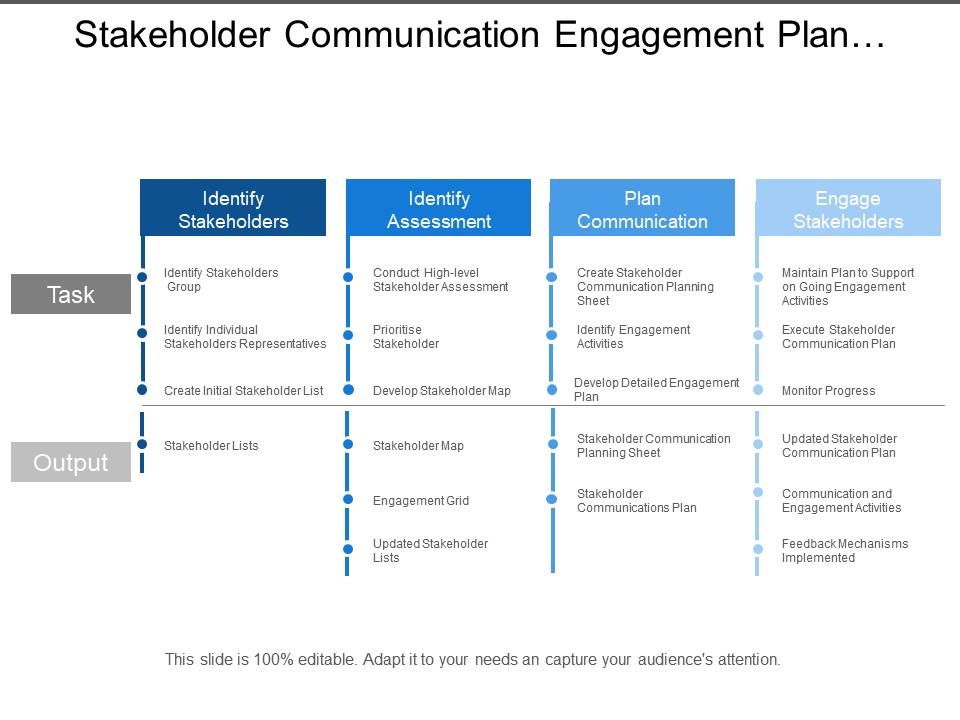
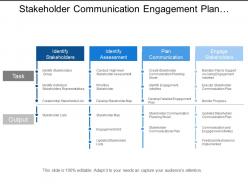
Stakeholder communication engagement plan showing methods of identifying and engaging stakeholders
Try Before you Buy Download Free Sample Product
Audience
Editable
of Time
Democratize education with our Stakeholder Communication Engagement Plan Showing Methods Of Identifying And Engaging Stakeholders. Enable easy and equal access for all.
People who downloaded this PowerPoint presentation also viewed the following :
Stakeholder communication engagement plan showing methods of identifying and engaging stakeholders with all 5 slides:
Be hailed a hero with our Stakeholder Communication Engagement Plan Showing Methods Of Identifying And Engaging Stakeholders. Guide them to a great destiny.
FAQs for Stakeholder communication engagement plan showing methods of identifying
Honestly, first figure out who your stakeholders actually are and what keeps them up at night - don't just guess. Two-way communication is everything here. Nobody wants another one-sided update email, trust me. Try mixing it up with surveys, quick workshops, maybe even grabbing coffee (way better than conference rooms). Be real about the good stuff AND when things go sideways - people can smell BS from miles away. Show them their feedback actually matters by connecting it to real decisions you make. Oh, and don't try to tackle everyone at once. Pick one group first.
Honestly, stakeholder mapping is a game changer - you basically plot everyone on a grid by how much influence and interest they have. Then you can actually speak to what motivates each group instead of boring everyone with the same updates. Your executives want the big picture stuff, but your tech leads need those detailed specs. Plus you'll spot potential conflicts before they blow up (learned that one the hard way). Some people need to be in early decision-making, others just want quarterly check-ins. Once you map it out, communication becomes way less stressful.
Honestly, the worst part is usually conflicting priorities and crappy communication. Plus everyone's burnt out from endless meetings - I swear some people collect them like Pokemon cards. You'll also hit time crunches and vague expectations that kill motivation instantly. What works for me: figure out how each stakeholder actually likes to communicate first. Share stuff ahead of time, be crystal clear about what you need. The big one though? Actually close the loop when people give feedback. Nothing makes someone check out faster than feeling ignored. Mix up your meeting times too - not everyone's a 9am person.
Honestly, just pick 2-3 tech tools that actually fit how your stakeholders like to communicate - don't go overboard. Mobile apps and dedicated portals work great for ongoing conversations instead of those painful one-off meetings everyone dreads. Real-time surveys give you way better insights than traditional focus groups (seriously, the difference is huge). Video calls keep remote people in the loop. Oh, and project management tools are clutch for transparency - everyone can see what's actually happening. Social media works too if that's where your people hang out. Just don't overwhelm them with every shiny new platform.
Honestly, the biggest game-changer is actually closing the feedback loop - most people totally forget this part. Give stakeholders different ways to share input (surveys, quick chats, focus groups) so they can pick what works for them. But here's the thing that really matters: always circle back to show what happened with their suggestions. Even if you can't use everything, just explaining why goes such a long way. I'd set up something simple to track who owns what feedback and when you'll follow up. Oh, and be upfront about what's actually changeable vs. what isn't. People appreciate the honesty way more than you'd think.
Dude, transparency is huge for building trust. When you're upfront about decisions and challenges, people actually feel included instead of left out. Nobody wants the corporate BS treatment - we can all smell that from a mile away. Regular updates work wonders, even when things go sideways. Admitting mistakes? Game changer. People respect honesty way more than some perfect facade. Share your reasoning behind decisions too. Oh, and don't forget the messy stuff - roadblocks, setbacks, whatever. That's where real trust gets built, honestly.
Honestly, you've got to think about cultural stuff right from the beginning - it makes a huge difference. Some people love face-to-face meetings while others prefer emails or written updates. Mix it up. Try scheduling at different times too since time zones and religious holidays can be tricky (learned this the hard way once). Translation services are your friend when needed. What really works is creating that safe space where everyone knows their perspective matters. I'd start meetings by setting some basic ground rules about respectful dialogue. It sounds simple but people really appreciate when you acknowledge cultural differences upfront instead of pretending they don't exist.
So I usually start with participation rates - like who's actually showing up to meetings or responding to surveys. Response times tell you a lot too. Honestly, satisfaction scores are probably the most telling metric because unhappy stakeholders just check out completely. Track how quickly you're resolving their concerns and watch for sentiment changes over time (social media monitoring works great for this). Oh, and repeat participation is huge - means people actually find value in engaging with you. Don't go crazy measuring everything though. Pick 3-4 metrics that actually matter for your specific group.
Honestly, you've gotta be upfront about what they can actually influence vs. what's just not happening. Set up regular feedback sessions where they weigh in on priorities and scope - but keep them out of the technical weeds. I learned this the hard way when a stakeholder tried micromanaging our methodology choices (nightmare). Let them focus on the "what" while you handle the "how." Document everything they say so they feel heard, then circle back showing how their input shaped things. Trust me, this saves your sanity while keeping the project on track. Everyone wins.
Honestly, just be real with people from the start. Tell them what you're actually doing and how you'll use their feedback - don't make it some mystery project. Reach out to different types of people too, not just the same folks who show up to everything. Here's the thing though: only ask for input on stuff that could actually change. People get pissed when they realize it was all for show. Oh, and this part's huge - actually follow up later and show them what happened with their ideas. Radio silence after collecting feedback is basically the kiss of death.
Honestly, scrap those marathon virtual meetings - nobody can focus that long on a screen. Break things into shorter, frequent check-ins instead. Mix live sessions with async stuff like shared docs or quick video updates. When you do meet virtually, make it interactive with polls and breakout rooms, otherwise people just zone out scrolling Instagram (let's be real). For hybrid events, don't let remote folks become wallflowers - give them actual speaking time and keep their cameras visible. Oh, and always send follow-ups with clear next steps through multiple channels. People forget everything otherwise.
Start with regular check-ins from day one - quarterly works well for sharing updates and getting feedback. Don't let great relationships die just because everyone's swamped with new projects (happens way too often honestly). Keep them posted on industry stuff they'd care about, send interesting articles, maybe invite them to relevant events. But make it genuinely useful, not just "hey remember me" outreach. I use a basic spreadsheet to track everyone and set reminders. Sounds dorky but it works. The whole point is staying helpful rather than transactional.
Don't ignore the elephant in the room - that never works. Get everyone together (Zoom works fine) and let each person actually explain what they're worried about. Really listen to what's underneath their complaints, not just the surface stuff they're throwing around. You'd be surprised how often people want similar things but are just talking past each other. Focus on having an actual conversation instead of everyone just arguing their point. Oh, and definitely end with concrete next steps - otherwise you'll just have the same meeting again next week.
Look, you need people in your corner from day one - that's what keeps projects alive long-term. Get stakeholders involved early and they'll actually fight for your project when you're not around. Regular feedback from them helps you catch problems before they blow up. They bring resources and expertise you didn't even know you needed. Honestly, the political backing alone is worth it. Map out who matters most and set up check-ins now. Way less painful than scrambling to fix broken relationships later (learned that one the hard way).
Don't just think about the obvious people - you've gotta map out everyone who might care. Ask your main stakeholders who else could be impacted. Community leaders, advocacy groups, even those loud voices on social media in your field. I swear, so many projects get completely caught off guard by groups they never considered! Try using stakeholder mapping tools to see how everyone connects. Instead of waiting for people to show up pissed off, reach out first. Go to their meetings, create ways for feedback that actually work. Oh, and meet them on their turf - makes a huge difference.
-
Informative presentations that are easily editable.
-
Unique design & color.