


Project Stakeholder Management And Engagement Plan Communication Management Bundle




Try Before you Buy Download Free Sample Product
 Impress Your
 Audience
 100%
100% Editable
 Save Hours
 of Time


Our Project Stakeholder Management And Engagement Plan Communication Management Bundle are topically designed to provide an attractive backdrop to any subject. Use them to look like a presentation pro.
People who downloaded this PowerPoint presentation also viewed the following :
Content of this Powerpoint Presentation
Turning project stakeholders from neutral to supportive and supporting to leading is the primary function of project stakeholder management. In business, it is critical to ensure that the project remains on track.
Of the many ways to achieve more significant project stakeholder management and engagement, communication remains the best medium.
Here's a 4-step guide to project stakeholder management.
In this blog, we bring to you the best form of communication that will bring your company or enterprise the best results in ensuring that the management of stakeholders is a breeze. The template is a comprehensive guide on clear engagement with stakeholders with examples and legends to ensure you can use it from the word go. Even better, it is 100% editable and customizable as well to ensure that you can add your data, experiences, and examples in a jiffy.
Find a world-class stakeholder management plan here.
Here's a tour of the best product that we have on this. On our website, you will find many more samples and examples of templates for driving stakeholder engagement.
Template 1 Project Stakeholder Engagement PPT Template That Works
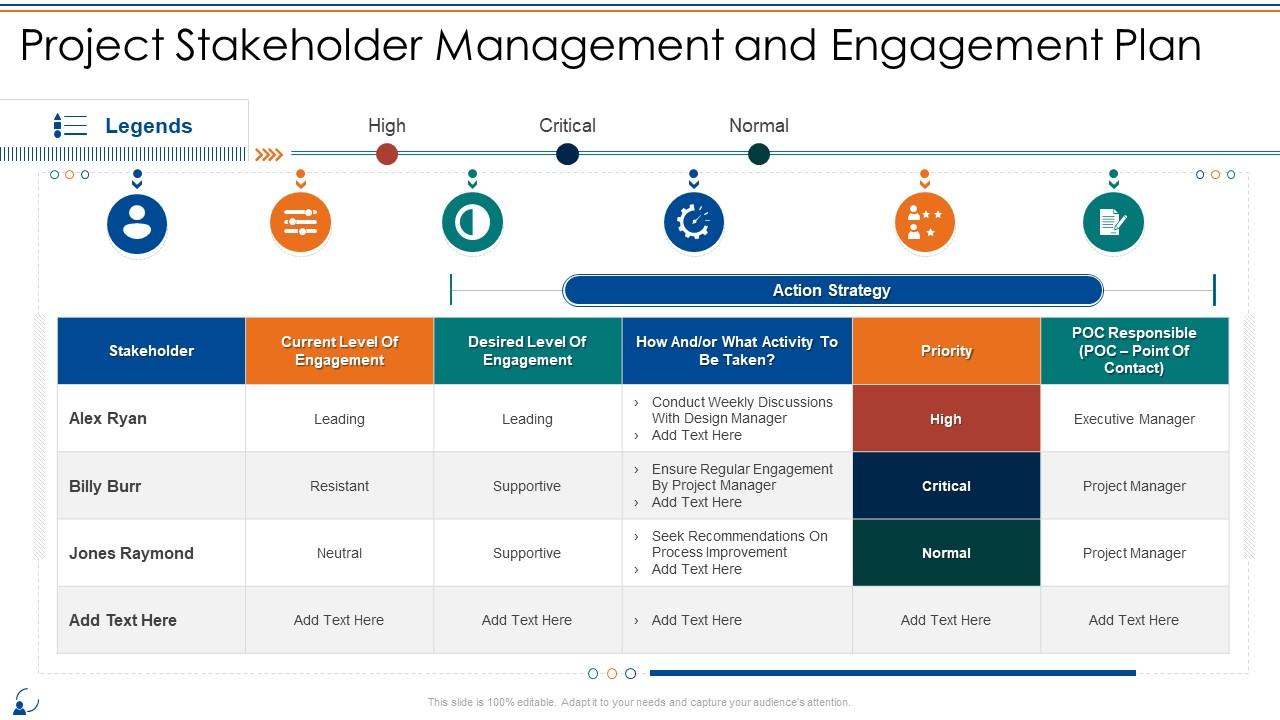
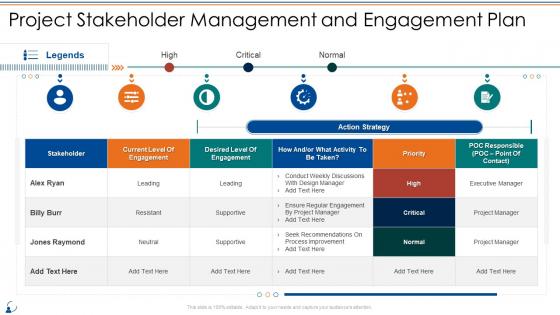
This is a ready-made PowerPoint Template to help you streamline your engagement plans with stakeholders and come across as the professional of professionals. Incorporate this to-the-point and appealing PPT Slide to monitor activities involved in managing an organization’s employees. This PPT Diagram showcases key stakeholders by name and lists the current level of engagement vis-à-vis the desired level of engagement. This PPT Template exhibits the three levels of priority on which you can rate the stakeholders’ need to be tackled. These priority levels can be expected, critical, or high. The slide also lists how and what activity is to be undertaken and the responsible POC (Point of contact) person. Grab this ready-to-use PowerPoint Template to outline strategies and processes to promote and manage stakeholder engagement with flair and panache. Download this action strategy-oriented template now!
PS There are many approaches you can take to stakeholder engagement approaches. Find a world-class method in this template.
Project Stakeholder Management And Engagement Plan Communication Management Bundle with all 6 slides:
Use our Project Stakeholder Management And Engagement Plan Communication Management Bundle to effectively help you save your valuable time. They are readymade to fit into any presentation structure.





FAQs for Project Stakeholder Management And Engagement Plan
So there's five main steps: identify, analyze, plan, engage, and monitor. First you map out all your stakeholders, then figure out their influence levels and what they actually care about. Planning comes next - some people want weekly check-ins, others just need the highlights. Then you execute and build those relationships. This part honestly makes or breaks everything. Oh, and don't forget to keep monitoring since people's needs shift constantly. Seriously though, spend real time on that analysis phase. I can't tell you how many headaches you'll avoid by understanding what each person truly wants upfront.
Okay so first thing - grab a whiteboard and just dump everyone who touches your project. Gets messy but whatever. Then you'll want to plot them on influence vs impact. High influence + high impact people? Those are your VIPs who need babying constantly. The low/low crowd just needs updates, nothing fancy. Honestly the magic happens when you focus hard on that top-right corner of high-influence folks. Oh and create different approaches for each group - cookie cutter engagement is useless. Makes such a difference when you actually tailor it.
Start with stakeholder mapping - honestly it's boring but super helpful for figuring out who actually has influence. Surveys work well, though people won't always be straight with you about what they really want. I'd throw in some interviews too. Network analysis is clutch for finding those behind-the-scenes power players you'd totally miss otherwise. If your people are online, social media monitoring gives you the real tea on how they feel. Mix the data stuff with actual conversations - that's where the magic happens. Keep it simple at first, then get fancy later.
Public sector means you're juggling everyone - community groups, agencies, random citizens who show up to meetings. Everything's gotta be transparent and there's so much red tape it'll make your head spin. Private sector's way more focused though. You pick stakeholders based on who actually affects your profits - customers, investors, key partners. Honestly, government work feels like managing a circus sometimes, but private companies can be pickier about where they spend their energy. Both need different approaches. I'd say figure out who you're actually dealing with first, then match your strategy to what that crowd expects.
Honestly, communication is like the foundation of the whole thing - without it, you're basically flying blind and hoping people just "get it." Map out who needs what info and when, then actually stick to it. Different groups want different details, so don't blast the same generic updates to everyone. The listening part is huge too, not just talking at people. I've seen projects tank because someone skipped the regular check-ins - sounds boring but those little touchpoints really do keep relationships from going stale. Oh, and make sure it goes both ways or you'll miss important feedback.
Honestly, I'd focus on both the numbers and the gut-check stuff. Track meeting attendance and survey responses, sure. But pay attention to whether people are actually engaging differently - like, are they bringing up ideas without being asked? The quality of feedback matters way more than quantity IMO. You'll know it's working when stakeholders start sharing sensitive info or wanting to collaborate on solutions. That's real trust right there. Set up quick check-ins with your key people to see how they feel about the whole process. Sometimes the vibe tells you more than any spreadsheet will.
Oh man, the worst part is dealing with everyone's conflicting priorities - like marketing wants one thing, finance wants another. Plus half the people won't even show up to meetings. Communication gets messy fast too. What's worked for me is figuring out what each group actually cares about before you start. Be super clear about who does what and when. Mix up how you reach out - some folks hate emails, others won't do calls. This might sound obvious, but actually tell people how you used their feedback. Game changer. Next time just ask them upfront how they prefer to be involved.
Honestly, tech tools are a game-changer for getting everyone on the same page. Slack or Teams keeps conversations flowing instead of those awful email chains that go nowhere. Project dashboards show progress transparently, which stakeholders love. Virtual meetings actually help you include people who'd normally miss out - remote folks, busy executives, whatever. I've found digital surveys way faster for collecting feedback from big groups too. Oh, and mobile notifications work great for urgent stuff. Start with whatever fixes your biggest headache first. Don't try implementing everything at once though, that's just chaos waiting to happen.
Okay so transparency is huge here - don't hide the messy stuff or only invite people who'll kiss your ass. Actively go find voices from communities that'll actually be impacted, especially the ones getting hit hardest. Show up prepared and follow through on what you promise (seems obvious but people mess this up constantly). Create spaces where folks can give real feedback without worrying about getting shut down later. Oh, and respect their time - nobody wants to sit through poorly planned meetings. The whole thing falls apart if people don't trust you're being straight with them.
Don't let those conflicts just sit there - deal with them right away before everything goes sideways. I'd set up some structured meetings where people can actually talk through the issues. Ground rules help too, especially when things get heated. Maybe bring in someone neutral to keep everyone on track? The trick is getting people to focus on what they all want instead of just their own agenda. Some stakeholders are honestly just stubborn by nature lol. Try reframing it like "we all want the same thing, just different ideas on how to get there." Write everything down so nobody feels ignored. Trust me, tackle it early.
Start by figuring out who actually matters in this decision - then loop them in right from the beginning, not when you're already halfway done. Mix up how you get their input too. Some people hate surveys, others won't show up to workshops. One-on-ones work great for the introverts. Here's the thing though - be brutally honest about how much say they really have. Nothing pisses people off more than fake consultation. Keep everyone posted on progress, even during the boring phases. But here's what really counts: always circle back and show them exactly how their feedback changed things. Or if it didn't, explain why.
Start collecting feedback right from day one - seriously, don't wait until you're halfway done. Weekly check-ins work great, or just build reviews into your milestones where you actually ask what they think about scope and timing. Write everything down because people forget what they said last week (myself included). Be upfront about what you can actually change vs. what's set in stone. Here's the thing though - always circle back and show them how their input changed the plan. It's probably the best way to get them engaged next time around.
Oh man, cultural stuff can totally derail stakeholder engagement if you're not careful. Some cultures want super direct feedback, others need you to be way more diplomatic about it. Meeting styles are different too - plus how long decisions actually take. I found this out the hard way on a project a while back! Power dynamics get tricky because who you even talk to varies by culture, and sometimes you need to be formal when you wouldn't expect it. Honestly, just ask your local teammates for advice before jumping in. Way easier than figuring it out as you go.
Honestly, stakeholder engagement is what separates projects that actually survive from ones that crash and burn after launch. Getting people involved early means you'll have allies when things get tough. They'll also catch problems you'd totally miss - I've watched entire projects change direction because someone spoke up, and it saved everything. The trick is making it real engagement, not just going through the motions. Map out who matters most to your project's long-term success. Each group probably has different ways they can help with sustainability stuff. Oh, and their insights are usually way better than anything you'd come up with sitting alone at your desk.
Listen, you've gotta master active listening and empathy first - really get what each person actually cares about. Clear communication is obvious but harder than it sounds when you're translating technical stuff. Building genuine relationships matters more than people think honestly, because trust changes everything. Project management keeps everyone on the same page with deadlines. Oh, and you'll definitely need conflict resolution skills since stakeholders love disagreeing with each other lol. Every group communicates differently too, so staying adaptable helps. Start by figuring out who your main players are and what drives them - makes the rest so much smoother.
-
SlideTeam makes creating presentations easy. Unlimited products, premium quality designs and affordable.
-
One-stop solution for all presentation needs. Great products with easy customization.