


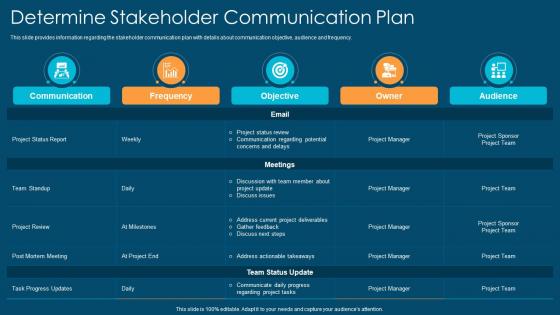
Project management playbook determine stakeholder communication plan




Try Before you Buy Download Free Sample Product
 Impress Your
 Audience
 100%
100% Editable
 Save Hours
 of Time


This slide provides information regarding the stakeholder communication plan with details about communication objective, audience and frequency.
People who downloaded this PowerPoint presentation also viewed the following :
Project management playbook determine stakeholder communication plan with all 6 slides:
Use our Project Management Playbook Determine Stakeholder Communication Plan to effectively help you save your valuable time. They are readymade to fit into any presentation structure.





FAQs for Project management playbook determine
Honestly, it all comes down to knowing your audience. Executives want different info than your dev team - like completely different. Keep updates regular, not just crisis mode stuff. I always try to be upfront about what's working and what isn't, plus throw in clear next steps. Oh, and keep it short! Nobody has time for novels. The feedback thing is huge though - make sure they can actually respond to you. I'd start by figuring out who needs what and how often, then just build from there. Two-way communication beats broadcasting every time.
Honestly, you've gotta speak their language. Executives want the big picture stuff - quick bullet points showing how it impacts business. Technical people need all those nitty-gritty details and specs. But end users? Just tell them how it changes their day-to-day work, nothing fancy. I bombed this once sending our CEO some crazy technical breakdown - total silence lol. Also figure out how they actually want to hear from you. Some people live in their email, others need that face-to-face time. Before sending anything major, I literally ask myself: what does this group actually need and what's their preferred way to get it?
Zoom or Teams are solid for face-to-face stuff, but honestly mixing it up works way better - some people just hate being on camera constantly. Slack's great for the day-to-day chatter. I'd throw in something like Mentimeter for quick polls during meetings too. Asana keeps everyone looped in on progress without constant check-ins. Oh, and stick to maybe 2-3 tools max. I've seen teams go overboard with like six different platforms and it becomes a nightmare to track everything.
Start by listing everyone who needs updates - execs, your team, customers, vendors. Ask each person what they actually want to know and how they prefer getting it. Don't guess! Executives usually just want the big picture stuff and major risks. Your project team needs the nitty-gritty details and what's blocking them. Some people live in email, others want quick Slack pings. Honestly, the people who love self-updating dashboards are my favorite - they just check it themselves. Way easier than constantly sending updates to everyone.
Honestly, just be upfront about everything from day one - good news and bad news. I learned this the hard way when I tried sugarcoating stuff once and it totally blew up on me later. Set up regular check-ins so people know when to expect updates. Create some kind of standard template so stakeholders aren't guessing what they'll get. Mix up how you communicate too - some people want emails, others prefer quick calls or dashboards. Oh, and map out who actually needs what info first. Don't try to update everyone on everything. Be consistent and honest, even when you're still figuring things out.
Honestly, visuals are a total lifesaver for stakeholder presentations. Complex data becomes so much easier to follow when you've got charts or graphs backing you up. Your audience won't zone out staring at bullet points - trust me on this one. Plus they help you craft a better story with your numbers. Just don't go overboard cramming everything onto one slide. Pick maybe 2-3 solid visuals that actually support what you're saying. Clean, simple stuff works best. Oh, and avoid tiny fonts - learned that the hard way! You'll notice people stay way more engaged during discussions too.
Dude, feedback is everything in stakeholder communication. Without it, you're basically guessing if people understand you or if they're sitting there confused as hell. I made this mistake on a project last year - thought everyone was following along perfectly when half the team was totally lost. You need multiple ways for people to reach you. Quick check-ins work great, surveys if you're feeling formal, or just grabbing coffee and asking how things are going. But here's the thing - you actually have to DO something with what they tell you, otherwise what's the point?
Track the obvious stuff first - email opens, meeting attendance, response times. Numbers are useful but they're kinda shallow tbh. What really matters is asking people directly: was this clear? Did it actually help? Do you feel like your voice is being heard? I've found that someone might open every email but still think you're completely missing the point. Watch for behavior changes too - are they actually doing anything with what you tell them? Oh, and definitely check in regularly because different groups need totally different approaches. What works for executives will probably bomb with your tech team.
Honestly, most teams mess up by either bombarding some people with updates while totally ghosting others. Then there's the classic mistake of sending super technical stuff to executives (they don't care about the code details!) or giving your dev team just fluffy high-level nonsense when they need actual specs. Timing's another killer - I've seen so many projects fall apart because nobody knew when decisions were due. Here's what actually works: list out everyone who matters first, figure out what each group actually wants to hear, then make a dead simple plan for who gets what and when. Sounds basic but most people skip this step entirely.
Dude, this is huge and so many people mess it up. Research your stakeholders' backgrounds first - some cultures want relationship-building before any business talk, others just want you to cut to the chase. How direct you can be totally changes too. Plus high-context cultures read between the lines way more, so you can't just dump info on them. Honestly learned this the hard way once in a meeting with Japanese clients. Your timing, how you show respect for hierarchy, even your whole communication style needs to shift. Sounds like a pain but it'll save you from super awkward moments.
Honestly, I learned this the hard way - you've gotta overcommunicate rather than go radio silent. Ask each stakeholder upfront what they actually want: how often, what format, which channel. Some need weekly check-ins, others are fine with monthly. Always lead with what matters to them specifically, not just generic project stuff. Their preferred channels matter too - email, Slack, whatever they actually use. Oh, and document the big decisions after important conversations. I know it sounds obvious but most people skip this step. Then actually stick to what you promised them. Trust me on this one.
Honestly, ditch the broadcast mentality and actually talk WITH people instead of AT them. LinkedIn's your best bet for professional stuff, Twitter works for quick back-and-forth conversations. Facebook groups are weirdly effective too - people sleep on those. Pick maybe two platforms max where your people actually are (not where you think they should be). Respond to comments, ask questions, show some behind-the-scenes stuff. I'd start by just checking where your key stakeholders are posting already. Way easier than guessing.
Okay so basically - be straight with people and don't BS them. Share the good AND bad stuff when it matters, not just when it's convenient for you. I've seen so many people try to sugarcoat everything and it always backfires eventually. Match your message to who you're talking to though - like don't dump heavy strategic stuff on interns, but also don't talk down to your boss like they're five. Oh and timing matters too. Nobody wants to get blindsided by news they should've heard weeks ago. Really just comes down to treating people the way you'd want them to treat you.
Okay so here's what works for me - actually listen to what they're saying before you start defending yourself. I get it, you want to jump in and explain why they're totally off base, but don't. Tell them you hear their concerns, then try to find something you both actually agree on. Ask questions too - like half the time these things are just people talking past each other anyway. Once you figure it out together, write down what you decided so nobody "forgets" later (you know how that goes). The whole thing is about working with them instead of against them, even when they're being difficult.
Start with presentation skills workshops - they're absolute game changers. Active listening training too. Business writing courses are clutch for email clarity (seriously, so many people ramble in emails). Toastmasters beats any corporate training I've done, but maybe that's just me being biased. Conflict resolution workshops matter since stakeholder convos get heated fast. "Crucial Conversations" is solid reading for tough discussions. Role-playing with your team sounds cheesy but actually works for practicing scenarios. Oh, and tackle one skill at a time - I made the mistake of trying everything simultaneously and totally burned out.
-
Unique design & color.
-
Colors used are bright and distinctive.