

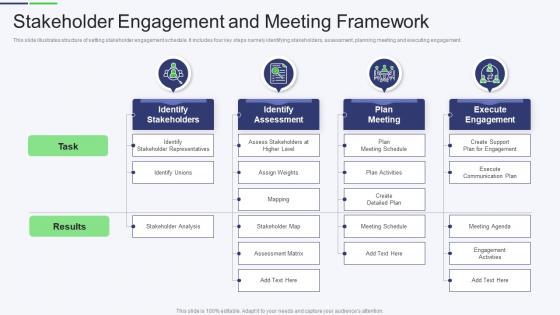
Stakeholder Engagement And Meeting Framework




Try Before you Buy Download Free Sample Product
 Impress Your
 Audience
 100%
100% Editable
 Save Hours
 of Time


This slide illustrates structure of setting stakeholder engagement schedule. It includes four key steps namely identifying stakeholders, assessment, planning meeting and executing engagement.
People who downloaded this PowerPoint presentation also viewed the following :
Stakeholder Engagement And Meeting Framework with all 6 slides:
Use our Stakeholder Engagement And Meeting Framework to effectively help you save your valuable time. They are readymade to fit into any presentation structure.





FAQs for Stakeholder Engagement
Figure out who matters early and what they actually want. Some people need detailed updates, others just want the cliff notes version. Trust me, I've watched projects completely blow up because someone didn't include the right person in an email chain - it's honestly ridiculous how petty people get! Be upfront about problems, not just wins. Map out who has real power vs who just thinks they do. Build relationships before you need favors. Oh, and don't wait for people to come asking - stay ahead of it.
Okay so first thing - grab your team and brainstorm who actually cares about what you're doing. Employees, customers, suppliers, government people, local communities, maybe some annoying activists too. Once you've got that list, make a simple grid thing. Plot everyone by how much power they have vs how much your stuff affects them. The ones with high power AND high impact? Those are your VIPs right there. Honestly the whole process is pretty straightforward once you get going. Start with that top corner of your grid, then just work down when you have time. Don't stress about making it perfect.
Look, if you can't communicate well with stakeholders, you're basically dead in the water. Each group cares about different stuff, so tailor your messaging to what actually matters to them. I've watched so many projects crash and burn because people thought stakeholders would magically understand everything without explanation - spoiler alert, they won't. Make it a real conversation though. Listen to their feedback, ask follow-up questions, then tweak your approach. Oh, and definitely figure out upfront who needs what info and how frequently they want updates.
Honestly, tech makes stakeholder stuff so much easier. Real-time feedback through apps and virtual town halls actually get people involved - way better than boring meetings. The analytics piece is huge too, you can see who's not speaking up and track how people really feel about things. Social media monitoring lets you find them where they already hang out instead of making them come to you (which never works anyway). Mobile surveys are clutch for quick responses. I'd say pick whatever tool fixes your biggest headache first, then add more later. Don't try to do everything at once or you'll overwhelm yourself.
Oh this is tricky but totally doable! Start with the basics - meeting attendance, survey response rates, how fast people get back to you. Numbers are helpful but they don't tell the whole story, you know? Pay attention to feedback quality too. Are people actually engaging or just showing up? I'd also watch whether stakeholders start reaching out to you first instead of you always chasing them down. That's usually a good sign things are working. Don't go crazy measuring everything though - pick maybe 3-4 things that actually matter for what you're trying to accomplish.
Start getting feedback super early - like before you've planned half the project. Regular check-ins where people can actually change things, not just nod along to decisions you already made. Honestly, I've been in so many "feedback sessions" that were basically just fancy presentations. Surveys work, workshops too, whatever gets people talking. Document their suggestions and show how you used them (or didn't, and why). The closing-the-loop part is huge - circle back so they see their input mattered. Builds trust and keeps everyone invested instead of checked out.
Honestly, people just get burned out from too many pointless meetings. Time's always tight, and if you're not clear about what you actually need from them, they'll tune out fast. The worst part? When feedback disappears into some void and nothing changes - been there, super frustrating. Here's what works: tell people upfront exactly what you need and why it matters. Keep meetings short and focused. Always loop back to show how their ideas actually influenced decisions. Oh, and figure out who you really need to talk to early on. Don't waste the finance team's time on design questions, you know?
Oh man, cultural stuff makes stakeholder engagement way trickier than people think. You've got some cultures that are super direct, others where you have to read between the lines constantly. Meeting styles are all over the place too - I've seen projects crash because someone didn't get this. Decision-making processes? Completely different everywhere. Definitely do your research on local norms first. And honestly, find local partners who actually know what they're doing in that region. They'll save you from so many awkward mistakes you didn't even know were possible.
Figure out who your real stakeholders are first - not just the loudest voices, but people who actually matter. Hit them up through surveys, focus groups, whatever fits. Here's the thing though: timing matters way more than people think. Get their input when you can still use it, not after everything's already decided. Don't bullshit them either - be upfront about what you can actually change based on their feedback. Nobody wants to waste time on fake consultation. Oh, and always circle back to show how their ideas influenced the final policy. That last part makes all the difference.
Think of stakeholder engagement as your crystal ball for spotting problems before they blow up. People on the ground see stuff management totally misses - they'll tell you what's actually broken and what might work. Here's the thing: when folks feel like their input matters, they won't fight your changes as much. Actually, they might even help push things forward. The trick is mapping out who really matters and then - this is key - actually listening to them regularly. Don't just check the box once and call it good.
Honestly, regular check-ins are a game changer - like weekly standups or bi-weekly reviews where you actually talk through what's stuck. Skip the formal presentations though. Just ask "what's worrying you most?" and people will be way more honest. Visual stuff helps too - dashboards or simple status boards so everyone's seeing the same thing. Always document decisions right away and send quick follow-ups with next steps. Oh, and try starting your next meeting by having everyone share their top priority. Sounds basic but it's weirdly effective at clearing things up.
Honestly, just pick one platform where your people already are and actually talk *with* them instead of talking *at* them. Instagram for customers, LinkedIn for investors, whatever. The magic happens when you respond to comments and ask questions - like "what do you think about this new feature?" or running quick polls. Behind-the-scenes stuff works way better than polished corporate posts anyway. Don't try to be everywhere at once though, that's a recipe for burnout. Master one platform first, then maybe expand later when you've got the hang of it.
So stakeholder mapping is like figuring out who actually matters for your project. List everyone who could mess with your work or get affected by it. Then rank them by how much power they have and how interested they are - sounds boring but trust me, it works. Plot them on a simple grid so you can see where to spend your time. Honestly, it's saved me from kissing up to people who can't even approve my lunch budget while missing the VP who could kill my whole project. Don't overthink it, just be ruthless about prioritizing.
Honestly, you'll catch risks you'd never think of if you talk to stakeholders from the start. They know where the landmines are - budget issues, office politics, operational stuff that could totally wreck your project. When people feel included, they won't turn into problems later by pulling their support or fighting you. I can't tell you how many projects I've watched crash because someone key got blindsided. Those regular check-ins? They turn the people who might work against you into allies who'll actually help you dodge problems. Build that stakeholder stuff right into your risk planning.
Honestly, just don't hide stuff from people. When you're upfront about both wins and problems, they actually respect you more. Think about it - you'd rather hang with the friend who admits they're having a rough time than the one pretending life's Instagram-perfect, right? Same thing applies here. Share regular updates, explain your decisions clearly, and if you don't know something yet? Just say so. People can smell BS from miles away. The trick is making honesty your go-to move, not something you only do when you're backed into a corner. Consistency matters way more than perfection.
-
Nothing beats the well-formatted and professionally designed templates offered. Kudos to SlideTeam for their amazing collection of PPT slides.
-
I really liked their customized design services. I got my desired template made by their expert team. Thank You!