


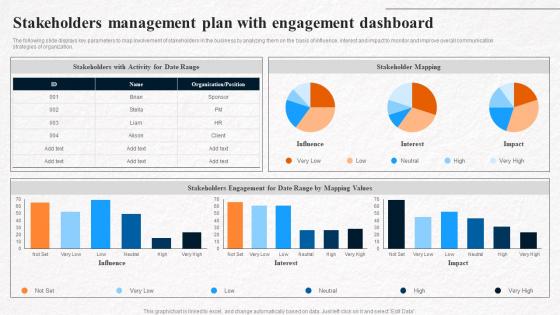
Stakeholders Management Plan With Engagement Dashboard




Try Before you Buy Download Free Sample Product
 Impress Your
 Audience
 100%
100% Editable
 Save Hours
 of Time


The following slide displays key parameters to map involvement of stakeholders in the business by analyzing them on the basis of influence, interest and impact to monitor and improve overall communication strategies of organization.
People who downloaded this PowerPoint presentation also viewed the following :
Stakeholders Management Plan With Engagement Dashboard with all 7 slides:
Use our Stakeholders Management Plan With Engagement Dashboard to effectively help you save your valuable time. They are readymade to fit into any presentation structure.






FAQs for Stakeholders Management Plan
Honestly? Just figure out who matters early on and don't ghost them. Map out who's got influence versus who's just along for the ride - takes like 30 minutes but saves you so much drama later. Keep everyone in the loop as you go, not just when stuff hits the fan (guilty as charged on that one). The trick is being upfront about what you can't do instead of promising everything. Get them involved in the big calls so they feel heard. Oh, and write down how each person likes to communicate - some want emails, others prefer quick calls. Sounds basic but it works.
First thing - grab a whiteboard and brain dump everyone who touches your project. Sponsors, users, vendors, other teams. You'll definitely forget someone if you don't write it all down (I always do). Next, sort them into a power/interest grid. High power + high interest = your VIPs who need constant updates. High power but low interest? Just keep them happy with occasional check-ins. Low power/high interest people are your cheerleaders - inform them but don't go overboard. Honestly, spend like 80% of your time on those high power/high interest folks. They're the ones who can actually make or break things.
Honestly, just figure out what each group actually wants first. Executives love their formal reports with all the data. Operational teams? They're swamped, so hit them with quick visual dashboards instead. Some people are allergic to long emails - I totally get that. Match how often they want updates too. Project teams need daily check-ins, managers want weekly summaries, senior leadership thinks monthly is plenty. I'd make little profiles for each stakeholder noting their preferred channels and timing. Sounds nerdy but it works. Map out who needs what before you start blasting everyone with the same generic update.
Honestly, stakeholder engagement is huge for project success - like, it can totally make or break everything. You'll catch problems way earlier when people are actually involved instead of just getting updates. Map out who really has influence first (some people think they matter more than they do, but focus on the ones who can actually help or hurt you). Once they're bought in, they'll approve stuff faster and won't fight you on changes. The whole thing becomes so much smoother. Create some kind of communication plan to keep them in the loop, but don't overthink it - just consistent updates work.
Honestly, stakeholder analysis is like your project's crystal ball. Map out who has power and who cares about your project - you'll catch potential disasters way earlier. I learned this the hard way on my last big project (wish someone had told me sooner!). Look for people who might fight changes or mess with your budget. But also find your champions - they're gold when things get messy. Just list everyone who's affected, then figure out their influence level and how much they actually care. Sounds boring but it's basically a cheat sheet for avoiding nasty surprises down the road.
Honestly, just get a decent CRM first - it'll change your life. You can track who you've talked to, set reminders for follow-ups, and sort people by how much they actually matter to your project. Project management tools are clutch too since they cut down on those endless email chains (I swear half my inbox used to be "what's the update?" messages). Survey tools work great for getting feedback from tons of people at once. Oh, and those analytics dashboards? They're pretty cool for seeing trends in how stakeholders feel over time. Don't go crazy picking tools though - start simple and add more later.
Honestly, I'd start by figuring out what each person actually wants - there's usually more overlap than you think. Focus on the stakeholders who can make or break your project first. Don't try to be sneaky about it either, just be straight up with everyone. I like doing group meetings so nobody feels left out of the loop. You'll have to make some tough calls, so write down your reasoning (trust me on this one). Oh and here's the thing - you're never gonna make everyone 100% happy, so aim for project success instead. Some people will just have to deal with it.
Set up different ways for people to give you feedback - surveys, one-on-ones, focus groups, casual check-ins. Ask specific questions instead of vague stuff like "how's it going?" because that gets you nowhere. Here's the thing though - you actually have to close the loop. Document what people tell you, look for patterns, then show them how their input changed things. I keep a simple log of feedback and what I did about it. People stop caring if they think you're just collecting their thoughts and tossing them into the void. When they see real changes happen, they'll keep being honest with you.
Honestly, I'd start with simple satisfaction surveys - maybe NPS or just a 1-10 rating scale. Track how fast people respond to your emails too (sounds weird but it actually tells you a lot about engagement). Meeting attendance is pretty obvious but useful. What really works though is regular check-ins for actual feedback, not just numbers. I usually pick 2-3 metrics and throw them in a basic dashboard each month. Response rates to communications matter too. Oh, and definitely watch complaint patterns - that's where you'll catch problems before they blow up. Trust me, spotting trends early saves so much headache later.
Dude, cultural stuff can seriously tank your international projects if you're not careful. Some people are crazy direct, others beat around the bush forever. Decision-making is wild too - I've sat through what felt like a million meetings just so everyone could feel heard. Time zones are obvious but punctuality expectations? Whole different beast. Missing hierarchy stuff will definitely bite you later. Oh and honestly, assuming anything is usually a mistake. Just ask your local contacts how they prefer things done - saves so much headache down the road. Way better than guessing and looking like an idiot.
Start with a stakeholder map - plot everyone by influence and interest. High-influence people? You'll want to actively consult them, maybe even co-create decisions together. I totally messed this up once by ignoring someone I thought was "low interest" who actually had tons of sway behind the scenes. For bigger groups, surveys and workshops work great to gather input without going crazy. Here's the thing though - be super transparent about how you'll actually use their feedback. People can smell BS from a mile away when you're just checking boxes. Then circle back and explain what you decided and why their input shaped it.
Honestly, forget just posting updates - make it actually interactive. LinkedIn's your best bet for investors and partners. Twitter's clutch for quick responses when stuff hits the fan. Facebook and Instagram are great for community vibes (Instagram Stories are seriously underrated for showing what actually happens behind the scenes). But here's the thing - figure out where your people actually are first, not where you assume they should be. I'd start by just... listening for a bit? Then post stuff they genuinely care about, not generic corporate fluff. Consistency matters way more than being perfect.
Honestly, I'd just start with the power-interest grid - it's super straightforward. You plot people by how much influence they have vs how interested they are in your project. Once you get that down, stakeholder circles add more detail like attitude and timing stuff. Network mapping shows how everyone connects to each other, which can be pretty eye-opening actually. Sometimes you'll find out the quiet person in accounting is buddies with the CEO or whatever. But yeah, don't overcomplicate it at first. Master the basic grid then add the relationship stuff later when you're not drowning in stakeholder chaos.
Think of each stakeholder group as going through their own mini change journey - because that's basically what's happening. First, figure out where everyone currently sits and what they're worried about. Then build communication plans around those specific concerns. I'm obsessed with the ADKAR model for this stuff. Map each group against those five stages: awareness, desire, knowledge, ability, reinforcement. Some stakeholders might already want the change but lack skills. Others don't even see why it's needed yet. Start with a quick audit of who's at what stage. Game changer, honestly. Your whole engagement strategy shifts once you know where people actually are.
Look, transparency is what makes people actually trust you. Nobody wants to be blindsided by stuff that affects them - I learned that the hard way at my last job. Share the good AND the messy parts upfront. Explain why you made certain calls, even when you're still figuring things out. Consistency matters more than being perfect about it. You can't just communicate when things are going well, then go radio silent during problems. Figure out what info your people actually need (not everything), then set up regular check-ins. It's honestly not that complicated once you get into the rhythm.
-
Very unique and reliable designs.
-
They helped us design the pamphlets for our church’s food drive! The people loved the design, and I’m happy to say it was successful. Thank you, SlideTeam!