


Enhancing E Waste Management System For Smart Cities Powerpoint Presentation Slides




Try Before you Buy Download Free Sample Product
 Impress Your
 Audience
 100%
100% Editable
 Save Hours
 of Time


Check out our professionally designed Enhancing E waste Management System for smart cities. E waste management is a process to mitigate environmental and health risks. It includes conserving resources, and promote sustainable practices through proper handling, recycling, and disposal of electronic waste. In this Implementation of E Waste guidelines presentation, we have covered multiple e waste solution, devices, complete process of e waste management system, and challenges faced during the process. Moreover, our Ultimate Guide for Electronic Waste templates PPT helps the clients to get an overview of a complete smart e waste management system. Lastly, this step by step process for e waste recycling presentation provides the benefits of using e waste in the environment, as well as various types of IoT applications such as smart bins, fleet tracking, pneumatic sewer pipes, etc. Download this 100 percentage editable and customizable PowerPoint presentation, which is also compatible with Google Slides. Get access now.
People who downloaded this PowerPoint presentation also viewed the following :
Content of this Powerpoint Presentation
Slide 1: This slide introduces Enhancing E-waste Management System for Smart Cities. State Your Company Name and begin.
Slide 2: This slide is an Agenda slide. State your agendas here.
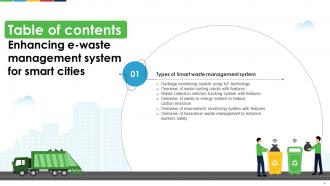
Slide 3: This slide shows a Table of Contents for the presentation.
Slide 4: This slide is an introductory slide.
Slide 5: This slide showcases information about smart waste management systems with a working block diagram.
Slide 6: This slide shows key elements of E- waste management system ecosystem for making the system accessible and user-friendly.
Slide 7: This slide exhibits benefits of smart waste management system.
Slide 8: This slide comprises of smart waste management process that leads to less fuel consumption and ultimately reduces carbon footprint.
Slide 9: This slide is an introductory slide.
Slide 10: This slide puts a graphical representation of the global market size of smart waste management systems.
Slide 11: This slide contains smart waste management system growth analysis in various geographical regions.
Slide 12: This slide elucidates market growth driving forces contributing to rapid adoption of smart waste management system in smart cities.
Slide 13: This slide graphically provides information on major players market size in the smart waste management market.
Slide 14: This slide is an introductory slide.
Slide 15: This slide presents multiple challenges in waste management process, crucial to resolve for effective waste separation, and safe disposal.
Slide 16: This slide graphically provide information about different types of costs incurred by low income and high income countries to manage solid waste.
Slide 17: This slide exhibits key challenges faced by cities in managing landfills, recycling, and their impact on the environment due to limited resources.
Slide 18: This slide is an introductory slide.
Slide 19: This slide highlights how IoT technology streamlines and enhances waste management processes.
Slide 20: This slide is an introductory slide.
Slide 21: This slide outlines an overview of IoT garbage monitoring system to enhance waste collection and disposal process.
Slide 22: This slide provides information about waste sorting robots in recycling industry that helps reduce manual content with hazardous material.
Slide 23: This slide consists of an overview of the garbage vehicle tracking system, helpful in optimizing waste management routes for residential and recycling purposes.
Slide 24: This slide illustrates an overview of waste-to-energy systems that employ advanced technologies.
Slide 25: This slide puts information about environment monitoring systems in smart cities to improve urban cleanliness and quality of life for citizens.
Slide 26: This slide includes information about hazardous waste management to significantly improve workers’ safety and resource allocation in smart cities.
Slide 27: This slide is an introductory slide.
Slide 28: This slide mentions an overview of technologically advanced smart bins, helpful in the waste collection and recycling process.
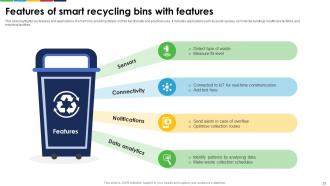
Slide 29: This slide highlights key features and applications of smart bins, providing details on their functionality and practical uses.
Slide 30: This slide puts key features and applications of smart bins, providing details on their functionality and practical uses.
Slide 31: This slide caters to key smart trash bins common sensors, helpful in determining fill level information.
Slide 32: This slide denotes smart waste bin architecture and key components providing insights into its functionality.
Slide 33: This slide is an introductory slide.
Slide 34: This slide exhibits an overview of fleet management in the Internet of Things waste management to monitor and optimize waste collection operations.
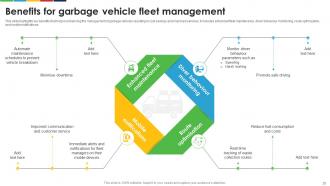
Slide 35: This slide caters to key benefits that help in enhancing the management of garbage vehicles resulting in cost savings and improved services.
Slide 36: This slide puts connected devices embedded into vehicles to collect data and offer insights regarding fleet performance and operation.
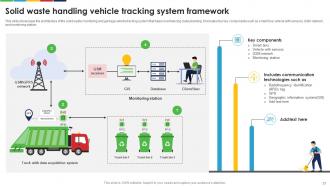
Slide 37: This slide depicts the architecture of the solid waste monitoring and garbage vehicle tracking system that helps in enhancing route planning.
Slide 38: This slide is an introductory slide.
Slide 39: This slide exhibits an overview of pneumatic pipes IoT technology that helps in intelligent waste collection scheduling from multiple inlet points.
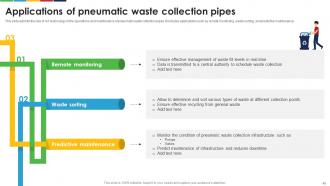
Slide 40: This slide represents the role of IoT technology in the operations and maintenance of pneumatic waste collection pipes.
Slide 41: This slide presents features of different types of sensor technology utilized by central waste handling facilities to optimize automated waste collection systems.
Slide 42: This slide is an introductory slide.
Slide 43: This slide outlines an overview of a smart waste sorting and recycling system that helps to improve efficiency and real-time monitoring.
Slide 44: This slide puts applications of IoT that help waste sorting and recycling facilities operate more efficiently.
Slide 45: This slide includes block diagram of a smart waste management and classification system using various technologies for efficient waste collection, sorting, and disposal.
Slide 46: TThis slide is an introductory slide.
Slide 47: This slide illustrates potential technologies that integrate smart technologies in waste management processes.
Slide 48: This slide is an introductory slide.
Slide 49: This slide graphically provides information about the reduction in operational costs resulting from IoT technology deployment in waste management.
Slide 50: This slide presents the impact of IoT implementation on waste management operations.
Slide 51: This slide is an introductory slide.
Slide 52: This slide contains information about smart waste management systems with a working block diagram.
Slide 53: This slide caters to waste bins and vehicles monitoring dashboard used by waste management teams to effectively optimize operations.
Slide 54: This slide is an introductory slide.
Slide 55: This slide outlines a case study of how Wembley Park transformed waste collection by utilizing an effective smart waste management system.
Slide 56: This slide is in continuation with the previous slide.
Slide 57: This slide consists of a case study of the city Nitra that addresses waste management challenges by deploying smart sensors.
Slide 58: This slide shows all the icons included in the presentation.
Slide 59: This slide is titled Additional Slides for moving forward.
Slide 60: This slide includes waste management architecture, helpful in optimizing routes for waste pickups and other operations.
Slide 61: This slide presents applications of smart waste management systems in smart cities, improving efficiency and overall quality of urban living.
Slide 62: This slide presents a Roadmap with additional text boxes.
Slide 63: This slide depicts a Venn diagram with text boxes.
Slide 64: This slide contains a Puzzle with related icons and text.
Slide 65: This slide is Our Target slide. State your targets here.
Slide 66: This slide is a thank-you slide with address, contact numbers, and email address.
Enhancing E Waste Management System For Smart Cities Powerpoint Presentation Slides with all 74 slides:
Use our Enhancing E Waste Management System For Smart Cities Powerpoint Presentation Slides to effectively help you save your valuable time. They are readymade to fit into any presentation structure.
-
Enhancing E waste Management System for Smart Cities
-
Enhancing e waste management system for smart cities
-

Enhancing e waste management system for smart cities
-
Enhancing e waste management system for smart cities
-

Overview of E waste management system with features
-
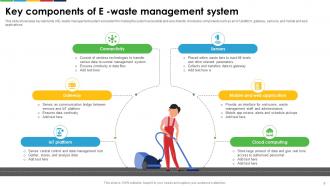
Key components of E waste management system
-

Key benefits of E Waste management system
-

Smart E waste management process to reduce carbon footprint
-
Enhancing e waste management system for smart cities
-

Global market size of E waste management system
-

Regional analysis of E waste management market
-
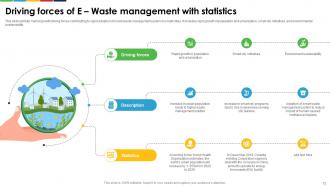
Driving forces of E Waste management with statistics
-
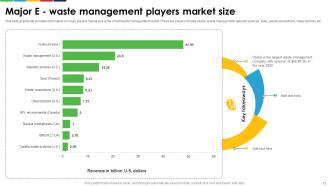
Major E waste management players market size
-

Enhancing e waste management system for smart cities
-

Challenges faced in traditional waste management system
-

Operating and transportation costs for solid E waste management
-

Global landfill management challenges faced by various cities
-
Enhancing e waste management system for smart cities
-
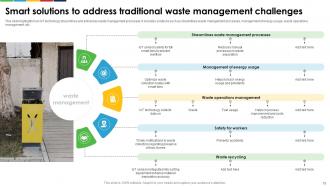
Smart solutions to address traditional waste management challenges
-

Enhancing e waste management system for smart cities
-

Garbage monitoring system using IoT technology
-

Overview of waste sorting robots with features
-

Waste collection vehicles tracking system with features
-

Overview of waste to energy system to reduce carbon emission
-

Overview of environment monitoring system with features
-
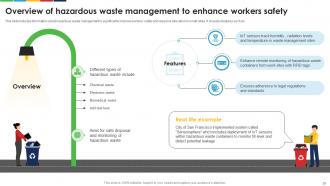
Overview of hazardous waste management to enhance workers safety
-

Enhancing e waste management system for smart cities
-
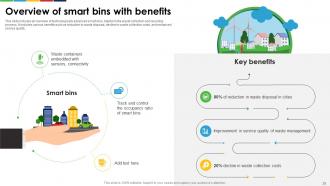
Overview of smart bins with benefits
-
Features of smart recycling bins with features
-

Applications of smart recycling bins with features
-

Integration of various sensors in intelligent waste bins
-

Working mechanism for smart waste bins
-

Enhancing e waste management system for smart cities
-

Overview of fleet management with key benefits
-
Benefits for garbage vehicle fleet management
-

Fleet monitoring sensors to optimize vehicle performance and operation
-
Solid waste handling vehicle tracking system framework
-

Enhancing e waste management system for smart cities
-

Overview of pneumatic waste collection system
-
Applications of pneumatic waste collection pipes
-

Types of sensors used in management of pneumatic pipes
-
Enhancing e waste management system for smart cities
-

Overview of smart waste sorting and recycling
-

IoT applications in smart waste sorting and recycling
-

Smart waste management using cutting edge technique
-
Enhancing e waste management system for smart cities
-

Emerging E waste management technologies
-

Enhancing e waste management system for smart cities
-
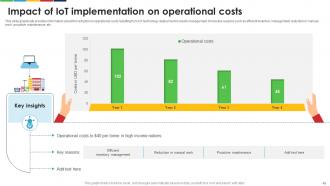
Impact of IoT implementation on operational costs
-
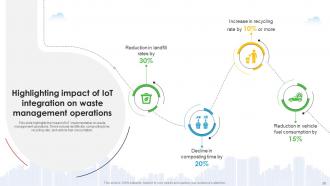
Highlighting impact of IoT integration on waste management operations
-

Enhancing e waste management system for smart cities
-

Waste collection and recycling monitoring KPI dashboard
-

KPI dashboard to manage waste bins and vehicles on weekly basis
-

Enhancing e waste management system for smart cities
-

Case Study for EVAC waste management system
-
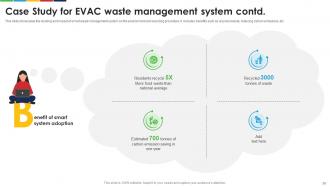
Case Study for EVAC waste management system contd
-

Smart bin monitoring system implemented by city Nitra
-
Icons slide for enhancing e waste management system for smart cities
-

Additional slides
-
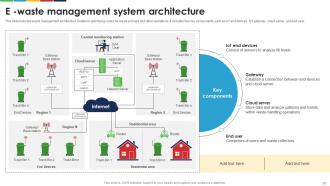
E waste management system architecture
-
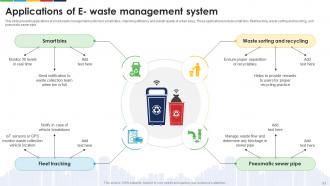
Applications of E waste management system
-
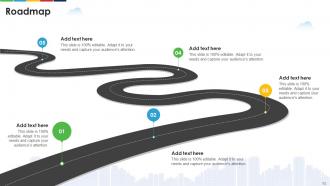
Roadmap
-

Venn
-

Puzzle
-

Our target
-

Thanks for watching
-

-

-

-

-

-

-

-

FAQs for Enhancing E Waste Management System For Smart Cities
Honestly, it's mostly the obvious stuff - phones, laptops, those ancient desktop computers collecting dust. Gaming consoles too. Plus all those random chargers you've hoarded over the years (we all do it). Microwaves and coffee makers when they die. Tablets are huge contributors now since everyone upgrades constantly. Offices are probably worse though - they dump massive amounts of servers and printers whenever they refresh their tech. Basic rule: if it plugs into the wall or needs batteries, don't chuck it in regular trash.
Honestly, just stop upgrading every year - that's the biggest thing. Fix your old phone instead of tossing it, or turn it into a dedicated music player or something. When you do need to buy, go refurbished if you can. For getting rid of stuff, find those e-waste collection events (they're usually at Best Buy or whatever) instead of just throwing things away. Oh, and if your company doesn't have a buyback program yet, maybe bug them about it? Also worth doing a quick inventory of what electronics you actually use vs. what's just sitting in a drawer collecting dust.
Oh man, you definitely don't want to just chuck that stuff in regular trash. Electronics have all these toxic chemicals like lead and mercury that seep into groundwater when they sit in landfills - super gross. Plus if they get burned, the fumes are terrible for air quality. I learned this the hard way when I realized I'd been throwing out old phones wrong for years. Circuit boards and batteries are the worst offenders. Find a certified e-waste place or see if the manufacturer takes it back. Way better than accidentally poisoning someone's water supply.
Dude, you should definitely recycle that old phone instead of trashing it. There's actually more gold per ton in smartphones than in literal gold mines - crazy, right? All that copper, silver, and rare earth stuff just sitting there. Recycling one laptop saves materials from like 1,800 pounds of raw ore, which honestly seems like a lot but whatever. Way better than mining new materials and wrecking more ecosystems. Just find a certified e-waste place next time you upgrade. Your old tech is basically a tiny treasure chest.
Honestly, it's a total mess because every place does it differently. The EU has this WEEE thing where companies have to deal with recycling their own stuff. Most US states handle it themselves since there's no federal law - California and New York are super strict about it. China started their version in 2011 and they're cracking down harder now. Japan's actually pretty smart - they make people pay recycling fees when they buy electronics. If you're shipping internationally though, you'll definitely want to look up the specific rules for wherever you're dealing with first.
So manufacturers pretty much set the whole tone for e-waste from the start. They pick what materials go in, decide if you can actually fix something when it breaks, and control how easy recycling will be down the line. Some brands are stepping up with recycled materials and better design - though yeah, they still want you buying new stuff constantly. Look for companies with solid trade-in programs or clear recycling partnerships. That's usually a good sign they're not just trying to sell and forget. Apple's pretty decent about this, actually. Those take-back programs make a real difference when your phone finally dies.
Honestly, the tech for e-waste recycling has gotten pretty insane lately. AI-powered sorting systems can identify materials way faster than people ever could, and there's these robotic lines that safely pull out valuable stuff like gold and lithium from old circuit boards. New chemical processes can recover materials that used to just get thrown away forever. Oh, and blockchain tracking is kind of wild - you can actually follow your old phone through the whole recycling process to make sure it's not ending up in some sketchy overseas dump. I'd definitely look for certified programs near you that use this advanced stuff.
Honestly, e-waste recycling is where the money's at these days. Companies are literally pulling gold and rare metals out of old phones - it's wild when you think about it. Creates tons of jobs too, from pickup crews to the tech people doing refurbishment. Your company probably already has some certified recycler they work with, so that's worth checking first. The whole thing saves manufacturers crazy amounts since they don't need as much new material. Oh, and you dodge those massive environmental cleanup bills later. Circular economy stuff actually works when done right.
Start with workshops at libraries or community centers - crack open old phones and show people the nasty stuff inside. Social media works too, especially those before/after photos from cleanup events. Schools are honestly your best bet though, kids guilt-trip their parents way better than any PSA can. Local news eats up environmental stories, so hit them up around Earth Day or when you're doing collection drives. The trick is making it visual and super easy - show neighbors exactly where their old junk goes and give them a simple dropoff spot they'll actually use.
Oh man, e-waste recycling is brutal honestly. The biggest nightmare is separating all the different materials safely - you've got toxic stuff like lead and mercury that need special handling. Plus every year there's new devices, so facilities are constantly updating their processes. They need skilled workers which gets expensive, and here's the kicker - recovered materials often don't even cover what it costs to run the operation. Regulations are super strict too. When you're checking out facilities, ask about their certifications and how they actually handle the hazardous separation stuff. Economics are just rough in this industry.
Look for suppliers that sell refurbished or energy-efficient stuff first. Ask about their take-back programs right away - most companies are actually decent about this now. Make your teams justify why they need new equipment instead of just extending what they already have. Modular gear is your friend since you can upgrade pieces instead of tossing everything. Oh, and definitely find certified e-waste recyclers for when things finally die. I'd start by figuring out what you're buying now and where it all ends up. That audit part's kind of tedious but worth it.
Dude, the e-waste space is getting wild right now. AI sorting systems can identify materials crazy fast - way better than humans doing it manually. New extraction methods are ditching those toxic chemicals for cleaner processes. There's even bacteria being used to pull valuable metals out of old phones, which honestly sounds like something from a movie but apparently works. The real breakthrough though? Companies are finally designing gadgets that don't require a PhD to take apart and fix. If you're buying tech for work, definitely ask vendors about their repair-friendly designs.
Oh definitely go with hands-on stuff! Kids learn way better when they're actually taking apart old phones and laptops instead of just sitting through lectures. Field trips to recycling centers are solid too. I'd start with whatever tech they're already obsessed with - their phones, gaming stuff, whatever. Then have them do projects like auditing the school's e-waste or creating campaigns for collection drives. The whole "learn by doing" thing just works better than talking about environmental impact all day. Design challenges are pretty effective too, though honestly some kids get more excited about the dismantling part than the designing part.
Oh dude, there's so much you can do with old tech! Broken laptops make sick digital photo frames. Old hard drives? Perfect desk organizers. I've seen people turn CRT monitors into planters and they look way cooler than you'd think. Circuit boards mounted with some lighting behind them are honestly beautiful wall art. Phone cases work great for random storage, tablets become dedicated smart home hubs. Even cables are useful for organizing other stuff. The trick is ignoring what it used to be and just looking at the materials you've got. Maybe start with something easy like cable management though - don't go crazy right away.
There's actually some cool stuff happening with e-waste partnerships. Apple and Dell team up with cities for device take-back programs. Companies also fund recycling infrastructure through EPR schemes while cities handle operations - smart way to split costs honestly. Private recyclers can get certified to meet government standards too. Oh and definitely check what's available locally for your company - you might score free pickup services. I was surprised how many options exist once you start looking. These partnerships make way more sense than everyone trying to figure it out alone.
-
The best and engaging collection of PPTs I’ve seen so far. Great work!
-
Awesome presentation, really professional and easy to edit.