

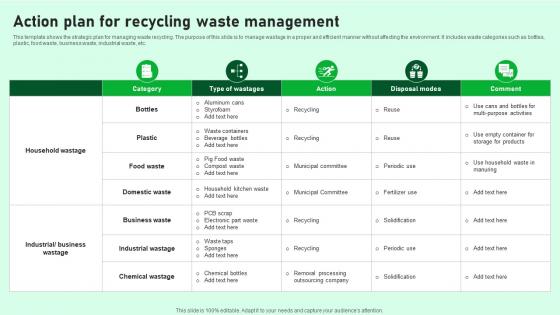
Action Plan For Recycling Waste Management




Try Before you Buy Download Free Sample Product
 Impress Your
 Audience
 100%
100% Editable
 Save Hours
 of Time


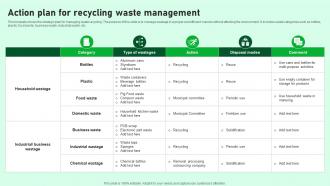
This template shows the strategic plan for managing waste recycling. The purpose of this slide is to manage wastage in a proper and efficient manner without affecting the environment. It includes waste categories such as bottles, plastic, food waste, business waste, industrial waste, etc.
People who downloaded this PowerPoint presentation also viewed the following :
Action Plan For Recycling Waste Management with all 6 slides:
Use our Action Plan For Recycling Waste Management to effectively help you save your valuable time. They are readymade to fit into any presentation structure.





FAQs for Action Plan For
Start with a waste audit - seriously, you can't fix what you don't know about. Set clear goals people can actually track, then put collection bins everywhere with decent signage. Train your staff but keep bugging them about it because honestly, everyone forgets this stuff super fast. Make participation braindead simple or people will just ignore it. Oh, and assign someone to actually be responsible for results - otherwise it'll just die quietly. Track your progress so you know if it's working. The audit thing first though, that's your starting point.
Track the basic stuff first - recycling rates, contamination levels, how much waste you're actually diverting. But honestly? The community engagement side matters just as much. Run surveys, see who shows up to events, check if people are talking about it on social media. Cost savings data will make your boss happy too. Oh, and definitely get your baseline numbers before launching anything - learned that the hard way on another project. Set up quarterly check-ins so you can spot trends. Numbers are great but they don't tell you if people actually care.
Honestly, businesses are where recycling programs live or die. They toss SO much stuff every day - like, way more than regular people realize. When companies actually commit to sorting waste and cutting back on packaging, the whole thing snowballs in a good way. Employee training is a pain but totally worth it. What really works is using that buying power to push suppliers for better recyclable materials. Oh, and definitely audit what you're currently throwing out first - my friend's office was shocked they were tossing perfectly recyclable cardboard. The ripple effect is real.
So smart bins are game-changers - they've got sensors that track when they're full and catch contamination issues. Apps help people figure out what goes where too. The AI sorting at recycling plants? Honestly way better than humans at identifying stuff. QR codes on packages are pretty cool, they link straight to disposal info. Oh and blockchain can track materials through the whole process if you're into that. Really depends what's screwing you up though - is it people throwing wrong stuff in bins, or pickup timing, or just confusion? Pick tech that fixes your actual problem, you know?
Honestly, most people just get confused about what actually goes where - those recycling symbols are totally useless. Plus the bins are never where you need them. Money's a huge issue too, especially for businesses freaking out about costs. But here's the thing - make it ridiculously simple first. Put labeled bins right where people throw stuff away naturally. Create visual guides that actually make sense. For the cost thing, show them they'll save money long-term and maybe even make some back from recyclables. Do a quick waste audit first though - you'll probably find tons of recyclable stuff getting tossed.
Honestly, education programs work because they make recycling less confusing. People get way more invested when you show them what actually happens to their stuff - like how one dirty container can mess up a whole batch. Kids are the secret weapon though. They come home from school programs and basically turn into little recycling enforcers with their parents, which is hilarious but it works. Interactive workshops beat boring flyers every time. I'd start small with just one neighborhood and see how it goes. Once people understand the "why" behind it all, they're much more likely to actually follow through.
So recycling plans actually make a huge difference - you'll cut way down on landfill waste and lower your carbon footprint since there's less demand for new manufacturing. Natural resources get conserved too, like water and raw materials. Production pollution drops. Honestly, most people don't realize how big the ripple effects are. But here's the thing - even an amazing plan is useless if your team doesn't actually follow through with it consistently. Track your current waste streams first so you can see real impact numbers. That's where I'd start anyway.
Honestly, recycling's weird because some stuff is dead simple while other materials are a total pain. Paper and aluminum? No sweat - easy to sort and turn into new stuff. Glass is actually amazing for recycling but man, it's heavy to haul around. Plastics though... ugh. You've got different types that need separating, and if one contaminated item gets in there, it can mess up a whole batch. Electronics are tricky too - lots of valuable metals but you need special equipment to take them apart properly. I'd say start with the high-volume, simple stuff first since you'll see results faster.
Honestly, make it super easy and give people incentives. Reward programs work great - residents earn points for sorting correctly or compete with neighbors. Smart bins that alert you before pickup? Game changer, nobody wants gross overflowing trash. Apps where you scan stuff to check if it's recyclable are pretty cool too. Simple color codes help, plus education in multiple languages so people actually know what goes where. I mean, most folks want to recycle properly, they just get confused about the rules. Remove the barriers and you'll see way better participation than just threatening fines.
Dude, you've gotta figure out what each community actually needs first. Like, apartment dwellers want convenience while rural folks need totally different pickup times. Translation is non-negotiable if you want people to participate - learned that the hard way on another project. Income matters too since some areas might need free bins or incentives. Honestly? Skip the one-size-fits-all BS. Survey people, team up with local groups, then test small sections before rolling out everywhere. Cookie-cutter programs always flop. That upfront research will save you so much stress later, trust me.
Honestly, policy is what makes or breaks recycling programs. Without solid regulations, you're just spinning your wheels. Look at Germany or South Korea - their strict rules actually work because they mix rewards with penalties. Businesses need real incentives to participate, not just good vibes. Your area probably has some policies already, but I bet there are gaps. Find those first. The best approach? Carrot and stick - reward the good stuff, punish waste. It's not rocket science, but getting the balance right is where most places mess up.
Partnerships will seriously transform your recycling program. You'll get access to stuff you don't have - volunteer networks, community connections, sometimes even funding. Schools are perfect for education campaigns, nonprofits can run collection drives, and local businesses might sponsor bins or cover processing costs. Here's the thing though - these groups already know your community way better than you do, so they can help solve the actual barriers people face. Start by finding who's already doing environmental work nearby (there's usually more than you'd think) and just reach out to see if your goals match up.
Track your diversion rates first - that's the big one showing how much you're keeping out of landfills. Check contamination in recycling bins too, plus participation rates by department. Cost per ton matters way more than people think - nobody's gonna stick with expensive recycling. Monthly check-ins are clutch so you can fix things fast if they're not working. Oh, and measure the behavioral stuff like whether people are actually using bins right. I'd also watch for drops in overall waste generation since that's honestly the best outcome.
Dude, education is honestly everything when it comes to recycling. Most people actually want to do the right thing, but the rules are so damn confusing between different cities. Like, can this plastic tub go in or not? When communities actually explain what happens to stuff after pickup and share local success stories, participation rates go way up. Skip the generic "save the planet" messaging though - nobody connects with that anymore. Focus on your specific area's rules and maybe some real examples from your neighborhood. People need the "why" behind properly sorting that takeout container, you know?
Germany's bottle deposit thing is insane - they get like 98% return rates or something crazy. Also, making companies deal with their own packaging waste instead of leaving cities to figure it out works really well. Japan goes overboard with sorting (10+ categories!) but honestly it pays off. For stuff you can't recycle, Sweden's waste-to-energy plants are genius. Denmark's approach is probably my favorite though - they design products so there's less waste to begin with. I'd say pick whatever fits what you've already got and try it small first. No point overhauling everything at once.
-
Great quality slides in rapid time.
-
The slides come with appealing color schemes and relevant content that helped me deliver a stunning presentation without any hassle!