


5r Of Solid Waste Management System




Try Before you Buy Download Free Sample Product
 Impress Your
 Audience
 100%
100% Editable
 Save Hours
 of Time


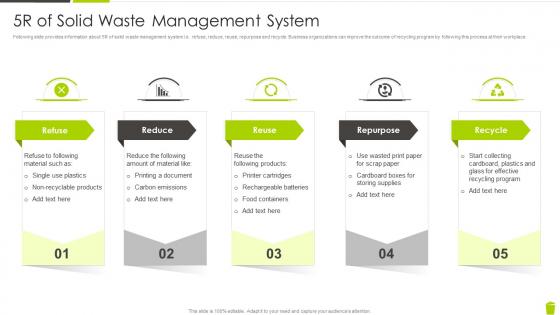
Following slide provides information about 5R of solid waste management system I.e. refuse, reduce, reuse, repurpose and recycle. Business organizations can improve the outcome of recycling program by following this process at their workplace.
People who downloaded this PowerPoint presentation also viewed the following :
5r Of Solid Waste Management System with all 6 slides:
Use our 5r Of Solid Waste Management System to effectively help you save your valuable time. They are readymade to fit into any presentation structure.





FAQs for 5r Of Solid
So the 5R thing is basically: Refuse, Reduce, Reuse, Recycle, Rot (composting). Start with refusing stuff you don't actually need - that's honestly where most people mess up. Then reduce what you do use, reuse when you can, recycle properly, and compost organic waste. It's like a hierarchy where you work from top to bottom. Way better than just tossing everything in the recycling bin and calling it a day. I'd say audit what you're accepting vs refusing first - like all those random freebies and impulse buys. That alone makes a huge difference.
The 5R thing (Refuse, Reduce, Reuse, Recycle, Rot) actually works for pretty much any business - you just gotta tweak it. Manufacturing can refuse unnecessary materials and reduce production waste. Service companies might refuse excessive printing or reduce energy use. Restaurants have it easier with composting honestly, but they can also refuse single-use stuff and reduce food waste. My cousin runs a small shop and she started by just looking at one area - her packaging - and figured out which Rs made sense there. Each industry's different, so you'll need to see it through your own business lens. Start small with one department and work from there.
Honestly, the 5R model is pretty solid for project management. Better risk handling, clearer decisions, more consistent results - all that good stuff. Think of it as a checklist that doesn't suck (unlike most frameworks that look great on paper but are terrible in practice). Your team communication improves since everyone's on the same page. Stakeholders dig the transparency too. But here's the real benefit: catching problems early before they cost you serious money. Just try it on one project first - I bet you'll end up using it everywhere. Oh, and it actually makes those status meetings less painful somehow.
So the 5R thing is pretty smart - it's like a ladder where you tackle the biggest impact stuff first. Refuse unnecessary crap, then reduce what you actually need. After that comes reusing items, recycling when possible, and composting (the "rot" part). Honestly, most people jump straight to recycling because it feels productive, but refusing and reducing save way more money and resources. I'd start by looking at your current setup and asking "do we even need this?" before worrying about where to toss it. The whole system works because each step down gets less effective at helping the planet.
Oh for sure! The 5R thing actually works really well in marketing - people eat that stuff up these days. You can build campaigns around how your products fit into Refuse, Reduce, Reuse, Recycle, and Rot. Just don't be fake about it though, customers can spot BS sustainability claims instantly and they'll roast you for it. I'd start by looking at what your brand already does naturally with those Rs, then craft your messaging from there. Honestly, authentic green marketing hits different than forced eco-stuff. Your packaging design and product development can reflect this too.
Honestly, data analysis is what makes the 5R thing actually useful instead of just corporate fluff. Track your waste reduction percentages and cost savings from reuse - those numbers will show you what's working. I learned this the hard way on a project last year. Short wins matter, but you'll also spot where things get stuck. Maybe your refuse stage rocks but repair is totally lagging behind. Pick like 2-3 metrics for each R and check them monthly. Without that info, you're basically throwing darts blindfolded and hoping something sticks.
So there's this 5R thing that's actually pretty useful - Refuse, Reduce, Reuse, Recycle, Rot. Basically you ask yourself: do I even need this crap? Can I use less? What can I repurpose instead of buying new? Honestly, starting with "Refuse" is a game changer because like 90% of resource requests are just shiny object syndrome. I always run through the whole list now before asking for budget stuff. The "Rot" part is about whether something can biodegrade naturally - sounds weird but it's surprisingly relevant. Try going through all five R's next time you're about to submit a resource request. It'll save you money and make you look way more thoughtful.
Money's gonna be your first headache - switching to reusable stuff or redesigning products costs a ton upfront. Stakeholders hate when short-term profits take a hit, so expect pushback. Finding suppliers who actually care about reduce/reuse? Good luck with that mess. Oh, and don't underestimate how stubborn people get about changing their daily routines at work. Even simple process changes somehow become this huge drama. Start small though - pick one R and go for easy wins first. Build some momentum before you tackle the really big changes that'll make people's heads explode.
You know how lean manufacturing is all about cutting waste? The 5R model does basically the same thing, just with a different approach. Both make you question every step and ditch anything that doesn't help your customer. Refuse, Reduce, Reuse, Recycle, Rot - these hit the same waste targets lean goes after, like overproduction and excess inventory. They're honestly like cousins or something. Lean's got its flow systems, but 5R gives you this simple hierarchy when you're trying to streamline stuff. Try mixing 5R thinking into your next kaizen event. You'll probably catch waste patterns you'd miss otherwise.
Really depends what kind of 5R you're dealing with! Waste management stuff? SAP's Environmental Compliance or Enablon are decent for tracking your waste data. Data management 5Rs are different - Microsoft Purview and Varonis work well, though honestly that whole space is kinda oversaturated right now. For general 5R tracking, basic project management tools do the trick. Asana, Monday.com, whatever. Don't overthink it - just use what you've already got access to first. You can always upgrade later once you figure out what you actually need.
Honestly, the 5R thing works because people just want to feel heard, you know? Quick responses matter way more than you'd think. When you actually relate to their problem instead of giving some robotic answer, plus own up to mistakes without making excuses - that's when customers stop hating you. Real solutions obviously help too, but here's what most companies miss: following up later shows you actually give a damn. I swear, your satisfaction scores will jump just from fixing response times and follow-ups. It's wild how much those two things alone change everything.
Oh totally! Patagonia's crushing it with their repair programs - they literally tell people to buy less stuff which is wild for a company. Interface Inc. did this crazy turnaround with their carpet business using all 5Rs and went carbon negative. Unilever's sustainable brands are solid too. There's this smaller company Eileen Fisher that actually takes your old clothes back to remake them into new pieces, which I think is pretty cool. The thing is, none of them just picked one area to focus on. They went all-in from the start and made it part of everything they do.
So here's what worked for my team - give everyone ownership of one of the 5Rs (Refuse, Reduce, etc.) so there's no confusion about who does what. We started doing these quick 15-minute check-ins every week where people share their progress. Honestly gets pretty competitive once the numbers start rolling in! Oh, and definitely set up some kind of shared tracker - could be a simple spreadsheet or whatever - so everyone can see what others are doing. The whole thing only works if people remember you're all working toward the same goal together, not just individual wins. Maybe start with everyone doing a waste audit this week?
Track waste reduction and how many people actually participate - those two metrics matter most. Cost savings from reusing stuff and recycling rates help too. Don't forget time saved from better organization and fewer safety incidents. Honestly, I've seen great programs completely flop because nobody measured if employees were actually doing it. Set up a basic dashboard with maybe 3-4 numbers you check monthly. Way better than trying to measure everything and getting overwhelmed. Start simple with waste and participation rates - you can always add more later if you need to.
Honestly, skip the boring presentations and go straight to hands-on stuff. Get your new people actually sorting through real office materials - like old supplies, packaging, whatever you've got lying around. Way more effective than slides, trust me. Pair them up with someone who already gets the 5R thing (Refuse, Reduce, Reuse, Recycle, Rot). Those little reference cards work great too - just something they can glance at while they're figuring things out. Oh, and definitely add it to your onboarding checklist so it doesn't get forgotten. The whole point is making it feel normal from their first day, not like some big environmental lecture.
-
The best collection of PPT templates!! Totally worth the money.
-
The information is visually stunning and easy to understand, making it perfect for any business person. So I would highly recommend you purchase this PPT design now!