Framework for developing business strategy plan
Try Before you Buy Download Free Sample Product
Audience
Editable
of Time
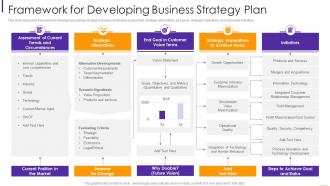
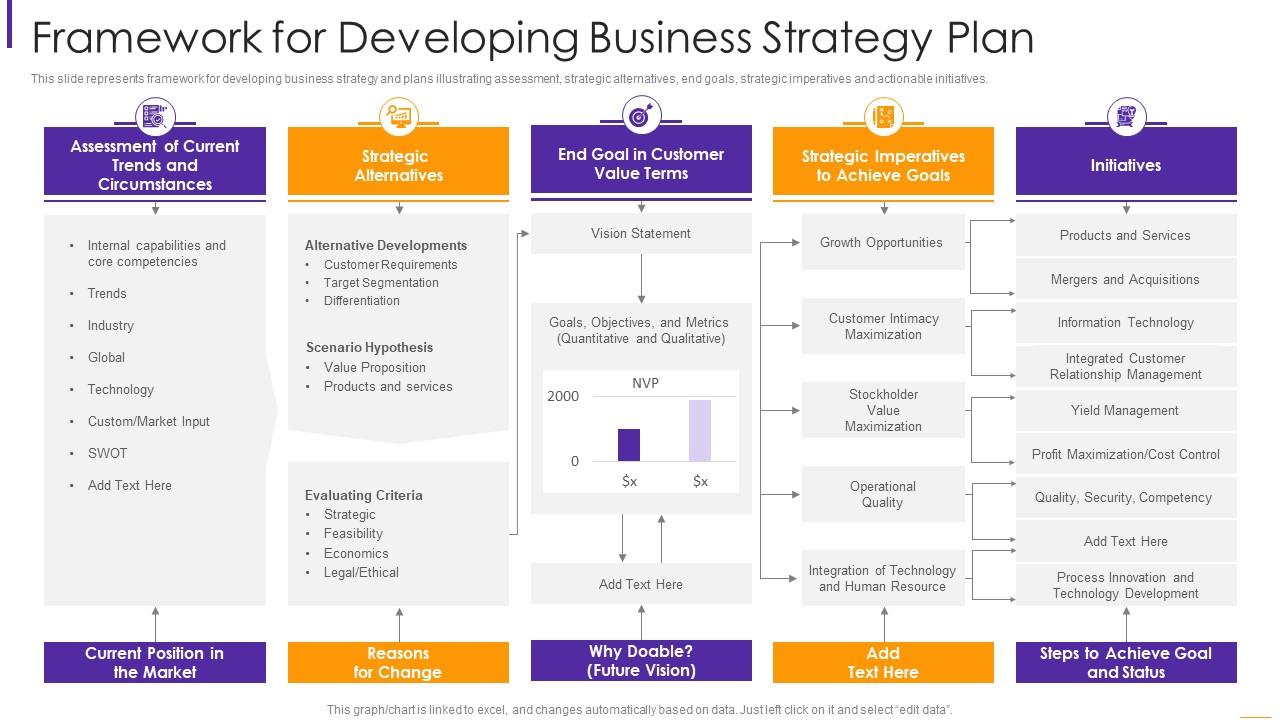
This slide represents framework for developing business strategy and plans illustrating assessment, strategic alternatives, end goals, strategic imperatives and actionable initiatives.
People who downloaded this PowerPoint presentation also viewed the following :
Framework for developing business strategy plan with all 6 slides:
Use our Framework For Developing Business Strategy Plan to effectively help you save your valuable time. They are readymade to fit into any presentation structure.
FAQs for Framework for developing
Start with your vision/mission and do a solid market analysis - competitive positioning too. Honestly, most people skip the boring part of mapping out what resources you actually have vs what you think you have. Don't plan stuff you can't pull off, it's pointless. Set measurable goals and create timelines with someone accountable for each piece. Build in review cycles because things will change (they always do). Oh and make sure it's not too rigid or vague - that's where most frameworks die. Tailor everything to your industry and company size.
Okay so first things first - your strategy framework has to flow FROM your mission and vision, not the other way around. I've seen way too many companies mess this up and then scratch their heads wondering why nothing works. Vision = where you're going, mission = why you exist, strategy = how you'll get there. Pretty straightforward but people overcomplicate it constantly. Here's what I do: draw actual lines connecting each strategic piece back to your mission/vision. Can't connect something? Either fix it or dump it. Sounds harsh but it works.
Honestly, you can't build any decent business strategy without knowing what's going on in your market first. Map out who you're competing against and what your customers actually want - that's where I'd start. It's like... imagine planning a camping trip without checking if it's gonna rain (terrible idea, trust me). Market analysis helps you spot the good opportunities and avoid getting blindsided by threats. Plus it guides all your big decisions later on. Where should you position yourself? How do you price things? What should you even be building? All that stuff flows from understanding your competitive landscape.
Here's how I'd actually use SWOT - don't just fill out those four boxes and call it done. Match your strengths to opportunities first, that's your goldmine right there. Most people totally ignore fixing their weaknesses until it bites them later (learned this the hard way). Build backup plans around the threats you identified. The real trick? Turn everything into actual action items with deadlines and assign someone to own each piece. Otherwise it just sits in a drawer somewhere. Oh, and revisit it every few months because things change fast.
So the Balanced Scorecard breaks down into four areas - financial stuff, customer feedback, internal processes, and learning/growth. Way better than just staring at revenue all day. Honestly, it's kind of a game-changer when you first try it out! You'll catch issues early, like customers getting annoyed while your numbers still look decent. Plus it connects what people do daily to the bigger picture, which is huge for morale. Oh, and don't go crazy with metrics at first - pick maybe 2-3 for each area and check them monthly. Trust me on that one.
Honestly, you can't build a solid strategy without first figuring out what you're up against. Map out how cutthroat your industry is - can new players jump in easily? Do your suppliers or customers have you by the throat? Porter's five forces might be old school but it still works. These competitive dynamics will totally shape where you position yourself, how you price things, and where you throw your resources. Oh and don't skip this step - I've seen too many strategies that look great on paper but completely ignore market realities. Figure out the competitive landscape first, then build your options around that.
Honestly, just pick a few key metrics and actually track them before/after you roll things out. Performance data doesn't lie. I'd also talk to the people using your framework - their feedback is gold, even when it stings a bit. Scenario planning helps too, like testing how your approach holds up when the market goes sideways. Oh, and those regular strategy check-ins? Don't skip them. They'll catch outdated assumptions fast. The thing about feedback loops is they're actually critical for capturing what you learn along the way. My advice: choose 2-3 methods max and stick with them. Trying everything at once just creates chaos.
Build flexibility right into your framework from day one - modular pieces you can actually swap out instead of rigid processes. Go with shorter planning cycles, like quarterly vs annual. Do regular pulse checks to see what's happening in the market. Honestly, I've watched way too many companies cling to dead strategies because they built everything too rigid. Set trigger points that kick off strategy reviews when your metrics hit certain levels. Always have backup scenarios mapped out - and make sure your team can pivot fast. Having decision trees already approved saves you tons of time when things shift.
Look, you've gotta talk to people before diving headfirst into any big strategy. Map out who actually matters - employees, customers, investors, whoever. Their input shows you what'll work and what's complete BS you hadn't thought of. Honestly, I've seen too many brilliant plans crash because leadership just... didn't ask around first. People will fight for ideas they helped create, but they'll drag their feet on stuff that gets dropped on them. Build in ways to get feedback throughout the whole process, not just at the end. Trust me on this one.
Tech changes everything about how you think through business strategy. First, audit where you've got digital gaps in your current setup. Then pick technologies that actually support your main goals - don't just chase shiny objects. AI is honestly insane right now, but here's the thing: tech isn't some separate project you bolt on later. It transforms how you deliver value AND run operations. I'd stop thinking about it as traditional vs digital and start seeing it as one integrated approach. The companies winning right now? They're not treating technology like an add-on.
Honestly, don't overthink it. Most people make their frameworks way too complicated - I see this all the time. Starting with like 8 different strategic pillars or whatever. Just pick 3-4 max and actually test them out. Also, resist the urge to copy what some big company does. Their playbook probably makes zero sense for your situation anyway. The worst trap though? Spending forever tweaking everything before you try anything real. I've definitely done that before and it's such a waste of time. Build something basic that fits your actual business, then fix it as you go.
Dude, scenario planning is a game changer for making your strategy actually stick. Pick 3-4 different futures - best case, worst case, couple realistic ones. Then see how your strategy holds up against each. Honestly, most people just plan for one outcome and get blindsided. This way you'll spot problems early and build in flexibility before you need it. It's basically like... having multiple exit routes mapped out, you know? Start with 2-3 big uncertainties in your space and work from there. Way better than crossing your fingers and hoping.
Track financial stuff like revenue growth and profit margins, but honestly those numbers lag behind what's actually happening. Employee engagement and how fast you're hitting milestones tell you way more in real time. Customer satisfaction matters too - though I probably check that one obsessively. Market share's good for the bigger picture. Don't go crazy measuring everything though. Pick maybe 3-5 metrics that actually connect to your goals. Review quarterly and ditch what isn't helping. Most people track too much random stuff instead of focusing on what moves things forward.
Oh man, cultural stuff will absolutely wreck your strategy if you're not careful. Different teams interpret goals completely differently based on their background. Communication styles vary wildly too - what seems direct and efficient might come off as rude somewhere else. I learned this the hard way on a project last year, honestly. Hierarchy expectations are huge as well. Some cultures expect way more top-down direction while others want collaborative input. Don't just copy-paste your approach everywhere. Talk to your local leads first about what might backfire culturally before rolling anything out.
Honestly, innovation is what stops your business strategy from turning into yesterday's trash. New tech and changing customer habits force you to constantly rethink how you approach things. Look at digital transformation - companies that didn't adapt their strategic thinking got crushed. You'll discover competitive advantages and revenue opportunities you never even considered before. The smart move? Build flexibility right into your framework so you can pivot fast when something disruptive hits your industry. Actually happened to my old company and we were way too slow to react.
-
Really like the color and design of the presentation.
-
Nice and innovative design.