


Event Coordinator Company Profile Powerpoint Presentation Slides
A Company profile is a summary that describes business information for potential clients, stakeholders and investors. Check out our competently designed presentation on Event Coordinator Company Profile, representing the executive summary, company introduction with values, beliefs, mission, vision, etc. Also, it provides a glimpse of our specialization in event planning, service offerings, business model, and company history and milestones. Further, this PPT shows our global presence with significant clients across the globe. Moreover, it covers event management team structure, leadership members, certifications, and awards and recognitions. Additionally, this profile showcases our major events, upcoming events, major clients and their testimonials, global partners, and financial highlights such as annual revenue, net profit, and operating expenses. Also, it captures market share and comparison with competitors based on financials and services. It also focuses on marketing mix, business expansion plans, SWOT analysis, CSR initiatives, and case studies. Customize our 100 percent editable Company profile through assistance from our highly-skilled research or design team. Get access now.











-

- Google Slides is a new FREE Presentation software from Google.
- All our content is 100% compatible with Google Slides.
- Just download our designs, and upload them to Google Slides and they will work automatically.
- Amaze your audience with SlideTeam and Google Slides.
-

Want Changes to This PPT Slide? Check out our Presentation Design Services
-

- WideScreen Aspect ratio is becoming a very popular format. When you download this product, the downloaded ZIP will contain this product in both standard and widescreen format.
-

- Some older products that we have may only be in standard format, but they can easily be converted to widescreen.
- To do this, please open the SlideTeam product in Powerpoint, and go to
- Design ( On the top bar) -> Page Setup -> and select "On-screen Show (16:9)” in the drop down for "Slides Sized for".
- The slide or theme will change to widescreen, and all graphics will adjust automatically. You can similarly convert our content to any other desired screen aspect ratio.
Compatible With Google Slides

Get This In WideScreen
You must be logged in to download this presentation.


Do you want to remove this product from your favourites?
PowerPoint presentation slides
Deliver an informational PPT on various topics by using this Event Coordinator Company Profile Powerpoint Presentation Slides. This deck focuses and implements best industry practices, thus providing a birds-eye view of the topic. Encompassed with fourty one slides, designed using high-quality visuals and graphics, this deck is a complete package to use and download. All the slides offered in this deck are subjective to innumerable alterations, thus making you a pro at delivering and educating. You can modify the color of the graphics, background, or anything else as per your needs and requirements. It suits every business vertical because of its adaptable layout.

People who downloaded this PowerPoint presentation also viewed the following :
Content of this Powerpoint Presentation
Slide 1: This slide introduces Event Coordinator Company Profile. State Your Company Name and begin.
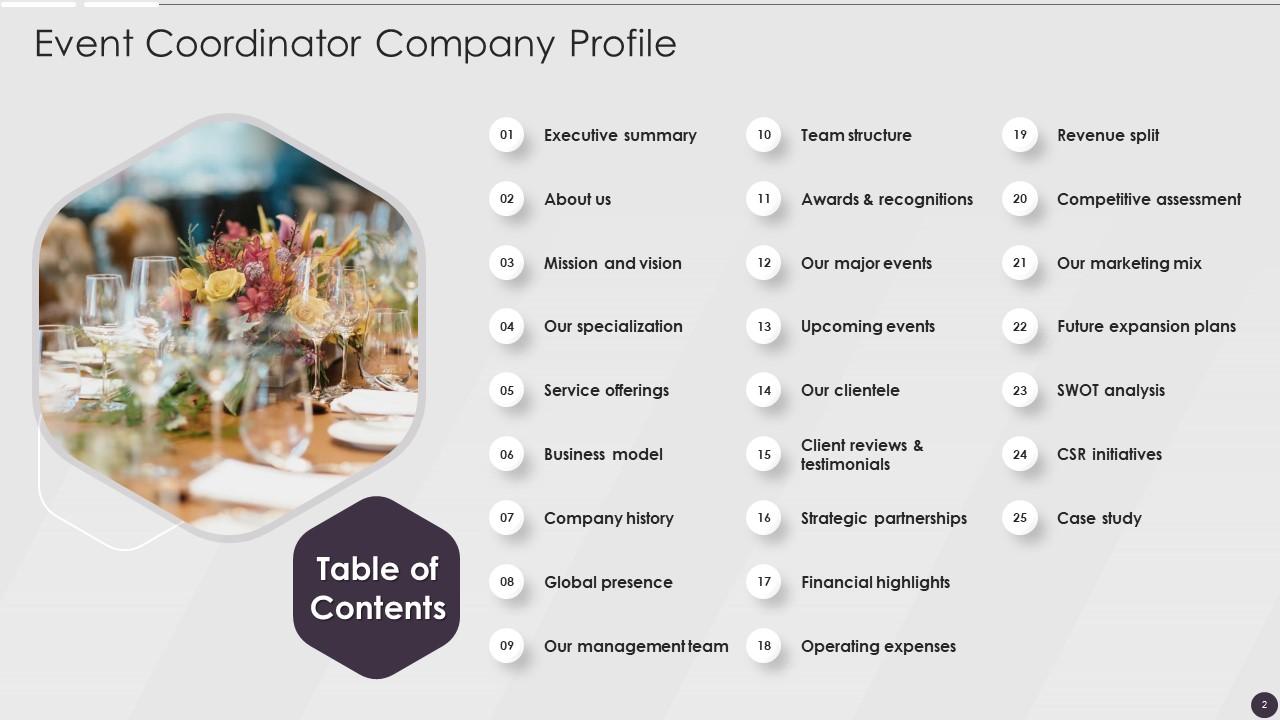
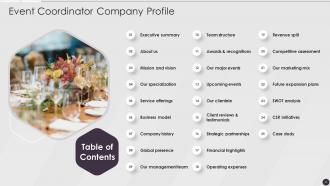
Slide 2: This slide presents Table of Content for the presentation.
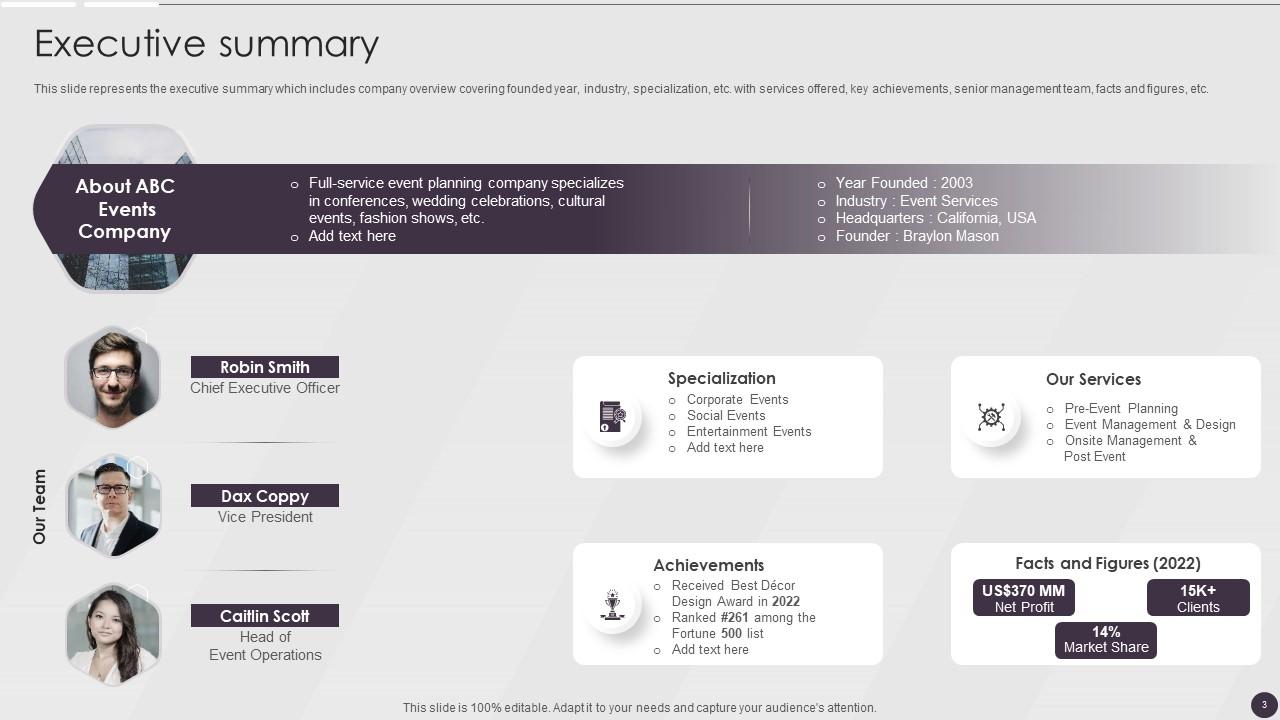
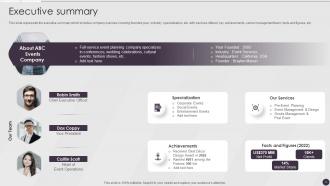
Slide 3: This slide represents the executive summary which includes company overview.
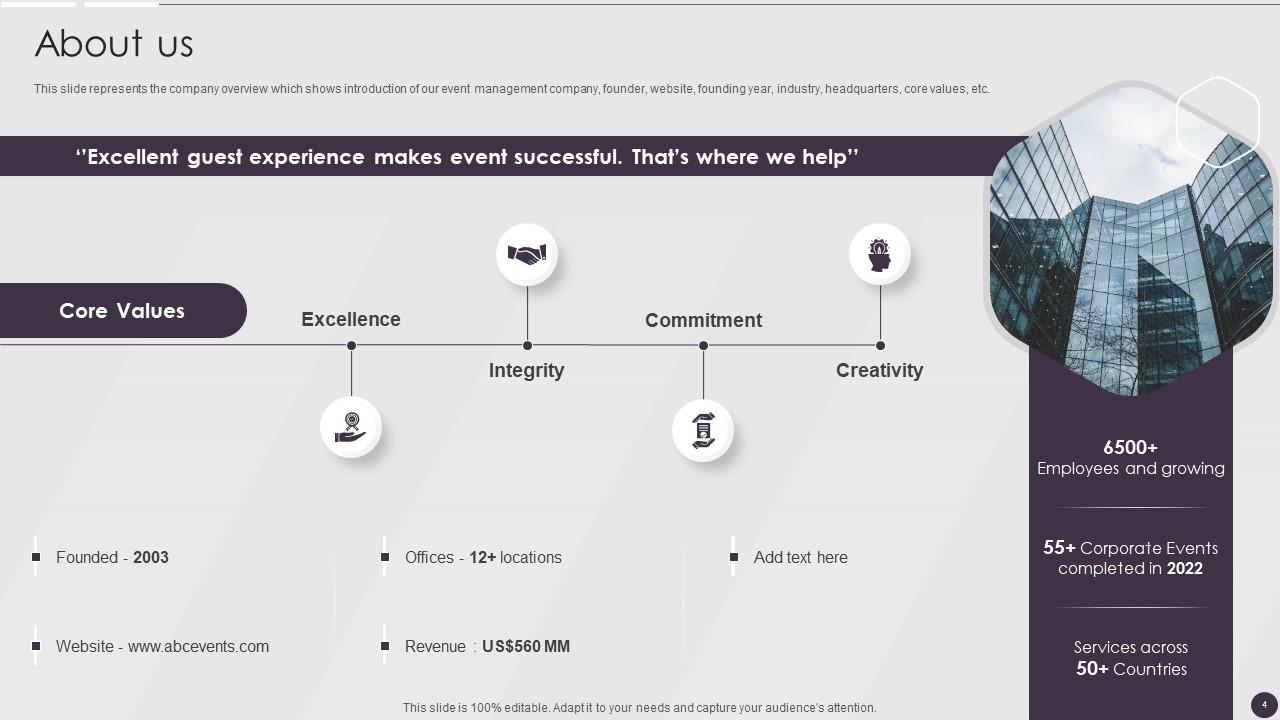
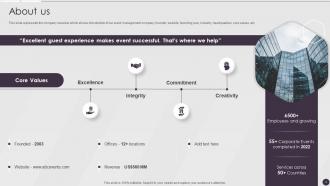
Slide 4: This slide presents company overview which shows introduction of our event management company.
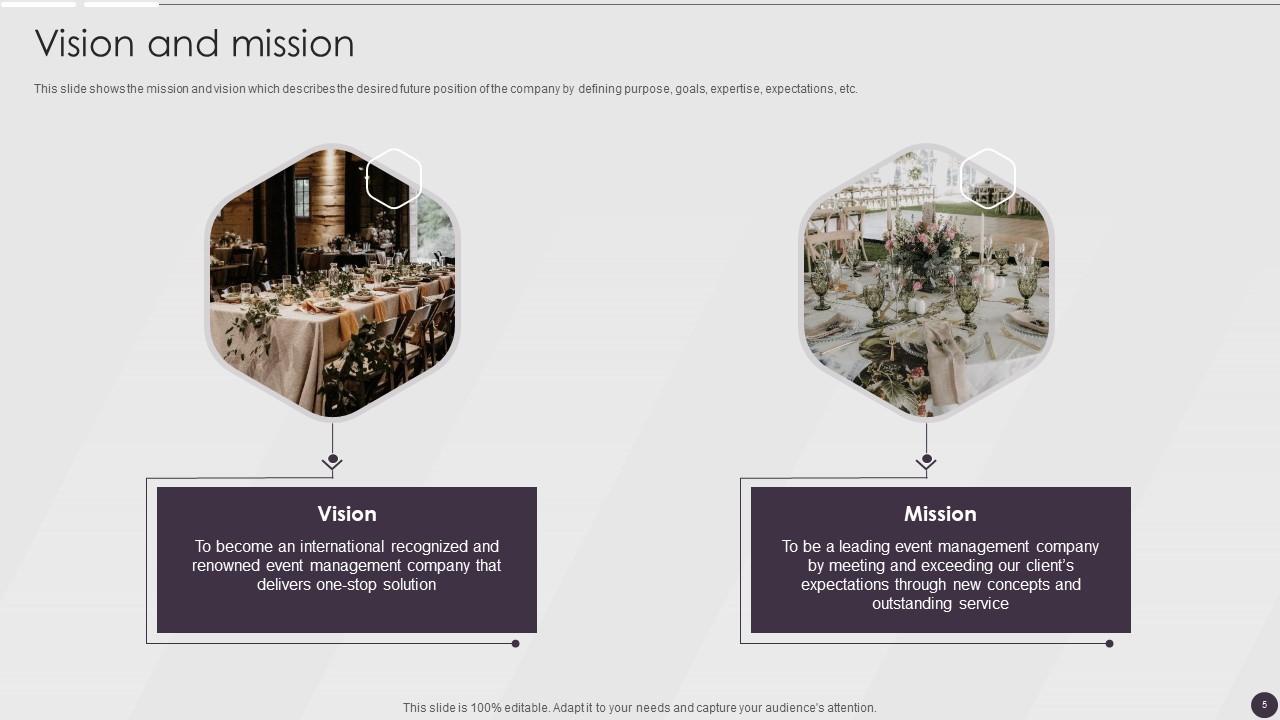
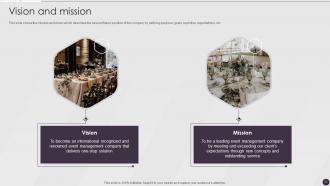
Slide 5: This slide shows the mission and vision which describes the desired future position of the company.
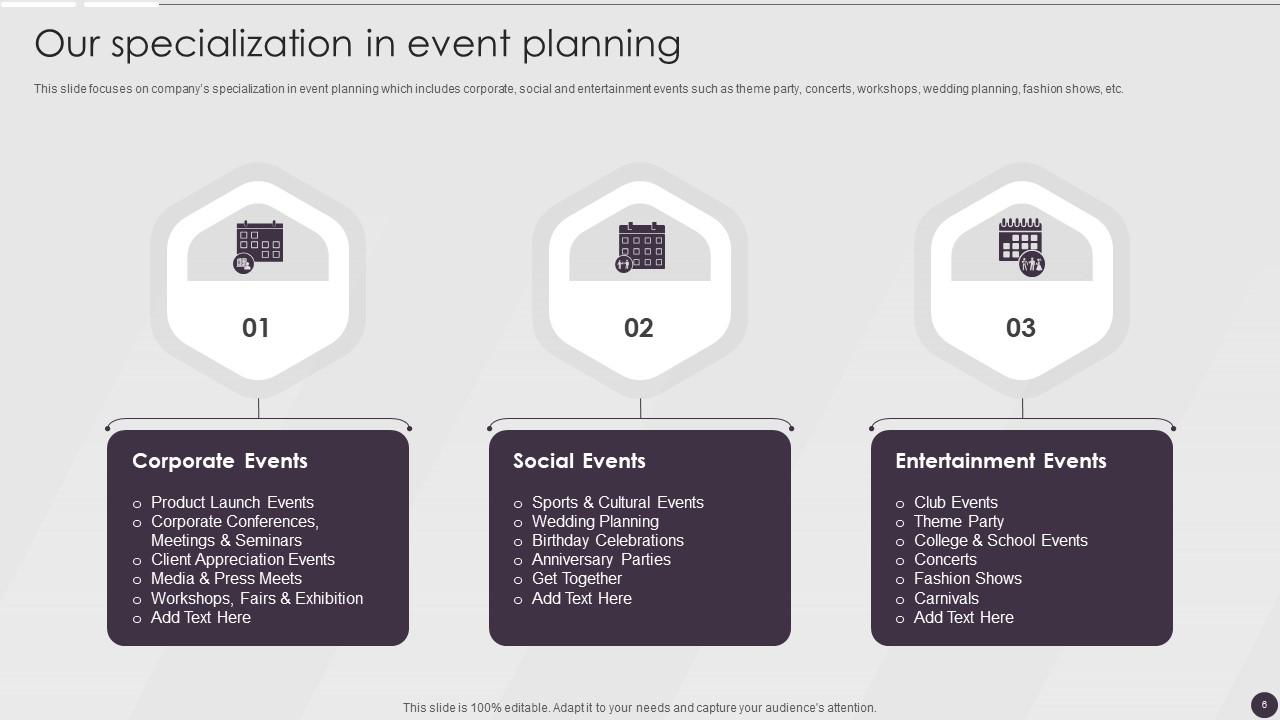
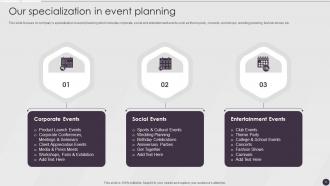
Slide 6: This slide focuses on company’s specialization in event planning.
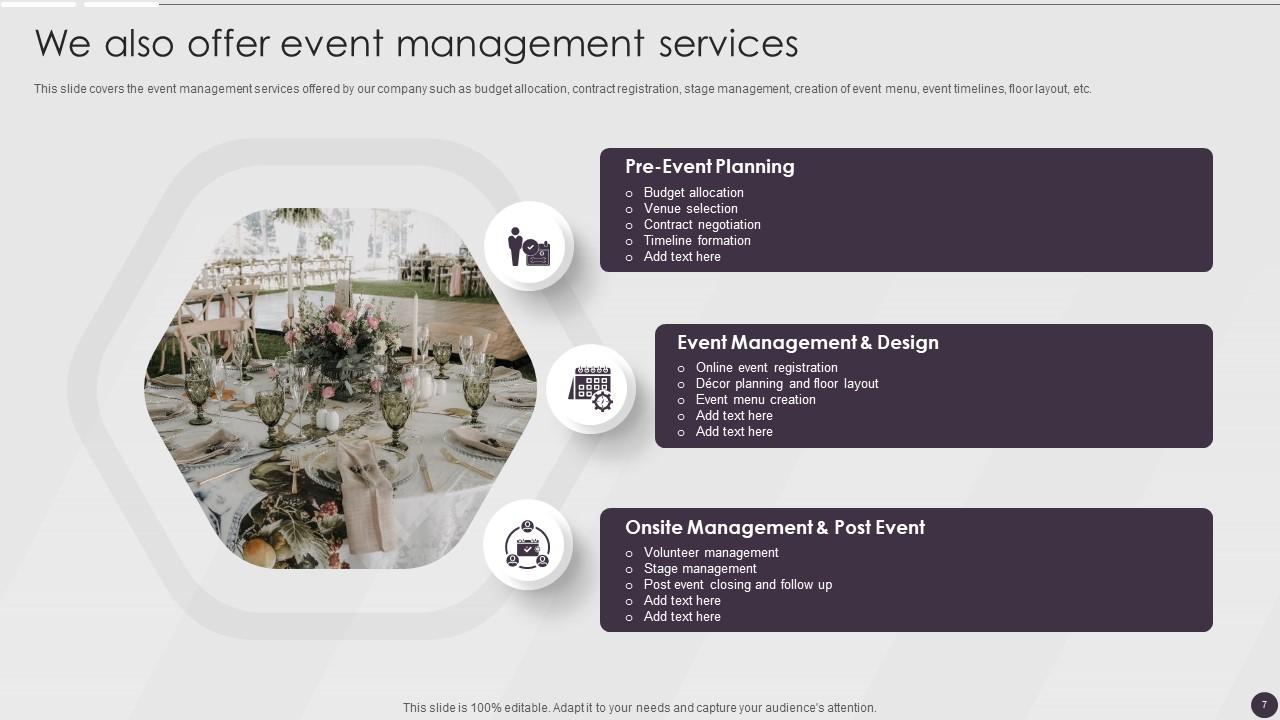
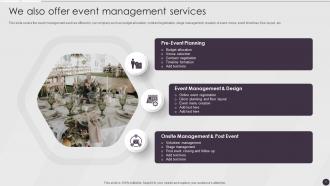
Slide 7: This slide covers the event management services offered by our company.
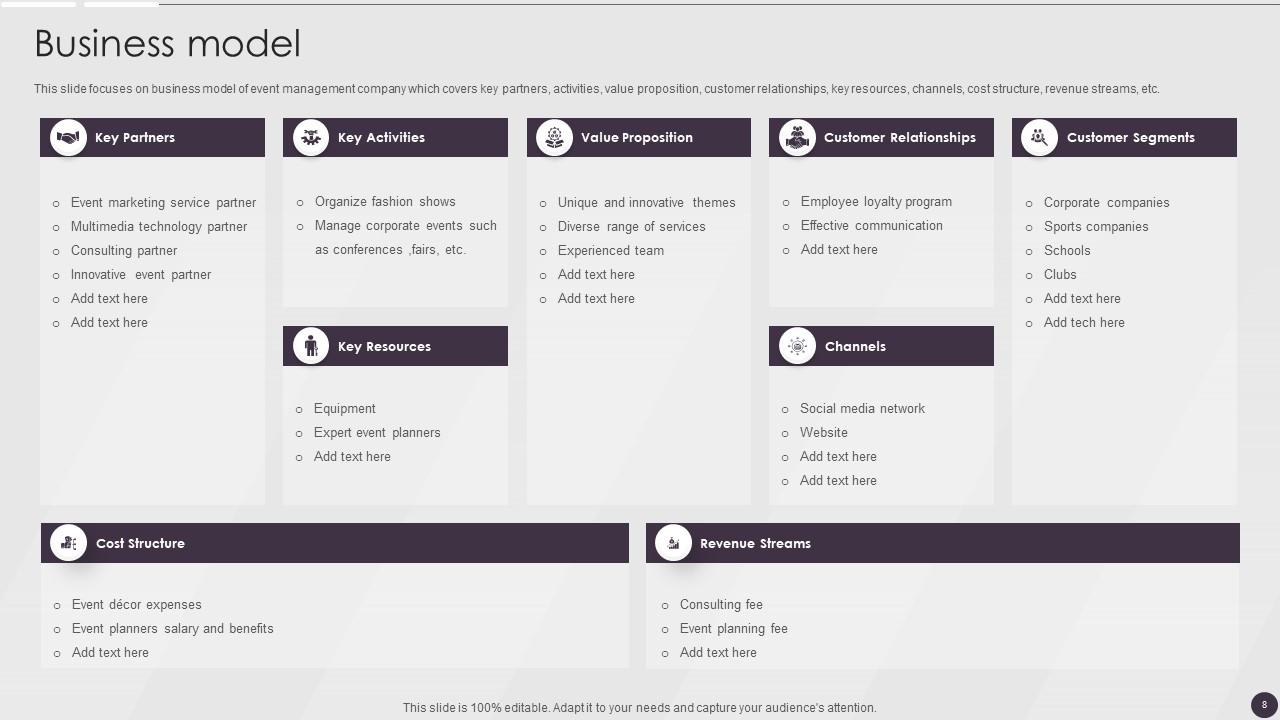
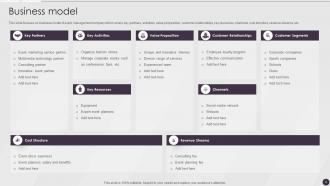
Slide 8: This slide displays business model of event management company.
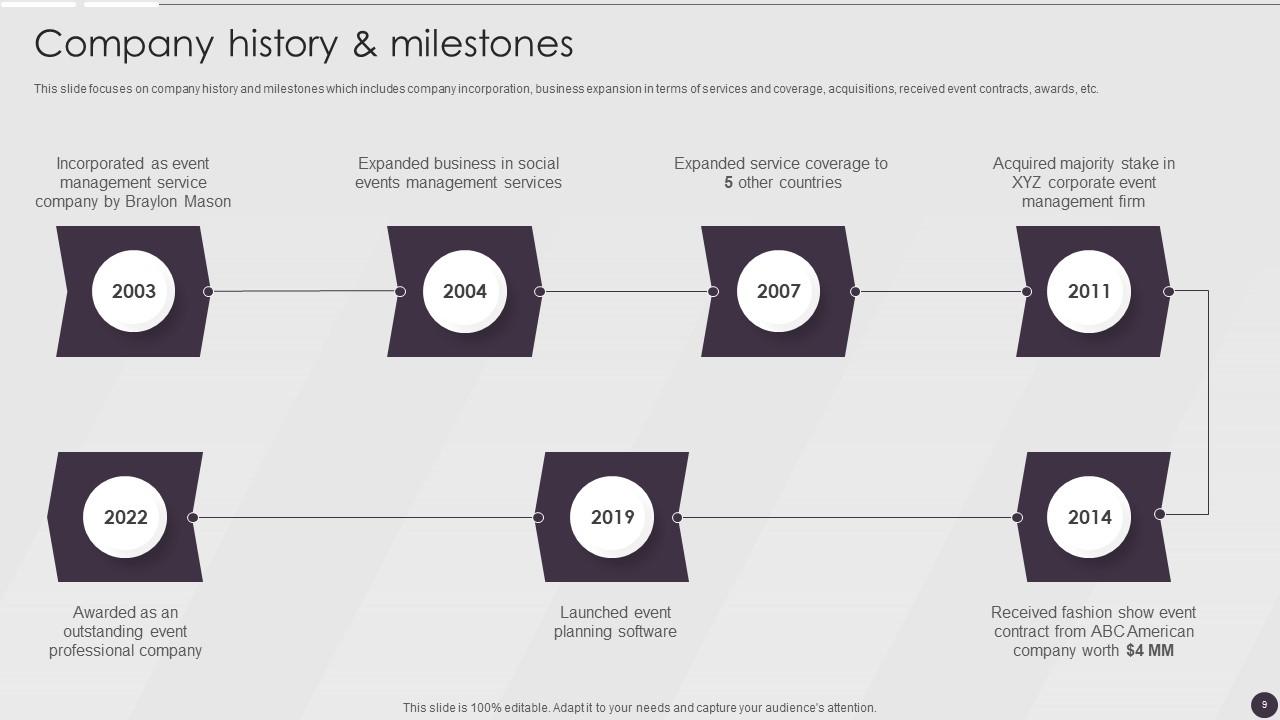
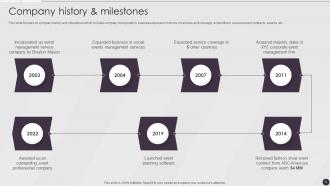
Slide 9: This slide focuses on company history and milestones.
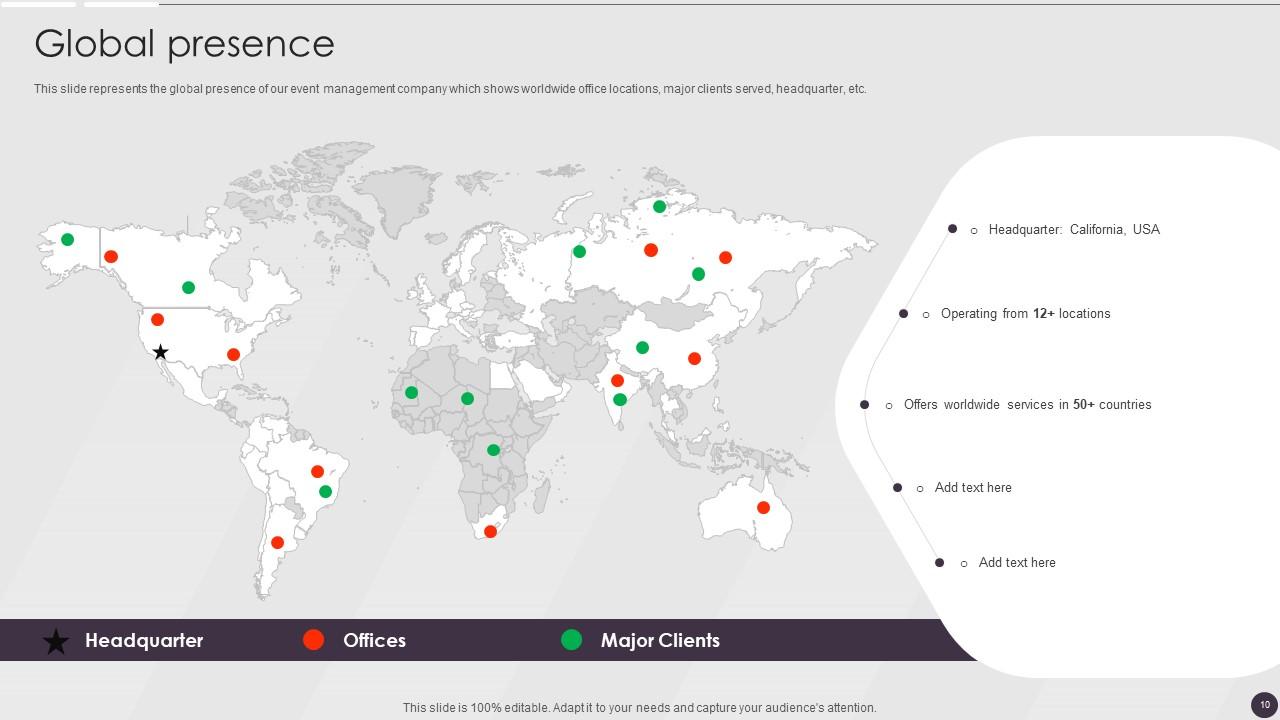
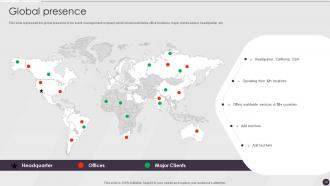
Slide 10: This slide represents the global presence of our event management company.
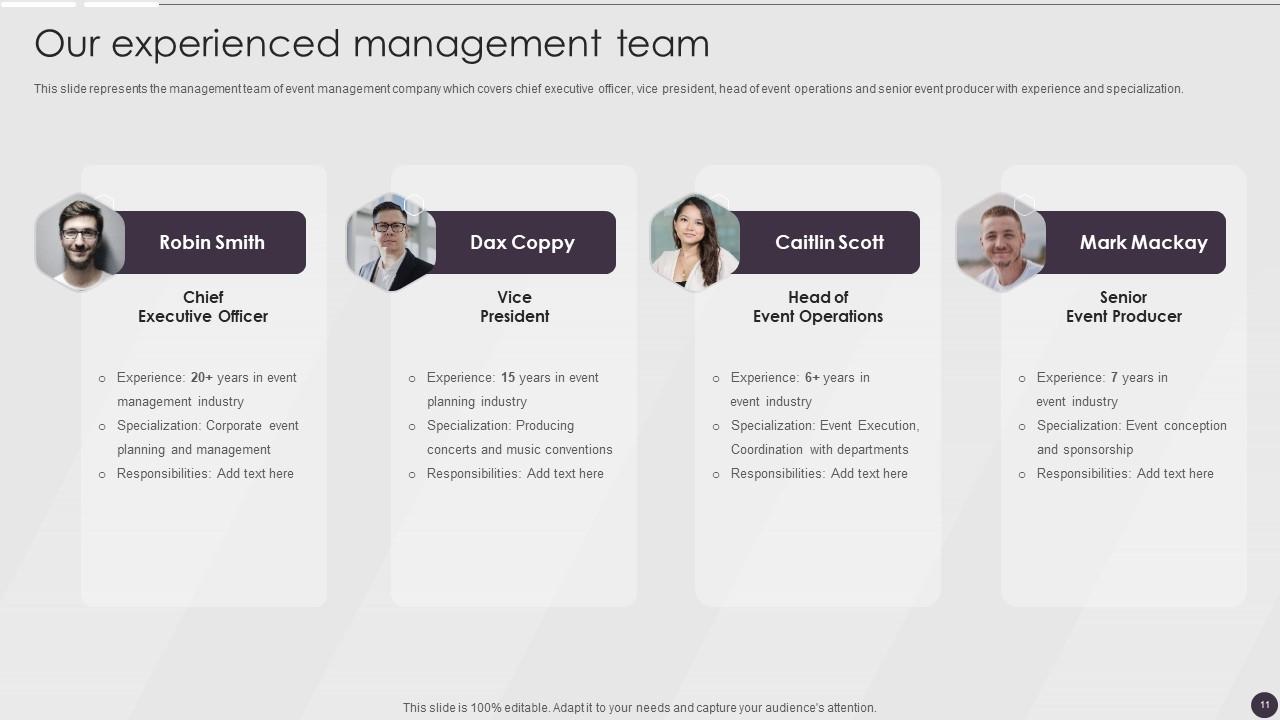
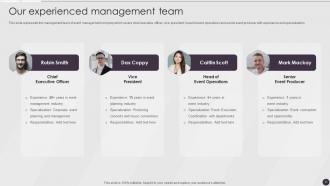
Slide 11: This slide showcases Our experienced management team.
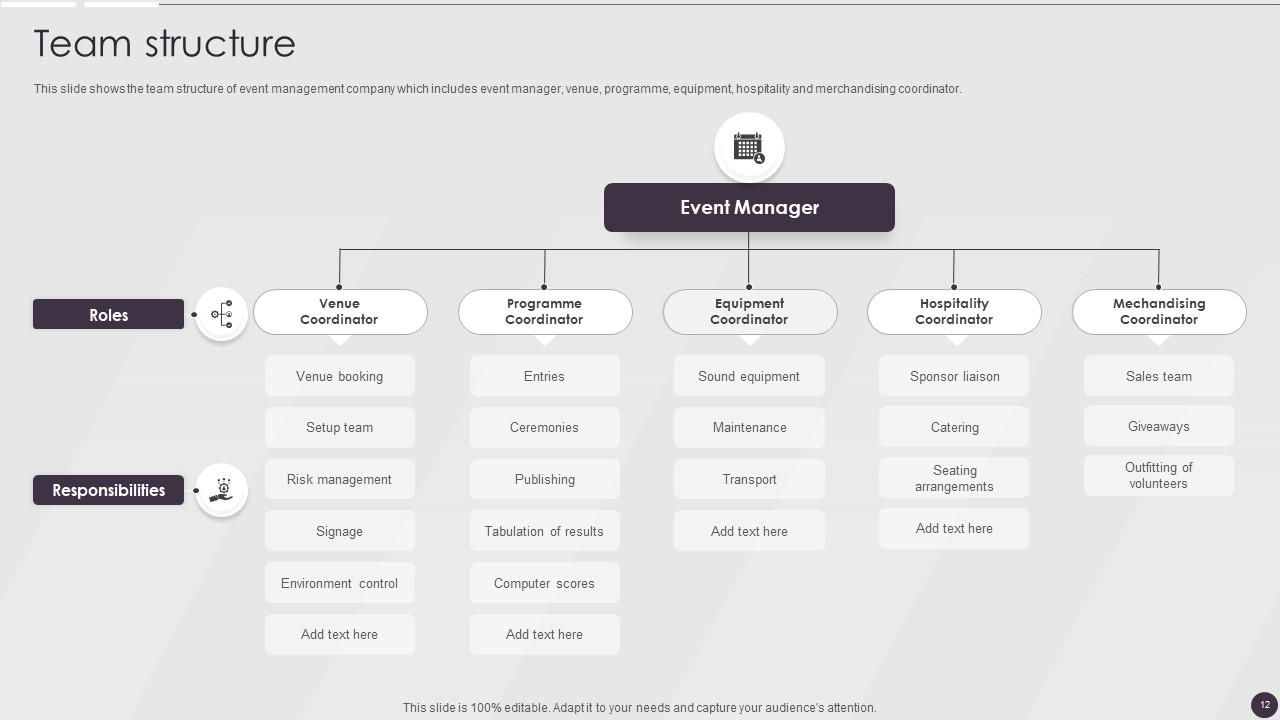
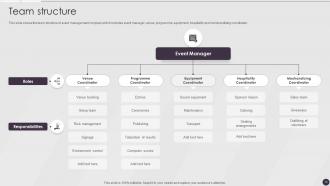
Slide 12: This slide shows the team structure of event management company.
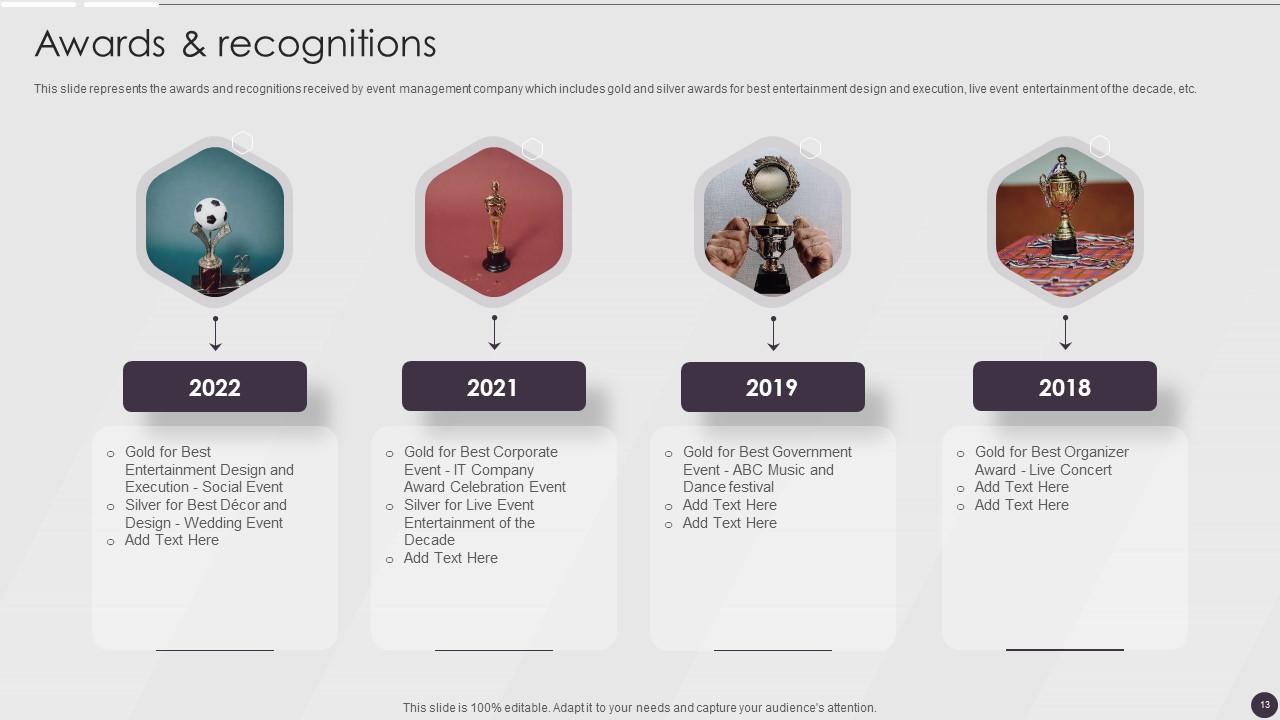
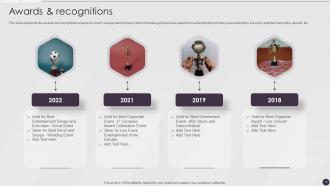
Slide 13: This slide represents the awards and recognitions received by event management company.
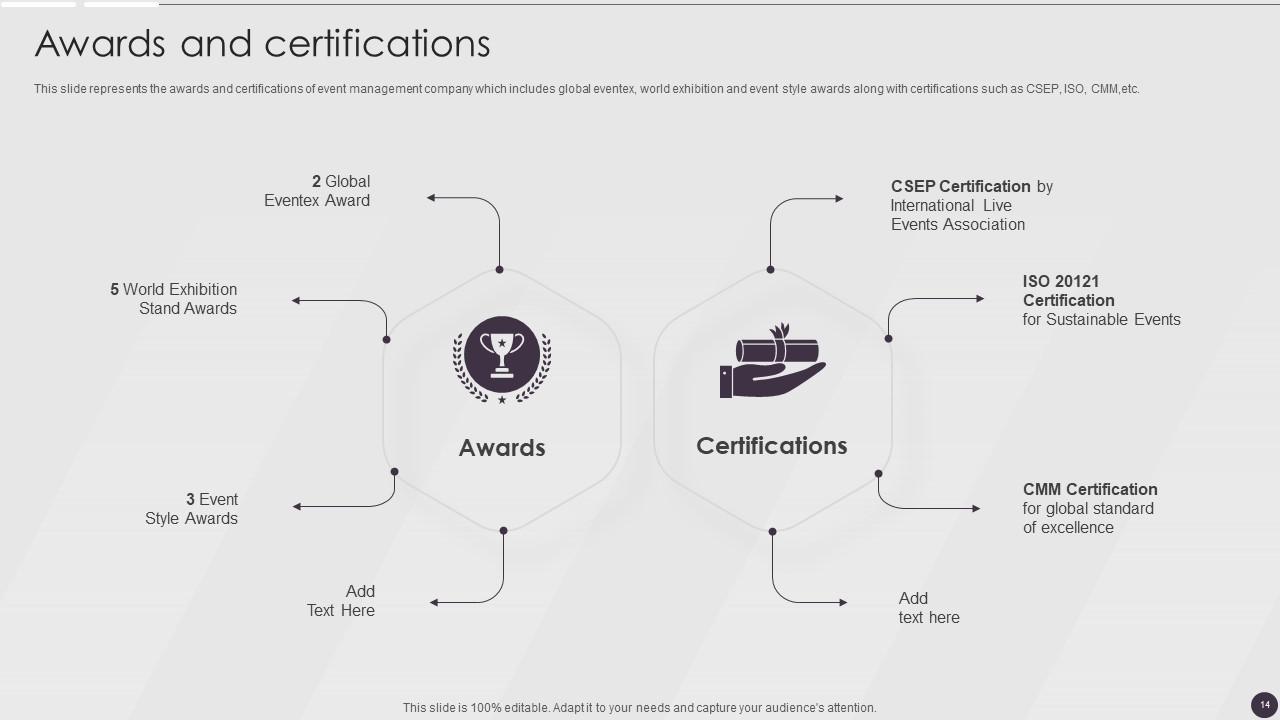
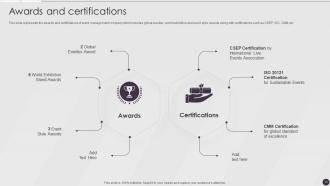
Slide 14: This slide displays the awards and certifications of event management company.
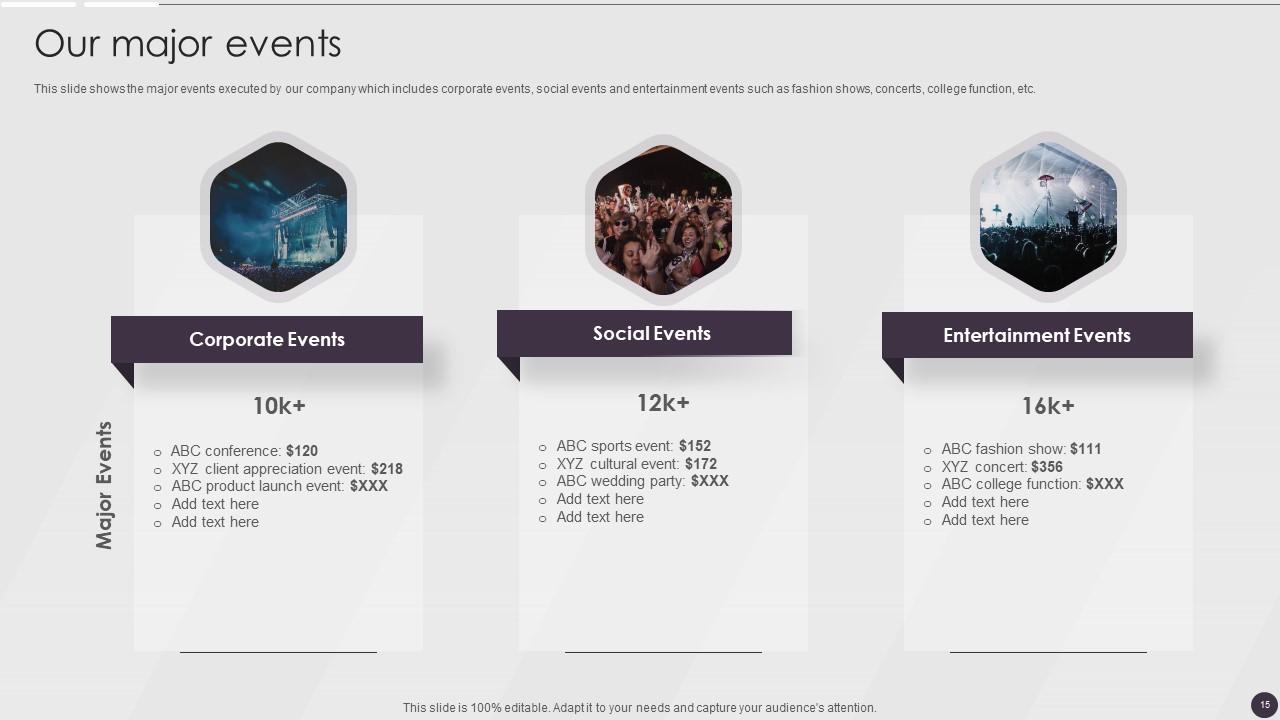
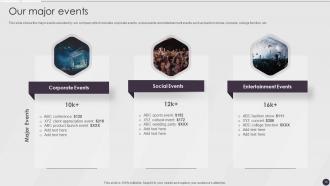
Slide 15: This slide showcases the major events executed by our company.
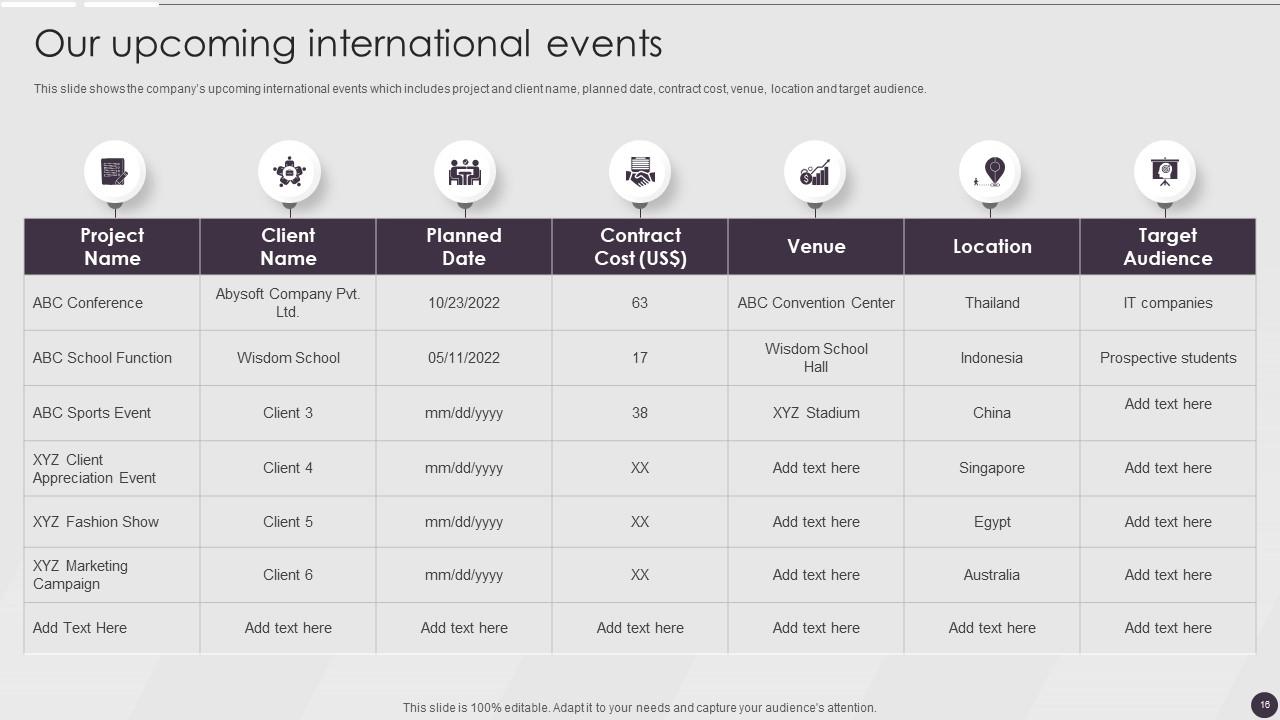
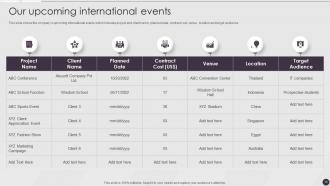
Slide 16: This slide shows the company’s upcoming international events.
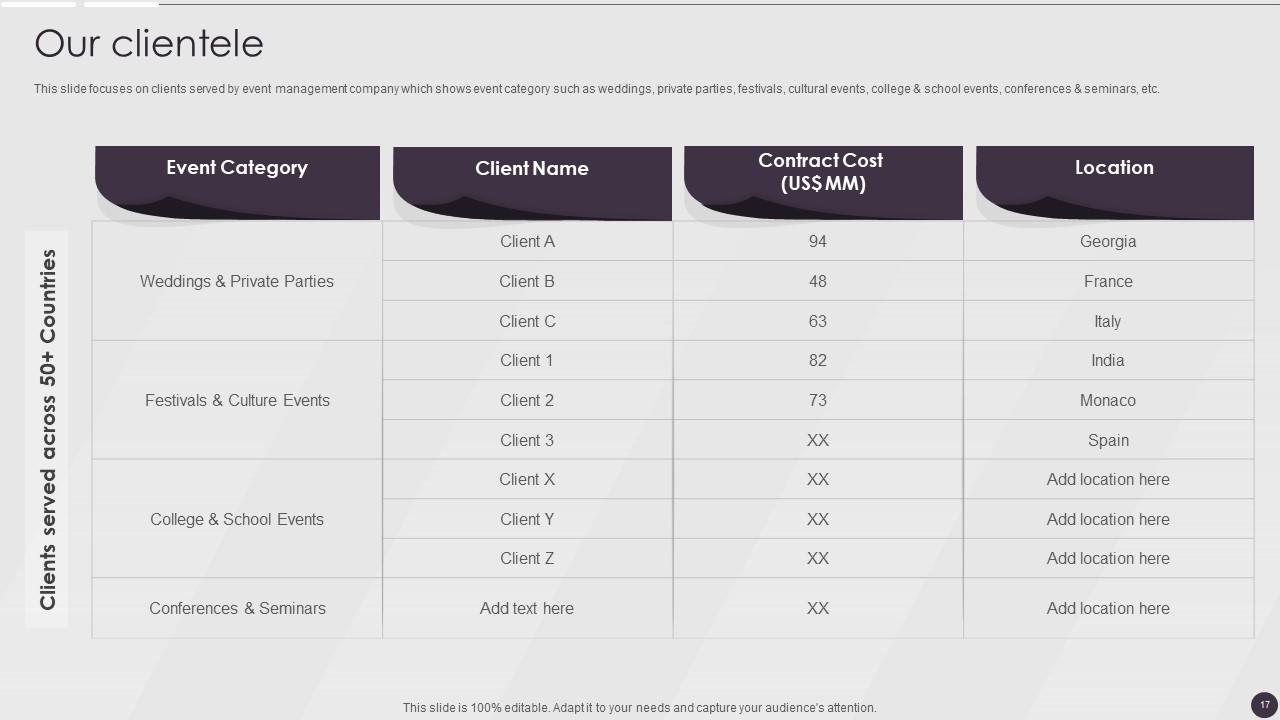
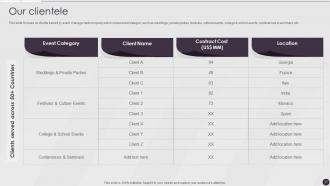
Slide 17: This slide focuses on clients served by event management company.
Slide 18: This slide shows the major clients associated with our event management company.
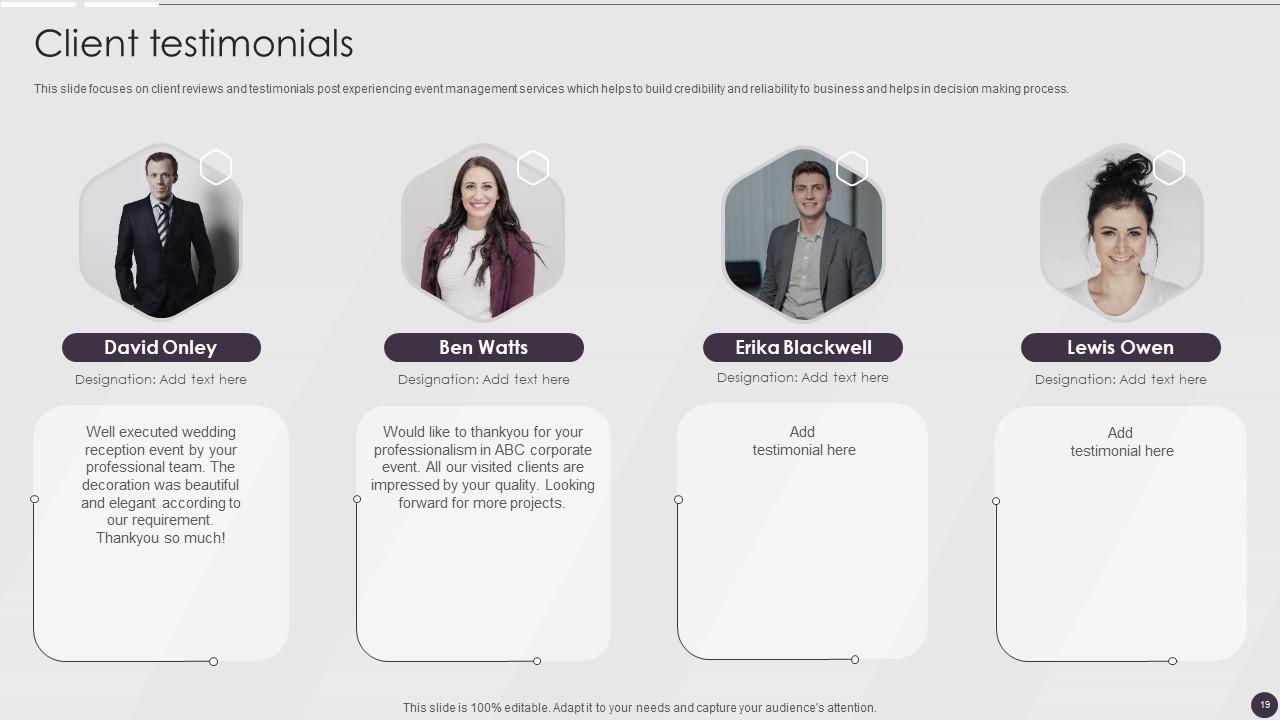
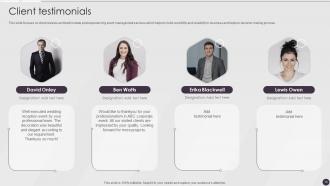
Slide 19: This slide focuses on client reviews and testimonials post experiencing event management services.
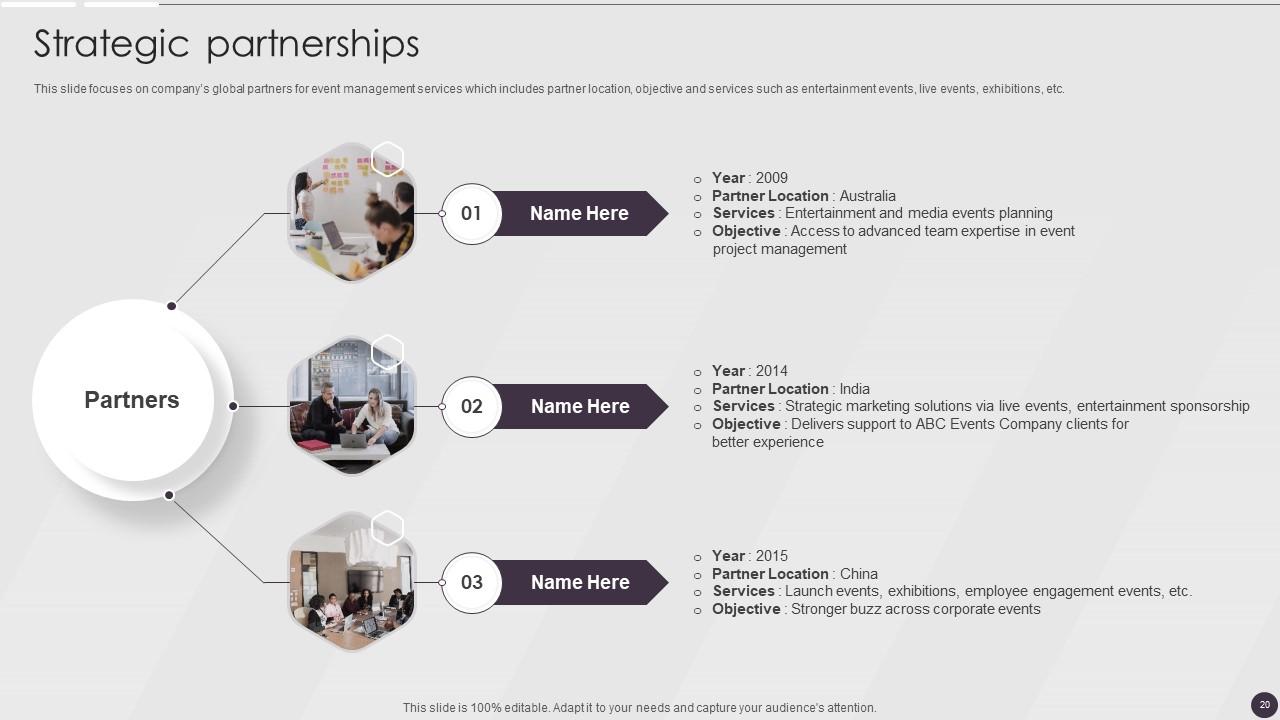
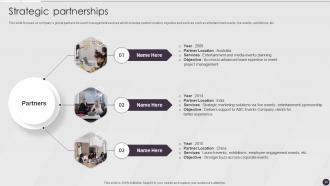
Slide 20: This slide presents company’s global partners for event management services.
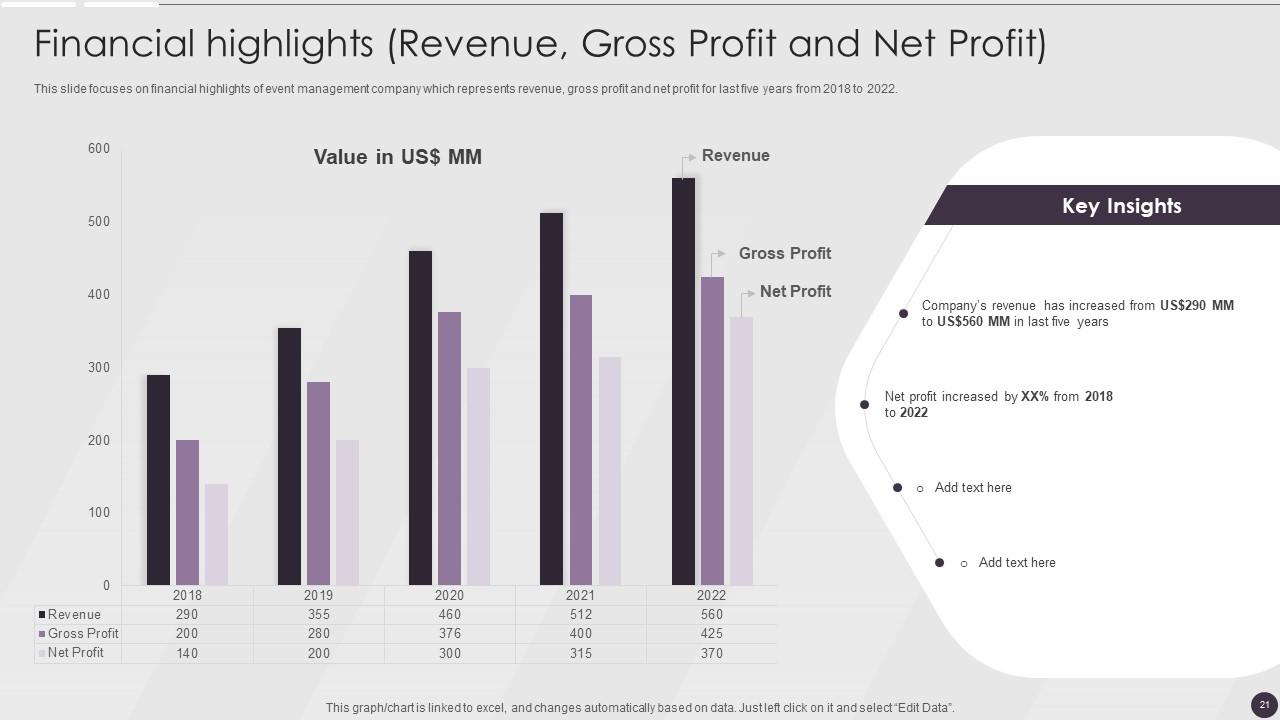
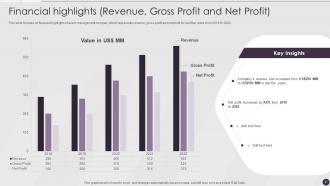
Slide 21: This slide focuses on financial highlights of event management company.
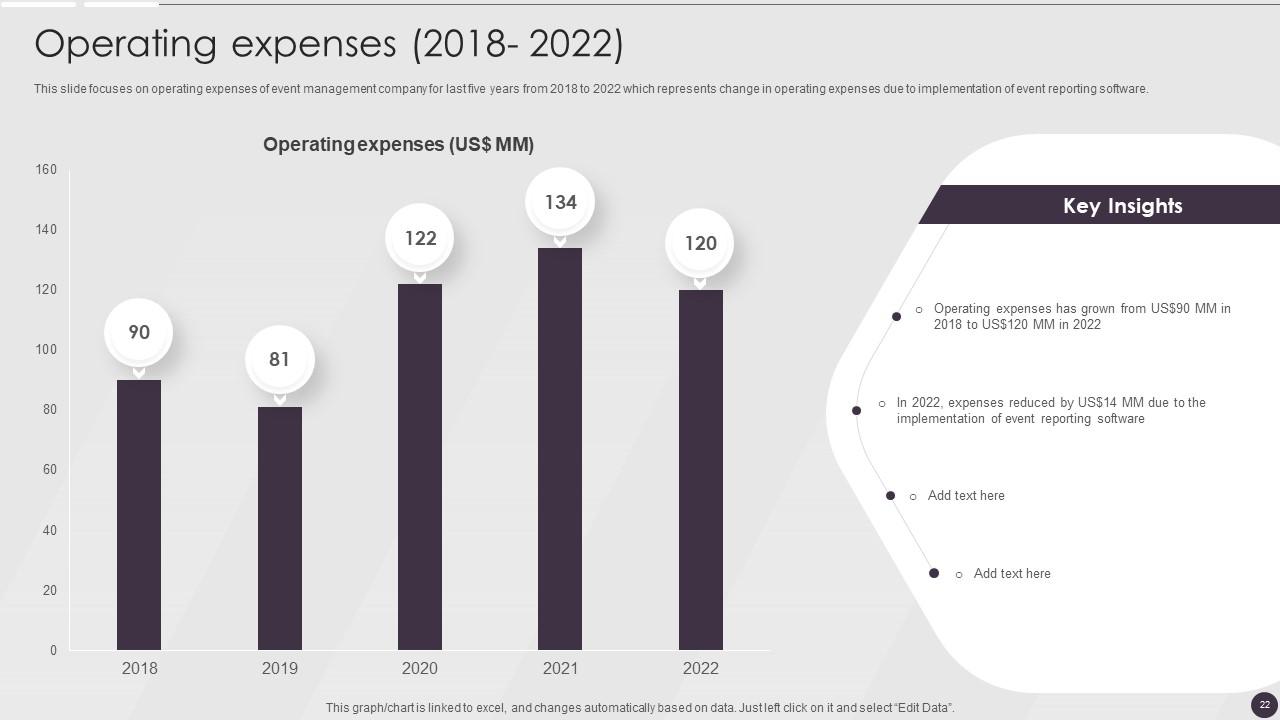
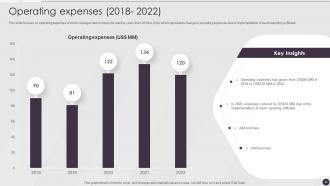
Slide 22: This slide displays operating expenses of event management company for last five years.
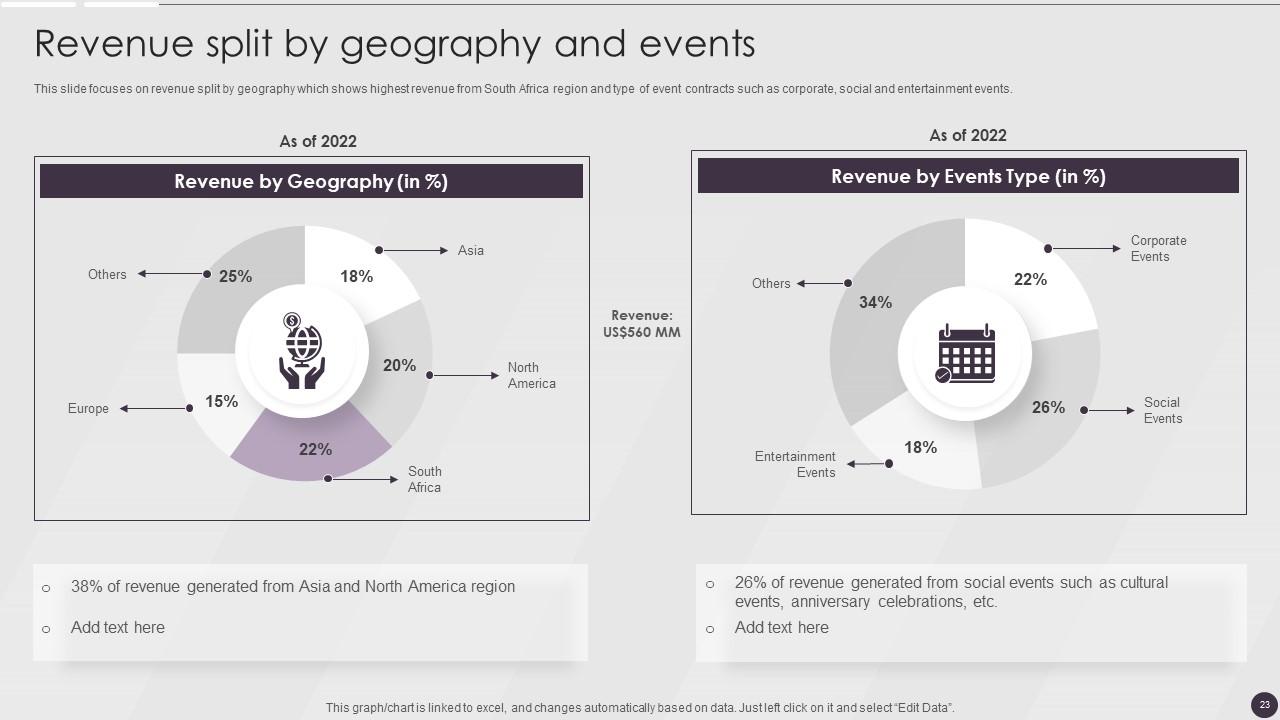
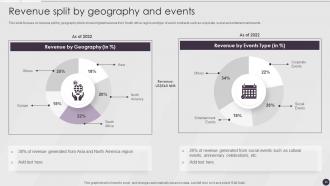
Slide 23: This slide represents revenue split by geography i.e. which region shows highest revenue.
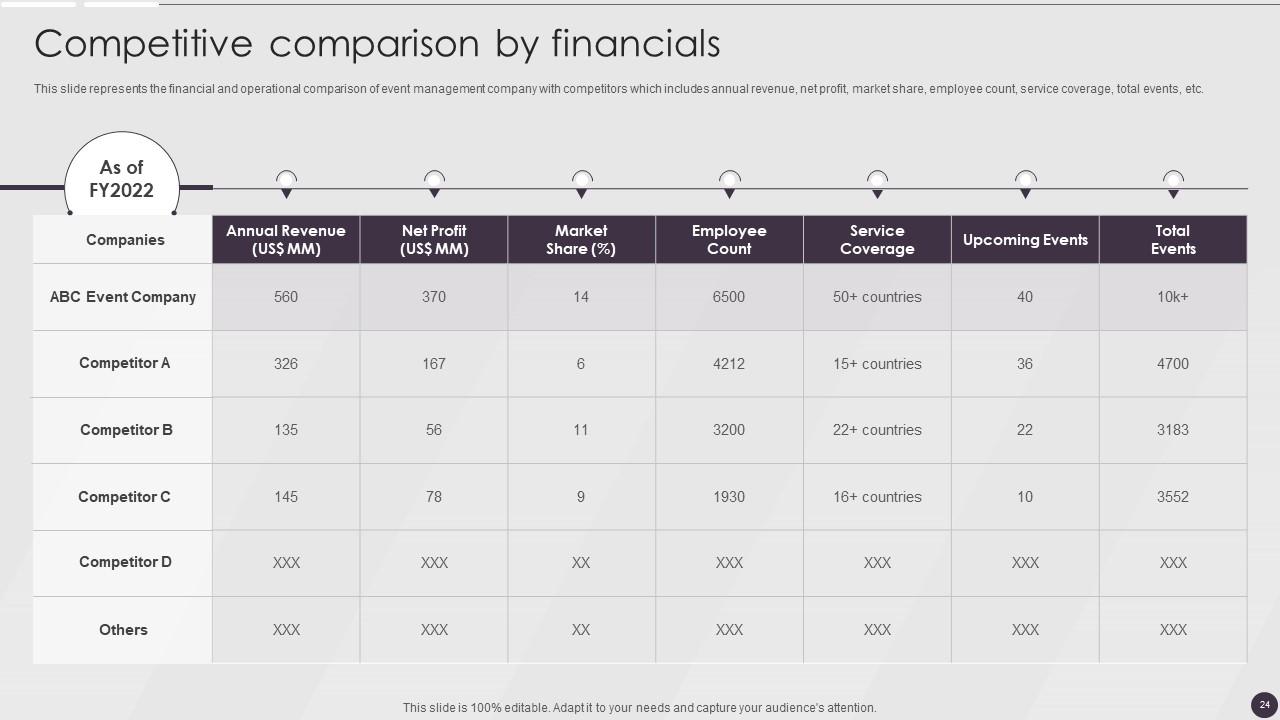
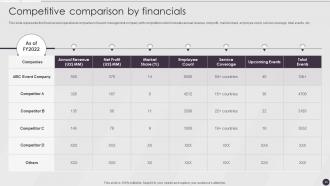
Slide 24: This slide showcases the financial and operational comparison of event management company.
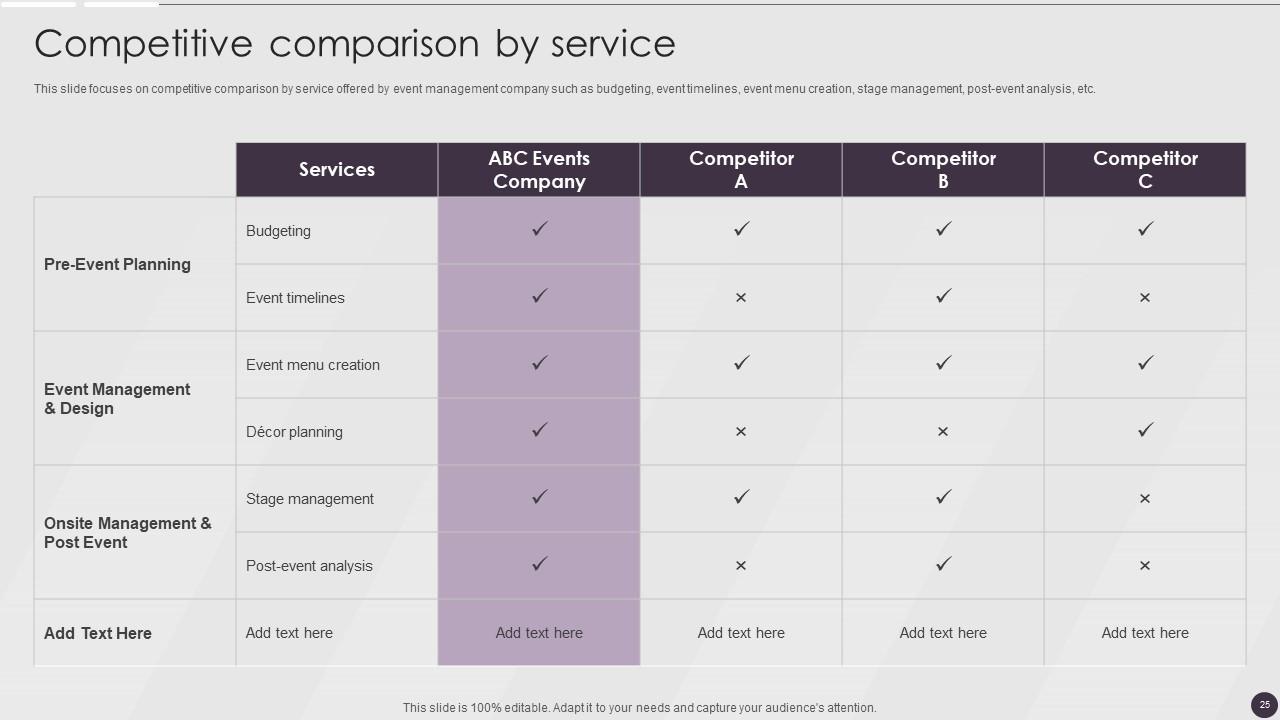
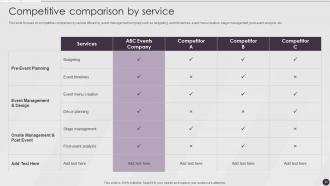
Slide 25: This slide focuses on competitive comparison by service offered by event management.
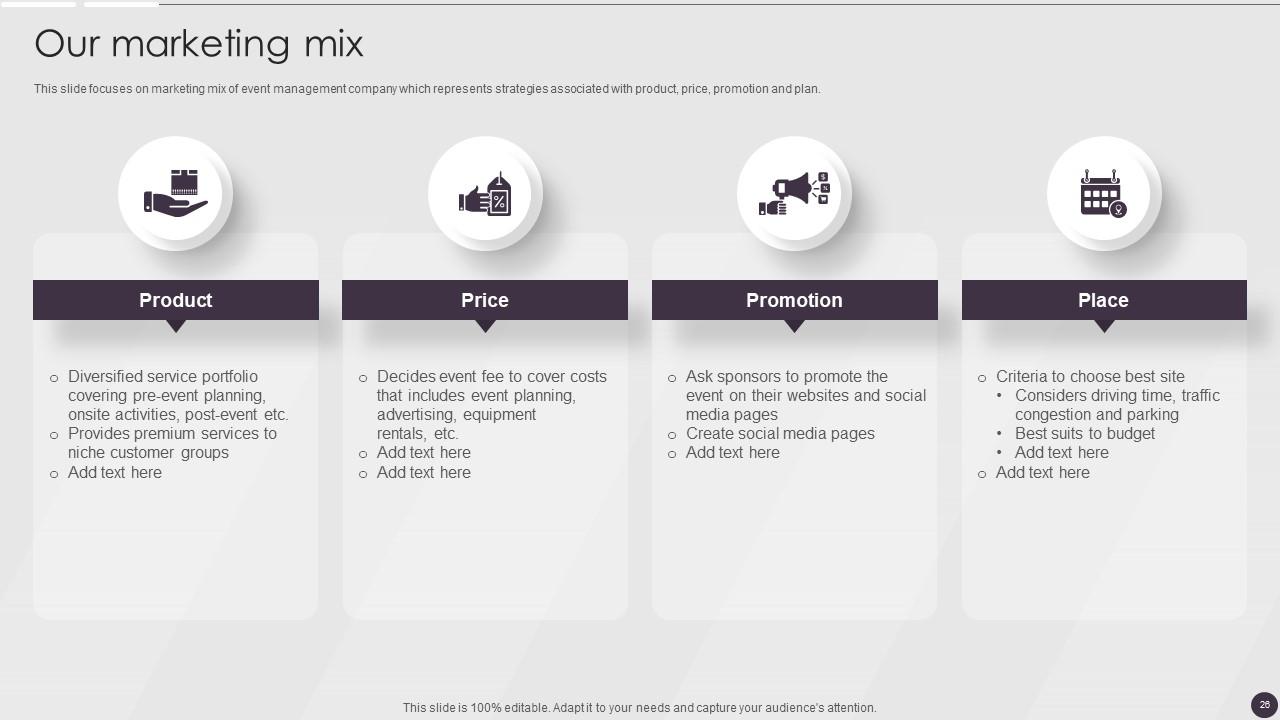
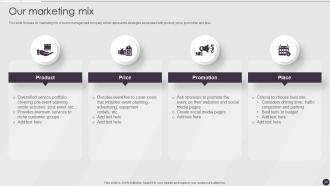
Slide 26: This slide shows marketing mix of event management company.
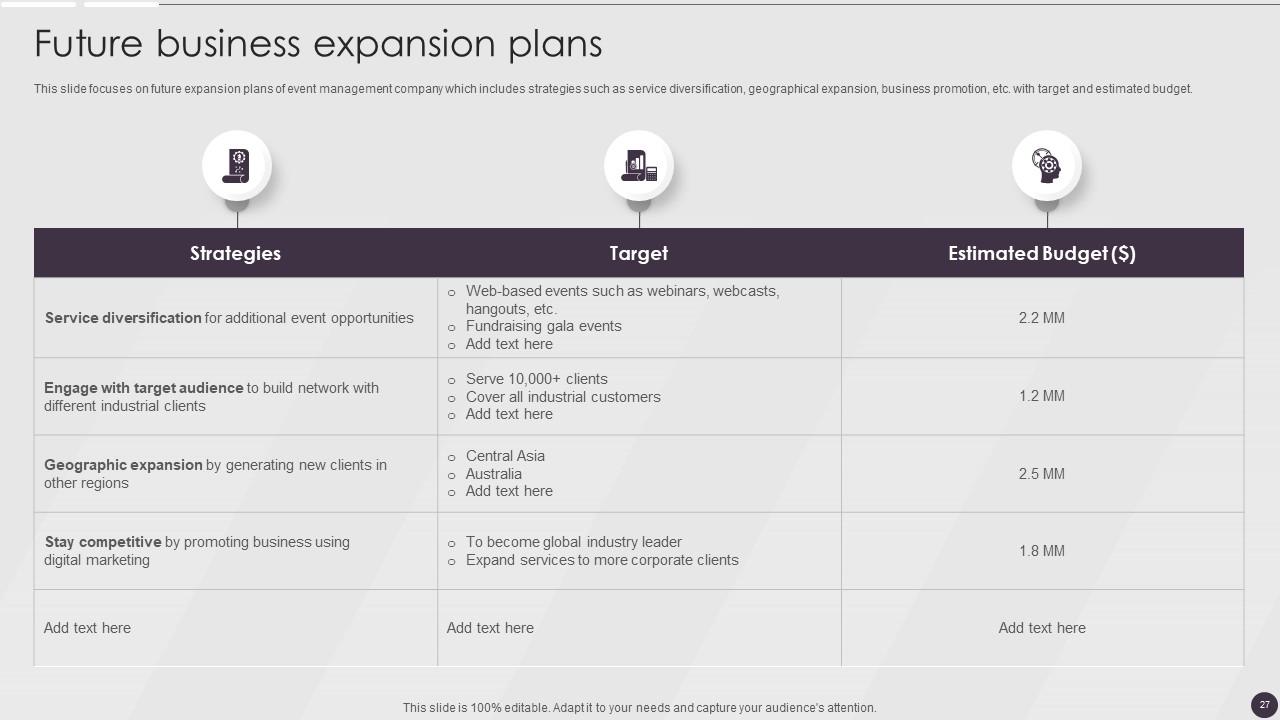
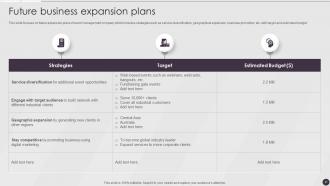
Slide 27: This slide focuses on future expansion plans of event management company.
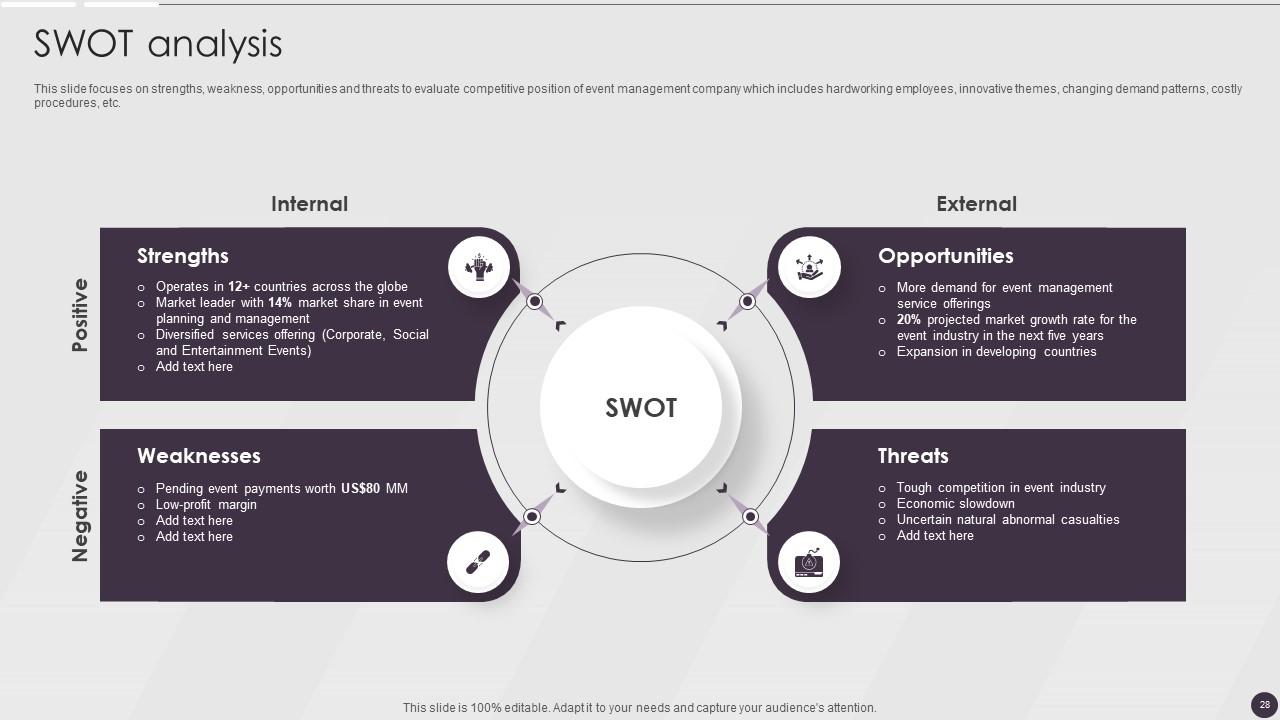
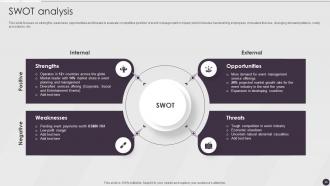
Slide 28: This slide displays strengths, weakness, opportunities and threats to evaluate competitive position.
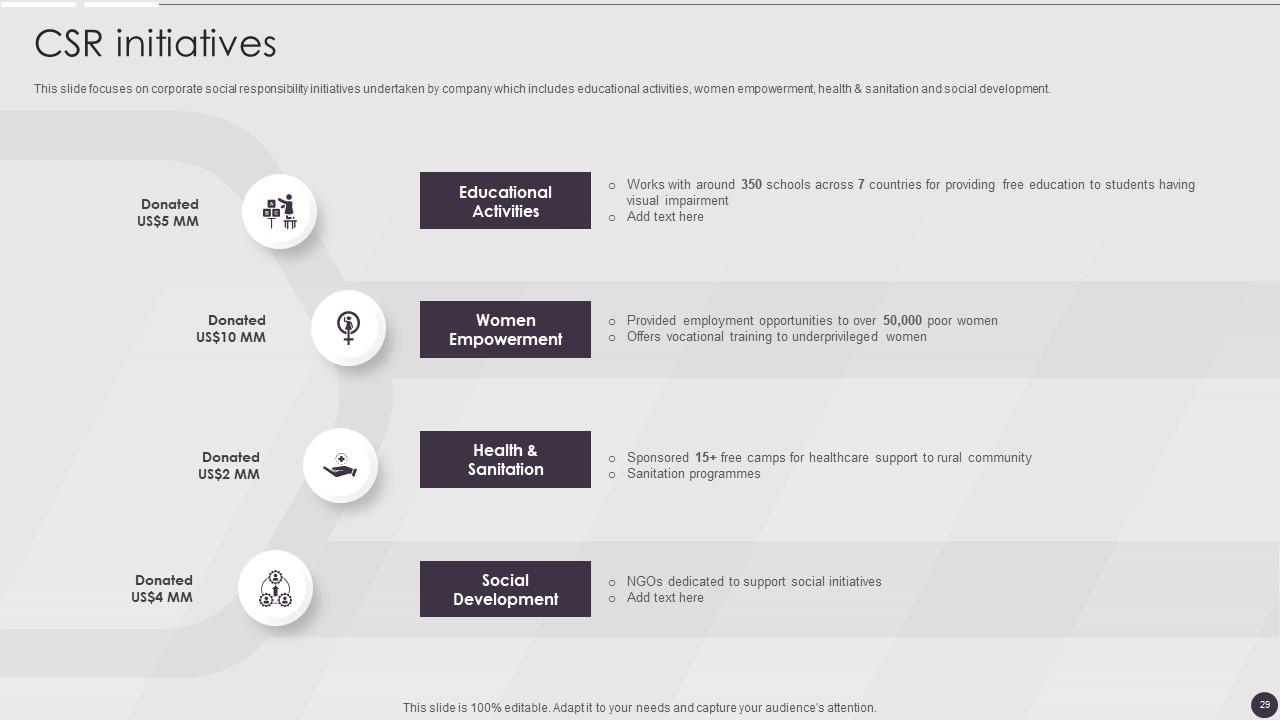
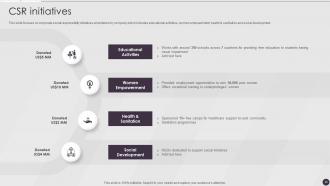
Slide 29: This slide focuses on corporate social responsibility initiatives undertaken by company.
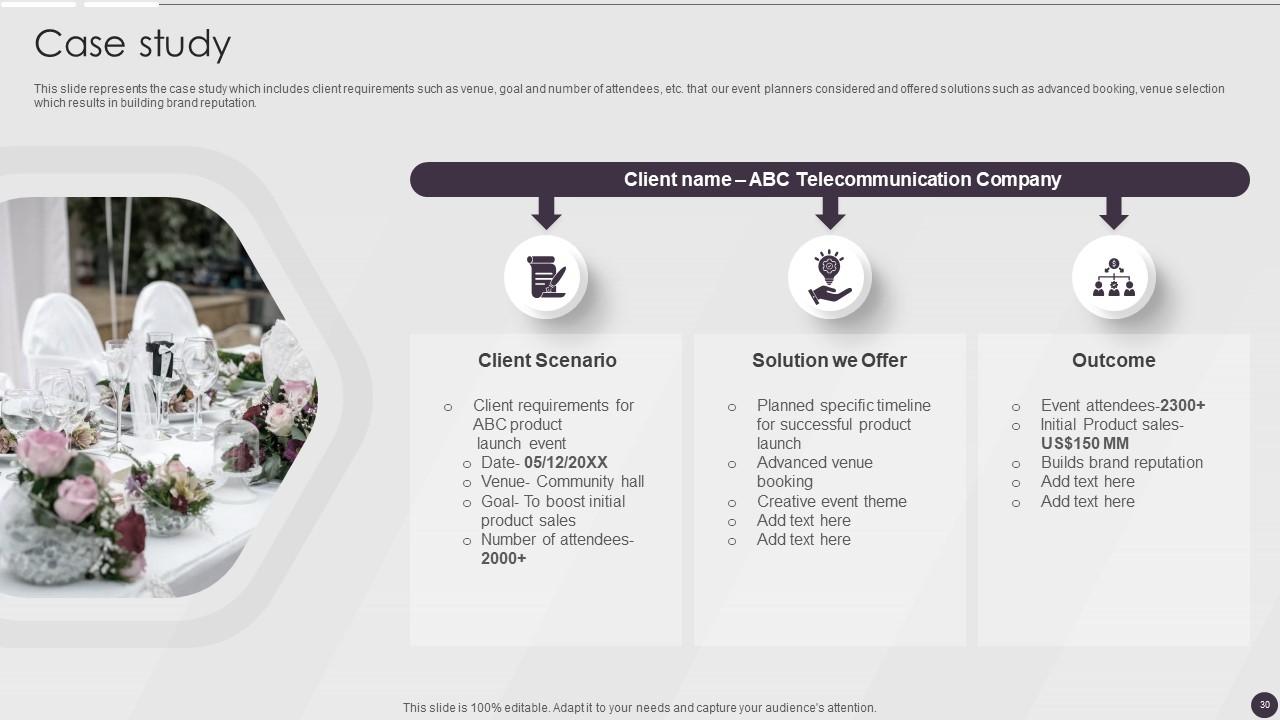
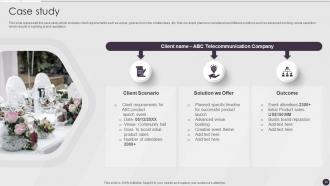
Slide 30: This slide represents the case study which includes client requirements.
Slide 31: This slide displays Icons for event coordinator company profile.
Slide 32: This slide is titled as Additional Slides for moving forward.
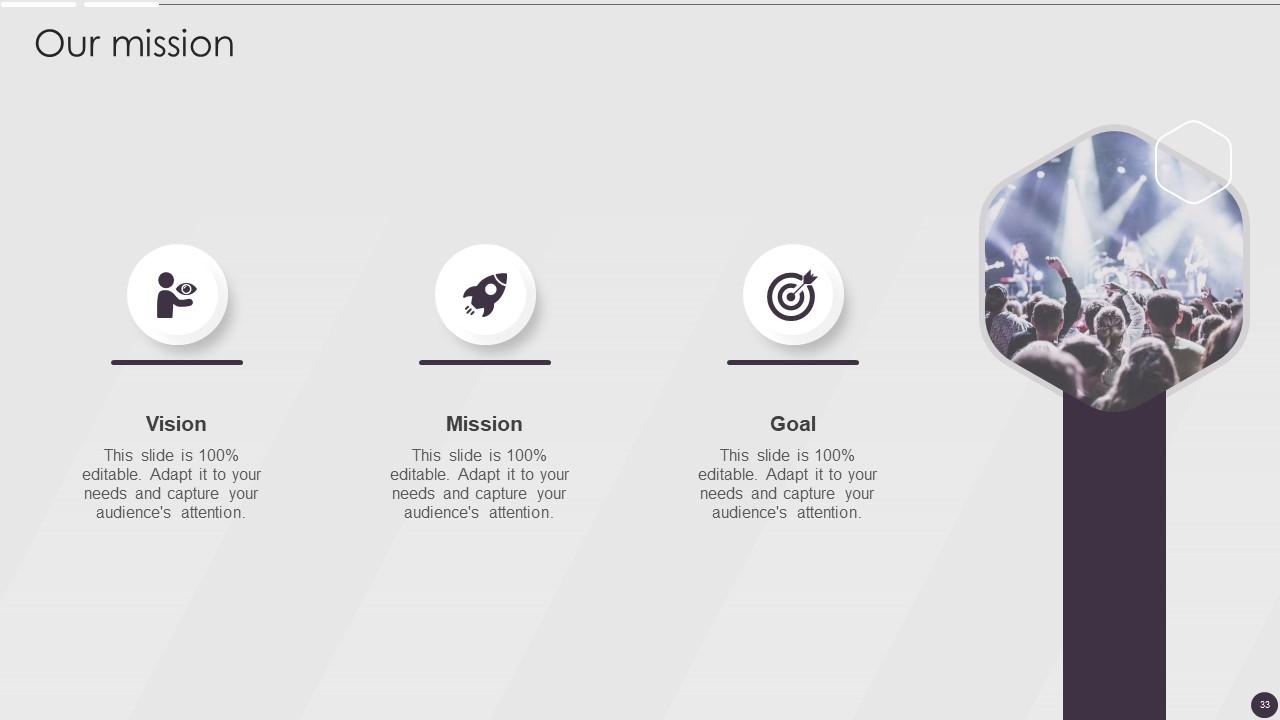
Slide 33: This is Our Mission slide with related imagery and text.
Slide 34: This is About Us slide to show company specifications etc.
Slide 35: This is Our Team slide with names and designation.
Slide 36: This is Our Goal slide. State your firm's goals here.
Slide 37: This slide shows Post It Notes. Post your important notes here.
Slide 38: This slide depicts Venn diagram with text boxes.
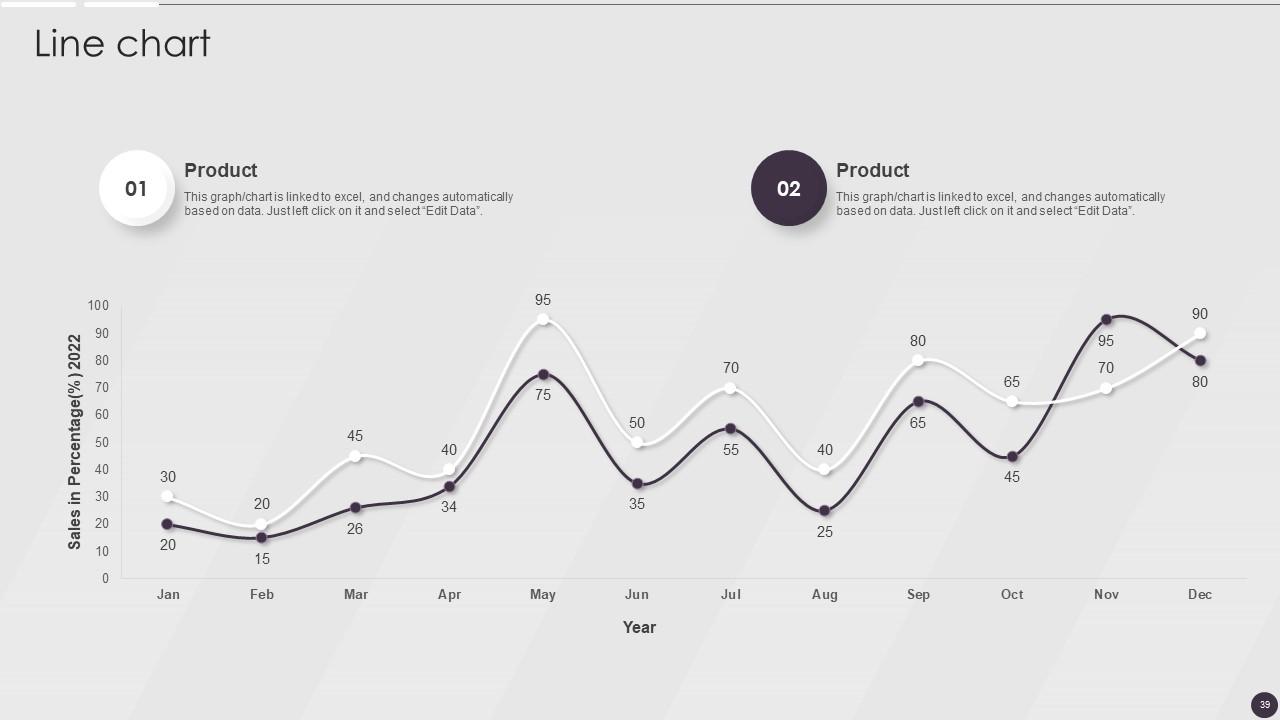
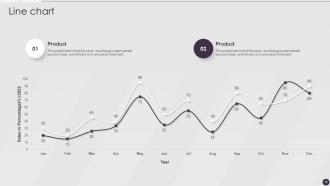
Slide 39: This slide describes Line chart with two products comparison.
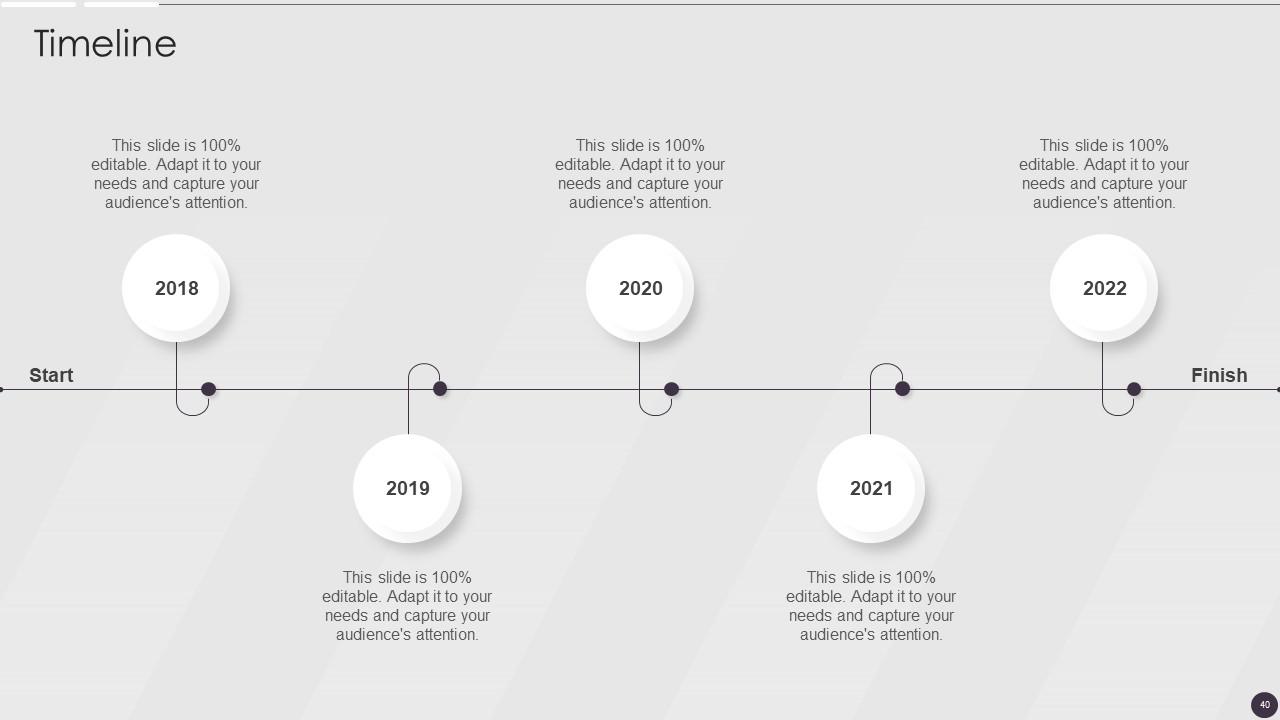
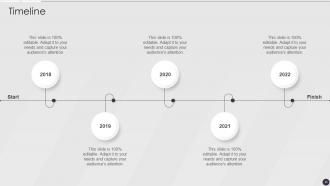
Slide 40: This is a Timeline slide. Show data related to time intervals here.
Slide 41: This is a Thank You slide with address, contact numbers and email address.
Event Coordinator Company Profile Powerpoint Presentation Slides with all 46 slides:
Use our Event Coordinator Company Profile Powerpoint Presentation Slides to effectively help you save your valuable time. They are readymade to fit into any presentation structure.
-
“Thanks to SlideTeam. Now I can make smart presentations in a fraction of time without any hassle.”
-
SlideTeam is my one-stop solution for all the presentation needs. Their templates have beautiful designs that are worth every penny!
