


Evolution Of Blockchain Technology Training Ppt




Try Before you Buy Download Free Sample Product
 Impress Your
 Audience
 100%
100% Editable
 Save Hours
 of Time


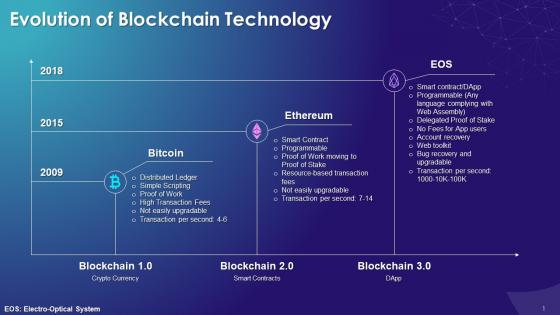
This slide graphically illustrates the timeline of blockchain technology from 2009 to 2018. It also covers the characteristics of Blockchain 1.0, Blockchain 2.0, and Blockchain 3.0.
People who downloaded this PowerPoint presentation also viewed the following :
Evolution Of Blockchain Technology Training Ppt with all 16 slides:
Use our Evolution Of Blockchain Technology Training Ppt to effectively help you save your valuable time. They are readymade to fit into any presentation structure.










FAQs for Evolution Of Blockchain
Okay so basically you've got three main parts: blocks, transactions, and nodes. Think of blocks like containers holding bunches of verified transactions, plus this cryptographic hash that connects to the previous block - that's your "chain" right there. Nodes are just computers that validate stuff and decide which blocks get added next. What makes it secure is that hash linking thing - mess with one block and you break the whole chain, which is kinda brilliant honestly. Oh and everyone has their own copy of this digital ledger, so they all gotta agree before anything changes.
So basically, regular databases have one company running the whole show - they can change or delete whatever they want. Blockchain works totally differently though. It spreads copies across tons of computers, and you need most of them to agree before anything gets changed. Once something's recorded, you can't go back and mess with it later (which is honestly pretty genius). Traditional databases give you way more control if that's what you need. Really depends on your project - do you want that bulletproof record-keeping or do you actually need the flexibility to edit stuff?
So there are three main ones you'll see everywhere. Bitcoin uses Proof of Work - miners basically race to solve math puzzles, super secure but burns crazy energy. Then there's Proof of Stake like Ethereum 2.0, way more efficient since validators get picked based on how much they own. Delegated Proof of Stake is the fastest but kinda gives up some decentralization. Security works differently for each - PoW makes attacks expensive computationally, PoS hits you in the wallet if you cheat. Start with understanding PoW and PoS basics first, trust me.
So smart contracts are basically programs that run themselves on the blockchain when conditions get met - like a vending machine but for digital stuff. Companies like Walmart use them to track where food comes from. Insurance can pay out automatically if your flight's delayed. Real estate deals happen without lawyers hovering around (honestly pretty cool). They're everywhere now. Main perks? Way cheaper, harder to scam, and everything moves faster since humans aren't slowing things down. Check out some Ethereum examples first - that's where most of the action is happening.
So crypto was basically what put blockchain on the map - it's just digital money running on these distributed networks. Bitcoin proved the whole thing actually worked, which was pretty huge. But now tokens do way more than just payments. They incentivize people to keep networks running, cover transaction costs, even give you voting power in some projects. Honestly, if you want to understand blockchain, just figure out how Bitcoin transactions work first - that'll click everything else into place. It's like learning the foundation before you build the house, you know?
Honestly, don't try to flip everything at once - that's a recipe for disaster. Pick one thing first, like tracking your supply chain or verifying documents. Most companies just use APIs to connect blockchain stuff to whatever databases they're already running. The real pain point though? Getting your team up to speed on how this actually works. Nobody talks about that part enough. You'll probably want a hybrid setup so your current systems can play nice with the blockchain components without rebuilding from scratch. Start small, test the hell out of it, and definitely have tech support ready before you flip the switch.
Honestly, blockchain adoption is pretty messy right now. Three big issues keep coming up - the tech is crazy complex and finding people who actually know what they're doing is like hunting unicorns. Then there's the money side of things. Setting up the infrastructure isn't cheap, plus you've got ongoing costs that add up fast. And don't get me started on regulations - they change constantly, so planning anything long-term feels impossible. I'd say try a small pilot first. Way better than diving headfirst into something this unpredictable.
So blockchain basically gives you this tamper-proof record of everything in your supply chain. Raw materials, processing, shipping - it's all timestamped and verified. Way better than those Excel files that somehow always get "accidentally" changed, you know? You can trace products back to their exact source and see who touched them when. Really handy for catching contamination fast or proving your stuff is ethically sourced. Customers eat that transparency up. I'd start by figuring out which parts of your current setup would benefit most from this kind of tracking.
Dude, regulations are honestly a mess - totally different everywhere you look. GDPR in Europe is super strict about data privacy, so that'll hit how you handle blockchain stuff. The US cares more about financial rules if you're touching tokens or payments. Asia's basically chaos though - some places love crypto, others straight up ban it. You really gotta talk to local lawyers early on, especially if you're thinking multi-country. I learned this the hard way - what flies in one place can get you in serious trouble somewhere else.
So blockchain's basically cutting out all those middleman fees banks love charging us. International transfers that used to take forever? Now they're done in minutes instead of days. Everything gets recorded permanently, so there's way less fraud - though honestly, I still don't fully trust crypto bros who act like it'll solve world hunger. Banks like JPMorgan are already using it for settlements. Smart contracts run automatically when conditions hit. You should probably look into DeFi stuff if you're working in finance - it's not going anywhere.
Honestly, key management is where most people screw up first - get that locked down before anything else. Use proof-of-stake consensus and multi-sig wallets if you're serious about this stuff. Never store private keys in plain text anywhere, that's just asking for trouble. Regular audits matter too, especially for smart contracts since one bug can cost you everything. Encrypt node communications, update your software regularly, and set up monitoring to catch weird activity early. Access controls are basic but people skip them all the time. Actually had a friend lose his whole wallet because he got lazy with the basics.
So basically, blockchain spreads transaction records across tons of computers - can't just hack one and change stuff. Each block connects to the previous one with crypto locks that break if tampered with. Honestly, it's pretty clever. You'd have to simultaneously hack most of the network to pull off fraud, which is insane to attempt. Everything's traceable back to where it started too. Banks are already doing this for international transfers if you want to see how it works in practice. The whole distributed thing makes it nearly bulletproof against manipulation.
DeFi is absolutely massive right now - they're literally rebuilding banks on blockchain. NFTs have moved way beyond just art too, now it's gaming stuff, real estate, even digital IDs. CBDCs are actually happening - governments can't ignore digital money anymore. Also the whole energy thing is pushing everyone toward proof-of-stake instead of mining (thank god). Honestly sustainability wasn't even on my radar a year ago but now it's everywhere. I'd pick one of these to really focus on for your career. Maybe start with DeFi since that's where most of the job opportunities are right now?
Honestly, measuring blockchain ROI is kinda tricky but doable. Track the obvious stuff first - cost savings from automation, lower transaction fees, faster settlements. But don't ignore the softer wins like better transparency and customer trust (those matter more than most people think). Fair warning though: real ROI usually takes 2-3 years to show up, so patience is key. Set your baseline metrics before you start, then check monthly progress. A simple dashboard works best - show cost reduction, efficiency gains, and risk stuff. Makes it way easier when you're explaining the wins to your boss or investors. Also track data accuracy improvements because that's where you'll see some surprising benefits.
Start with the coding basics - Solidity, JavaScript, Python are your main ones. Cryptography and distributed systems knowledge is pretty essential too. The space moves crazy fast though, so don't stress if it feels like drinking from a fire hose at first. Smart contracts and consensus mechanisms are big topics to dive into. Security's absolutely critical since one bug can wreck everything. Oh, and you'll definitely need to explain this stuff to business people who have no clue what a blockchain even is. Honestly? Just pick one platform and build something small to start.
-
Presentation Design is very nice, good work with the content as well.
-
Impressive templates. Designing a presentation is fun now!