

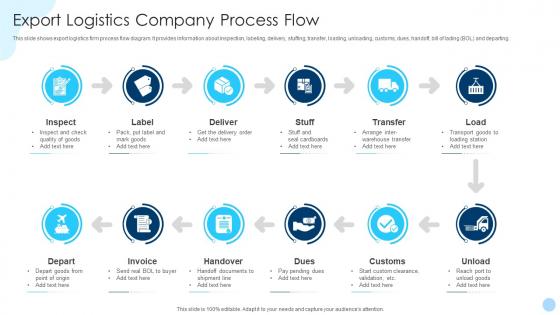
Export Logistics Company Process Flow




Try Before you Buy Download Free Sample Product
 Impress Your
 Audience
 100%
100% Editable
 Save Hours
 of Time


This slide shows export logistics firm process flow diagram. It provides information about inspection, labeling, delivery, stuffing, transfer, loading, unloading, customs, dues, handoff, bill of lading BOL and departing.
People who downloaded this PowerPoint presentation also viewed the following :
Export Logistics Company Process Flow with all 6 slides:
Use our Export Logistics Company Process Flow to effectively help you save your valuable time. They are readymade to fit into any presentation structure.





FAQs for Export Logistics
Basically you've got six main steps: processing the order and prepping docs, booking freight + pickup, customs clearance on your end, the actual shipping overseas, customs at destination, then final delivery. Documentation's honestly where most people get stuck initially - commercial invoices, packing lists, certificates of origin, plus whatever weird permits your specific product needs. Get a freight forwarder involved super early though, they'll handle the customs headaches and carrier stuff for you. I'd start by just mapping out these steps for whatever you're shipping and where it's going first.
So Incoterms are basically who does what in shipping - super important for planning everything out. FOB means you just get stuff to the port and you're done. DDP though? You're stuck dealing with customs at their end, which honestly sucks. The terms completely change your costs, timing, how much paperwork you'll need. Insurance, freight, customs clearance - could be yours or theirs depending on what you agreed to. I always nail down the incoterm first thing because it affects literally your entire logistics plan. Don't let them spring a different one on you later.
So there's tons of cool stuff happening with export logistics tech right now. AI is getting way better at route planning and predicting demand. IoT sensors let you track everything in real-time - like where your containers are, temperature, all that. Blockchain's supposed to make paperwork more secure but honestly it's taking forever to catch on in some places. Cloud platforms are pretty much handling all your customs docs and freight stuff now. Oh, and ports are automating like crazy which speeds things up a lot. I'd figure out what's driving you most insane first, then tackle that.
Honestly, start by batching your shipments - don't send a bunch of small ones when you could fill a whole container. Ocean freight is way cheaper than air unless something's genuinely urgent (though yeah, customers always act like everything is). Work with freight forwarders to get better rates, and maybe look into free trade zones for storage. Oh, and automate that paperwork stuff - I was surprised how much time those export forms actually waste. Free trade zones are underrated btw. First thing though? Audit what you're shipping now to see where you can combine orders.
Documentation will make or break your shipment - trust me on this. You need export licenses, commercial invoices, packing lists, bills of lading, certificates of origin. Missing just one? Your stuff sits in customs forever (been there, it sucks). Each paper serves different purposes - proving ownership, listing contents, meeting regulations for both countries. Requirements change completely depending where you're shipping, so make a checklist for each destination. Oh and start this process early because some certificates take forever to get. Getting organized upfront beats scrambling later when your shipment's stuck somewhere.
Documentation is everything - get your commercial invoices, packing lists, and certificates of origin perfect for each country. Honestly, tracking all these different requirements would drive me insane if I tried doing it manually! Find a solid freight forwarder or customs broker who actually knows what they're doing. Trade compliance software is worth the money too - it'll catch restricted items and keep you updated when regulations change. Oh, and build these checks into your workflow early. Trust me, you don't want to be scrambling last minute when you're trying to ship.
Oh man, where do I even start? Documentation screwups happen constantly - I swear half my job is fixing paperwork mistakes. Customs will delay your stuff for the weirdest reasons too. Then you've got transportation headaches, currency rates messing with your budget, and everyone miscommunicating. Damage claims are surprisingly common btw. Plus regulations change randomly and catch you off guard. Honestly though? Always pad your timelines with extra weeks. Find a freight forwarder who actually answers their phone - seriously, this makes or breaks everything when stuff hits the fan.
Look, tariffs totally change how you plan your whole supply chain. High tariffs to Country A? Just route through a free trade zone instead - way smarter. NAFTA and CPTPP can slash your costs by 10-25%, which honestly makes or breaks your margins. But here's the thing - you can't mess up those rules of origin requirements or you lose all the preferential rates. I learned that one the hard way once. Short version: check your trade agreement options first, then figure out your logistics and supplier spots. Saves you tons of headaches later.
Definitely set up those automated notifications for all the big stuff - pickup, port arrival, customs, delivery. Your freight forwarder's portal is gonna be your best friend, but honestly? Double-check it against the actual carrier sites because they don't always match up (found that out the annoying way). I'd go with SMS alerts over email - way faster when something goes sideways. Oh, and update your customers before they bug you about it. Having backup tracking sources is clutch since systems crash at the worst possible times. Multiple touchpoints = less stress for everyone.
Hey! So first thing - get solid insurance for cargo, transit, and political risks. Build in checkpoints at every stage, from vetting suppliers to final delivery. Real-time tracking is huge so you catch problems early. Have backup suppliers and shipping routes lined up because stuff goes wrong constantly - port delays, regulatory changes, whatever. Honestly the companies that wait until crisis mode to think about this are the ones that get burned. Make risk assessment part of your regular planning routine instead of an afterthought. Oh and definitely have contingency plans ready to roll.
So basically, air gets your stuff there in like 1-7 days but you're gonna pay through the nose - seriously, 5-10x more than shipping by sea. Ocean takes forever (2-6 weeks) but it's way cheaper, especially for heavy stuff. Air has stricter limits on size and weight too, plus different paperwork. Honestly, I always go ocean for anything bulky like machinery - no point burning cash if you're not in a rush. Choose air when you need it fast and don't mind the cost, ocean when you can plan ahead and want to save money.
Dude, cultural stuff will seriously mess up your export game if you don't plan for it. Business hours are completely different everywhere, plus holidays can shut things down for weeks - I learned that the hard way during Chinese New Year once. Communication styles vary too. Some cultures want to build relationships first before any real business happens, which slows everything down. Others make decisions super fast while some take forever to negotiate. Honestly, just research the cultural norms beforehand and build extra time into your schedules. You'll thank yourself later when things don't go sideways.
So there's a bunch of stuff you should track, but the big ones are transit times, shipping costs (all the hidden fees too), and whether stuff actually arrives on time. Documentation errors are the worst - customs will hold everything up over stupid paperwork mistakes. I'd also watch inventory turnover and customer feedback, plus how well your carriers are actually performing. Oh, and compliance issues before they bite you. Honestly, just throw it all into a basic dashboard and check monthly. You'll catch problems way earlier that way.
Look, 3PLs are game-changers for exports. They handle all the messy customs paperwork and international regulations - stuff that'd take forever to master yourself. Their networks are already built, which is huge. Trust me, you don't want to be dealing with shipping disasters at 2am when there's a problem in some random port. The volume discounts alone usually make it worth it, plus way fewer headaches overall. I'd say figure out what's currently driving you crazy in your export process first. That's probably where you'll see the biggest win from partnering up.
Honestly, packaging is like armor for your stuff - it's gotta survive everything from getting tossed around at ports to crazy temperature swings during those long ocean trips. Different shipping methods are brutal in their own ways too. Air freight's obviously faster but ocean containers? Your boxes might sit in humidity for weeks. Match your packaging to how fragile your product is and what abuse it'll face. Oh, and definitely check what packaging rules your destination country has first - some places are super picky about materials. Build heavy-duty protection if you're shipping delicate stuff, but don't go overboard for sturdy items.
-
mk
-
Perfect template with attractive color combination.
-
You can rely on SlideTeam whenever you run out of designs for your presentation. Thank you so much SlideTeam!