

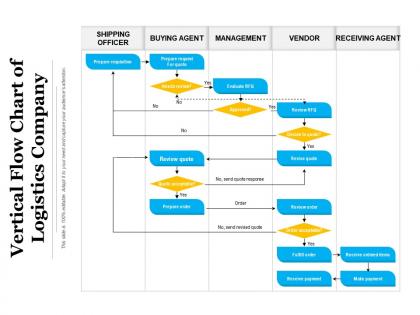
Vertical flow chart of logistics company




Try Before you Buy Download Free Sample Product
 Impress Your
 Audience
 100%
100% Editable
 Save Hours
 of Time


Our Vertical Flow Chart Of Logistics Company are topically designed to provide an attractive backdrop to any subject. Use them to look like a presentation pro.
People who downloaded this PowerPoint presentation also viewed the following :
Vertical flow chart of logistics company with all 2 slides:
Use our Vertical Flow Chart Of Logistics Company to effectively help you save your valuable time. They are readymade to fit into any presentation structure.
FAQs for Vertical flow chart
So logistics breaks down into five main chunks: planning, sourcing, manufacturing, delivery, and returns. First you're forecasting demand and mapping out your supply chain. Then sourcing materials from suppliers. Manufacturing or assembly comes next, plus all that warehousing and inventory stuff (honestly the least fun part). Transportation is huge - moving goods efficiently from A to B. Finally there's customer delivery and handling returns. The key is making sure each stage flows into the next without hiccups. You'll want visibility across everything so you can catch bottlenecks early before they screw you over.
Honestly, tech can totally save you here. Start with just one problem area though - don't go crazy trying to fix everything. Warehouse management systems are clutch for tracking inventory automatically. Route optimization cuts your delivery times (and gas costs, which adds up fast). IoT sensors let you see where shipments are in real-time, which customers love. The AI forecasting stuff is weirdly good at predicting demand - like almost too good sometimes. Automated sorting and robots crush the repetitive work way faster than people can. Pick your biggest headache first, then grab one solution that'll actually solve it.
So inventory management is basically what keeps your whole logistics thing from falling apart. You need to know what you have, where it is, and when you'll run out - otherwise you're just guessing and that never ends well. Bad tracking means you'll either have way too much stuff taking up expensive warehouse space or you'll be scrambling when customers want something you don't have. The real game-changer though? Getting your inventory system to sync up with your logistics platform in real-time. That's honestly where most coordination headaches come from. It also helps you figure out better warehouse layouts and delivery routes, which is pretty clutch.
Honestly, demand forecasting is probably gonna be your worst nightmare - mine always was. Inventory gets messy fast, and transportation delays happen constantly. Cost pressures never stop but you still gotta hit service levels somehow. Getting real-time visibility across all your partners and systems? Good luck with that. Then there's compliance stuff and sustainability reqs on top of everything else. My advice? Fix your demand planning first, then work on supplier relationships. Those two things will clean up most of your other headaches down the line.
Honestly, start with route planning software - that's where you'll see money back fastest. Three big things to tackle: routes, inventory, and supplier deals. Get logistics software to map efficient deliveries and bundle shipments when you can. Inventory's tricky though - you want it lean but can't run out of stuff. That balance is annoying but you'll figure it out. Negotiate harder with carriers, maybe team up with 3PLs for better rates. Oh and rearrange your warehouse layout if it's messy - sounds boring but even small changes cut tons of time on packing.
Yeah so globalization totally messes with your supply chain game plan. COVID taught us that putting all your eggs in one basket is a terrible idea - diversify suppliers across different regions for sure. Tariffs and customs stuff changes constantly, which is honestly super annoying, so you need logistics that can adapt fast. International sourcing means dealing with compliance costs and way longer lead times too. Oh and build up some buffer stock for your must-have components. Keep good relationships with suppliers everywhere so you're not panicking when new regulations drop out of nowhere.
Honestly, last-mile delivery can make or break your whole customer experience. Get it right with fast options and good tracking? People will love you. Screw it up though, and you're getting roasted in the reviews. Everyone expects Amazon-speed now, which is kind of annoying but whatever - you've got to offer same-day, pickup spots, delivery windows, all that stuff. I'd start by just asking your customers what they actually want delivery-wise. That survey data will show you exactly what's worth investing in first instead of guessing.
Honestly, I'd start with the big four: on-time delivery, inventory turnover, order accuracy, and what you're spending on transportation versus total sales. Those will tell you most of what you need to know. Customer satisfaction is huge too, but good luck figuring out what part is actually logistics vs everything else your company does. Order cycle time is solid to track as well. Don't overthink it at first - nail down these basics and add the fancy stuff later once you've got your baseline down.
Dude, sustainability in logistics is actually a smart business move. Your fuel costs drop when you optimize routes. Packaging efficiently cuts waste expenses. Energy bills shrink with better warehouses. Plus customers are getting pickier about buying from eco-friendly companies - it's become a real competitive edge. Nobody wants to support planet destroyers anymore, you know? Oh and don't forget regulatory stuff is getting stricter too. My advice? Don't overthink it. Just audit what you're doing now and pick one thing to improve that'll help both the environment and your wallet.
Think of 3PLs as outsourcing your entire logistics headache to people who actually know what they're doing. Instead of building warehouses and figuring out shipping, you just hand it off to them. They've got the facilities, tech, and carrier connections already set up - plus they can usually get better shipping rates than you could on your own. Honestly, it's way cheaper than trying to do everything in-house. You'll free up your team to focus on what you're actually good at while they handle moving your stuff around. I'd start by looking at which logistics tasks are eating up most of your time right now.
Honestly, data analytics is a game-changer for logistics - no more making decisions based on gut feelings. You'll be able to predict when demand spikes are coming, find the best routes on the fly, and catch problems before they turn into disasters. Plus it helps you nail down which shipping methods actually save money (some of the "cheap" options aren't as cheap as they seem). Track stuff like delivery times and fuel costs so you know what's actually working. My advice? Pick one thing that's driving you crazy right now and dig into whatever data you've got on it.
Dude, the visibility alone is a game changer - you'll actually see what's happening across your whole operation. Real-time tracking cuts inventory costs like crazy, and suddenly coordinating between warehouses and suppliers doesn't feel like herding cats. Your customers will love the accurate delivery windows too. But honestly? The best part is discovering all these bottlenecks you had no idea existed. The data insights are wild. My advice though - don't get distracted by the fancy bells and whistles. Map out what's actually broken first, then find something that fixes those specific headaches.
Basically you're picking between speed and cost every time. Air freight? Super fast but costs a fortune - like 10x ocean shipping sometimes. Trucks are solid for shorter runs, rail's perfect when you're moving heavy stuff long distances. Ocean's cheapest but takes forever, obviously. Here's the thing though - most people overthink this. Rush orders might be worth paying air prices for, but your regular stock movements? Probably not. I'd map out what you usually ship and how fast you actually need it there. That'll tell you way more than any fancy formula.
So the big stuff right now? Warehouse robots doing all the picking and sorting - it's wild to see. Route optimization with AI is cutting delivery times like crazy. Predictive analytics helps with demand forecasting too. Autonomous vehicles aren't quite ready yet but everyone's testing them. Oh, and IoT sensors are literally everywhere now tracking temp, location, you name it. There's also this massive push for sustainable logistics tech which honestly makes sense. My advice? Start small with whatever automation fits your current volume, then just scale up from there. Don't go overboard initially.
Build redundancy everywhere before shit hits the fan. Spread suppliers across different regions - don't put everything in one place like we stupidly did during COVID. Keep extra inventory of critical stuff, even if it costs more upfront. Multiple shipping routes are clutch too. Get tracking systems that actually work in real-time so you can react fast. Honestly, the best thing we started doing was those "what if" planning sessions with the team every quarter. Sounds boring but it's saved our butts twice now. Test your backup plans when things are calm, not when you're panicking.
No Reviews