


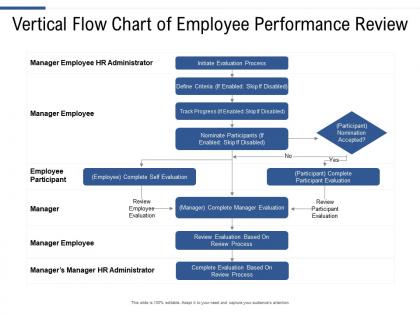
Vertical flow chart of employee performance review




Try Before you Buy Download Free Sample Product
 Impress Your
 Audience
 100%
100% Editable
 Save Hours
 of Time


Our Vertical Flow Chart Of Employee Performance Review are topically designed to provide an attractive backdrop to any subject. Use them to look like a presentation pro.
People who downloaded this PowerPoint presentation also viewed the following :
Vertical flow chart of employee performance review with all 2 slides:
Use our Vertical Flow Chart Of Employee Performance Review to effectively help you save your valuable time. They are readymade to fit into any presentation structure.

FAQs for Vertical flow chart of
Definitely include goal achievement and skill assessment sections - those are non-negotiable. Add behavioral feedback with actual examples, not just vague comments. I'd throw in a self-assessment part too so employees can reflect beforehand. Most templates totally mess up the future goal-setting piece, which is honestly the most important part. Don't skip reviewing last period's objectives either. End with concrete development plans because otherwise it's just another useless meeting. Oh, and make sure you cover both technical skills and soft skills - people always forget the soft stuff but it matters just as much.
Dude, get super specific about behaviors instead of vague personality stuff. Like don't say "better communication" - say "prep talking points beforehand and pause for questions every few minutes when you're with clients." I used to give terrible feedback for years before figuring this out! Give them 1-2 concrete things they can actually do in the next month. The real game-changer though? Don't wait until their next review to check in. Schedule quick follow-ups to see how they're doing with those specific goals. Makes such a difference.
Look, self-assessments are basically your chance to control the story before your manager jumps in. Fill out that form honestly - your wins, what went sideways, future goals. Your boss will actually appreciate not going in completely clueless (trust me on this one). Don't just write fluff though. Be real about what you crushed AND where you want to improve. I know it feels weird praising yourself, but think of it as making your case. Why do you deserve that promotion or raise? This is literally your moment to spell it out.
Honestly, tools like BambooHR or 15Five are lifesavers for this stuff. They handle all the scheduling headaches and send automatic reminders so you're not chasing people down. Everything gets stored in one spot - self-assessments, manager notes, the whole deal. Way better than digging through old emails trying to remember what Sarah did last quarter (been there). The AI analytics are pretty decent at catching trends too, though nothing replaces just... you know, actually checking in with people regularly. But having it all documented and easy to find? Total game-changer for staying organized year-round instead of panicking during review time.
Okay so first thing - prep some concrete examples ahead of time, both good stuff and things that need work. Don't just wing it with vague feelings about their performance. Also check what goals you set last time and think about what kind of help they actually need now. Block out way more time than you think because honestly these talks always go sideways lol. Instead of just telling them your thoughts, ask stuff like "How do you think you're doing with X?" Make it actually conversational - nobody wants to just sit there getting talked at. Oh and put your laptop away! Listen to what they're saying. You might learn something unexpected.
Track the stuff that actually matters - are people performing better after reviews? Is turnover going down? Employee surveys are clutch here. Ask if they think the process helps or just wastes time. So many places obsess over completion rates while the actual quality is garbage. Check if your top people stay motivated and underperformers either step up or leave. Honestly, the whole system's pointless if it doesn't drive real results. I'd start by asking employees how their last review went - you'll learn more from that than any spreadsheet.
Oh man, performance reviews are a minefield! Recency bias hits everyone - you'll only remember what happened last month instead of the whole year. Then there's the halo effect where someone's one amazing project makes you forget they screwed up everything else. I'm definitely guilty of similarity bias too, rating people higher just because they remind me of myself somehow. Confirmation bias is probably the worst though - you end up hunting for evidence that backs up what you already think. Attribution bias gets tricky with crediting luck vs actual performance. Honestly, just keep notes throughout the year and review them first.
Honestly, quarterly reviews with one big annual eval works best. Monthly is overkill - nobody wants their boss breathing down their neck that much. But a whole year? Way too long. People get frustrated when good work goes unnoticed, and problems just get worse. With quarterly check-ins, you can fix stuff quickly and celebrate wins while people still remember them. Most employees actually prefer it over those dreaded once-a-year meetings. Just do 30-minute sessions focused on growth, not boring performance ratings. Way less stressful for everyone.
Honestly, peer feedback is a game changer because your coworkers see how you actually work day-to-day. Your manager might miss stuff that teammates notice right away. Like, they know if you're actually helpful in meetings or just talk a lot (guilty as charged sometimes). You get way more practical advice since they're dealing with the same BS you are. Plus people appreciate when you ask for their input - builds better relationships. I'd start with maybe 2-3 people you're tight with and ask for specific examples of what's working and what isn't.
Honestly, the trick is working backwards from your big company goals. Break those down by department first, then get specific with individual roles. When you're doing reviews, don't just hand people random tasks - actually explain how their work connects to real business stuff like revenue or customer happiness. I've watched this totally flop when managers skip the "why" part. People need to see how their daily grind actually moves things forward, you know? Track results that roll up to those bigger priorities. Otherwise you're just creating busy work, which nobody wants.
Honestly, the biggest thing is getting your criteria nailed down before you even start reviews - like, what exactly counts as "good performance"? Train all your managers the same way so nobody's doing their own random thing. Throughout the year, don't just hoard feedback until review time rolls around. Give people regular updates so they're not sitting there wondering how they're doing. Multiple reviewers help catch when someone's being unfair (intentionally or not). Document everything because trust me, you'll need it later. The whole point is transparency - people shouldn't be shocked by what they hear during reviews.
Dude, skip the generic "great job" stuff. Call out their actual wins from the review - like "your client strategy boosted renewals 15%" instead of vague praise. Here's the thing though - people remember good recognition way longer than bonus money. Figure out what actually motivates them first. Some want the public praise, others just want flexibility or growth opportunities. Be specific and don't wait forever to do it. Honestly, I'd start planning their reward right after you wrap up the review while it's all fresh.
Your managers definitely need training on giving real feedback - not just the vague "good job" stuff. Teach them to document things year-round instead of panicking before reviews (we've all been there). Role-playing awkward scenarios actually works way better than you'd think. They should learn SMART goals, how to listen properly, and honestly? How to give tough feedback without being jerks about it. The whole point is connecting performance to actual business results and creating development plans that aren't total BS. I'd start with like a half-day workshop covering the basics.
Think of performance reviews as showing you exactly what your employee wants next. Their strengths? Those point to stretch assignments and promotions they could handle. Skill gaps need training or mentoring - pretty straightforward. I usually map what they're already crushing against what needs work. Then connect each piece of feedback to something concrete: new projects, job shadowing, courses, whatever fits. Honestly, most managers skip the follow-through part, but that's where the real growth happens. Don't be one of those people.
Dude, performance reviews can totally make or break whether people stick around. Done right, they show employees you actually give a damn about where they're headed career-wise. People feel valued when you acknowledge their wins and give them a real roadmap forward. But honestly? Terrible reviews are way more damaging than just skipping them entirely - I've seen that backfire so many times. Make it a genuine conversation, not some corporate checklist situation. Nobody wants to sit through performance theater, you know? Good people will bail if it feels fake. Give them specific feedback and actual next steps they can work with.
No Reviews