


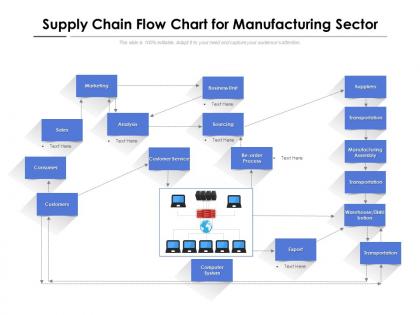
Supply chain flow chart for manufacturing sector




Try Before you Buy Download Free Sample Product
 Impress Your
 Audience
 100%
100% Editable
 Save Hours
 of Time


Our Supply Chain Flow Chart For Manufacturing Sector are topically designed to provide an attractive backdrop to any subject. Use them to look like a presentation pro.
People who downloaded this PowerPoint presentation also viewed the following :
Supply chain flow chart for manufacturing sector with all 2 slides:
Use our Supply Chain Flow Chart For Manufacturing Sector to effectively help you save your valuable time. They are readymade to fit into any presentation structure.
FAQs for Supply chain flow chart
Okay so you'll want to nail down four main things: demand planning, supplier relationships, inventory optimization, and logistics coordination. I know that sounds overwhelming but they actually connect pretty naturally once you figure it out. Strong data analytics will save your butt - you can spot problems before they blow up. Communication is huge too. Map out what you're doing now first, then see which area needs work. Everyone from suppliers to customers should know what's going on, otherwise you're just asking for chaos. Start there and build from it.
Dude, honestly the visibility thing alone is worth it - no more endless calls trying to track down shipments. IoT sensors can monitor everything in real-time, while AI figures out demand patterns before you do. Cloud platforms connect all your suppliers so you're not juggling fifty different systems (been there). Automation cuts out those annoying human errors in inventory and orders. Start small though - maybe just inventory tracking first, then build from there. The predictive stuff is pretty cool too since it catches problems early. Way better than scrambling when something goes sideways.
Look, data analytics totally changed how supply chains work. You can actually predict what you'll need instead of just guessing - tracks demand patterns, catches bottlenecks before they screw you over. Real-time visibility across everything beats the old "hope for the best" method by miles. Start with clean data from whatever systems you've got running already. Then build dashboards that show stuff you can act on, not just fancy graphs that look impressive but don't help. I swear half the companies I've seen focus too much on making things look pretty rather than useful.
Honestly, global crises are like pop quizzes for your supply chain - they expose every weakness you didn't see coming. Pandemics shut down suppliers overnight. Natural disasters mess up shipping routes. Demand suddenly spikes in weird places. Companies that recover fast? They've got suppliers spread across different regions, not everything crammed into one country (learned that lesson the hard way during COVID). You need backup plans for your critical suppliers and some kind of tracking system so you can actually see what's happening in real-time. Otherwise you're just crossing your fingers hoping nothing breaks.
Honestly, supplier consolidation is your biggest win here - fewer vendors gives you way better negotiating power plus less paperwork headaches. Demand forecasting tools are clutch too (wish I'd figured that out sooner instead of sitting on mountains of inventory). Transportation's another huge one - optimize your routes and maybe find some regional suppliers instead of shipping everything cross-country. Oh and basic automation for inventory management pays for itself crazy fast. I'd hit the supplier thing first since it's usually the easiest to tackle and saves the most money right off the bat.
Look, your customers already expect this stuff - it's not going away. Regulations keep getting stricter too. Companies are getting hit hard when they ignore what's happening in their supply chains, environmentally and socially speaking. The thing is, sustainable practices usually end up saving you money anyway through better efficiency and less waste. Map out where your biggest environmental problems are first - that's your starting point. Then build sustainability into how you pick suppliers, not just the usual cost and timing metrics. It's honestly becoming a business risk if you don't.
Honestly, the biggest pain is just keeping track of everything when suppliers are scattered everywhere. You can't see what's happening in real-time like you would with everything centralized. Communication gets messy fast - different vendors, different systems, sometimes different languages. Quality control? Good luck standardizing that across multiple locations. Plus coordinating between all these moving pieces becomes this whole thing. I'd definitely get some kind of supply chain platform that pulls all the data together in one place. Makes life way easier when you can actually see what's going on.
Look, transparency is everything here. Get some collaborative planning tools so everyone can actually see inventory levels, demand forecasts, production schedules - the whole picture. Short meetings help too (nobody wants to sit through endless PowerPoints). Make sure you're all working toward shared KPIs instead of everyone just protecting their own turf. Joint risk planning sessions are smart. Oh, and this goes both ways - give your partners visibility into your stuff but demand the same back. Honestly, most supply chain problems come down to people working in silos when they should be coordinating.
Start with on-time delivery, inventory turnover, order accuracy, and cost per shipment - those are your bread and butter metrics. Fill rate's huge too since it shows how often you can actually fulfill complete orders from what you've got in stock. Honestly, I'd nail down these basics before diving into the fancier stuff like perfect order rate. That can wait. Don't go crazy with too many metrics right off the bat or you'll drown in spreadsheets. Three to four max. Focus on whatever hits your customers first - that's what actually moves the needle anyway.
Honestly, those two are like best friends - you can't really separate them. Your demand forecasts basically tell you what to buy and when. Get the forecasting wrong? You're either drowning in extra stock (which sucks for cash flow) or constantly running out of stuff. Safety stock, reorder points, purchase amounts - all of that hinges on decent predictions. I learned this the hard way at my last job, actually. But here's the thing: even tiny improvements in forecasting make inventory management so much easier. Start there first - it'll save you tons of headaches down the road.
Honestly, automation is a game-changer for supply chains but it's not cheap upfront. Your accuracy goes through the roof with automated sorting, and you get real-time tracking across everything. Efficiency gains are huge, costs drop over time. But yeah, people lose jobs and systems can crash when you least expect it. I'd probably test it in just one warehouse first - work out the bugs before going all-in. My cousin's company did that and it saved them from a disaster when their initial setup had major glitches.
Honestly, you've gotta build this stuff into your planning from the start - can't just slap it on later. Map out your critical suppliers first and spot where you're totally screwed if one goes down. Then run different scenarios when you're forecasting demand and planning inventory. Something WILL go wrong (trust me on this), so keep buffer stock for risky components. Build those backup supplier relationships now, not when you're panicking. Oh, and make checking for risks as normal as checking inventory levels. It becomes second nature after a while, which is exactly what you want.
Ugh, regulations totally mess with your supply chain flow. Different countries have their own safety standards, environmental rules, labor laws - it's honestly like regulatory Tetris sometimes! Trade compliance becomes this whole thing you didn't expect. But here's what's weird - some companies actually get ahead by knowing the rules better than competitors. They find compliant suppliers others miss or enter markets faster. Oh, and definitely get a customs broker and trade attorney on speed dial before you desperately need them. Trust me on that one.
Okay so three main things to nail down: visibility, flexibility, and communication. Map out your whole supply chain first - not just the obvious tier-1 suppliers, but dig deeper since that's where most companies get blindsided. Don't put all your eggs in one basket either - multiple suppliers and backup routes are clutch. Here's the thing though: when shit hits the fan, communicate constantly with everyone involved. Even if you're still figuring things out, radio silence is way worse than admitting you don't have all the answers yet. Start by auditing who you're working with now and spot those single points of failure.
Dude, AI can basically touch every piece of your supply chain. Demand forecasting is probably the biggest win - it crunches historical data and market trends way better than spreadsheets. Inventory management becomes way less stressful too since it prevents those "oh shit we're out of stock" moments. Route optimization for deliveries, predictive maintenance, supplier risk stuff - honestly the list goes on. Even customer service chatbots don't totally suck anymore. My advice? Don't try to boil the ocean right away. Pick something that's already driving you crazy, like demand planning, and test it there first.
No Reviews