

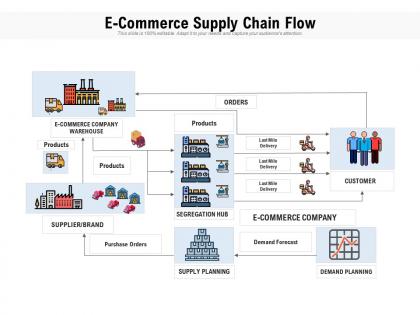
E commerce supply chain flow





Try Before you Buy Download Free Sample Product
 Impress Your
 Audience
 100%
100% Editable
 Save Hours
 of Time


Our E Commerce Supply Chain Flow are explicit and effective. They combine clarity and concise expression.
People who downloaded this PowerPoint presentation also viewed the following :
E commerce supply chain flow with all 2 slides:
Give your audience a fulfilling experience. They will find our E Commerce Supply Chain Flow elevating.
FAQs for E commerce
So you've got suppliers/manufacturers at the start, then warehouses and inventory systems. Order processing comes next, plus shipping partners. Returns are massive in e-commerce - seriously, plan for that early or you'll hate yourself later. Customer service touches everything, and payment processing has to sync up with all of it. Data flow between components is what makes or breaks real-time tracking. Honestly? Just sketch out your current process first. Shows you exactly where things get stuck instead of guessing.
Look, inventory management can totally make or break your e-commerce business. You need accurate stock levels and decent forecasting so orders actually get to customers on time. But there's this annoying balance - hold too much inventory and your cash gets tied up, stock too little and you'll have angry customers. I learned this the hard way honestly. The goal is having enough product in the right places without going overboard. Get some real-time tracking tools and demand forecasting set up. It'll save you major headaches down the road and keep everything running smooth.
So logistics companies are like the middlemen that get your online orders from warehouses to your door. They do warehousing, manage inventory, pack orders, and handle that final delivery step. You've got the big players like FedEx and UPS, but there's also smaller ones doing crazy fast same-day stuff. Returns processing is another thing they deal with - which honestly saves retailers a ton of headache. If you're thinking about e-commerce, picking the right logistics partner matters way more than people realize. Check their delivery speeds and where they actually deliver before you sign anything though.
Look, IoT sensors and RFID tags basically give you eyes everywhere in your supply chain. No more calling around to figure out where stuff is. Your systems talk to each other through APIs - inventory, shipping, warehouses, all synced up automatically. Honestly feels like cheating compared to the old days. Cloud dashboards show you problems before customers start complaining, which is clutch. I'd start simple though - just get your main carriers and warehouse system talking first. You can always add more bells and whistles later once you're not pulling your hair out.
Honestly, don't rely on just one supplier - learned that the hard way during COVID. Spread your bets around and keep some extra stock of your must-have items. Real-time tracking is clutch so you catch problems before they blow up. Multiple shipping partners saved my butt more times than I can count. Map out where you're most vulnerable right now and fix those spots first. Oh, and backup routes are everything when your main logistics go sideways. The whole game is about seeing issues coming fast enough to actually do something about it.
Honestly, last-mile delivery can totally make or break your whole business. Customers remember that final step more than anything else – if their package shows up late or damaged, they'll forget all the good stuff that happened before. I've seen companies nail everything in their supply chain but then lose customers because of sketchy delivery partners. Real-time tracking helps a ton though. People just want to know where their stuff is, you know? When deliveries go smoothly with good updates, customers actually become repeat buyers. But mess up that final handoff and your reviews will tank fast.
Dude, don't put all your eggs in one basket with suppliers - learned that lesson when our main guy just vanished last year, total nightmare. Get 2-3 solid options for each product and actually check their certifications and financials before committing. Build real relationships with them too, not just transactional stuff. Geography matters more than people think - closer suppliers = cheaper shipping and faster turnaround. Quality checkpoints are non-negotiable, and honestly? Line up backups before you're scrambling. Supply chain issues hit everyone these days, so being prepared isn't paranoid, it's smart business.
Honestly, data analytics is a game changer for supply chain stuff. Instead of just winging it, you can actually predict when demand's gonna spike and keep inventory at the right levels. Spotting bottlenecks becomes way easier too - before they cost you money. The cool part? You'll see patterns in customer buying habits and seasonal trends that would take forever to notice otherwise. Plus supplier performance tracking becomes automatic. I'd start simple though - just basic dashboards showing your main metrics. Even that will probably reveal opportunities you're totally missing. It's wild how much clearer everything becomes once you can actually see the data.
Ugh, where do I even start? Customs is the worst - packages just sit there forever while regulations change randomly by country. Shipping costs are all over the place too, which kills your profit margins. Currency keeps fluctuating, taxes are different everywhere, and don't get me started on the paperwork disaster. Your customers won't be thrilled about waiting weeks for deliveries either, especially when returns cost a fortune. Honestly, I'd just pick one or two countries first. Find some decent local shipping partners and get solid tracking so you can at least tell people where their stuff is when everything inevitably goes wrong.
Honestly, just make returns brain-dead simple for customers. Clear policies, auto-generated return labels, the whole deal. Speed is everything here - get items inspected and back on shelves fast or your cash flow tanks. I'd set up a dedicated returns area in your warehouse too. Here's the thing though - pay attention to what's coming back. Same product keeps showing up? Your descriptions are probably off or there's a quality issue. Oh, and here's a neat trick: push exchanges or store credit through your returns portal instead of straight refunds. Keeps customers around longer.
Honestly, sustainability is making e-commerce companies totally overhaul their supply chains. Start with something manageable like eco-friendly packaging - don't try to fix everything at once. Yeah, upfront costs are gonna sting a bit. But customers actually care about this stuff now, plus regulations keep getting stricter. You'll need carbon-neutral shipping, suppliers who aren't environmental disasters, and some kind of returns/recycling setup. My cousin's company started with just switching their mailers and it wasn't as expensive as they thought. Build from there once you see what fits your budget.
So basically these platforms become the middleman between you and your customers. Amazon, eBay - they set all the rules now. Your fees, fulfillment requirements, everything. It's weird because you lose control over that final customer touchpoint, but honestly? Their logistics network is insane. The tricky part is inventory planning gets way harder. You're fighting thousands of other sellers for attention, so predicting demand becomes this total guessing game compared to direct sales. Oh and their algorithms change constantly which doesn't help.
Honestly, supply chains are getting wild right now. Predictive analytics and smart warehouses are popping up everywhere - it's like watching sci-fi become reality. Customers won't shut up about sustainability either, which fair enough, but it's forcing companies to rethink everything from packaging to delivery methods. Real-time tracking is basically expected now (crazy how "in transit" used to be acceptable). Same-day delivery is the new gold standard, so everyone's building these hyperlocal distribution hubs. Oh, and don't even get me started on omnichannel - customers expect perfection across every platform. My advice? Pick one thing like AI inventory forecasting and nail that first. Don't try revolutionizing everything simultaneously or you'll lose your mind.
Honestly, partnerships are like having a backup plan for your backup plan. You can spread out your suppliers, share warehouse space, maybe even use their delivery networks when yours craps out. Build those relationships NOW while everything's chill - with suppliers, shipping companies, hell even competitors sometimes. When supply chains inevitably get screwed (because they always do), you'll already have people to call instead of frantically googling alternatives at 2am. Map out who you could partner with before you actually need them. Trust me on this one.
Look, your customers are basically calling the shots here. Same-day delivery expectations? You'll need warehouses everywhere. Black Friday hits and suddenly everyone's panic-buying - good luck predicting those spikes. Fashion and electronics are the worst for returns, which totally screws with your inventory numbers. I learned this the hard way at my last job. Short story: dig into your customer data to figure out shopping patterns. Then adjust where you put warehouses, how much stock you keep, and which shipping partners actually deliver on time. Don't fight how people shop - just roll with it.
No Reviews