

Five Pillars Of Operational Excellence Model




Try Before you Buy Download Free Sample Product
 Impress Your
 Audience
 100%
100% Editable
 Save Hours
 of Time


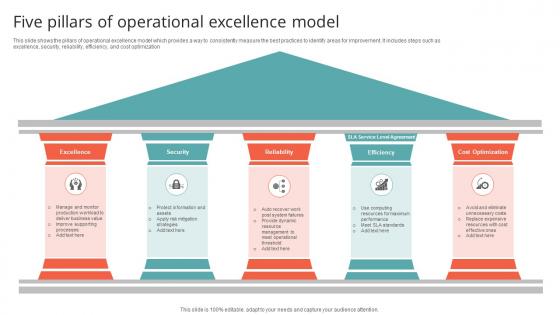
This slide shows the pillars of operational excellence model which provides a way to consistently measure the best practices to identify areas for improvement. It includes steps such as excellence, security, reliability, efficiency, and cost optimization
People who downloaded this PowerPoint presentation also viewed the following :
Five Pillars Of Operational Excellence Model with all 6 slides:
Use our Five Pillars Of Operational Excellence Model to effectively help you save your valuable time. They are readymade to fit into any presentation structure.





FAQs for Five Pillars Of
So the basics are continuous improvement, customer focus, getting employees involved, using data to make decisions, and having standard processes. Pick something that's driving everyone crazy and map out how it actually works right now. Manufacturing usually goes with lean, service companies do Six Sigma or Kaizen stuff. Healthcare's all about patient safety, tech companies are obsessed with automation and dashboards - which honestly makes sense. But here's the thing: your industry matters way less than getting people on board. Just ask your team what's broken and actually listen. That's where you'll find the real problems worth fixing.
Mix leading and lagging indicators for the full picture. Cycle time, defect rates, customer satisfaction, cost per unit - that's your bread and butter. Employee surveys are honestly underrated since they know what's actually working day-to-day. Track how fast you're rolling out improvements too, and whether they stick around long-term (that's where most people mess up). Don't go crazy with metrics though. Pick 3-5 that match your goals. Simple dashboard, monthly team reviews to catch trends early. Way better than drowning in data you'll never look at.
Your leaders totally make or break this stuff. Seriously, if they're not actually doing the continuous improvement thing themselves, why would anyone else care? The good ones I've worked with always ask "how do we make this better?" instead of just pushing for speed. They celebrate the small wins, admit when something's broken, and - this is huge - they actually listen when people point out problems. Oh, and they invest in proper training instead of expecting miracles. I've watched so many teams fail because leadership just pays lip service to operational excellence. That fake-it-till-you-make-it approach crashes hard every time.
Honestly, the biggest pain is just getting people to actually change anything - everyone's so stuck in their old routines. Departments never talk to each other either, which drives me crazy. Leadership buy-in is huge too; without that you're basically screwed from the start. Most places also mess up by tracking the wrong stuff or trying to fix everything at once (been there). Oh, and good luck getting enough budget or people assigned to actually make improvements happen. My advice? Start super small with something you can win quickly, then use that momentum to tackle bigger stuff once you've got some proof it works.
Honestly, these frameworks are game-changers for fixing messy operations. Lean strips out all the useless stuff that doesn't actually help your customers. Six Sigma? That's your data nerd approach - finds problems through numbers instead of guesswork. I've seen companies transform just by using both together. Your team starts naturally hunting for improvements instead of accepting "that's just how we do things." Pick one annoying process first and literally draw it out step-by-step. You'll probably find three things to fix immediately. Way better than crossing your fingers and hoping stuff improves on its own.
Honestly, tech can be a game-changer for operations if you do it right. Start with your biggest headaches - what's slowing you down or causing the most errors? Automation handles all that repetitive stuff so your team can focus on work that actually matters. Real-time dashboards are clutch for tracking what's important (not just vanity metrics). Cloud tools make collaboration way smoother, especially if you're scaling. AI's getting scary good at predicting when equipment might fail or spotting workflow issues before they blow up. I'd map out your pain points first, then find solutions that hit those specific problems head-on.
Honestly, stick to the basics first - cycle time, defect rates, customer satisfaction, and cost per transaction. Those actually tell you if things are getting better or if you're just shuffling deck chairs, you know? Oh, and don't forget employee engagement scores. Your team's doing the heavy lifting here. Start small though - maybe 3 or 4 metrics tops so you don't drown in data. Make sure you're tracking before/after numbers too. Pick stuff that connects to real business results, not the fluff that makes pretty PowerPoints but doesn't mean anything.
Honestly, engaged employees are like having extra eyes everywhere - they catch problems you'd miss sitting in meetings all day. Give people actual decision-making power and they'll find inefficiencies nobody else spots. Micromanaging just kills creativity anyway. Workers who feel heard take real ownership of quality control and error prevention. The trick is letting them both fix things AND speak up without getting in trouble. Oh, and psychological safety isn't just HR buzzword stuff - people genuinely won't improve processes if they think they'll get blamed for pointing out what's broken.
Honestly, you've gotta tie your ops metrics straight to whatever leadership actually cares about. Customer satisfaction matters? Track response times and quality scores, not random stuff that's just easy to measure. Cross-functional reviews are clutch when priorities change - which happens way more than anyone admits. Set up cascading scorecards so your team sees how fixing that broken process actually helps the company hit its big goals. Otherwise people just think they're doing busy work. The whole point is making it obvious how operational wins translate to business wins. Sounds basic but most places totally whiff on this connection.
Look, customer feedback is basically your cheat sheet for figuring out what's actually broken in your operations. When people complain about wait times or confusing processes, that's telling you exactly where to focus. I've watched teams waste months perfecting stuff that looked amazing internally but completely missed what customers cared about - such a headache. Use satisfaction scores to prioritize which fixes will actually move the needle. Map your worst feedback directly to specific processes first. Those are your quick wins. Don't get caught up optimizing things that already work fine.
Honestly, Toyota nailed this first - their whole lean manufacturing thing is basically the blueprint everyone copies now. Amazon's warehouses are insane too, they're obsessed with getting stuff to you crazy fast through all their automation. Then there's 3M with Six Sigma, which totally changed how they handle quality control across like thousands of products. The smart thing? None of them just focused on cutting costs. They actually redesigned how work flows based on what customers actually want. I'd say pick one process you deal with and map out every single step - you'll spot the bottlenecks pretty quick.
So first step - grab data from your main processes. Cycle times, error rates, how you're using resources, customer feedback, that stuff. Analytics tools will catch patterns you'd totally miss otherwise. Heat maps show exactly where things get stuck (seriously game-changing), and trend analysis helps you spot problems before they blow up. The boring spreadsheets honestly give you the best insights half the time! Focus on metrics that actually matter to your bottom line. Don't go crazy though - pick one process area first, show it works, then roll it out everywhere else.
So there's three main things you gotta hit: process improvement stuff like Lean/Six Sigma, leadership development, and cross-functional training. Honestly, the leadership part is where most companies totally screw up. Your managers need to actually coach this stuff, not just bark orders about it. I'd start with hands-on workshops where people work through real problems they're dealing with. Communication and change management training matters too - probably more than you'd think. Oh, and don't roll this out company-wide right away. Pick a department that's actually excited about it first.
So you know how departments never talk to each other? That's literally your biggest efficiency killer right there. Getting teams to actually collaborate means you catch issues way earlier - like Finance can warn Operations before they blow the budget on some expensive solution. IT and ops can work together on tech that solves real problems instead of imaginary ones. Everyone gets how their work connects to the bigger picture. Honestly, just start with regular cross-team meetings where people share what's working and what sucks. You'll be amazed at the opportunities you've been missing.
Think of sustainability as your long-term game plan - you can't really nail operations if you're just burning through resources like crazy. It forces you to build processes that actually last, not those quick fixes that blow up in your face later. Honestly, companies find so much waste they didn't even know about once they start tracking this stuff. The trick is baking those sustainability numbers right into your regular performance metrics from day one. That way you're hitting both efficiency and staying power at the same time. Makes way more sense than treating them separately.
-
Templates are beautiful and easy to use. An amateur can also create a presentation using these slides. It is amazing.
-
Really like the color and design of the presentation.