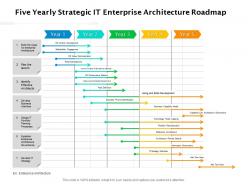
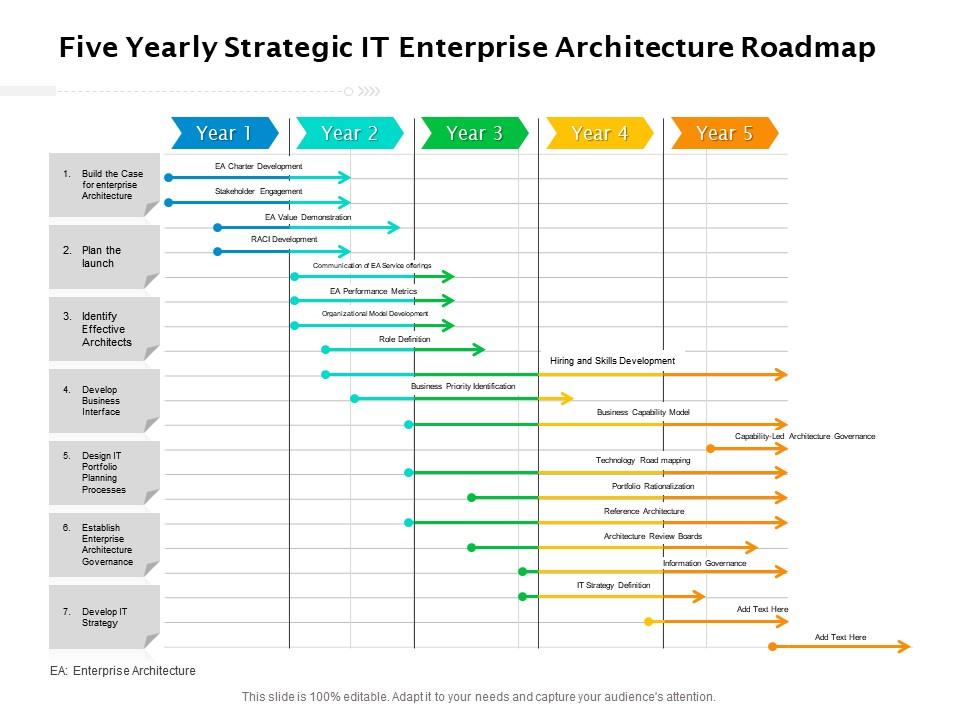
Five yearly strategic it enterprise architecture roadmap
Try Before you Buy Download Free Sample Product
Audience
Editable
of Time
The success rate of business plans is hugely dependent on the plan of action, and this editable Five Yearly Strategic IT Enterprise Architecture Roadmap rightly serves the purpose. Encapsulate all the information related to the project in a well structured manner to obtain maximum efficiency by incorporating our stunning PowerPoint theme. State the critical deliverable, steps involved, time frame, workforce allocation, and lots more in an easy to understand manner by utilizing this pre designed roadmap PowerPoint layout. You can also prioritize your tasks and discuss the problem areas with your colleagues by incorporating this tailor made PPT layout. Empower your work plan by employing this professionally designed PPT theme. Entrepreneurs can download Five Yearly Strategic IT Enterprise Architecture Roadmap as a beneficial communication tool that facilitates in collaborating with different tasks and achieve targets.
People who downloaded this PowerPoint presentation also viewed the following :
Five yearly strategic it enterprise architecture roadmap with all 2 slides:
Give your audience a fulfilling experience. They will find our Five Yearly Strategic IT Enterprise Architecture Roadmap elevating.
FAQs for Five yearly strategic it
So you'll need the basics first - current state assessment, future vision, gap analysis. Then build your transition roadmap with realistic timelines. Governance structure and risk strategies are crucial (executives love that stuff). Make sure you've got clear milestones and dependencies mapped out so you can actually track progress. Oh, and build in regular review cycles because priorities change constantly - learned that one the hard way. I'd start by documenting where you're at today, then work backwards from your target architecture. Break it into phases that won't overwhelm everyone.
So basically the roadmap translates business wants into tech reality. Map their goals to actual capabilities first. Then figure out timing for your architecture changes - what comes first, second, etc. I always think of it like connecting two sides that speak different languages. Business people in early conversations is huge though, otherwise you're just building shiny stuff nobody needs. Show clear wins at each milestone that they can actually measure. Oh and definitely do quarterly check-ins with business leaders. Keeps everyone from going off in weird directions.
Honestly, the worst part is getting everyone on the same page - it's like trying to coordinate a group dinner with 20 people. Marketing wants their stuff prioritized while engineering is pushing back on timelines. Then you've got scope creep constantly messing with your plans. Legacy systems will tie your hands more than you'd expect, and there's never enough resources to go around. Oh, and mapping out all the dependencies between different systems? Total nightmare. I'd say start with something small first - pick one area, prove it works, then build from there. Way less overwhelming.
Get them involved from day one - don't just dump a finished roadmap on them later. Figure out what actually matters to each group first. IT cares about fixing technical debt, finance wants to cut costs, business teams need better features. I've watched so many architects build these gorgeous roadmaps alone and then wonder why nobody's on board. Connect your architecture stuff directly to what they already want. Show real business value with timelines that aren't total fantasy. Oh, and ditch the tech speak - talk like a normal person. Build some quick wins early so they'll actually trust you going forward.
Dude, TOGAF is your go-to here. It's got that whole ADM process thing that actually makes sense for roadmap planning. Zachman's more about organizing stuff - good for keeping your artifacts tidy but won't help you figure out what comes next. Most folks I've worked with just use TOGAF as their main framework. There's FEAF and DoDAF too if you're dealing with government clients (ugh, the paperwork though). My take? Just pick one and run with it. I've seen teams try mixing frameworks and it becomes a total mess. TOGAF will cover what you need.
Here's how I'd handle it: Build in regular tech reviews - maybe quarterly - so you can actually pivot when something proves useful. Run innovation pilots alongside your main projects instead of trying to integrate everything at once. Most "game-changing" tech is just marketing fluff anyway, so you need solid evaluation criteria. Horizon scanning helps you spot what's coming, but honestly? The flexible planning phases matter more than predicting the future perfectly. Don't lock yourself into rigid timelines. Build decision points where you can either kill projects or scale them up based on real results.
Think of governance as your guardrails and decision-making process for the whole roadmap. Projects stay aligned with your architecture vision, dependencies get managed between teams, and tech choices stay consistent. Skip this step and you'll have a mess of random efforts going nowhere - trust me on that one. Reality will definitely hit your plan hard, so governance handles those change requests too. Get your architecture review boards and escalation paths set up early. Otherwise you're just crossing your fingers and hoping things work out.
Quarterly reviews are your bare minimum - I'd do monthly if you're dealing with constant changes. Most teams let their roadmaps sit there getting stale for like two years (big mistake). Those quarterly check-ins help you spot when things are drifting off course before it becomes a nightmare. Annual updates are when you tackle the bigger strategic stuff. Fast-moving industry or major transformation happening? Definitely go monthly. Oh, and actually put these reviews in your calendar - sounds obvious but you'd be surprised how many people skip this step. Trust me, future you will appreciate it.
So for EA roadmaps, BiZZdesign HoriZZon and MEGA HOPEX are your best bet - they're built for this enterprise architecture stuff. Visio's decent if budget's tight, though it gets ugly fast with complex stuff. LucidChart and Draw.io work great for cloud-based collaboration. Here's the thing though - I've actually seen killer roadmaps made in PowerPoint when execs just want the story without all the technical detail. My advice? Whatever your stakeholders can easily open and give feedback on wins every time. The fanciest tool means nothing if people won't use it.
So basically it's your game plan for going digital without screwing everything up. Map out what you've got now, then figure out which old systems need updating first and how new tech fits in. I've seen too many companies just buy random software and wonder why nothing works together - this prevents that mess. The roadmap helps you pick projects based on what actually matters to your business, not just what sounds cool. Short sentences work. Longer ones help you see the connections between technical stuff and dependencies. Start by writing down your current setup - you can't improve what you don't understand.
Track both tech stuff and business impact - that's where the real story is. Technical metrics like system integration scores, reduced debt, architecture compliance. Business side covers cost savings, faster delivery times, better uptime. Don't sleep on stakeholder surveys though - sometimes those tell you more than spreadsheets do. Set your baselines first, then check progress every quarter. The trick is connecting your technical wins back to actual dollars and business results. That's honestly what execs care about anyway, even if they won't admit it upfront.
Yeah, totally doable! Instead of doing one massive upfront plan, break your roadmap into smaller pieces. Review them quarterly with your stakeholders - works way better than yearly planning sessions that nobody remembers anyway. Run sprint-style meetings to test architecture decisions early. When business priorities shift (and they will), you can actually pivot instead of being stuck with some outdated master plan. Pick your most critical business capabilities first, then tackle them in 3-month chunks. You'll get feedback faster and deliver real value incrementally rather than waiting forever.
Build risk management into your roadmap from the start - don't treat it as an afterthought. For each major change, think through what could tank it: system crashes, budget blowouts, users who hate the new setup. Create backup plans for the scary stuff. Those "what if everything breaks" brainstorming sessions? Way more useful than they sound. As you roll things out, keep checking for new risks because they always pop up. Oh, and set up clear escalation chains so your team isn't scrambling around wondering who to call when stuff inevitably goes wrong.
Look, documentation is your lifeline for EA roadmaps - it keeps everyone on the same page about where you're going and how you'll get there. I've watched projects implode when the lead architect left and took all the knowledge with them. Not fun. Start with architecture diagrams and decision records first. Those will stop stakeholders from asking you the same stuff over and over. Plus you'll need solid docs when it's budget time and leadership wants to know what the hell you're actually building. New team members won't waste weeks trying to decode your master plan either.
Look, you gotta make EA improvements feel like wins, not more crap on people's to-do lists. Celebrate publicly when teams nail new architecture patterns - people love recognition. Run "architecture retrospectives" so everyone can actually talk about what's broken without getting blamed for it. Training is huge too because honestly? Most devs don't get why good EA even matters beyond hitting their sprint goals. Get your architects doing real mentoring, not just reviewing from their ivory towers. Oh and this part's critical - connect every improvement back to business results people can actually see. Nothing kills motivation faster than work that feels pointless.
No Reviews