


Five year planning and preparation research roadmap




Try Before you Buy Download Free Sample Product
 Impress Your
 Audience
 100%
100% Editable
 Save Hours
 of Time


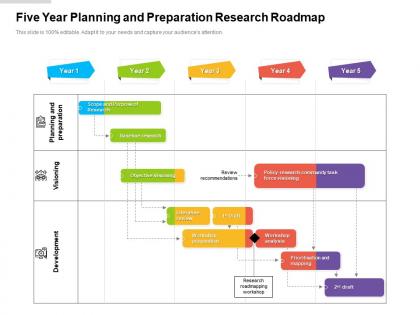
Visualize your work plan and communicate your ideas impactfully with our pre designed Five Year Planning And Preparation Research Roadmap. Showcase the detailed overview of the project, the key deliverables, and the milestones to be achieved with the help of our fully customizable PowerPoint layout. You can easily emphasize on the project goals and discuss all the activities involved in an easy to comprehend manner by utilizing our professionally designed PPT theme. This roadmap PowerPoint layout is a perfect strategic planning tool that can help in keeping the project on track. With our attractive PowerPoint theme, you can articulate the workflow, track the work progress, and have a clear vision of the goal to be achieved. Download this versatile Five Year Planning And Preparation Research Roadmap and save your hours of work.
People who downloaded this PowerPoint presentation also viewed the following :
Five year planning and preparation research roadmap with all 2 slides:
Give your audience a fulfilling experience. They will find our Five Year Planning And Preparation Research Roadmap elevating.

FAQs for Five year planning and
Okay so you need vision/mission stuff first, then do your internal/external analysis. Set actual measurable goals - not vague ones. After that comes strategy formulation and implementation planning. Oh, and monitor it regularly! Most people totally bomb this last part then act surprised when everything goes sideways. Get stakeholders involved early too, not as an afterthought. The real challenge? Don't let the planning drag on forever - I swear some teams plan for months and never actually do anything. Set a deadline and stick to it, even if it's not perfect.
Honestly, most mission statements are just corporate BS that nobody cares about. Make yours actually matter to your team first. Then for every strategic goal you're considering, ask yourself - does this genuinely help us hit our mission and get closer to our vision? If not, ditch it. I'd sketch out a simple visual map with mission in the middle, vision up top, and your goals branching off with obvious connections. Check it every quarter and be brutal about cutting stuff that doesn't fit. Otherwise you'll end up with random goals that sound important but don't actually move the needle.
Okay so stakeholder analysis is basically figuring out who actually gives a damn about your strategic plan. List everyone who could mess with it or get affected - customers, employees, investors, regulators, competitors, whatever. Then map their interests and how much pull they have. Trust me, skipping this step is how you end up with a "brilliant" strategy nobody wants to follow. Some people you'll need totally on board, others just need a heads up. The goal is spotting drama before it happens and knowing where to focus your energy. Honestly saved my butt more times than I can count.
Start with SWOT - strengths, weaknesses, opportunities, threats. Honestly, the brainstorming part gets chaotic but that's when the best ideas come out. Once you've got everything mapped, connect the pieces. Use your strengths to grab opportunities. Fix weaknesses before they bite you. Build defenses against threats - boring but necessary. This is where your goal-setting and budget decisions should come from. Oh, and don't just do this once. Things shift constantly, so revisit every quarter or you'll be working off old info.
Oh man, I've seen this go wrong so many times. People set these super vague goals that nobody understands. Then they plan everything behind closed doors without asking anyone what they actually think. Half the time the plan just sits there unused - such a waste. Get your key people involved early, make your goals specific and measurable. Check in regularly instead of hoping it all works out. Don't get stuck trying to make the perfect plan either. Start with something decent and fix it as you go. Oh, and definitely assign clear owners or everything just becomes nobody's problem.
Think of market trends like your GPS for business planning - you've got to know where things are headed, not just where they are right now. Look at how customers are changing, what tech is coming up, what competitors are doing. Honestly, flexibility is everything because trends shift fast and you don't want to end up like Blockbuster (though I still miss browsing movie aisles sometimes). Set up some kind of regular check-ins to monitor what's happening in your space. Then actually use that info in your quarterly planning - aim for where your market will be in 2-3 years.
Pick your 3-5 biggest competitors first and figure out what they're good at, what sucks about them, and how they price stuff. I always check out their recent moves too - like if they bought another company or launched something new. That tells you where they're probably going next. Don't just read their marketing BS though. Look at what customers actually say about them online. SWOT analysis or Porter's Five Forces can help organize everything, but honestly don't overthink the frameworks. The whole point is finding gaps in the market you can jump on.
Honestly, tech makes strategic planning so much less painful. Analytics tools help you catch market trends you'd totally miss otherwise. Those competitor tracking platforms? Pure gold for seeing what everyone else is up to. I swear by dashboard tools that show your KPIs live - way better than constantly updating spreadsheets. Collaboration software keeps your team from going in circles during planning sessions too. Project management apps are clutch for breaking down those massive goals into stuff you can actually track. My advice? Don't go crazy at first. Pick whatever's currently making you want to pull your hair out and digitize that.
Focus on three main areas: financial stuff (revenue growth, profit margins, ROI), operational metrics (productivity, customer satisfaction, market share), and strategic milestones like hitting goals on time. Here's the thing though - don't track everything or you'll drown in data. Pick maybe 5-7 metrics that actually connect to what you're trying to achieve. Mix leading indicators (stuff that predicts future wins) with lagging ones (actual results you can see). Oh, and definitely do quarterly check-ins to see how you're doing and pivot if something's not working.
Honestly, most companies do a full strategic review once a year – that's usually enough time to see real changes in the market. Quarterly check-ins are smart too for tracking your key numbers. Don't be rigid about it though. If something major hits your industry (like, I don't know, a pandemic), you gotta pivot fast instead of waiting for your scheduled review. Those quarterly meetings? Actually show up to them. I swear, the number of companies that schedule these things then cancel when they get "too busy" is ridiculous. Put the dates in your calendar now and treat them like you would any other critical meeting.
So instead of trying to predict the future (impossible, btw), scenario planning lets you prep for different possibilities. Pick your biggest uncertainty and build 3-4 "what if" stories around it - best case, worst case, most likely, plus maybe one curveball scenario. Then figure out how you'd handle each one. Honestly, it's like having backup plans for your backup plans. You'll spot warning signs earlier and won't be scrambling when things go sideways. Way better than crossing your fingers and hoping your one prediction works out.
Honestly, the biggest thing is getting people to ask "why" and "what if" in regular meetings instead of just going through motions. Share the big picture stuff openly - like, actually tell people how their work fits into company goals. Most managers I've worked with are terrible at this, but the good ones encourage questioning instead of shutting it down. You've got to give people breathing room to think strategically too. Can't expect deep thinking when everyone's just putting out fires constantly. Maybe try monthly "what could we do differently" sessions? Sounds cheesy but it works. Builds that strategic muscle over time.
Honestly, get them involved from day one and explain WHY you're doing this stuff. People hate generic "trust us" speeches - they want real answers to their actual concerns. I'd focus on some quick wins first so they can see results happening. Find those influencers on your team who everyone listens to and get them on board as your champions. Don't forget training though, because overwhelmed people will just resist harder. Most pushback comes from fear or feeling excluded from decisions anyway. Think of it like bringing friends along on a road trip instead of just telling them to get in the car.
Honestly, I'd focus on just 3 main things when ranking your initiatives. First - which ones actually move you toward your big goals? Score each one against what you're trying to achieve. Then figure out what you can realistically pull off with your current budget and team. I've watched so many companies crash and burn because they tried to do everything at once. Pick maybe 3-5 max that'll make the biggest difference. Oh, and definitely get your key people involved in the ranking - you'll need their buy-in anyway, plus they might catch stuff you missed. A simple scoring sheet works great for this.
Dude, communication makes or breaks everything. Seriously - I've seen so many good plans crash because nobody actually explained what people were supposed to do. Everyone just works in their own bubble and misses deadlines left and right. You'll want regular check-ins too since stuff always goes wrong (trust me on this one). Better to over-communicate than leave people guessing. Oh, and don't just rely on one big meeting - set up multiple touchpoints so you can course-correct when needed. Otherwise your team will be running in totally different directions.
No Reviews