


Five years erp development and implementation approach roadmap




Try Before you Buy Download Free Sample Product
 Impress Your
 Audience
 100%
100% Editable
 Save Hours
 of Time


The success rate of business plans is hugely dependent on the plan of action, and this editable Five Years ERP Development And Implementation Approach Roadmap rightly serves the purpose. Encapsulate all the information related to the project in a well structured manner to obtain maximum efficiency by incorporating our stunning PowerPoint theme. State the critical deliverable, steps involved, time frame, workforce allocation, and lots more in an easy to understand manner by utilizing this pre designed roadmap PowerPoint layout. You can also prioritize your tasks and discuss the problem areas with your colleagues by incorporating this tailor made PPT layout. Empower your work plan by employing this professionally designed PPT theme. Entrepreneurs can download Five Years ERP Development And Implementation Approach Roadmap as a beneficial communication tool that facilitates in collaborating with different tasks and achieve targets.
People who downloaded this PowerPoint presentation also viewed the following :
Content of this Powerpoint Presentation
Description:
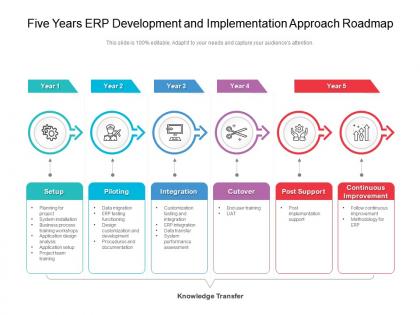
The image illustrates a "Five Years ERP Development and Implementation Approach Roadmap," providing a structured overview of the stages involved in deploying and enhancing an Enterprise Resource Planning (ERP) system over five years. Each year is associated with a specific phase in the ERP implementation process, ensuring a systematic approach to the project.
Year 1: Setup
Planning for the project
System installation
Business process training/workshops
Application design analysis
Application setup
Project team training
Year 2: Piloting
Data migration
ERP testing and functioning
Customization and development
Procedures and documentation
Year 3: Integration
Customization testing and integration
Data integration
ERP transfer system performance assessment
Year 4: Cutover
End-user training
UAT (User Acceptance Testing)
Year 5: Post-Support and Continuous Improvement
Post-implementation support
Follow continuous improvement methodology for ERP
A mention of "Knowledge Transfer" at the bottom of the slide underscores the importance of sharing knowledge and ensuring that all stakeholders are informed and trained throughout the ERP implementation journey.
Use Cases:
These informative slides are valuable across multiple industries requiring the integration of complex ERP systems to streamline and enhance various functions:
1. Manufacturing:
Use: To present a comprehensive ERP implementation plan spanning five years.
Presenter: IT Project Manager / ERP Implementation Specialist
Audience: Company Executives and Management Team
2. Retail:
Use: Outlining the process for implementing an ERP system supporting inventory management, sales tracking, and customer service.
Presenter: Chief Information Officer (CIO)
Audience: Department Heads and Store Managers
3. Healthcare:
Use: Introducing a structured approach to integrating an ERP system handling patient records, billing, and supply chain.
Presenter: Healthcare IT Consultant
Audience: Hospital Administration and Medical Staff
4. Finance:
Use: For a roadmap presentation on implementing an ERP solution for financial operations, reporting, and compliance.
Presenter: Finance Director / ERP Project Lead
Audience: Finance Team and Stakeholders
5. Logistics and Supply Chain:
Use: To present the phases of applying an ERP for improved logistics operations, inventory management, and distribution.
Presenter: Supply Chain Manager / IT Systems Director
Audience: Operations Managers and Logistics Coordinators
6. Higher Education:
Use: Planning the deployment of an ERP for managing university operations such as admission, scheduling, and human resources.
Presenter: Head of IT Department
Audience: University Board Members and Administrative Staff
7. Government:
Use: To illustrate how an ERP system can be implemented to streamline governmental processes and citizen services.
Presenter: IT Strategy Consultant
Audience: Government Officials and Public Sector Managers
Five years erp development and implementation approach roadmap with all 2 slides:
Give your audience a fulfilling experience. They will find our Five Years ERP Development And Implementation Approach Roadmap elevating.
FAQs for Five years erp development and
Dude, here's what actually matters: figure out what you NEED versus what looks shiny. Total cost is huge - not just upfront but ongoing support, training, all that stuff. Can it play nice with whatever systems you're already using? I've seen so many companies buy something fancy then realize their team absolutely hates using it. Such a waste. Check if the vendor knows your industry and won't disappear in two years. Oh, and think about whether it can scale up - you don't want to do this nightmare again in three years. Write down your must-haves first before vendors start their sales pitches.
Start by documenting every single step in your key processes - order fulfillment, inventory, financial reporting, whatever matters most. Honestly, skip the official procedures and just follow your employees around for a day. What actually happens is usually way different from what's supposed to happen! Look for where things get stuck or need weird manual fixes. Then figure out where your data lives in different systems that don't talk to each other. This whole audit thing sounds boring but it's crucial - you'll know exactly what your ERP needs to solve and can prioritize based on real impact.
Dude, you HAVE to get everyone on board with your ERP roadmap - like, it's literally make or break time. C-suite, end users, the whole gang needs to buy in because they're the ones who decide if this thing actually works. I've watched so many projects crash and burn when teams just... skipped talking to people? Wild. Anyway, do regular check-ins so you can spot when requirements shift (they always do) and manage what people expect. Oh, and you'll actually solve real problems instead of just throwing tech at stuff. Map out who matters and get them talking from day one.
Dude, the software license is like maybe 25% of what you'll actually spend. Implementation fees will kill you - plus data migration, training everyone, hardware that needs upgrading. Oh and people will be slower for months while they figure it out. Most companies blow their budget by half, easy. Get quotes from 3-4 vendors first, then tack on 25% more because something always goes wrong. Don't forget you'll pay maintenance fees forever too. I'd make a massive spreadsheet with every cost you can think of. Get finance on board early or they'll freak out later when the real numbers hit.
Dude, scope creep will kill you - that's like the
No Reviews