


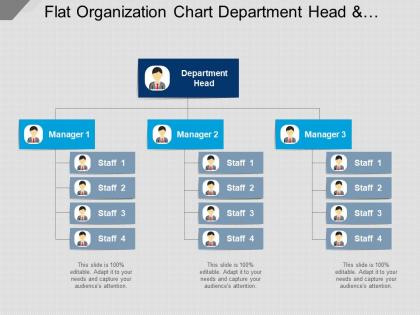
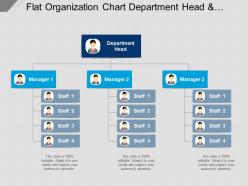
Flat organization chart department head and managers





Try Before you Buy Download Free Sample Product
 Impress Your
 Audience
 100%
100% Editable
 Save Hours
 of Time


Display customary elan with our Flat Organization Chart Department Head And Managers. Handle the event with great dignity.
People who downloaded this PowerPoint presentation also viewed the following :
Flat organization chart department head and managers with all 5 slides:
Increase feelings of good cheer with our Flat Organization Chart Department Head And Managers. Create a bunch of happy faces.


FAQs for Flat organization chart department
Honestly, the speed thing is huge - decisions happen in days instead of weeks since you're not bouncing requests through a million people. Communication flows way better too. Your team actually gets to own their work without someone breathing down their necks every five minutes. The cost savings are pretty obvious when you cut out those middle management layers (awkward conversation with current managers though, lol). Ideas reach the right people fast, so you see more creative stuff happening. If you're thinking about it, maybe start small? Figure out what approval stuff you could simplify first.
Yeah, flat structures are pretty motivating honestly - you get way more autonomy and can actually talk to the people making decisions instead of going through like 5 managers. Your input matters more. You'll probably end up doing different types of work too, which beats doing the same boring tasks every day. The tricky part? Career growth gets weird since there aren't as many levels to climb. I'd say if you're thinking about it, just make sure there are other ways for people to advance or at least feel appreciated beyond the usual promotion route.
Honestly, the whole thing gets messy fast - nobody knows who's doing what anymore. Your managers who used to just decide stuff now have to get everyone's input on everything. Total bottleneck situation. Plus you'll definitely see some drama when the middle management people start scrambling to stay relevant. My advice? Figure out the new roles and how decisions will actually get made BEFORE you blow everything up. Don't just strip away the layers and cross your fingers, because that never works out well.
Honestly, flat structures are game-changers for communication. No more playing telephone through five different managers - you just talk directly to whoever you need. Decisions happen way faster when you're not waiting for approval up and down some chain. I've noticed even the shy people start speaking up more when there's less intimidation factor from hierarchy. Quick decisions, less lost info, more ideas flowing. Just don't skip setting up some basic communication rules first or you'll end up with total chaos - learned that one the hard way!
Honestly, flat orgs are pretty cool once you adjust. You get to make calls right where stuff actually happens instead of waiting around for like three different managers to approve everything. Way faster when problems pop up. The catch? You'll deal with way more gray areas and need to own your decisions - less someone above telling you exactly what to do. Oh, and those big picture strategic moves can drag on forever since everyone's gotta agree rather than just having one person decide. But personally I think the trade-off's worth it most of the time.
So flat structures totally depend on having the right tech setup. Communication tools like Slack are a must - otherwise you're playing telephone all day. Project management stuff like Asana helps too since there's no middle manager keeping track of everyone's tasks. Honestly, the transparency part is what makes or breaks it. Cloud systems let people grab info directly instead of asking permission from some gatekeeper. Analytics dashboards are clutch for decision-making. I'd start by looking at your current tools and figuring out where messages get stuck. It's really about removing those bottlenecks.
Flat structures work great in some places but totally bomb in others. Creative agencies and startups love them - quick decisions, lots of collaboration. Healthcare and finance though? Forget it. They need clear chains of command for safety and compliance stuff. Once you hit like 150 people, things get messy fast without managers to wrangle everyone. Knowledge work is where it really shines since smart people generally know what they're doing. Manufacturing is probably the worst fit - you can't have assembly line workers just deciding things on their own. Before you ditch all your middle management, figure out if your industry actually needs that flexibility or if structure keeps things from falling apart.
Honestly, going flat means you can't just boss people around anymore. Your whole approach has to shift from telling to coaching. I've seen some managers really struggle with this - they miss being "the boss," you know? Now you're more like a facilitator who removes obstacles and helps develop other people's leadership skills. Trust becomes huge since your team needs to make their own decisions. Active listening matters way more than having all the answers. Oh, and forget micromanaging - that'll kill you in a flat structure. It's really about empowering people instead of controlling them.
Honestly, flat structures are kinda wild - you'll end up doing everything from strategy to probably fixing the printer. More autonomy though, which is nice since you won't need three approvals just to order new pens. You get face time with the big bosses too. But here's the thing - promotions get weird when there's nowhere to really "move up" to. I'd say roll with it and pick up whatever skills you can. Oh, and expect some chaos because nobody's quite sure who's supposed to handle what sometimes.
Honestly, the biggest thing is nailing down who's responsible for what right from the start. Without a boss breathing down everyone's neck, you need other ways to keep people on track. Daily standups work great, or maybe weekly check-ins - whatever clicks with your team. Make sure everyone can see what others are working on through shared dashboards or something similar. Cross-functional projects are clutch because people actually depend on each other then. Document those role boundaries clearly and define what success looks like for each person. It's messier than traditional structures but way more flexible once you get it right.
Oh Netflix is the classic example - they basically let people do whatever and it works because they can pivot super fast. Spotify does this cool thing where they break into tiny "squads" that act like their own little companies. Buffer's crazy transparent about everything, even salaries which is kinda wild. Google used to be flat too but honestly, most companies get more hierarchical when they grow bigger. That's just reality. If you're thinking about trying it, maybe test it with a small team first? See how people handle the extra responsibility before you commit to the whole thing.
Ugh yeah flat orgs are weird for handling conflicts. No real hierarchy means you can't just escalate to your boss when things get messy. You end up hashing it out peer-to-peer, which honestly makes you better at communicating and problem-solving since there's nowhere else to go. But here's the thing - when people really clash or it gets personal, fights can drag on forever without someone in charge making the call. I'd say set up some kind of process beforehand, maybe rotate who mediates between team members when stuff goes sideways.
Honestly, the biggest thing is nailing down who decides what - otherwise you'll have five people thinking they're in charge of the same project (been there, it's a mess). Get your decision-making frameworks super clear upfront. Document everything where people can actually find it, not buried in some random folder. Regular team check-ins are clutch. You want info flowing everywhere, not getting stuck in weird bottlenecks. Project management tools aren't optional here - use them religiously or things fall apart fast. Oh, and create escalation paths for when decisions get stuck in limbo. Trust me on this one.
Honestly, flat structures are pretty great for innovation. You can pitch directly to the people who matter instead of watching your ideas die in some middle manager's inbox. Less bureaucracy means your concepts don't get watered down before they reach the top. The chaos factor is real though - sometimes everyone's throwing ideas around with zero direction, which gets messy fast. But you'll have way more freedom to experiment without someone constantly looking over your shoulder. My advice? Figure out who actually makes decisions first, then hit them with your best stuff. Way more agile than traditional setups.
Honestly, self-management is huge - you can't just wait around for someone to tell you what to do. Time management, prioritizing tasks, all that boring stuff actually matters. Communication gets way more important too since there's no manager playing telephone between teams. You'll be giving feedback directly to coworkers, which is awkward at first but you get used to it. Conflict resolution becomes your problem to figure out. Oh, and try to learn bits about other departments - roles aren't as siloed anymore. Start practicing honest feedback now though. That skill alone will save you so much headache later.
No Reviews