


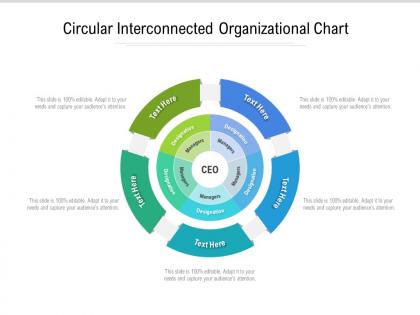
Circular interconnected organizational chart





Try Before you Buy Download Free Sample Product
 Impress Your
 Audience
 100%
100% Editable
 Save Hours
 of Time


Add depth to your discussion with our Circular Interconnected Organizational Chart. They give weightage to your every word.
People who downloaded this PowerPoint presentation also viewed the following :
Circular interconnected organizational chart with all 5 slides:
Serve up your thoughts in a pleasant way. Dish them out on our Circular Interconnected Organizational Chart.



FAQs for Circular
Honestly, the communication thing is huge - info flows sideways between teams instead of getting stuck waiting for your boss's boss to approve everything. People actually own their work more, which makes them give a damn about results. Those stupid department silos? Gone, because everyone's collaborating in these circle structures. Quick decisions become the norm since you're not dealing with endless approval chains. Oh, and teams can pivot way faster when stuff changes (which, let's be real, happens constantly). I'd test it with just one team first though - see how it goes before rolling it out everywhere.
So basically, circular structures get rid of those annoying departmental walls where info gets trapped. People can actually talk directly instead of going through like 5 managers first - saves so much time, honestly. Decisions happen way faster since there's less hierarchy to navigate. When everyone's on more equal ground, you get people speaking up who normally stay quiet in meetings. I'd start by sketching out how communication currently flows in your place, then figure out where you can cut out the middlemen and connect teams directly.
Honestly, the biggest shift is ditching that whole command-and-control thing. Your job becomes more about clearing roadblocks and connecting people instead of barking orders from above. I like to think of it as greasing the wheels rather than trying to steer them - does that sound weird? You'll be coaching way more, asking better questions, helping your team own their decisions. The brutal part is letting go of control (which, let's be real, most of us suck at). Pick one small area where you can back off and see what happens. Start there.
Honestly, circular structures work because they cut through all that bureaucratic BS that usually kills good ideas. No more waiting for approval from five different managers. People actually feel comfortable pitching stuff when they're not terrified of the hierarchy. What's cool is how teams start connecting in weird ways - like marketing suddenly brainstorming with engineering and boom, something brilliant happens. Information just flows better too, instead of getting trapped at the top. My advice? Pick one small project and try flattening things out. You'll probably be surprised how much more creative energy you get.
Track decision speed and engagement scores first - those usually shift pretty fast. Cross-team collaboration is where you'll really see if it's working (are people actually breaking out of their old silos?). Innovation metrics matter too since these structures should spark more creativity. Honestly, the hardest part is waiting - some benefits won't show up for months. I'd do pulse surveys to catch early wins and problems, then compare everything to your pre-restructure baseline quarterly. Info flow between teams is another big one to watch.
Oh man, middle managers are gonna hate this - they'll feel like you're stripping away their power. Your employees will be totally lost about reporting structures too. Decision-making gets messy at first because teams don't know what they can actually decide on their own. Plus everyone has to learn completely new ways to communicate, which honestly takes forever. Don't try to change everything at once though. Pick one department to test it out first. I learned this the hard way at my last job - going full-scale immediately is just asking for chaos.
Honestly, most people love circular structures way more than traditional hierarchies. You get actual say in decisions instead of just taking orders from your boss. The whole thing feels less corporate and bureaucratic, which is such a relief. Plus having more autonomy and responsibility can be really energizing - though I'll be real, some folks get overwhelmed by all the ambiguity at first. If your company's thinking about making the switch, just make sure everyone gets trained on how to actually manage themselves and make group decisions. Otherwise it's just chaos pretending to be progress.
Honestly, startups and tech companies crush it with circular structures - everyone's already doing a million things anyway. Creative agencies love them too since ideas need to bounce around freely. You won't get that with some rigid corporate ladder setup. Healthcare orgs actually work great this way because doctors, nurses, and admin staff have to collaborate constantly. Same with consulting firms and any project-based work really. The common thread? These places need people to pivot fast and share info without it getting bottlenecked by bureaucracy. If your company values being agile over following strict processes, definitely worth trying out.
Honestly, start with a solid chat platform like Slack or Teams - breaks down those annoying departmental walls. Asana's great for tracking projects without the usual management mess getting in the way. Oh, and Loomio is pretty cool for team decisions, lets people vote on stuff transparently. Everyone should see the same dashboards too, keeps things open. Don't go crazy adding everything at once though. Pick one collaboration tool first, then slowly build from there as people get used to the whole circular thing. Trust me, trying to implement everything simultaneously never works out well.
Start with communication workshops - that's your base for everything else. Cross-functional training is huge because people gotta understand how different departments actually work together. Conflict resolution becomes way more important without traditional hierarchies (disagreements can spiral quickly, trust me). Your leadership development should focus on influence instead of just giving orders. Honestly, the collaboration piece is where most companies totally bomb when switching to flat structures. Everyone needs practice with shared decision-making too - it's messier than it sounds but works once people get it.
So basically, the teams that do the actual work get to make their own calls instead of everything going through management. Each "circle" handles decisions for their stuff without waiting around for approvals. Speed is the main win here - no more sitting in approval hell when you need to change direction. Plus people actually own their choices, which honestly makes everyone care more. The flip side? You can't blame your boss anymore when things go sideways since your team made the call. Takes some getting used to but way less frustrating than traditional corporate BS.
Okay so basically, when you ditch those old-school hierarchies, suddenly everyone's voice actually matters in decisions. People can talk directly to leadership instead of going through like five different managers first. Cross-team collaboration gets so much better because nobody's trapped in those weird reporting chains. I honestly think it's way more interesting than the typical corporate ladder BS. Different perspectives start flowing through the whole organization since authority gets spread around more. Oh, and here's something cool - try sketching out who influences big decisions at your company right now. You'll probably realize how much more diverse input you could get with a circular setup.
So Morning Star (you know, the tomato people) has been doing this for years - no traditional managers at all. Workers just hash out responsibilities between themselves. Haier did something crazy too - they broke their whole company into these tiny self-managing teams that operate like startups. Kind of nuts when you think about the logistics. W.L. Gore does the lattice thing where people naturally become leaders based on what they actually know, not some arbitrary title. Honestly, I'd test it with just one team first though. See how people handle it before you blow up your whole structure.
Dude, circular models are game-changers for response time. Front-line teams can shoot feedback straight to product dev without waiting for some VP to approve it first. No more ideas dying in management purgatory, you know? Teams get actual autonomy to make calls when things shift. Honestly, the old top-down stuff feels so clunky now - like playing telephone with your business decisions. Map out how decisions currently flow in your company... I bet you'll find at least three pointless approval steps you can just axe.
Okay so first thing - get super clear on who does what and make sure info flows openly between everyone. Regular check-ins are clutch, plus those shared dashboards where teams can actually see what's happening. Honestly? Peer accountability hits different than the old boss-breathing-down-your-neck thing - people care more when their teammates are watching. Document your handoff points (sounds boring but trust me) and build in feedback loops so problems don't just... disappear into the void. Weekly cross-circle meetings are a good starting point to figure out what actually works for your specific situation.
No Reviews