


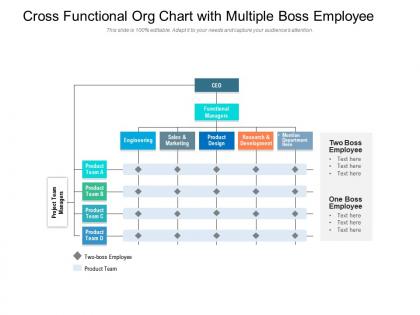
Cross functional org chart with multiple boss employee





Try Before you Buy Download Free Sample Product
 Impress Your
 Audience
 100%
100% Editable
 Save Hours
 of Time


Our Cross Functional Org Chart With Multiple Boss Employee are explicit and effective. They combine clarity and concise expression.
People who downloaded this PowerPoint presentation also viewed the following :
Cross functional org chart with multiple boss employee with all 2 slides:
Give your audience a fulfilling experience. They will find our Cross Functional Org Chart With Multiple Boss Employee elevating.
FAQs for Cross functional org chart with
Okay so basically it's dual reporting - employees answer to both functional managers AND project managers at the same time. Resources get shared between projects instead of staying in one department. Decision-making becomes way more collaborative since multiple managers weigh in on priorities. Honestly, it sounds like a recipe for chaos if you ask me. But it can work if you nail down clear roles and communication from day one. Otherwise people end up getting mixed signals from different bosses and nobody knows what they're supposed to be doing.
Okay so basically with matrix structures you're dealing with multiple bosses instead of just one - which honestly can get pretty chaotic. Traditional setups are way cleaner since there's just one clear chain going up. But in matrix orgs? You might have your department head AND a project manager both expecting different things from you. It's like being pulled in two directions sometimes. You're still part of your main team but also working across other projects. The trick is nailing down who decides what upfront, otherwise you'll go crazy trying to juggle conflicting priorities.
Honestly, matrix orgs are pretty sweet for flexibility - you can grab talent from anywhere instead of being stuck with your team's resources. People end up collaborating across departments they'd never normally work with, which is where the real innovation happens. Your employees pick up way broader skills too since they're juggling different managers and projects. The downside? Multiple bosses can get confusing fast. Projects definitely move quicker though. I'd say test it out with just one cross-functional project first - see how your people handle the shared authority thing before you go crazy and restructure everything. Some companies just aren't built for it.
Oh man, the confusion is brutal - suddenly everyone's got two bosses and nobody knows who actually calls the shots. Employees get totally lost when their regular manager wants one thing but the project lead demands something else. Communication gets messy fast since info has to bounce everywhere instead of just going up the chain. Decision-making? Forget about it, everything crawls because you need like five people to agree. Honestly I'd test it with just one small project first. Figure out who decides what before you roll it out everywhere - trust me on this one.
Set up your escalation paths and communication rules from the start - seriously, this saves so much headache later. Jump on conflicts fast before they turn into weird office drama. I've watched way too many matrix situations spiral because people avoided the uncomfortable talks. Look past what everyone's demanding and figure out what they actually need. Regular check-ins help a ton. Make sure everyone knows who gets to decide what right off the bat, or you'll have people stepping on each other constantly. Always tie it back to business goals when things get heated.
Honestly, it's like having two bosses pulling you in different directions - your department manager plus whoever's running the project. You're coordinating people across teams, managing deadlines, trying to keep everyone on the same page. Here's the kicker though: you usually can't actually tell these people what to do directly. So you become this master negotiator, constantly balancing competing priorities. Building relationships becomes everything. Oh, and stakeholder management - get good at it fast or you'll be miserable. Clear communication from day one saves your sanity later.
Matrix reporting is messy, but overcommunication saves you every time. What feels excessive? That's probably perfect. Get everyone on shared project tools so nobody's working with outdated info - I've watched teams crash and burn over this stuff. Those RACI charts everyone hates making? Do them anyway, they actually work. Schedule regular check-ins between your two bosses, especially when priorities get weird (which they will). The "alignment meetings" feel awkward but they're better than you being stuck in the middle of conflicting demands later.
You'll need to track both the project stuff and how people are actually feeling. Check your delivery times, budgets, and quality scores to see if the matrix setup is helping or just making things messier. Employee satisfaction and turnover rates are huge too - matrix orgs can stress people out when they don't know who they're really reporting to. Run quarterly surveys asking about role clarity and workload balance. Those always catch problems before they explode. Oh, and definitely measure how fast decisions are getting made and if teams are actually collaborating better across functions. The people metrics honestly matter just as much as the project ones.
Matrix structures are honestly pretty hit or miss. The variety is nice - you'll work with different teams and avoid getting bored. But man, having two bosses can be a nightmare when they want completely different things. I've watched coworkers get seriously stressed trying to juggle conflicting priorities. Your productivity will probably tank at first while you figure out the politics. Once you get good at managing both managers though (sounds weird but you know what I mean), things usually smooth out. Clear communication about deadlines becomes your best friend.
Dude, matrix orgs are wild - you're basically managing people who don't even report to you. Negotiation skills become your best friend. Communication is everything since you're constantly trying to get different departments on the same page (which is honestly exhausting sometimes). You'll need solid conflict resolution chops because competing priorities are just part of the deal. Emotional intelligence helps too - all those complex relationships get messy fast. Oh, and start mapping out who actually influences decisions early on. Trust me, it'll save you so many headaches down the road when things get political.
So matrix structures basically tear down those department walls by having people report to multiple bosses - one for their function, another for projects. Cross-functional teams become the norm, which is where the magic happens honestly. Different perspectives clash and suddenly you're getting way better ideas. Your people start picking up skills from all over the place too, which is pretty cool for their careers. Knowledge doesn't get stuck in one corner anymore. Oh, but definitely nail down who decides what upfront - I've seen this turn into a total mess when roles aren't clear.
Matrix structures work best in aerospace, consulting, tech, pharma, and construction. Basically anywhere you've got complex projects that need people from different departments working together. Engineering companies swear by it - makes sense when you're dealing with stuff that requires expertise from like 5 different areas. Your teams get way more flexibility than traditional hierarchies allow. If you're running routine, standardized operations though? Honestly might not be worth the coordination mess. But for companies doing innovative work where projects change constantly, it's pretty solid. Just don't expect it to magically fix communication issues if those already exist.
Oh man, matrix orgs are wild. Decision-making gets super collaborative but way messier than normal companies. You've got like 2-3 managers all wanting input on everything - your functional boss, project lead, maybe others. Honestly it's exhausting some days. Tons more meetings to get everyone aligned. But you do get really diverse viewpoints which actually helps make better calls. My biggest tip? Get obsessed with documenting who owns what decisions. Trust me on this one. Also practice running meetings because you'll be doing it constantly. The consensus-building thing becomes second nature eventually.
So matrix orgs are basically chaos without the right tools, right? Start with Slack or Teams for communication - that's non-negotiable. Then grab something like Asana or Monday.com to track all the cross-functional projects. Google Workspace is solid for shared docs too. Resource management stuff like Smartsheet helps managers figure out who's doing what (and who's completely swamped). Pick one decent project management platform first though - don't go crazy buying everything at once. The tool fatigue is real when you have like 12 different apps to check daily.
Matrix org performance reviews are a bit of a mess, not gonna lie. You've got multiple managers giving input - your functional boss, project leads, sometimes even peers. It's basically a 360-degree thing where everyone weighs in on different parts of your work. The annoying part? Your functional manager cares about technical growth and long-term stuff, but project managers just want to know if you hit deadlines. Sometimes they'll completely contradict each other on how you're doing. My advice - stay in touch with all of them regularly, don't wait until review season to have those conversations.
No Reviews