


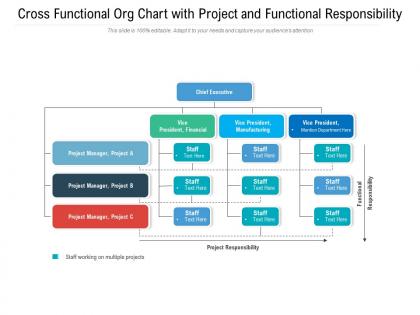
Cross functional org chart with project and functional responsibility




Try Before you Buy Download Free Sample Product
 Impress Your
 Audience
 100%
100% Editable
 Save Hours
 of Time


Our Cross Functional Org Chart With Project And Functional Responsibility are explicit and effective. They combine clarity and concise expression.
People who downloaded this PowerPoint presentation also viewed the following :
Cross functional org chart with project and functional responsibility with all 2 slides:
Give your audience a fulfilling experience. They will find our Cross Functional Org Chart With Project And Functional Responsibility elevating.
FAQs for Cross functional org chart with project
So basically instead of having departments work in their own bubbles, cross-functional teams mix everyone together. Marketing people sit with engineers, finance folks jump in with operations - you get the idea. Way better than that old-school thing where everything goes up the chain and back down again (such a waste of time honestly). Everyone makes decisions together and actually talks to each other instead of sending endless emails. The whole team owns the results, not just individual departments. Oh and if you're considering this - figure out which departments are already stepping on each other's toes. Start there.
So cross-functional teams basically grab people from different departments to work on one project together. Way better than the usual setup where everyone stays in their own little bubbles. You'll have marketing, engineering, and sales all working at the same table instead of that annoying back-and-forth chain. Honestly, decisions happen so much faster when you're not playing telephone between teams. Plus everyone's actually on the same page from the start - no more miscommunications or weird surprises halfway through. If you want to pitch this at work, maybe try it on just one smaller project first? Show them how much smoother everything runs.
Honestly, the biggest thing you'll notice is how much faster decisions get made. People actually start talking to each other instead of sending endless emails back and forth. Breaking down those department silos makes such a huge difference - suddenly your marketing team knows what engineering is actually dealing with, you know? Projects move way smoother because everyone's already in the loop. Plus your people pick up skills they never would've learned otherwise. Problems get solved quicker too since you've got all the right brains in the room from the start. I'd say try it with just one small project first and see how it goes.
Honestly, mixing different teams together is where the real breakthroughs happen. Your marketing person will catch things engineers miss, and vice versa. Everyone has to dumb down their jargon when they're explaining stuff to other departments - that's actually when the best ideas click. I've seen it work so many times. The tension between different viewpoints? That's the good stuff. It pushes people past the boring, safe solutions. Next time you're brainstorming, grab people from at least three different teams. Trust me on this one.
Honestly, the worst part is people getting super territorial about their expertise and then nobody knows who actually gets to make decisions. You'll also have team members confused about their roles since they're doing their normal job PLUS this new cross-functional stuff. Communication gets weird too - you're trying to coordinate between departments that basically speak different languages. And don't even get me started on performance reviews when someone reports to like three different people! My advice? Start with a small pilot team first. Be really clear upfront about who does what and who has final say on decisions.
Honestly, you've gotta nail the communication thing right away or you're screwed. Regular check-ins are annoying but they work - keeps everyone on the same page. Make shared docs so people can actually see what's happening instead of guessing. Oh, and force everyone to ditch the corporate speak when they're explaining their stuff. Slack channels help too since email threads turn into a nightmare fast. Pick someone from each team to be the "translator" - they can catch problems early and tell people what's actually going on. Trust me on this one.
Yeah, you really need a leader who can smash through those department walls - people love protecting their little kingdoms, you know? Pick someone who's genuinely good with people and can smooth over the inevitable drama when teams clash. Short sentences help too. They've got to think beyond their own department and actually create rewards for working together instead of competing. Honestly, the politics alone will drive most people crazy. Make sure whoever you choose can build real relationships across departments and won't just give up when things get messy.
Ditch the individual metrics and go team-based instead. Track stuff like project completion rates or customer satisfaction - things everyone contributes to. Way easier than figuring out who did what (trust me on this one). Add some collaboration metrics too - like how fast teams make decisions or share knowledge across departments. Oh, and conflict resolution speed is huge. Start with 2-3 main outcomes your team actually exists to deliver. Then build your metrics around those shared results. Honestly beats the hell out of departmental silos.
Honestly, start with making sure everyone's actually talking to each other and knows who owns what. Most of the time when teams are butting heads, they're literally fighting for the same thing - just approaching it differently. Wild how often it's just bad communication causing all the chaos. Get everyone in a room when stuff comes up and remind them what you're all trying to accomplish together. Set up regular check-ins so problems don't fester into disasters. Oh, and find someone neutral to run these conversations when people get heated - trust me on this one. Build it into your normal routine instead of scrambling when everything's already burning down.
Honestly, diverse teams just crush it compared to homogeneous ones. You get people attacking problems from completely different angles, which catches blind spots you'd never see otherwise. The innovation piece is huge too - when someone challenges your "obvious" solution with their totally different background, that's where the magic happens. I've watched this so many times where one department thinks they have the perfect answer, then someone else flips it completely. Oh and don't just hope these different perspectives will pop up naturally in meetings - you actually have to draw them out. Short version: mixed backgrounds = way better solutions.
Honestly, you've gotta tear down those departmental walls first. Get everyone working toward the same goals with shared metrics - otherwise it's chaos. Set up cross-team meetings that actually matter (not just time-wasters). Job shadowing helps too since most people have zero clue what other departments do daily. Here's what really works though: celebrate victories together and don't hide when things go sideways. Once marketing, engineering, and sales stop acting like rival gangs, collaboration just flows. Oh, and start small - pick one project between two teams as your test run.
Honestly, the biggest thing is breaking down those team silos that mess everything up. Tools like Asana or Monday let everyone see what's actually happening across departments - no more guessing games. Slack channels work way better than endless email threads too. Video calls are clutch for building real connections, even though we're all tired of Zoom at this point lol. Don't go crazy adding a million apps though. Pick one central spot where teams can track projects and see how their work connects. Once that's working, you can add more tools. It's all about connecting workflows without creating chaos.
Oh man, communication training first - that's your foundation right there. Cross-training is huge too so people actually get what other departments do (like having finance people learn basic operations stuff). Honestly, conflict resolution will save your sanity because different teams clash ALL the time. Project management skills help since coordinating across silos is weird at first. The "speaking each other's language" thing sounds cheesy but it's so true - engineers and customer service people might as well be from different planets sometimes. Start with communication though, then build from there.
You need both the numbers and the vibe, honestly. Track delivery times, quality scores, customer satisfaction - the usual suspects. But here's the thing: are people actually working together or just pretending? Survey your teams about communication and decision-making speed. See if silos are really breaking down. Count how often different departments actually talk to each other and share ideas. The sweet spot? When cross-functional stuff just becomes normal, not this big formal thing you have to announce. Oh, and do quarterly check-ins to review everything together.
Netflix basically blew up their whole structure and let product teams handle everything - development, deployment, the works. Amazon does the two-pizza thing which actually works pretty well since teams have clear ownership. Spotify's squad model gets talked about everywhere (though honestly it's kinda overrated at this point). ING Bank went all-in and restructured into cross-functional tribes - they're pushing features way faster now. The key thing all these companies did? They gave teams real autonomy and clear metrics to hit. I'd start small though - pick one workflow that's currently bouncing between departments and try a dedicated cross-functional team there first.
No Reviews