


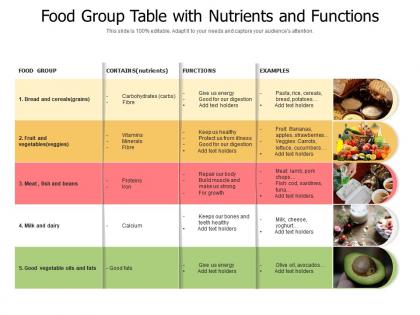
Food group table with nutrients and functions




Try Before you Buy Download Free Sample Product
 Impress Your
 Audience
 100%
100% Editable
 Save Hours
 of Time


Our Food Group Table With Nutrients And Functions are topically designed to provide an attractive backdrop to any subject. Use them to look like a presentation pro.
People who downloaded this PowerPoint presentation also viewed the following :
Food group table with nutrients and functions with all 2 slides:
Use our Food Group Table With Nutrients And Functions to effectively help you save your valuable time. They are readymade to fit into any presentation structure.
FAQs for Food group table with
So basically there are three main ones - carbs, protein, and fats. Your body needs all three to work right. Carbs give you energy, especially for your brain and workouts. Protein builds muscle and keeps you full longer (which is honestly why I throw it in everything now). Fats help with hormones and absorbing vitamins. The breakdown is roughly 45-65% carbs, 10-35% protein, 20-35% fats - though I wouldn't stress too much about hitting exact numbers. Just try getting some of each at your main meals and you'll feel way more balanced energy-wise.
So micronutrients are like vitamins and minerals - iron, zinc, B vitamins, all that stuff. Your body needs tiny amounts but they do SO much work behind the scenes. Energy production, immune system, brain function, bone health. You probably won't feel superhuman when you're getting enough, but man, you'll definitely know when you're not - constant fatigue, getting every cold that goes around, brain fog. The annoying thing is you need them from tons of different foods. Honestly, I'd just focus on eating colorful stuff and whole foods rather than stressing about each individual nutrient.
Honestly, going more plant-based has some solid perks - your heart will probably love you for it, and there's less cancer risk too. You get way more fiber and antioxidants, plus way less saturated fat. Weight management becomes easier (though I still struggle with portion control lol). Your wallet benefits since beans cost like nothing compared to decent meat. Oh, and it's better for the planet obviously. The tricky part? You've gotta actually think about getting enough protein, B12, and iron. Maybe start with Meatless Mondays or just swap breakfast to plant-based first. See how you feel before going all in.
Honestly, it's a game changer because you actually think about what you're eating instead of just panic-ordering pizza again. You end up with way more variety too - like you'll actually remember vegetables exist lol. The grocery thing is huge though - you buy what you need for specific recipes instead of random stuff that dies in your crisper drawer. I've started using ingredients in multiple meals which saves money and feels less wasteful. Don't go crazy at first - maybe just plan out 3 dinners this week? It's weird how much less stressful dinner becomes when you're not staring into the fridge at 6pm wondering what the hell to make.
Oh god, the whole "carbs make you fat" thing is so annoying! Like, your body literally runs on carbs for energy. Weight gain happens when you eat too many calories, period - doesn't matter if it's from bread or chicken. Sure, white bread and huge pasta portions aren't doing you any favors, but that's different than all carbs being evil. Sweet potatoes and oats? Those actually keep you full and boost your metabolism. Honestly, I'd rather have quinoa than go full keto and be miserable. Just eat real food carbs in normal portions instead of cutting them out completely.
Your cultural background basically determines everything about how you eat. Family traditions and where you grew up shape your spice preferences, cooking methods, even what time you have dinner. Religious beliefs play a huge role too. Some cultures are all about sharing big family meals, while others focus more on individual plates. What's considered "healthy" or "healing" food varies wildly - like, my friend's grandma swears by chicken soup for everything, but other cultures might avoid it completely. Honestly, this is why generic nutrition advice often falls flat. You gotta understand someone's cultural food practices first, or your suggestions won't stick.
Honestly, hydration is like the base layer that makes everything else work - transports nutrients, keeps your temp regulated, helps digestion flow. That "8 glasses" rule is basically BS though. Your needs totally depend on how active you are, the weather, your health situation. I just check my pee color - sounds gross but pale yellow means you're good. Fruits and soups count too, not just chugging water all day. Trust your thirst and don't stress about it too much.
Food labels are basically your cheat sheet for not eating garbage. They break down calories and nutrients so you know what you're actually putting in your body. Serving sizes are usually way smaller than you'd think though - like who eats half a muffin? You can compare products easily and spot hidden sugars. The nutrition panel shows percentages for sodium, fiber, vitamins and stuff. Don't forget to flip it over and check ingredients too. They're listed by weight, so whatever's first is mostly what you're eating. Super helpful for dietary restrictions or just being healthier.
Look, most processed stuff basically robs your food of the good nutrients and dumps in way too much sodium, sugar, and crappy fats. Your body ends up missing out on vitamins while fighting off all that inflammatory junk. The really bad ones are like those packaged snacks and frozen dinners - total energy crash territory. Honestly, some processing isn't evil though. Canned beans? Still pretty decent for you. But yeah, you'll feel the difference with constant cravings and eventually risk stuff like diabetes. Stick to whole foods when possible and if you can't pronounce half the ingredients, probably skip it.
So basically your gut bacteria control how you absorb nutrients and make vitamins - it's wild how much they actually do. Feed them fiber from beans, oats, veggies, that kind of stuff. Fermented foods are clutch though - yogurt, kefir, sauerkraut. Kimchi's been my go-to lately, can't get enough of it. Oh and prebiotics help too - garlic, onions, bananas. You want variety since different bacteria eat different things. Honestly just try adding one fermented thing daily and see what happens. Your gut will thank you.
Okay so "superfoods" are just regular nutritious foods with fancy marketing - blueberries, kale, salmon, that stuff. They're definitely healthy! But there's literally no official definition of what makes something "super." Marketing teams just slapped that label on nutrient-dense foods. Honestly, I used to buy into the hype and spent way too much on açai powder. You don't need magical foods though. Just eat a variety of whole foods and you'll be fine. Those expensive superfood supplements? Total ripoff when regular berries do the same thing.
Keep a detailed food diary first - track everything you eat and how you feel after. Then work with your doctor or a dietitian to do proper elimination testing. Yeah, it's tedious but honestly the most reliable way. Once you figure out your triggers, focus on finding good swaps - almond flour instead of wheat, or getting calcium from leafy greens if dairy's a problem. Read labels like your life depends on it (because it kinda does). A registered dietitian who specializes in allergies is worth their weight in gold. The whole goal is keeping your nutrition balanced while dodging whatever makes you sick.
Okay so this is actually legit - your gut makes like 90% of your serotonin, which is basically your happy chemical. Wild, right? When you're eating crap, your brain feels it. Omega-3s and B vitamins genuinely help with anxiety and depression. Sugar crashes make you feel awful and moody afterward. You know that hangry feeling? It's way more than just being cranky. Honestly, try writing down what you eat and how you feel for a few days. I did this once and was shocked at the patterns. Processed food days = anxiety spikes for me. Your brain runs on what you feed it.
Food makes a huge difference in how you perform - it's basically fuel for your body. Carbs are your main energy source, so load up before tough workouts. After training, protein helps your muscles recover and rebuild. Don't forget about water either, staying hydrated keeps everything working right. Timing is key though. I've noticed the biggest difference when I eat carbs before intense sessions and get protein within like 30 minutes after. Maybe start paying attention to how different foods affect your workouts? You'll probably be surprised how much it matters.
So the nutrition world's getting pretty wild right now. Personalized diets based on your DNA and gut bacteria are becoming a real thing - like, your perfect diet might be totally different from mine. Timing when you eat is suddenly as important as what you eat, which honestly makes meal planning even more complicated lol. The whole gut microbiome research is blowing my mind lately. Also, everyone's finally calling out ultra-processed foods as their own evil category. Plant-based eating is getting more sophisticated too - it's not just "eat more veggies" anymore. This stuff will probably hit the official guidelines soon.
-
The content is very helpful from business point of view.
-
Excellent products for quick understanding.
-
Topic best represented with attractive design.
-
Commendable slides with attractive designs. Extremely pleased with the fact that they are easy to modify. Great work!