


Food And Agriculture Company Profile Powerpoint Presentation Slides




Try Before you Buy Download Free Sample Product
 Impress Your
 Audience
 100%
100% Editable
 Save Hours
 of Time


A company profile describes all the relevant elements of a business, which helps the investors and stakeholders evaluate the business value and performance. Here is a professionally designed Food and Agriculture Company Profile PowerPoint presentation. Firstly, It covers the executive summary and company overview with key crops and fertilizers in which the company deals, business objectives, global presence with export offices and production facilities, essential commodities and brands, commodity production, potash fertilizer production, Nitrogen fertilizer production, phosphate fertilizer production with farming and processing centers. Additionally, it covers the food and agriculture company business model canvas, company timeline, organization chart and management team with company clients, customer testimonials, and strategic partnerships. Moreover, it includes the revenue and net profit, EBITA margin, sales revenue by market and commodities, inventories by segment, and goods stock value. At last, it mentions the competitive and SWOT analysis, selling strategies, business line extension, research and development investment, CSR initiatives, CSR programs impacts, and case study. Download our food and agriculture company profile templates now.
People who downloaded this PowerPoint presentation also viewed the following :
Content of this Powerpoint Presentation
Slide 1: This slide displays title i.e. 'Food and Agriculture Company Profile' and your Company Name.
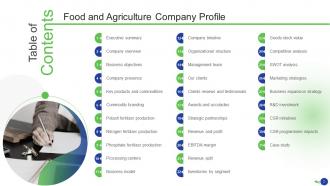
Slide 2: This slide presents table of contents.
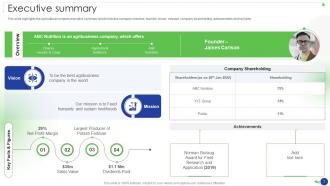
Slide 3: This slide highlights the agricultural company executive summary which includes company overview, founder, vision, mission, etc.
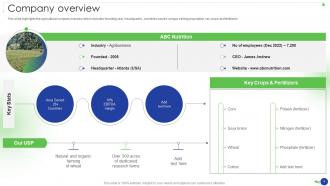
Slide 4: This slide highlights the agricultural company overview which includes founding year, headquarter, etc.
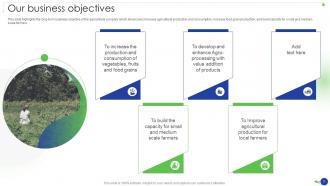
Slide 5: This slide highlights the long-term business objective of the agricultural company.
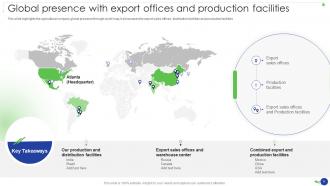
Slide 6: This slide highlights the agricultural company global presence through world map.
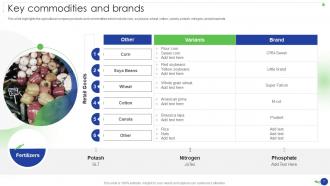
Slide 7: This slide highlights the agricultural company products and commodities which include corn, soybeans, wheat, cotton, canola, potash, etc.
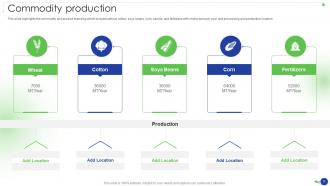
Slide 8: This slide highlights the commodity and product branding which includes wheat, cotton, soya beans, corn, canola, etc.
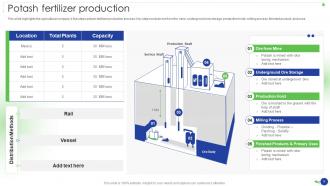
Slide 9: This slide highlights the agricultural company’s five steps potash fertilizer production process.
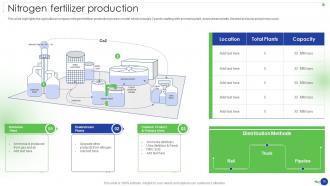
Slide 10: This slide highlights the agricultural company nitrogen fertilizer production process model.
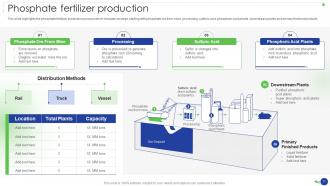
Slide 11: This slide highlights the phosphate fertilizer production process.
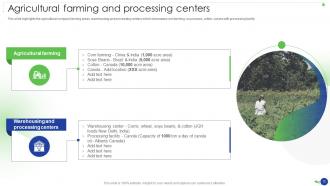
Slide 12: This slide highlights the agricultural company farming areas, warehousing and processing centers.
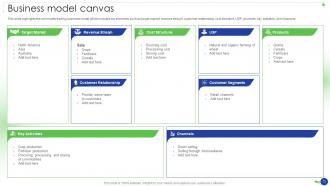
Slide 13: This slide highlights the commodity trading business model which includes key elements such as target market, revenue stream, etc.
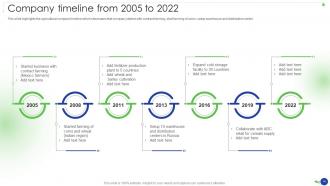
Slide 14: This slide highlights the agricultural company timeline.
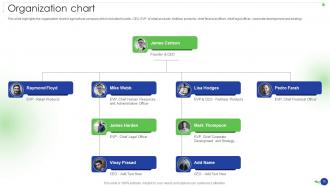
Slide 15: This slide highlights the organization chart of agricultural company which includes founder, CEO, EVP of retail products, etc.
Slide 16: This slide highlights the digital marketing company management team which includes company director, social media manager, content team manager, etc.
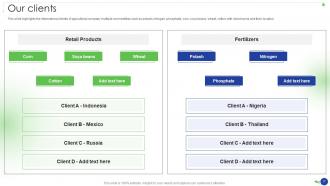
Slide 17: This slide highlights the international clients of agricultural company multiple commodities such as potash, nitrogen, phosphate, corn, etc.
Slide 18: This slide highlights the agricultural company customer testimonials from three different companies.
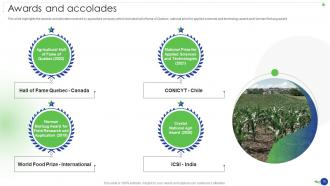
Slide 19: This slide highlights the awards and allocates received by agriculture company.
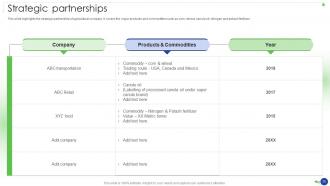
Slide 20: This slide highlights the strategic partnership of agricultural company.
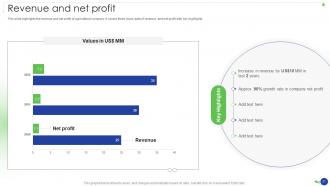
Slide 21: This slide highlights the revenue and net profit of agricultural company.
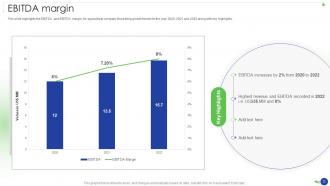
Slide 22: This slide highlights the EBITDA, and EBITDA margin, for agricultural company.
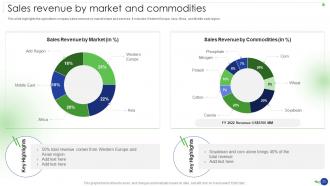
Slide 23: This slide highlights the agriculture company sales revenue by market share and services.
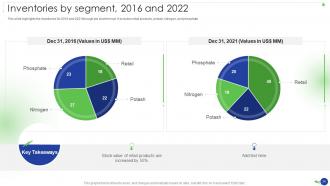
Slide 24: This slide highlights the inventories for 2016 and 2021 through pie chart format.
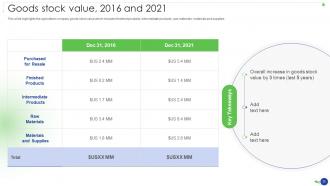
Slide 25: This slide highlights the agriculture company goods stock value which includes finished products, intermediate products, raw materials, etc.
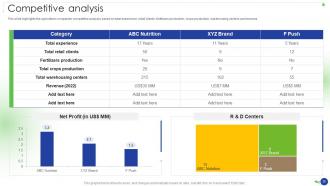
Slide 26: This slide highlights the agriculture companies' competitive analysis based on total experience, retail clients, fertilizers production, etc.
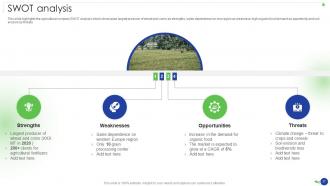
Slide 27: This slide highlights the agricultural company SWOT analysis which showcases largest producer of wheat and corns as strengths, etc.
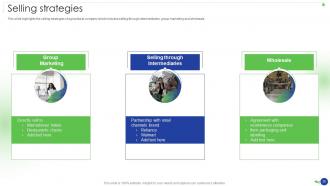
Slide 28: This slide highlights the selling strategies of agricultural company.
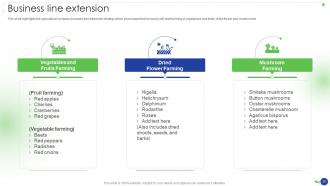
Slide 29: This slide highlights the agricultural company business line extension strategy.
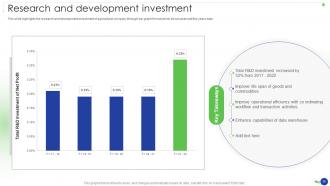
Slide 30: This slide highlights the research and development investment of agricultural company through bar graph format.
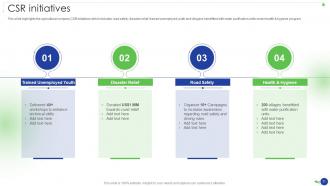
Slide 31: This slide highlights the agricultural company CSR initiatives which includes road safety, disaster relief, etc.
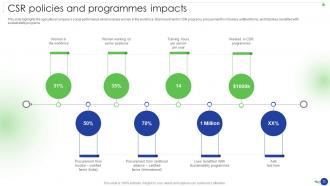
Slide 32: This slide highlights the agricultural company’s social performance which includes women in the workforce, etc.
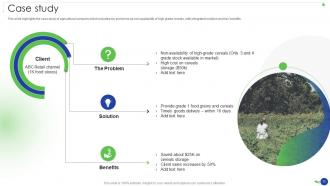
Slide 33: This slide highlights the case study of agricultural company which includes key problems as non availability of high grade cereals, etc.
Slide 34: This is the icons slide.
Slide 35: This slide presents title for additional slides.
Slide 36: This slide shows about your company, target audience and its client's values.
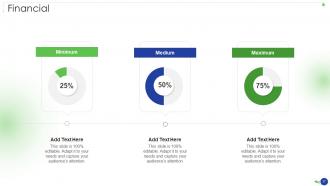
Slide 37: This slide showcases financials.
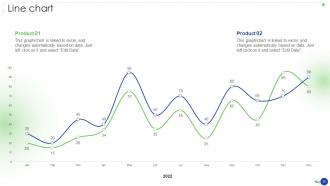
Slide 38: This slide exhibits monthly line charts for different products. The charts are linked to Excel.
Slide 39: This slide displays puzzle.
Slide 40: This slide depicts posts for past experiences of clients.
Slide 41: This slide depicts 30-60-90 days plan for projects.
Slide 42: This slide shows details of team members like name, designation, etc.
Slide 43: This slide exhibits ideas generated.
Slide 44: This is thank you slide & contains contact details of company like office address, phone no., etc.
Food And Agriculture Company Profile Powerpoint Presentation Slides with all 49 slides:
Use our Food And Agriculture Company Profile Powerpoint Presentation Slides to effectively help you save your valuable time. They are readymade to fit into any presentation structure.











FAQs for Food And Agriculture Company Profile
The food and agriculture industry faces supply chain disruptions, climate change impacts, labor shortages, regulatory compliance pressures, and evolving consumer demands for sustainability and transparency. These challenges present both obstacles and opportunities, with many companies finding that strategic automation, sustainable practices, and innovative supply chain management ultimately deliver operational resilience and competitive advantage.
Technology has revolutionized food production through precision agriculture, automated farming equipment, IoT sensors, and data analytics systems that optimize crop yields and resource management. These innovations streamline operations by reducing waste, enhancing quality control, and accelerating distribution networks, with many agricultural companies finding that smart supply chain technologies ultimately deliver faster market access and improved profitability.
Sustainability plays a central role in modern agriculture through precision farming technologies, water-efficient irrigation systems, soil health monitoring, renewable energy integration, and waste reduction programs. These practices enable agricultural companies to minimize environmental impact while maximizing crop yields, with many farming operations finding that sustainable approaches ultimately deliver lower operational costs, enhanced soil productivity, and stronger market positioning.
Climate change impacts agricultural yields through shifting precipitation patterns, rising temperatures, increased pest pressures, extreme weather events, and changing soil conditions. These environmental factors present both challenges and opportunities, with many agricultural companies finding that adaptive strategies like drought-resistant crops, precision irrigation, and climate-smart farming techniques ultimately deliver enhanced resilience and sustainable productivity.
Innovative practices include precision demand forecasting, smart packaging with freshness sensors, blockchain traceability systems, cold chain optimization, and AI-powered inventory management. These technologies streamline operations by reducing spoilage, improving distribution timing, and enhancing supply chain transparency, with many food companies finding that integrated approaches deliver significant cost savings while strengthening sustainability credentials.
Biotechnology and genetic modification are revolutionizing food production by enhancing crop yields, improving nutritional content, developing drought-resistant varieties, and reducing pesticide dependence. Through precision gene editing and advanced breeding techniques, agricultural companies are delivering more sustainable farming practices, extended shelf life, and enhanced food security, with many organizations finding that these innovations ultimately provide competitive advantages in an increasingly resource-constrained global market.
Government policies significantly impact food and agriculture companies through regulations on safety standards, environmental compliance, trade tariffs, subsidies, and land use restrictions. These policies shape operational costs, market access, and competitive positioning, with many agricultural businesses finding that strategic policy alignment enables better resource allocation, streamlined regulatory compliance, and enhanced market opportunities in an increasingly regulated industry landscape.
Agricultural companies can promote biodiversity through crop rotation, agroforestry, integrated pest management, pollinator habitat creation, and water conservation practices. These approaches enhance soil health while reducing chemical dependency, with many farming operations finding that biodiversity initiatives ultimately deliver improved crop resilience, reduced operational costs, and stronger market positioning in an increasingly sustainability-focused agricultural landscape.
Consumer preferences are increasingly shifting toward organic foods due to health consciousness, environmental concerns, and perceived quality benefits, while locally-sourced products gain traction through farm-to-table movements and sustainability awareness. These trends present both challenges and opportunities for food companies, with many retailers, restaurants, and agricultural producers finding that strategic sourcing partnerships and transparent supply chains ultimately deliver competitive advantage and enhanced customer loyalty.
Urban farming and vertical agriculture enhance food security by increasing local food production, reducing transportation costs, minimizing weather dependency, and enabling year-round cultivation in controlled environments. These methods allow cities to produce fresh vegetables and herbs locally, with many metropolitan areas finding that vertical farms deliver consistent harvests while reducing supply chain vulnerabilities and ultimately strengthening community resilience.
Strategies include demand forecasting technologies, automated inventory management, cold chain optimization, supplier relationship management systems, and real-time tracking solutions. These approaches streamline operations by reducing waste, minimizing transportation costs, and ensuring product freshness, with many food companies finding that integrated digital platforms ultimately deliver faster deliveries and enhanced customer satisfaction.
E-commerce is revolutionizing food and agriculture businesses by enabling direct-to-consumer sales, streamlining supply chains, and expanding market reach beyond traditional geographical boundaries. Through digital platforms, farmers and food producers can bypass intermediaries, reduce distribution costs, and deliver fresher products directly to consumers, while agricultural companies increasingly leverage online marketplaces to access global buyers and optimize inventory management.
**INPUT**: What collaborative efforts exist between farmers and tech companies in enhancing agriculture? **OUTPUT**: Collaborative efforts include precision farming partnerships, data-sharing platforms, IoT sensor networks, AI-powered crop monitoring systems, and sustainable farming technology initiatives. These strategic combinations streamline resource management, enhance yield predictions, and minimize environmental impact, with many agricultural cooperatives finding that technology partnerships ultimately deliver cost reductions, improved crop quality, and competitive advantage in increasingly data-driven markets. **Word count: 58 words**
Agricultural companies can better engage with local communities through transparent communication, collaborative partnerships with farmers and cooperatives, community investment programs, and regular stakeholder feedback sessions. These approaches enable companies to build trust while addressing local concerns, with many agricultural organizations finding that authentic community engagement ultimately delivers stronger supply chain relationships, enhanced brand reputation, and sustainable business growth in increasingly socially-conscious markets.
Future skills for food and agriculture professionals include data analytics, precision farming technologies, sustainable agriculture practices, supply chain optimization, and biotechnology applications. These competencies enable professionals to enhance crop yields, minimize environmental impact, and streamline operations, with many agricultural organizations finding that combining traditional farming knowledge with digital expertise delivers competitive advantage in an increasingly technology-driven sector.
-
Like always a great experience with you guys. Always there on the drop of hat to help.
-
Fantastic collection of visually appealing PowerPoint templates. They certainly uplift the look of the presentation.