

Agriculture Company Profile Powerpoint Presentation Slides




Try Before you Buy Download Free Sample Product
 Impress Your
 Audience
 100%
100% Editable
 Save Hours
 of Time


A company profile describes all the relevant elements of a business, which helps the investors and stakeholders evaluate the business value and performance. Check out our professionally designed Agriculture Company Profile PowerPoint presentation. Firstly, It covers the executive summary and company overview with key crops and fertilizers in which the company deals, business objectives, global presence with export offices and production facilities, key commodities and brands, commodity production, potash fertilizer production, Nitrogen fertilizer production, phosphate fertilizer production with farming and processing centers. Additionally, it covers the agriculture company business model canvas, company timeline, organization chart and management team with company clients, customer testimonials, and strategic partnerships. Moreover, it includes the revenue and net profit, EBITA margin, sales revenue by market and commodities, inventories by segment, and goods stock value. At last, it mentions the competitive and SWOT analysis, selling strategies, business line extension, research and development investment, CSR initiatives, CSR programs impacts, and case study. Build a powerful agriculture company profile templates for yourself and book a free demo with our research team now.
People who downloaded this PowerPoint presentation also viewed the following :
Content of this Powerpoint Presentation
Slide 1: This slide introduces Agriculture Company Profile. State Your Company Name and begin.
Slide 2: This slide presents Table of Content for the presentation.
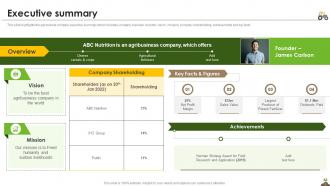
Slide 3: This slide displays agricultural company executive summary.
Slide 4: This slide highlights the agricultural company overview.
Slide 5: This slide represents long-term business objective of the agricultural company.
Slide 6: This slide showcases Global presence with export offices and production facilities.
Slide 7: This slide shows agricultural company products and commodities.
Slide 8: This slide presents commodity and product branding.
Slide 9: This slide displays agricultural company’s five steps potash fertilizer production process.
Slide 10: This slide represents agricultural company nitrogen fertilizer production process.
Slide 11: This slide showcases phosphate fertilizer production process.
Slide 12: This slide shows Agricultural farming and processing centers.
Slide 13: This slide presents commodity trading business model.
Slide 14: This slide displays Company timeline from 2005 to 2022.
Slide 15: This slide represents organization chart of agricultural company.
Slide 16: This slide showcases Executive leadership and management team.
Slide 17: This slide shows international clients of agricultural company multiple commodities.
Slide 18: This slide presents agricultural company customer testimonials from three different companies.
Slide 19: This slide highlights the awards and allocates received by agriculture company.
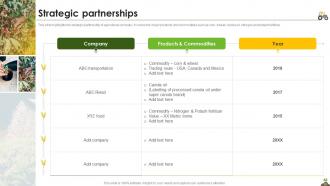
Slide 20: This slide displays strategic partnership of agricultural company.
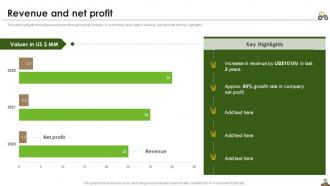
Slide 21: This slide represents revenue and net profit of agricultural company.
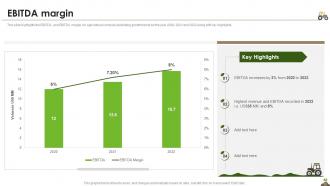
Slide 22: This slide highlights the EBITDA, and EBITDA margin, for agricultural company.
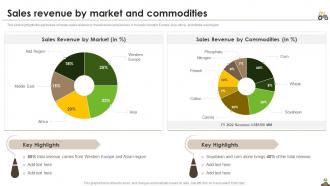
Slide 23: This slide showcases Sales revenue by market and commodities.
Slide 24: This slide highlights the inventories for 2016 and 2021 through pie chart format.
Slide 25: This slide showcases agriculture company goods stock value.
Slide 26: This slide shows agriculture companies' competitive analysis based on total experience.
Slide 27: This slide presents agricultural company SWOT analysis.
Slide 28: This slide displays Partnership with retail channels brand.
Slide 29: This slide represents agricultural company business line extension strategy.
Slide 30: This slide showcases Research and development investment.
Slide 31: This slide shows agricultural company CSR initiatives.
Slide 32: This slide presents agricultural company’s social performance.
Slide 33: This slide displays case study of agricultural company.
Slide 34: This slide represents Icons for agriculture company profile.
Slide 35: This slide is titled as Additional Slides for moving forward.
Slide 36: This is Our Mission slide with related imagery and text.
Slide 37: This is About Us slide to show company specifications etc.
Slide 38: This slide presents Bar chart with two products comparison.
Slide 39: This slide describes Line chart with two products comparison.
Slide 40: This is Our Target slide. State your targets here.
Slide 41: This slide shows Post It Notes. Post your important notes here.
Slide 42: This slide provides 30 60 90 Days Plan with text boxes.
Slide 43: This is Our Team slide with names and designation.
Slide 44: This is an Idea Generation slide to state a new idea or highlight information, specifications etc.
Slide 45: This is a Thank You slide with address, contact numbers and email address.
Agriculture Company Profile Powerpoint Presentation Slides with all 50 slides:
Use our Agriculture Company Profile Powerpoint Presentation Slides to effectively help you save your valuable time. They are readymade to fit into any presentation structure.
-
Agriculture Company Profile
-
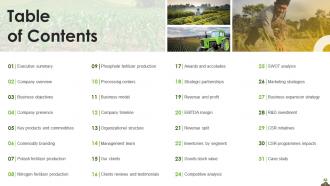
Table of Contents
-
Executive Summary Slide for ABC Nutrition
-
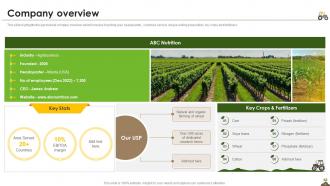
Company overview
-
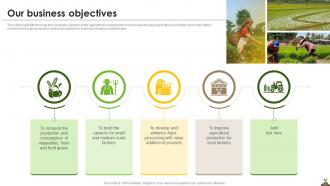
Our business objectives
-
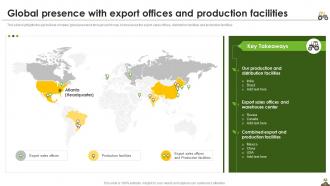
Global presence with export offices and production facilities
-
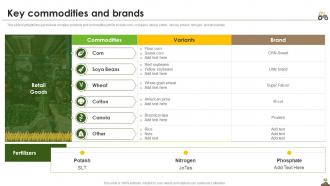
Key commodities and brands
-
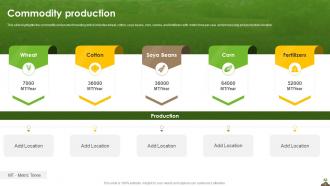
Commodity production
-
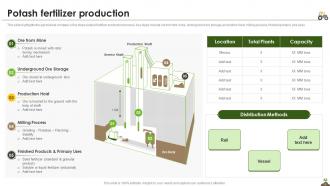
Potash fertilizer production
-
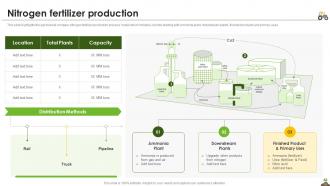
Nitrogen fertilizer production
-
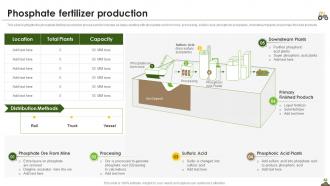
Phosphate fertilizer production
-
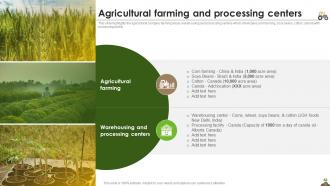
Agricultural farming and processing centers
-
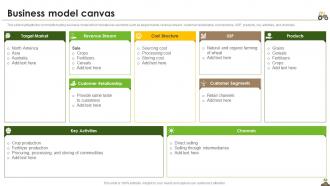
Business model canvas
-
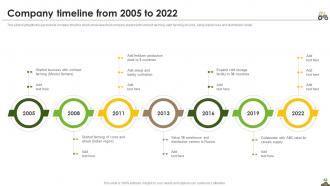
Company timeline from 2005 to 2022
-
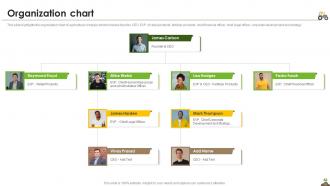
Organization chart
-
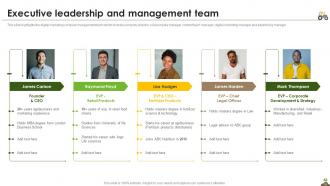
Executive leadership and management team
-
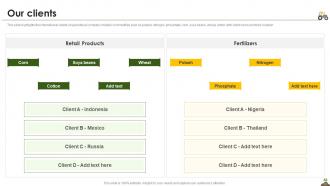
Our clients
-
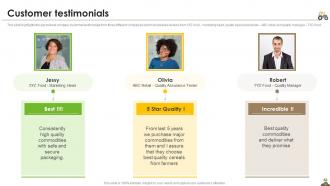
Customer testimonials
-
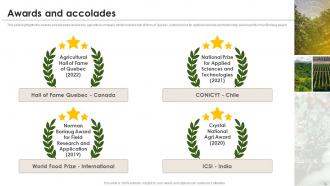
Awards and accolades
-
Strategic partnerships
-
Revenue and net profit
-
EBITDA margin
-
Sales revenue by market and commodities
-
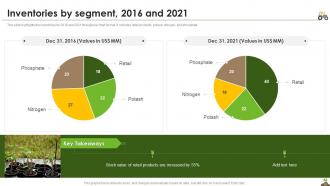
Inventories by segment 2016 and 2021
-
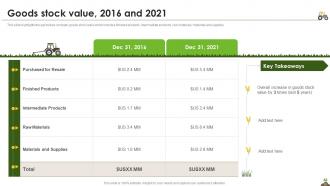
Goods stock value 2016 and 2021
-
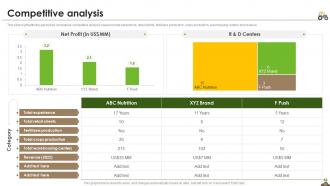
Competitive analysis
-
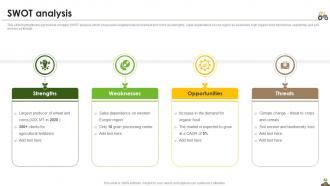
SWOT analysis
-
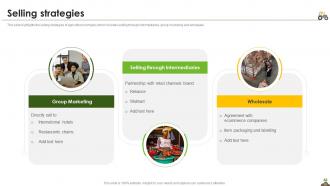
Selling strategies
-
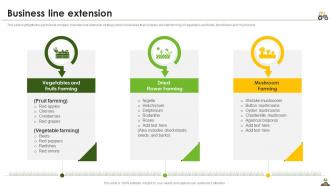
Business line extension
-
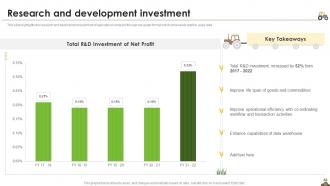
Research and development investment
-
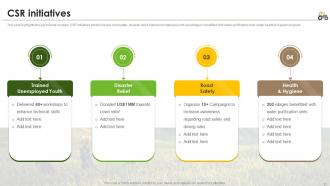
CSR initiatives
-
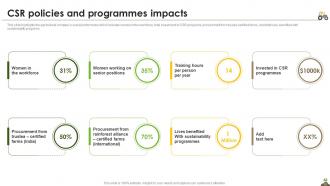
CSR policies and programmes impacts
-
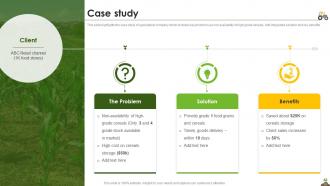
Case study
-
Icons slide for agriculture company profile
-
Additional slides
-
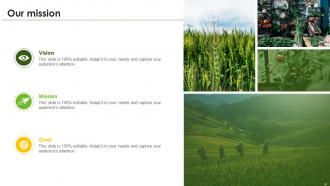
Our mission
-
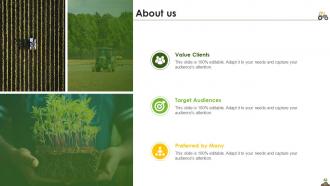
About us
-
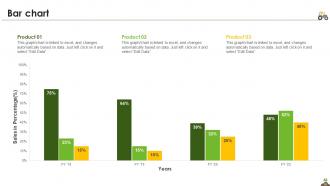
Bar chart
-
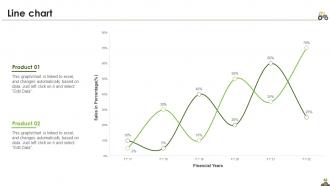
Line chart
-
Our target
-
Important notes
-
30 60 90 days plan
-
Our team
-
Idea generation
-
Thank you for watching
-

-

-

-

-

FAQs for Agriculture Company Profile
Hey! We've got three main product lines - seeds (corn, soybeans, wheat), crop protection stuff like herbicides, and fertilizers. But honestly? The real money's in services now. Precision ag consulting, soil testing, custom applications. All that digital farming tech too - drone mapping, data analytics, the whole nine yards. Oh, and farmers are eating this stuff up because it actually helps their yields. If you're thinking partnerships, I'd definitely go after the precision ag angle. That's where everyone wants help these days, way more than just selling them seeds and calling it good.
Dude, we're actually doing pretty well on the green stuff! About 70% of operations now use regenerative farming - way better for soil health long-term. The precision tech cuts down water waste and fertilizer runoff big time. Crop rotation is standard practice here, and honestly? The biodiversity tracking with those conservation groups is cooler than I expected. All suppliers gotta hit our environmental benchmarks too. Oh and if this is for quarterly reports or whatever, definitely hit up that sustainability dashboard on the portal for numbers.
Dude, we've got GPS tractors, soil sensors, and drones monitoring everything now. Honestly the drone footage is sick - you can spot pest problems and nutrient issues way before they blow up. Our automated irrigation adjusts based on weather and soil data, which is clutch. Variable rate fertilizing dropped our costs 15% and yields went up too. Oh, and moisture tracking is game-changing. Start with soil sensors if you're gonna upgrade anything - best ROI by far. The whole precision ag thing seemed overwhelming at first but it's totally worth it.
So we work directly with local farms and co-ops - basically skip the middlemen to save money and get better quality. Three regional warehouses handle distribution using this hub-and-spoke thing. Honestly, the hardest part has been timing harvests with what our retail partners actually want (we're still figuring that out). Everything gets tracked through our ERP system, so you can grab real-time inventory whenever. Oh, and definitely check out the supply chain dashboard if you haven't - took me forever to learn it but it's actually not terrible once you get used to it.
So we do this integrated pest management thing - basically throw beneficial bugs like ladybugs at the problem first. Nature's honestly way cooler at this stuff than we are. Chemical sprays come next if needed, but we use precision tech so we're not just dumping pesticide everywhere. Our crews scout weekly with these digital tools that predict outbreaks (pretty neat actually). Crop rotation helps too, obviously. Oh and definitely hit up your local agronomist since every region's different with pest pressure and what chemicals you can even use legally.
Here's how we do it - direct partnerships with local farms work best. Technical training gets them up to speed on sustainable stuff, plus we loan equipment to smaller guys who can't afford their own. The guaranteed purchase deals are honestly a game-changer since farmers know they'll have steady income. Our mentorship thing pairs newbies with experienced folks, which is pretty cool to see in action. Emergency support kicks in during rough seasons too. The whole co-op setup just makes sense - when everyone does well, we all do well. Your local ag liaison can tell you what's actually available in your area since it varies.
So we're trying to slash packaging waste by 40% in three years, plus go fully biodegradable for shipping by 2026. Electric delivery trucks are happening too, with better route planning to cut emissions - though rural deliveries are still being a total pain honestly. The compostable seed packets will probably show up first since they're the no-brainer change. Oh, and if your team needs to loop in on packaging stuff, hit up sustainability ASAP. They're mapping out the whole timeline and actually need ops feedback on what'll work in the real world.
So we've got a bunch of certifications depending on what you're growing. USDA Organic is the big one most people need. GAP certification covers all our facilities too. Specialty crops? That's where Rainforest Alliance and Fair Trade come in. The paperwork is honestly brutal - like, seriously annoying. But clients eat this stuff up when they're sourcing. Annual audits for each one mean you can't slack on documentation. Oh, and definitely check with your division manager about which ones actually matter for your area. Some training might be required too.
So we measure stuff like water per acre, soil health, carbon footprint, biodiversity - the usual suspects. Quarterly reports break it down by region and crop, plus third-party auditors verify everything (honestly keeps people from fudging numbers). There's year-over-year comparisons so you can actually see if things are improving or not. Gets rolled into our annual sustainability report that drops every March. But honestly? Just check the dashboard first - way better than waiting around for quarterly summaries since it's all real-time data.
So we do this 4-year rotation thing - soybeans for nitrogen, then corn since it's hungry for nutrients, cover crops in between. Gives the soil time to bounce back naturally. Timing's everything though. We test the soil regularly for pH and organic matter levels, which honestly felt like overkill at first but now I swear by it. Once you nail down the rotation schedule it's pretty automatic. Oh and definitely check out that soil health dashboard - shows live data from each field so you're not just guessing when you plant.
Hey! So we do farmer surveys and hit up trade shows for focus groups - that's where the real gold is tbh. Farmers get chatty about their problems when they're actually looking at gear. Our sales reps are constantly feeding us field reports from their territories too. Honestly, trade shows are way better than formal surveys sometimes because people just open up more. Start with your sales team data first though - they're hearing complaints and requests literally every day. Oh and don't overthink the survey questions, just ask about pain points and what features they actually want.
So we basically run everything through data models before making any big moves - crop planning, resource allocation, all of it. Most of the time you'll see this with yield predictions and soil monitoring. The analytics team grabs info from sensors and weather stations, then tells leadership what to do for both day-to-day stuff and bigger picture planning. Honestly the algorithms are scary good at predicting field conditions. Oh and definitely bring the analytics people into any proposals early - they pretty much drive all the final decisions around here anyway.
So we've got a few things going that are actually making a difference with climate change. The drought-resistant crops? They're crushing it in weird weather - honestly the results blew me away. Precision agriculture is cutting water use by 30% and way less fertilizer ends up in runoff. Soil health programs are probably the coolest part though, farmers are literally turning their fields into carbon sinks. Oh and if you want the nitty gritty details, check the sustainability dashboard or just text Sarah in AgTech - she knows everything.
So we're working with three research places right now. State Agricultural University is handling crop genetics - honestly, they're crushing it with drought-resistant stuff. Then there's the Regional Climate Research Center doing sustainable farming, and Metro Tech helps with our precision agriculture tech. State U is probably our best partnership since their research is actually breakthrough level. You get access to all their latest findings and can usually get your people into field trials too. Oh, and if you want details on specific projects, just hit up Sarah in R&D - she knows everything.
So we basically test soil and pick seeds first, then track everything through packaging. Third-party audits happen regularly plus HACCP stuff. The traceability system is honestly nuts - so much data it's overwhelming sometimes. But you can literally trace any product back to the specific field and when it was harvested, which is pretty cool. Temperature stays controlled during storage and shipping too. Everything gets documented like crazy. If something goes wrong, you'll know exactly where it started and can fix it fast. Way more thorough than I expected when I first started here.
-
Out of the box and creative design.
-
SlideTeam’s pool of 2Million+ PPTs has really benefited my team, everyone from the IT department to HR. We are lucky to have crossed ways with them.