


Four pillars of education sample of ppt




Try Before you Buy Download Free Sample Product
 Impress Your
 Audience
 100%
100% Editable
 Save Hours
 of Time


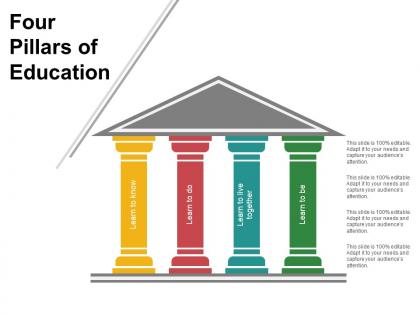
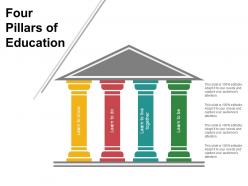
Are you looking to represent overview of learning principles for your firm? If yes, then use our intelligently designed four pillars of education sample of PPT presentation template to do it without any hassle. PPT template is perfect to display education and four pillars on Indian constitution. You can use this professional, modern four pillars of learning PowerPoint to understand the basic principles of learning for your business-related requirements. Pillars of teaching presentation template also focuses on the changes in education pattern, trend over the past, which have inducted basic rethinking on roles of education in industry and content. PPT template is mainly used in training and education related slideshows. You can also display overview of learning principles including learning to know, learning to do, learning to live together, learning to be for your business-related requirements. Download now by clicking on download button and deliver your ideas in front of clients, shareholders or other audience. Handle any cause for envy with our Four Pillars Of Education Sample Of Ppt. Address feelings of jealousy.
People who downloaded this PowerPoint presentation also viewed the following :
Four pillars of education sample of ppt with all 5 slides:
Establish firm control on further growth of inflation with our Four Pillars Of Education Sample Of Ppt. Initiate action to effectively handle it.


FAQs for Four pillars of education
So there's this UNESCO thing called the Four Pillars that's actually pretty smart. Learning to know (getting knowledge + critical thinking), learning to do (practical stuff and problem-solving), learning to live together (working with others, empathy, diversity), and learning to be (personal identity, creativity, judgment). Honestly, most education completely ignores the last two. The whole point is creating actual people instead of just walking encyclopedias. You should try looking at your training programs through this lens - I bet you'll find some obvious holes you hadn't noticed before.
Look at your current lessons first - figure out which pillars you're already hitting. Then just add bits for the missing ones. "Learning to know" is your content stuff. Hands-on practice covers "learning to do." Group work and discussions nail the "learning to live together" part (seriously, kids are so bad at working together now). The reflection piece is "learning to be" - get them thinking about themselves. Don't overthink it. You can hit multiple pillars in one activity if you're clever about it. I'd start with adding just one missing element per lesson, then build up from there once it feels natural.
Critical thinking fits into all four pillars, but "learning to know" is where it really lives - that's your analytical stuff. You'll also see it heavily in "learning to do" during problem-solving. Honestly, I think it's what makes everything else click better. Like when you're learning to live together, critical thinking makes you question your assumptions about people. Learning to be? Same deal - helps you actually reflect on what you value. Oh, and definitely try asking more "why" questions in whatever area you're working on. That usually gets the ball rolling.
Yeah, so cultural values basically determine which pillar gets the spotlight. East Asian countries go hard on "learning to know" - think super intense academics. Meanwhile, Nordic systems are all about "learning to live together" with tons of collaboration. Indigenous education? They've honestly nailed the "learning to be" thing way before it was trendy, weaving it into everything. Individual achievement vs. collective harmony makes a huge difference too - like, it completely flips how you'd approach "learning to do" practically. Bottom line: you gotta adapt each pillar to fit your community instead of cramming some generic approach down everyone's throat.
Honestly, tech makes all four pillars way more engaging. Kids can dive into simulations and interactive stuff that actually makes hard concepts stick - way better than textbooks. Virtual labs and coding platforms give them real hands-on practice. The collaboration part almost happens automatically now through online projects and global connections (though sometimes I miss the days when group work meant actually sitting together). Personalized learning paths help with the self-development piece too. I'd say just pick whichever pillar fits what you're already teaching and mess around with a few tools. Don't overthink it.
So you'll definitely need to mix it up since each pillar is totally different. Regular tests work fine for the "learning to know" stuff. But "learning to do"? That's where projects and simulations come in handy. The "learning to be" part is honestly pretty tricky - I'd go with reflection journals or portfolio presentations that show how they've grown. Group work and team observations help capture that "learning to live together" piece, though that one's probably the hardest to nail down. Oh, and don't rely on just one method - you want multiple ways to see what's actually happening.
Start small and pick one thing to focus on this week. For "learning to know," stay curious - maybe subscribe to newsletters or take online courses. "Learning to do" is about practicing skills, even uncomfortable ones. Honestly, I suck at this but it actually works! Self-reflection through journaling covers "learning to be." The last one, "learning to live together," happens when you seek out different perspectives and collaborate with various people. I'd probably start with curiosity since that's easiest. Just commit to one specific action and build from there.
The Four Pillars work so well because they hit different learning styles without making you stress about it. Analytical kids love the "learning to know" part, hands-on learners get excited about "learning to do." Social butterflies thrive with "learning to live together" - honestly, those are usually my chattiest students anyway. Then "learning to be" is perfect for your quiet, reflective ones. What I love is you can mix all four into basically any lesson. Every kid gets multiple ways to click with the material. Way better than trying to plan separate activities for every learning style.
Oh totally, parent involvement makes a huge difference with the Four Pillars thing. Kids do so much better when their parents actually get what's happening at school - like supporting the learning to know, do, live together, and be stuff at home too. Honestly, even just parents asking "what'd you learn today?" helps kids think more critically and work better with others. The pillars work okay on their own, but they're way more effective when there's that connection between home and school. I'd definitely try getting parents to understand the framework first though, so they can actually help reinforce each pillar intentionally.
Okay so the Four Pillars thing actually maps super well to what we need today. Learning to know = digital literacy and knowledge skills. Learning to do covers all the practical/technical stuff. Living together is basically collaboration and cultural awareness - which honestly feels more important than ever. Then learning to be hits critical thinking and personal development. Delors was way ahead of his time back in '96! You can see how OECD's Education 2030 and UNESCO's citizenship frameworks basically borrowed from his work. When you're building curriculum, just use those four pillars as your checklist to make sure you're covering what actually matters globally.
Honestly? The whole system fights against you from day one. Schools are obsessed with standardized tests and rigid schedules - everything's built around memorizing facts. Good luck measuring whether kids actually grew as people or learned to work together better. Your admin will want hard data on stuff that's basically impossible to quantify. Most teachers (no shade to them) weren't even trained for this kind of holistic teaching. I'd say start with small interdisciplinary projects that mix everything together naturally. Don't try revolutionizing your entire curriculum overnight - that's a recipe for burnout.
Honestly, you've gotta think outside the box here. Interactive platforms work way better than endless Zoom calls for the "learning to know" stuff. Ship materials to students so they can do actual hands-on projects at home - that covers your "learning to do" pillar. The social piece is brutal to replicate online, not gonna lie, but breakout rooms help a bit. Digital journals are great for reflection and personal growth. Oh, and definitely do one-on-one check-ins when you can. Don't just dump your regular curriculum online and call it a day - be purposeful about hitting each pillar differently.
Oh man, Finland's education system is like the holy grail for this stuff. They've got it all figured out - critical thinking, emotional learning, hands-on work, collaboration. The whole package. IB programs are solid too, especially with their global citizenship focus. Montessori schools naturally hit these marks without even trying, which is pretty cool. Project-based learning is where it gets interesting though - kids solving actual community problems while checking all four boxes. What you want to find locally are programs doing both academic rigor AND character building. That combo's your best bet.
Honestly, the Four Pillars are like a cheat code for career prep. Critical thinking comes from "learning to know" - that's your problem-solving foundation right there. "Learning to do" gets you the hands-on skills and adaptability employers actually want. Then there's "learning to live together" which sounds cheesy but is basically teamwork and communication (schools totally sleep on this one). "Learning to be" develops emotional intelligence and ethics - the leadership stuff that makes people promotable. You'll want to weave all four into your curriculum, not just focus on the academic pieces. Creates students who can think AND work with people.
So community engagement basically takes those four learning pillars and makes them actually matter in the real world. You're connecting students with local orgs, families, community leaders - suddenly they're learning through genuine expertise, doing hands-on projects that count, and collaborating with all kinds of different people. Mentorship happens naturally too. Honestly, it beats sitting in a classroom bubble any day. The trick is finding partners who actually align with what you're teaching, not just random volunteer gigs for show. Map out who's already in your area first - you'd be surprised what's there.
-
Appreciate the research and its presentable format.
-
Much better than the original! Thanks for the quick turnaround.