


Four Ps Of Marketing Mix For Restaurant




Try Before you Buy Download Free Sample Product
 Impress Your
 Audience
 100%
100% Editable
 Save Hours
 of Time


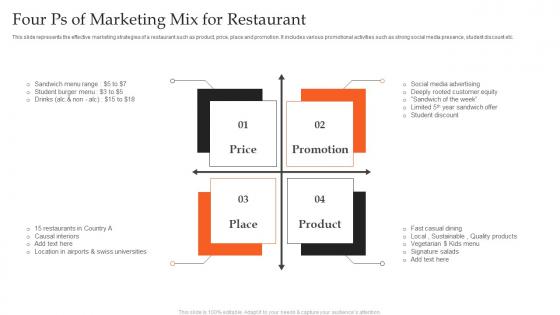
This slide represents the effective marketing strategies of a restaurant such as product, price, place and promotion. It includes various promotional activities such as strong social media presence, student discount etc.
People who downloaded this PowerPoint presentation also viewed the following :
Four Ps Of Marketing Mix For Restaurant with all 6 slides:
Use our Four Ps Of Marketing Mix For Restaurant to effectively help you save your valuable time. They are readymade to fit into any presentation structure.





FAQs for Four Ps Of Marketing
Okay so the restaurant marketing mix has four parts: Product (your menu and vibe), Price, Place (location), and Promotion. They all connect to each other though - like if you're in a fancy neighborhood, you'll probably charge more, which means your menu better be good and your social media can't look cheap. Honestly, I see so many places mess this up by having one piece that doesn't match. Fine dining spot with McDonald's prices? Weird. Fast casual trying to charge $30 for a burger? Also weird. Figure out who you're trying to attract first, then make sure everything else backs that up. When it all clicks together, that's when you actually make money.
Look, you gotta nail down what actually makes your food different - not just buzzwords. Maybe it's some killer signature dish or how you handle dietary stuff like keto/vegan. Farm-to-table is honestly played out unless you've got a legit story behind it. Focus on stuff people can literally taste and remember, you know? Seasonal menus work great for getting people back. Oh, and chef specials create good buzz too. Honestly though, start simple - pick ONE dish that becomes your "holy shit you have to try this" item. That's way better than trying to be special at everything.
Your pricing basically tells customers who you are before they even walk in. Go premium if you want the date night crowd. Competitive pricing pulls in families watching their budget. For lunch rushes, value pricing is your friend - people want decent food without the wait or the bill shock. Happy hours and early bird deals are clutch for filling seats during slow periods. Most restaurant owners totally sleep on how much their pricing affects what people think about them, which is crazy to me. Check out what your competition charges first, then tweak yours bit by bit until you find what clicks.
Look, location matters but don't just think about your physical spot. Apps like DoorDash and Uber Eats let you reach way more people without opening new places. Ghost kitchens are pretty smart too if you're testing markets. Partnerships are where it gets interesting though - pop up at breweries, try food trucks, do some catering. Each one puts you in front of completely different crowds. I learned this the hard way - you gotta go where your customers already hang out instead of waiting around for them to discover you.
Honestly, figure out what makes you different first - like are you the cozy date spot or the quick lunch place? Survey your regulars about why they keep coming back, then double down on that stuff. Social media's a must obviously, but everyone just posts the same boring food shots. Partner with local people instead, or create something actually worth sharing. Your POS system probably has tons of data you're not using - timing patterns, repeat customers, all that. Oh and experiences beat pretty photos every time. Build your whole marketing around whatever originally drew people in, just make it louder.
Honestly, the best thing you can do is weave customer feedback into everything you're doing. Reviews help you tweak your menu, pricing feedback shows if people think you're worth it, and complaints about slow service? That's gold for fixing your operations. I always tell people to track repeat visits and spending patterns - way more telling than vanity metrics. Your social media should reflect what customers actually say, not what sounds clever to you. Oh, and sentiment analysis is clutch for catching problems early. Set up a monthly cycle where you're collecting feedback, looking at the data, then making real changes. It's pretty wild how different reality is from what we assume customers want.
Honestly, changing your seasonal menu affects way more than just the food itself. Pricing gets weird when ingredient costs fluctuate, you'll need fresh promo content to show off what's new, and distribution changes too - like adding holiday catering or opening that patio space. I've seen so many places just swap dishes without thinking through the rest. Big mistake. You want all four marketing P's working together, which means planning like 6-8 weeks out minimum. That gives you time to get suppliers lined up, train staff properly, and actually build some buzz around the launch. It's probably the easiest way to get people excited about coming back.
Honestly, social media works great for restaurants if you don't overthink it. Post drool-worthy food pics on Instagram - those behind-the-scenes prep videos do really well too. Perfect for showing off new menu items or whatever seasonal stuff you're running. Partner with local food bloggers, run some targeted ads, maybe create a hashtag so customers post their own photos. Flash sales work awesome for your followers - people love feeling like they're getting insider deals. Oh, and definitely show off your space too, especially if you've got nice outdoor seating or host events. Just pick two platforms though. Better to nail Instagram and Facebook than suck at five different ones.
Budget's gonna be your biggest headache - restaurant margins are already brutal, so you can't waste money on stuff that doesn't work. Timing's rough too since food trends change every five minutes. Getting your staff on board with social media and new promo ideas? Good luck with that one. Honestly, the whole restaurant space is so crowded it feels like shouting into the void sometimes. My take? Pick one or two things and go deep instead of spreading yourself thin. Track everything like your life depends on it, then pivot fast when something's not hitting. Oh, and actually listen to what your customers want - sounds obvious but you'd be surprised.
Dude, cultural stuff totally changes how you gotta approach marketing. Like in California, everyone's obsessed with organic everything, so you'd push fresh ingredients hard. But somewhere with deep food traditions? You'll probably need different pricing and way more respectful messaging. Social media's tricky too - what kills it in cities can bomb in rural spots. Honestly, the whole "one size fits all" thing is such BS in marketing. Do your homework on each local market first, or you're basically throwing money away. I learned this the hard way with a campaign last year.
Dude, service quality can make or break your restaurant marketing. Bad service? Customers bolt and trash you online - that stuff spreads like wildfire. But nail the service game and you've got people coming back every week, plus they're basically doing your marketing for you by telling friends. Your staff are walking advertisements whether they know it or not. Honestly, I'd rather eat mediocre food with great service than amazing food with rude servers. Train your team well because they're interacting with customers way more than your fancy Instagram posts ever will. Reviews and repeat business all come down to how people feel when they leave.
Honestly, partnerships are a game-changer for getting your name out there without spending a fortune. Local farms are perfect for sourcing fresh stuff - plus the content writes itself for social media. Food bloggers will give you legit reviews, and you can do cross-promos with other businesses nearby. I'd definitely look into catering gigs at offices too. Oh, and delivery apps are huge right now. Even local events need food vendors. Just make sure you're not partnering with direct competitors, obviously. List out businesses in your area that attract the same crowd you want, then hit them up with actual collaboration ideas rather than some vague "let's work together" pitch.
Think of branding as your compass for the whole marketing mix. It drives how you price stuff, what you sell, where you set up shop, and your promo style. A fancy steakhouse can't randomly start advertising two-for-one deals like Applebee's - that'd be weird, right? Your customers would be so confused. Everything needs to match up. Short version: your product, pricing, location and ads should all scream the same vibe. Otherwise people won't get what you're actually about and you'll lose them.
Honestly, it's way easier than you'd think. Start with your food - just watch reviews, repeat customers, and complaints. Sales volume and profit margins will show if your pricing's working. For location stuff, count foot traffic and check sales per square foot (delivery radius too if you do that). Social media engagement is super easy to track, plus coupon use and ad ROI for promotions. I'd probably set up some basic dashboard so you're not drowning in numbers. The trick is catching trends early before things go sideways.
Honestly, just pick one thing and start there - don't overwhelm yourself. Your menu's the obvious place to begin - call out those locally-sourced ingredients and plant-based stuff. Maybe offer discounts for people bringing their own containers? That's easy money saved. The atmosphere thing is huge too... reclaimed wood looks cool anyway, plus you could do a visible compost setup so people actually see you're not just talking. Social media's where you'll probably get the biggest bang though. Tell stories about your local farm partnerships, show behind-the-scenes waste reduction stuff. I always think the authenticity comes through better than just posting generic eco-content.
-
Love how there are no boring templates here! The design is fresh and creative, just the way I like it. Can't wait to edit and use them for my extended projects!
-
The ease of modifying templates is just superb! Also, the vast collection offers plenty of options to choose from.