


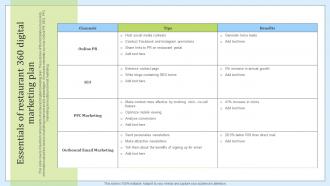
Essentials Of Restaurant 360 Digital Marketing Plan





Try Before you Buy Download Free Sample Product
 Impress Your
 Audience
 100%
100% Editable
 Save Hours
 of Time


This slide covers important components of restaurant digital marketing plan. The purpose of this template is to provide information about the various marketing channels and its advantages. It includes elements such as Online PR, SEO, PPC marketing and outbound email marketing
People who downloaded this PowerPoint presentation also viewed the following :
Essentials Of Restaurant 360 Digital Marketing Plan with all 6 slides:
Use our Essentials Of Restaurant 360 Digital Marketing Plan to effectively help you save your valuable time. They are readymade to fit into any presentation structure.





FAQs for Essentials Of Restaurant 360
Key components include social media engagement, local SEO optimization, online reputation management, email marketing campaigns, and targeted advertising across platforms like Google and Facebook. These strategies work together by building brand visibility, driving foot traffic, and fostering customer loyalty, with many restaurants finding that integrated digital approaches significantly increase reservations and repeat business.
Social media channels increase restaurant visibility through consistent content posting, engaging customer interactions, targeted local advertising, and strategic hashtag usage. Platforms like Instagram and Facebook enable restaurants to showcase menu items, share behind-the-scenes content, and promote special events, with many establishments finding that authentic storytelling and user-generated content ultimately drive foot traffic and build loyal customer communities.
SEO enhances a restaurant's digital marketing strategy by improving local search visibility, driving organic website traffic, and connecting with customers actively seeking dining options. Through optimized Google My Business profiles, location-based keywords, and review management, restaurants achieve higher search rankings, increased reservations, and competitive advantage in their local market.
Restaurants can leverage email marketing through personalized promotions, loyalty program updates, seasonal menu announcements, event invitations, and targeted customer segmentation based on dining preferences. These strategic campaigns enhance customer retention by delivering timely offers, birthday specials, and exclusive previews, with many establishments finding that consistent email engagement increases repeat visits and builds lasting customer relationships.
Facebook and Instagram advertising, Google Ads, TikTok promotions, YouTube marketing, and local directory listings represent the most effective platforms for restaurant promotion. These platforms enhance visibility by targeting local demographics, showcasing visual content, and enabling location-based advertising, with many restaurants finding that strategic combinations of social media advertising and search engine marketing ultimately deliver increased foot traffic and stronger customer engagement.
Restaurants can improve their online reputation through digital marketing by actively managing review platforms, engaging authentically with customer feedback, creating compelling social media content showcasing food quality and dining experiences, and implementing email campaigns that encourage positive reviews. These strategies streamline reputation management while building customer loyalty, with many establishments finding that consistent digital engagement ultimately delivers higher review ratings, increased customer trust, and sustainable competitive advantage in an increasingly crowded marketplace.
Restaurant owners should track website traffic, social media engagement rates, online reservation conversions, customer acquisition cost, and return on ad spend across platforms. These metrics enable comprehensive performance assessment by revealing customer behavior patterns, campaign effectiveness, and revenue attribution, with many establishments finding that tracking email open rates and review sentiment alongside foot traffic data ultimately delivers clearer ROI insights and competitive positioning advantages.
Restaurants can use content marketing to attract and retain customers by sharing behind-the-scenes cooking videos, featuring seasonal menu highlights, showcasing customer testimonials, creating recipe tutorials, and highlighting local ingredient sourcing stories. These content strategies build emotional connections with diners while demonstrating culinary expertise, with many establishments finding that consistent storytelling drives repeat visits and social media engagement.
Effective website engagement strategies include interactive menus with high-quality visuals, online reservation systems, customer review integration, personalized content based on dining preferences, and loyalty program portals. These digital touchpoints streamline the customer journey by reducing wait times, enhancing menu discovery, and building repeat visits, with many restaurants finding that personalized experiences increase online orders and customer retention significantly.
Mobile optimization is critically important for restaurants, as over 70% of food searches happen on mobile devices, directly impacting visibility, online ordering, and customer acquisition. With diners increasingly using smartphones to browse menus, make reservations, and order delivery, restaurants with mobile-optimized websites and apps deliver faster loading times, seamless ordering experiences, and higher conversion rates, ultimately gaining competitive advantage in today's mobile-first dining landscape.
Online reviews and testimonials serve as powerful social proof that significantly influences customer decisions, builds trust, and enhances a restaurant's online reputation across platforms like Google, Yelp, and social media. These authentic customer voices drive new customer acquisition, improve local search rankings, and provide valuable feedback for operational improvements, with many restaurants finding that actively managing and showcasing positive reviews ultimately delivers increased foot traffic and higher revenue.
Restaurants can utilize influencer marketing by partnering with food bloggers, local lifestyle influencers, micro-influencers in their geographic area, celebrity chefs, and social media personalities who align with their brand values. These collaborations enhance visibility through authentic content creation, targeted audience engagement, and strategic social media campaigns, with many establishments finding that influencer partnerships drive significant foot traffic and online buzz.
Effective digital promotion strategies include targeted social media campaigns, email marketing to segmented customer lists, influencer partnerships with local food bloggers, limited-time digital offers, and countdown campaigns across multiple platforms. These approaches create buzz by leveraging visual storytelling, exclusive previews, and time-sensitive incentives, with many restaurants finding that coordinated multi-channel campaigns significantly boost event attendance and new menu item adoption.
Restaurants can integrate loyalty programs by leveraging mobile apps with push notifications, email marketing campaigns featuring personalized rewards, social media contests encouraging user-generated content, and data analytics to track customer behavior and preferences. Through strategic combination with digital channels, restaurants streamline customer engagement, automate reward distribution, and enhance retention rates, while many establishments find that integrated loyalty systems deliver increased repeat visits and higher average transaction values.
Best practices for utilizing visuals in restaurant digital marketing include high-quality food photography, behind-the-scenes content, user-generated content, seasonal menu highlights, and brand-consistent graphics across platforms. These visual strategies enhance customer engagement by showcasing appetizing dishes, building authentic connections, and creating memorable brand experiences, with many restaurants finding that compelling visuals significantly increase social media engagement and drive foot traffic.
-
Appreciate the research and its presentable format.
-
The PPTs are extremely simple to modify. Thank you for providing the slides that are ready to be used. They assist me in saving a lot of time.