


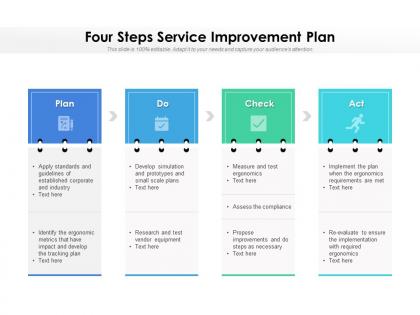
Four steps service improvement plan




Try Before you Buy Download Free Sample Product
 Impress Your
 Audience
 100%
100% Editable
 Save Hours
 of Time


Clearly indicate how fears have cropped up with our Four Steps Service Improvement Plan. Identify ill founded doubts that caused them.
People who downloaded this PowerPoint presentation also viewed the following :
Four steps service improvement plan with all 2 slides:
Ensure their confidence doesn't crumble with our Four Steps Service Improvement Plan. Fortify their genuine belief in themselves.
FAQs for Four steps
So you need to nail down what problem you're actually solving first - like, what's broken right now vs what success looks like. Set some concrete goals with real deadlines (not just "improve things"). Map out who's involved because stakeholders can make or break you. Your strategies should be specific, not fluffy buzzwords. Don't skip the boring stuff - what resources you need, what could go wrong. Here's the thing though: build in regular check-ins from day one. I've seen too many solid plans just die because nobody bothered following up on progress.
Honestly, data analytics is a game changer for service improvement - no more shooting in the dark. You'll pinpoint exactly what's broken and why customers keep complaining about the same stuff. I love how it shows you if your fixes actually worked or just made things worse. Think of it like finally getting glasses when you didn't realize you needed them. Focus on measuring impact first, then use that info to decide where to spend your energy next. Maybe start with your biggest pain points? Look at what metrics you already have and pick 2-3 areas that could really use some clarity.
Your customers basically hand you a blueprint through their feedback - they're telling you exactly what sucks and what works. Don't waste time guessing what to fix. Mine that data for real patterns, then tackle the biggest pain points first. Honestly, most companies collect surveys and then... nothing. That's such a missed opportunity. Use the feedback as your baseline so you can actually measure whether your changes made a difference. Skip the internal assumptions. Your customers know better than you do what needs fixing, so listen to them and act on the specific themes that keep coming up.
First thing - grab all your customer complaints and figure out which ones happen most often AND mess up their experience the worst. Support tickets are gold for this, way better than just wing it. Put everything on a simple grid: stuff you can fix fast vs. the big messy problems. Honestly, knock out the quick wins first because it gets everyone pumped (your team AND customers). Then you can tackle those bigger structural nightmares that'll eat up months of work. The momentum from early wins makes the hard stuff feel less impossible later.
You need both the numbers stuff and the feel-good metrics to really know what's happening. Track your response times, how many cases get solved, customer satisfaction scores, cost per incident - all that jazz. But honestly, employee happiness is probably more important than people realize. Miserable staff = miserable customers every time. First-call resolution rates tell you a lot too, plus how often things get escalated up the chain. Oh, and don't ignore whether you're actually hitting your project milestones - I've seen teams get so caught up in metrics they forget to check if they're even following the plan. Weekly dashboard updates work great for catching problems early.
Check yours monthly if possible, quarterly at bare minimum. I learned this the hard way when ours sat untouched for half a year - total nightmare to resurrect. Monthly reviews can be quick, just seeing if you're still headed in the right direction. Save the deep dives for quarterly when you're actually digging into metrics and feedback. Honestly, priorities shift so damn fast these days that waiting longer than three months is risky. You'll end up chasing goals that don't even matter anymore. Set those calendar reminders right now or you'll forget.
First thing - figure out what "better" actually means and get everyone on the same page about it. You'll want someone who actually uses this thing daily in your meetings (seriously, they'll catch stuff you never would). Don't try to fix everything at once - break it into smaller pieces you can test. Oh, and put everything somewhere people can actually find it later, not buried in some random email chain. Set up regular check-ins because stuff will definitely go wrong. Make sure each task has an owner with real deadlines, otherwise nothing happens.
Honestly, start by figuring out what skills your team's missing that are screwing up service quality. Map out what each role actually needs to hit your goals - yeah, it's boring work but whatever. Build targeted training around those gaps instead of generic stuff. Make the training objectives measurable so they connect back to your service metrics. Don't just do it once though. Regular check-ins are crucial to see if people are actually improving. If something's not working, switch it up. The whole thing needs to be ongoing or you're wasting your time.
Honestly, start with project management stuff like Asana or Monday.com - super helpful for tracking milestones and keeping everyone on task. For data, Tableau or Power BI are game-changers since you can actually see what's happening with your metrics instead of just staring at spreadsheets all day. Slack keeps the team talking (which is half the battle, trust me). Don't sleep on customer feedback tools either - Zendesk or SurveyMonkey will tell you if your changes are actually making a difference. My advice? Stick with tools your team already knows first. Better to master the basics than fumble around with something shiny and new.
Look, your Service Improvement Plan has to tie directly into what your company's actually trying to achieve - otherwise you're just spinning your wheels. Figure out which services really impact your big strategic goals first. Then set targets that'll actually matter to leadership, like boosting customer satisfaction or cutting costs. Honestly, I've watched so many teams create these elaborate plans that sound great but don't connect to anything the executives care about. Pick KPIs that align with where your org is headed and check in regularly to see if you're moving the needle. Random improvements might feel productive, but they won't get you recognition or resources when budget time rolls around.
Honestly, most people just hate change - they don't want their routine messed with. Getting executive support first is huge though, otherwise you're screwed. I'd loop stakeholders into the planning early and actually explain why you're doing this stuff. Resource problems are harder to fix but planning ahead helps a ton. Set up clear metrics so you know if it's working, and do regular check-ins to catch issues before they blow up. Oh, and don't just dump changes on people from above. Make it feel more like a team thing where everyone's got input.
Honestly, just be super upfront about everything from the start. Create a timeline showing what's changing and when - people absolutely hate being blindsided at work. Hit them from multiple angles: meetings, emails, maybe throw together a quick FAQ. Here's the thing though - you've gotta explain WHY stuff is changing, not just what's happening. Nobody buys into changes they don't understand. Give people actual time to adjust their workflow too. Oh, and follow up regularly because half the time people nod along but are totally confused. Trust me on this one.
Honestly, realistic timelines are a game-changer because your team won't get burned out and stakeholders actually trust you. Progress feels real when people hit their targets. I've watched so many projects crash because someone thought they could move mountains in a week - spoiler alert, they couldn't. Break everything into bite-sized pieces first. Then add buffer time because something always goes sideways (usually when you least expect it). Short deadlines might seem impressive but they backfire hard. You'll spot resource problems early this way instead of scrambling later. Trust me on the buffer thing.
Don't assume you know what customers actually want - big mistake I see all the time. Get feedback through surveys, focus groups, whatever works for your situation. Then prioritize improvements based on their input, not what seems cool internally. Honestly, I've watched teams get pumped about backend stuff that customers literally don't notice. Measure success through their eyes too. Set up regular check-ins with real customers to review progress. You'll probably need to pivot based on what they tell you, and that's totally normal.
Southwest Airlines completely redid their customer service approach - that's a solid one to study. Amazon's delivery improvements are another good example, though honestly everyone talks about those now. Toyota's continuous improvement thing is classic but maybe overdone? You want cases with clear numbers and real stakeholder support. Harvard Business Review has tons of these, or just ask around on LinkedIn. Pick 2-3 from your industry if possible. Look at how they actually implemented everything, their timelines, what worked. Way more useful than generic advice when you're planning your next move.
No Reviews