


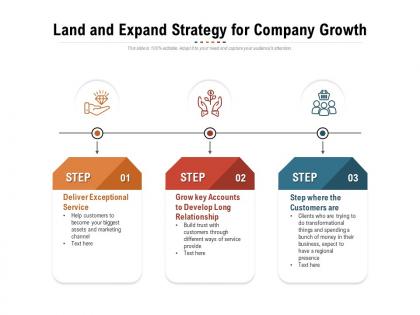
Land and expand strategy for company growth




Try Before you Buy Download Free Sample Product
 Impress Your
 Audience
 100%
100% Editable
 Save Hours
 of Time


The actual explanation becomes clear due to our Land And Expand Strategy For Company Growth. It ensures hidden agendas come apart.
People who downloaded this PowerPoint presentation also viewed the following :
Land and expand strategy for company growth with all 2 slides:
Identify dependable assets with our Land And Expand Strategy For Company Growth. Advise folks on how to acquire them.


FAQs for Land and expand strategy
So Land and Expand is basically getting your foot in the door small, then growing from there. You don't try to sell everything upfront - just focus on one department or use case first. Get that locked down and prove you're worth it. Once they're happy, that's when you start spreading to other teams or adding features. Way better than going for the massive deal right away, honestly. The whole strategy is about playing the long game with accounts instead of just chasing big initial contracts. Start with your easiest win, crush the implementation, then figure out where else you can grow within that company.
Honestly, the math just works better with expansion revenue. Your customer acquisition costs drop way down since you're selling to people who already trust you. Way easier than cold outreach, obviously. These customers stick around longer too, so their lifetime value shoots up. New signups are great but expansions hit your ARR immediately - that's the compound effect everyone talks about. Happy customers basically become your sales team anyway. I'd focus on figuring out which current customers are most likely to expand and build some solid upsell processes around them first.
Find departments screaming the loudest about problems your solution fixes. Seriously, chase the squeaky wheels - they actually want help and will implement fast. Target teams that already have budget sitting around or just went through some big change that created new headaches. Quick wins matter here. You need something that shows clear ROI in like 90 days, then you can point to that success when pitching other departments. Oh, and start figuring out early who controls the purse strings in those adjacent teams you'll want to hit next. Makes the whole expansion thing way smoother.
Dude, you absolutely need that customer feedback for Land and Expand - it's like your cheat sheet for knowing where to grow. Without it, you're just throwing darts blindfolded. I've watched teams completely miss the mark because they assumed they knew what customers wanted instead of actually asking. The feedback shows you exactly what pain points still exist and which features they're dying for. Then you can focus your expansion efforts on stuff that'll actually sell. Oh, and make sure you're doing regular check-ins with your biggest accounts - that's where the gold is. Don't wing it.
Okay so first thing - actually watch how your customers use your product. Login frequency, which features they're adopting, support tickets, team growth. Most companies are terrible at this honestly. Set up monthly or quarterly calls to talk about what's working and what isn't. You're looking for patterns that scream "ready to buy more." Are they hitting their goals with your product? Growing teams usually need more seats or features. I'd create some basic scoring system to rank which accounts to chase first - saves you from spinning your wheels on dead ends.
Don't get so obsessed with new deals that you ignore current customers - kills your expansion chances. Timing is huge here. Track usage data and set up regular check-ins, but don't wait forever to pitch additional stuff. I learned this one the hard way: never oversell upfront or promise features that don't exist yet. Honestly, most people mess up by not having clear triggers for when to expand. Plant seeds early about what else you could do for them. Short bursts work better than long pitches too. Keep an eye on health scores religiously.
Think of it like a relay race - sales closes the deal, then customer success grabs the baton to drive adoption and spot expansion chances. Marketing should definitely create content for existing customers too, not just chasing new ones. Product teams need to focus on features that actually open up upsell opportunities. Happy customers expand way more, so support becomes huge here. Honestly, the biggest thing is getting everyone to see their role in growing accounts, not just landing them. Regular team meetings where people share expansion intel and plan moves together - that's where the magic happens. Breaking down those silos is everything.
Honestly, NRR is your bread and butter here - shoot for 110%+ because it shows both retention and growth rolled into one. Track expansion revenue as a percentage of total sales, plus how long it actually takes to grow an account (time-to-expand). Customer health scores are clutch for spotting expansion opportunities early. Oh, and definitely segment your expansion rates by customer type - some segments just naturally expand way more than others. Set up monthly dashboards for all this stuff. Trust me, you'll start seeing patterns in which accounts are ready to grow and where your approach isn't quite hitting the mark.
Look, onboarding is everything for land and expand - mess this up and you're screwed. Get customers to their first win quickly and they'll start asking what else you've got. I've seen so many companies just dump people into their product with zero guidance, then act confused when nobody upgrades. Build trust early by actually helping them use your stuff right. Once they hit that "holy shit, this works" moment, expansion becomes way easier. The whole thing falls apart if they're struggling from day one though.
So you've got two totally different games to play here. First phase is all about getting them hooked - free trials, quick wins, those case studies that show instant results. Super straightforward stuff. But here's where most people screw up (and I've seen this a million times) - they completely ignore customers once they're signed up. Bad move. Your existing users need totally different content. Show them advanced features, maybe some success stories from companies that actually grew with your product. Oh, and segment everything based on where they are. A new user doesn't need the same pitch as someone who's been around for months.
Honestly, just be genuinely helpful instead of constantly pushing more products. Check in regularly—not only when you need something from them. Listen to how their business is changing. Too many sales teams disappear until renewal time, which feels so transactional and gross. Share useful insights when you find them. Introduce them to other customers with similar problems. Celebrate their wins publicly if that makes sense. You'll become the advisor they trust, someone who gets their bigger goals beyond just your stuff. When they naturally outgrow what they have, suggest new features then.
Go for the quick wins first - prove your worth in like 30-60 days. Pick their biggest headache and actually fix it, even if it seems small. I've watched so many companies try to do everything at once and it totally blows up in their face. Talk to them constantly during this phase (probably more than feels natural) and track real numbers. Show them actual metrics, not fluffy stuff. Celebrate those wins together! Once they trust you can deliver, that's your opening to pitch bigger projects or expanding to other teams. It's way easier than starting with some massive overhaul.
Honestly, start with what you've got before buying anything new - might save you some cash. Salesforce and HubSpot are solid for tracking account health, but Gainsight's my pick if you really want to catch expansion opportunities early. ChurnZero's good too for spotting usage patterns. The analytics side is huge - you need to know which features actually matter to your customers so you don't sound like an idiot when pitching upgrades. Oh, and set up some automated alerts for when accounts hit certain thresholds. Makes life way easier than manually checking everything.
When the market's crowded, Land and Expand actually becomes way more appealing. You can slip into accounts faster than competitors who demand huge upfront commitments. Speed matters - you've got to build those relationships before someone else swoops in, even if you're starting small. It's basically like claiming your spot first, then expanding later. Honestly, if your rivals are already doing this approach, you can't sit around waiting for bigger initial deals or you'll just lose out to more flexible companies. Get in with something genuinely useful, prove you're worth it, then grow from there.
Look at Slack - they went after small teams first, then those teams basically sold the rest of their companies for them. Snowflake does the same thing with data teams, starting tiny then spreading everywhere. Salesforce literally invented this playbook. Land with sales, expand to marketing and service later. AWS? Same deal - one dev team needs storage, next thing you know the whole company's on their platform. Honestly, it's genius. Prove you're worth it fast with a small group, then let your wins do the talking when it's time to grow bigger.
No Reviews