


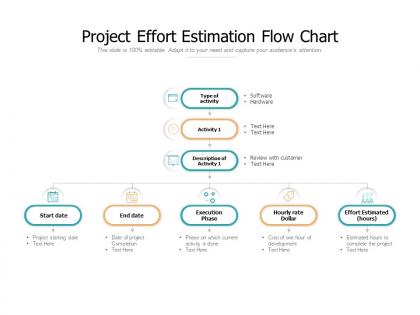
Project effort estimation flow chart




Try Before you Buy Download Free Sample Product
 Impress Your
 Audience
 100%
100% Editable
 Save Hours
 of Time


Finish off fast with our Project Effort Estimation Flow Chart. Get the chance to go to bed early.
People who downloaded this PowerPoint presentation also viewed the following :
Project effort estimation flow chart with all 5 slides:
Be fresh for the action with our Project Effort Estimation Flow Chart. Begin the day in an exciting fashion.


FAQs for Project effort
So Waterfall is all about nailing down every detail upfront - WBS, expert judgment, parametric estimation, the whole nine yards. You're basically predicting hours for tasks before you even start building. Agile's totally different though. Story points, planning poker, t-shirt sizing - it's way more flexible and honestly less painful than pretending you can estimate something perfectly from day one. Your estimates actually improve as your team finds its rhythm. Oh, and velocity tracking becomes super useful once you've got a few sprints under your belt. I'd go with story points first - most teams use them anyway.
Look, historical data is like having a cheat sheet for estimates. Check what actually happened vs what you thought would happen on past projects. You'll probably find your estimates are consistently off in the same spots (mine always are with testing phases, ugh). Instead of randomly guessing Feature X takes 2 weeks, you can see it took 3.5 weeks across five similar projects. Track your actual vs estimated hours, complexity factors, team speed. Even a basic spreadsheet works. Your future self will thank you when estimates aren't just educated guesses anymore.
Dude, you absolutely need stakeholder input for decent estimates. They know what they actually want and how messy their requirements are. Without talking to them first, you're just throwing darts blindfolded. Get their detailed requirements, quality standards, deadlines, and what resources they can give you. They'll spot hidden complexities and dependencies you'd totally miss - trust me on this one. Also document everything because they will change their minds later and wreck your timeline. Oh, and make sure you talk to ALL the key people early, not just whoever seems loudest.
Honestly, team dynamics make or break your estimates. I've watched projects completely tank because people weren't meshing or someone was still figuring out the basics. Good teams with solid skills? They'll crush deadlines. But if there's drama or knowledge gaps, you're screwed. Don't forget to pad time for code reviews and mentoring - that stuff adds up fast. Some teams actually collaborate, others just... exist in the same Slack channel, you know? Always build in extra time for when things get messy, because they will.
Oh man, this is such a common mistake! When you lowball your estimates, everything starts falling apart. Deadlines get missed, which makes you look bad to whoever's waiting on your work. Your budget explodes because suddenly you need way more time and people than planned. The worst part? Quality takes a nosedive when everyone's rushing around trying to hit impossible targets. I've seen teams deliver absolute trash just to meet the original timeline - it's brutal. Other projects depending on yours get screwed over too. Honestly, just pad your estimates and have someone else sanity-check them before you commit.
Honestly, the right tools make estimation way less painful. Project management stuff like Jira tracks how long similar tasks actually took - beats wild guessing every time. Planning poker apps help your team agree on estimates faster too. Some newer tools even suggest estimates using AI (though I'd double-check those, personally). The trick is finding something that plays nice with whatever you're already using. Otherwise you'll spend half your time just switching between different platforms, which defeats the whole point.
Honestly, breaking stuff down is a game changer for estimates. Your brain can actually wrap itself around "write the login validation" way better than "build the whole auth system" - there's just something about smaller pieces that makes sense. You'll catch weird dependencies too that would've blindsided you later. I used to think listing every tiny task was overkill, but it's worth it. Way easier to spot what you're missing when everything's written out. The concrete stuff gives you something real to base your guess on instead of just throwing numbers around.
Ugh, external stuff will absolutely wreck your estimates if you're not careful. I learned this the hard way when a client's project doubled because of some random audit nobody saw coming. Market changes can force you to pivot mid-way through, or suddenly there's new compliance rules you have to deal with. Build in buffer time - like 15-25% depending on how crazy your industry gets. During planning, really dig into what external risks might hit. Ask your stakeholders about any regulations or market pressures coming down the pipeline. Having backup plans ready honestly saves your sanity later.
Planning Poker is honestly pretty great for this - everyone reveals their estimate cards at the same time so nobody gets swayed by the first person who speaks up. T-shirt sizing (S, M, L, XL) feels way less scary than trying to nail down exact hours too. Have people write their estimates down first before any discussion starts. Trust me, it makes a huge difference. Oh, and three-point estimation works well - just ask for best case, worst case, and realistic scenarios from each person. The real trick is stopping your loudest team members from bulldozing everyone else. Once you get the quiet folks actually contributing, your estimates will get so much better.
Look, first thing - figure out what went wrong. Scope creep? Technical stuff you didn't see coming? Team members out sick? Write it down, don't just move on (been there, it sucks). Then dig into whether this was a weird one-off or if your estimation process needs work. Honestly, I've learned more from my biggest misses than my perfect estimates. Use that info to get better next time and just be straight with everyone about what happened. These screw-ups are actually pretty valuable if you pay attention to them.
So effort estimation is basically how much actual work something takes - like 20 hours of coding. Time estimation? That's when it'll actually be done, like "finished by Friday." Here's where it gets messy though - your 20-hour task could easily stretch across 3 weeks if you're juggling other stuff or waiting on approvals. I've seen this trip up so many teams. You really need both numbers. Effort helps with budgets and figuring out who's doing what. Time estimation drives your actual schedule and deadlines. Pro tip: always ask which one people want when they say "how long will this take?" - saves tons of confusion later.
Honestly, Gantt charts are a game changer for figuring out how long stuff will take. You can actually see which tasks are blocking each other - like when you realize Tom's gotta finish the design before anyone can start coding. That visual thing really helps catch dependencies you'd totally miss otherwise. I always break projects into smaller pieces first, then throw them into the Gantt to see the whole mess laid out. Makes it way easier to spot where you're being too optimistic about timing. Plus you can adjust on the fly when reality hits.
Expert judgment works well when you've got seasoned people who really know their stuff - they'll catch issues others miss and give solid estimates from experience. But honestly? It's all over the place in terms of consistency. Different experts will give you totally different numbers, and there's always that one guy who thinks everything will take twice as long (or half the time). Plus people tend to just nod along with whoever's been there longest. I'd say use it alongside other methods, not by itself. Oh, and write down why people estimated what they did - you'll thank yourself later when you're trying to figure out what actually happened.
So basically Planning Poker stops you from having just one person throw out a random guess for the whole team. Everyone shows their story point estimates at the same time, which prevents that thing where people just go with whatever number they hear first. The best part? When people's estimates are way off from each other, that's where the good stuff happens. Suddenly everyone's sharing details that others totally missed - I can't tell you how many weird dependencies we've caught this way. Those conversations end up being way more accurate than someone just winging it solo. Honestly, after a few rounds your team just gets so much better at being on the same page.
Honestly, just start tracking your actual time vs what you estimated - that data is gold. When projects wrap up, sit down with your team and figure out what went sideways (scope creep, tech debt, Bob vanishing for a week, whatever). I used to skip this part because it felt tedious, but documenting these patterns actually helps you catch the same problems before they happen again. Get the developers involved in estimation sessions instead of having managers just guess. Oh, and don't treat estimates like they're set in stone - update your whole process based on what you learn each sprint.
No Reviews