


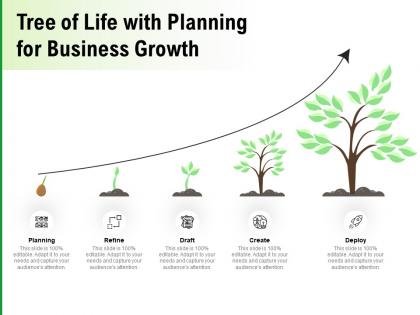
Tree of life with planning for business growth




Try Before you Buy Download Free Sample Product
 Impress Your
 Audience
 100%
100% Editable
 Save Hours
 of Time


Our Tree Of Life With Planning For Business Growth are conversant with any fresh changes. They allow you to gather greater expertise.
People who downloaded this PowerPoint presentation also viewed the following :
Tree of life with planning for business growth with all 2 slides:
Avail the excellent facilities of our Tree Of Life With Planning For Business Growth. The choice available is bound to fascinate you.

FAQs for Tree of life with planning
Look, growth really boils down to four things: know your market cold, have a value prop that actually resonates, build stuff that won't fall apart when you scale, and don't run out of money. Timing's huge too - sometimes you just wait for the right window. Keep existing customers happy while chasing new ones because that revolving door thing is brutal on your budget. Oh and here's what I'd actually do first: figure out where you stand right now, then pick ONE thing to test properly. Don't spread yourself too thin from the start.
Look, market research is honestly your best friend when you're trying to grow. It shows you which customer groups nobody's paying attention to yet. Competitors always miss stuff - that's where you swoop in. Without it, you're just guessing which markets are worth your cash and which ones will drain your account. I've watched so many startups burn through money because they thought they "knew" what people wanted. Spoiler alert: they didn't. You need real numbers AND actual conversations with customers. Both matter. Otherwise you're building your whole strategy on hope, and hope doesn't pay the bills.
Honestly, customer feedback is like your cheat sheet for what's actually working. Use it to figure out which features to build next and where you're missing the mark - way better than guessing and wasting money on stuff nobody wants (seen that disaster too many times). Set up proper ways to collect it - surveys, interviews, digging through support tickets. The real trick though? Don't just hoard it in some random spreadsheet. You've gotta spot the patterns and actually do something about them. It's basically your reality check against whatever assumptions you're making about your business.
Honestly, start by digging into your current customer data - who's actually buying from you? From there, find similar groups with the same problems. Surveys and competitor research help, but here's what really works: just talk to your existing customers about what they're missing. They'll literally tell you where the opportunities are. I learned this the hard way trying to guess what people wanted. Mix those real conversations with whatever data you can get. Then don't blow your whole budget - test small first with pilot campaigns before you go big.
Honestly, don't try to beat them at their own game. Big companies are drowning in red tape while you can change direction tomorrow if you need to. Pick one super specific thing and become *the* person for that. Like, forget trying to serve everyone - that's how you end up serving nobody well. Focus on speed and actually giving a damn about your customers. They can't match your personal touch or how fast you move. I see so many small businesses trying to scale like Amazon when they should be doubling down on what makes them different. Find your niche and own it completely.
Dude, scalability is everything. I've seen so many startups just completely implode because they couldn't handle growth - like, they'd get a flood of customers and suddenly everything falls apart. You want systems that won't die when you're doing 10x the volume. Build your tech and processes to expand without you pulling all-nighters forever (trust me on this one). The smart move? Figure out where you'll hit bottlenecks before they happen. Design everything - your team structure, operations, whatever - to grow with you from the start. It's honestly the difference between sustainable growth and hitting a brick wall.
Honestly, start with just the big three: monthly recurring revenue, customer acquisition cost, and lifetime value. That combo will show you if you're actually making money or just pretending to grow. We got burned by this once - tons of signups but bleeding cash everywhere lol. Churn rate matters too, plus maybe net promoter score if you want the customer happiness angle. But seriously don't go crazy with like 20 different dashboards. Pick maybe 4-5 metrics max that actually match what your business does and check them weekly. You can always add more later when things get busier.
Honestly, the right tech can be a total game changer for growth. Start with whatever's driving you crazy right now - maybe it's tracking leads or repetitive admin stuff. Once you automate that, your team can actually focus on strategy instead of busy work. CRM systems are clutch for understanding customers (way better than just winging it). I know a guy who literally doubled his team's output after getting his tech stack sorted. Don't go overboard though. Pick one thing, get it working smoothly, then move to the next. Analytics platforms will blow your mind with the insights you get.
Honestly, the scariest part is burning through cash way too fast and hiring people you haven't properly checked out. Quality control goes out the window when you're moving that quickly. Plus your systems will literally break - like, everything you've built suddenly can't handle the volume. Customer service takes a hit, markets you don't understand become money pits. I've seen brands totally wreck their reputation this way. Still go aggressive with your targets though. Just build in some wiggle room because something will definitely blow up unexpectedly.
Honestly, you've gotta bake your values into everything from the start - like literally write down what they look like day-to-day, not just fluffy mission statement stuff. Train everyone on them during onboarding. And yeah, this sounds harsh, but you'll need to let go of people who don't fit, even star performers (learned that one the hard way). Build values into reviews, promotions, how you pick vendors - the whole thing. Companies that go sideways during growth? They treated culture like a bonus instead of actual infrastructure. Oh, and start tracking culture metrics now while you can still see what's working.
Think of strategic partnerships as your growth hack without draining your bank account. You'll tap into their customer base or distribution network while they get access to whatever you're good at. Find companies where your strengths fill their gaps - like if you've got solid tech but zero market reach. I'd honestly start by writing down what you suck at or need most, then hunt for businesses that already crush those areas. The trick is being super clear about what everyone wants from day one. Otherwise you'll end up in one of those awkward "what are we even doing here" situations six months later.
Track your cash flow like your life depends on it - seriously, this is where most businesses mess up. Get funding lined up way before you think you'll need it. Growth is sneaky expensive because you're buying inventory and paying people while waiting forever for customers to actually pay you. Watch your receivables obsessively and throw in some early payment discounts if you have to. Line of credit or invoice factoring can save your butt during tight spots. Oh, and definitely try negotiating longer terms with your suppliers - worst they can say is no. Map out your cash needs for at least 6 months and have a backup plan ready.
Honestly, skip traditional ads and go for community stuff instead. User-generated content is gold - run contests or challenges to get customers creating for you. Interactive posts like polls and live Q&As seriously boost engagement. I'd also look into partnering with complementary businesses for cross-promotion. Micro-influencers crush it more than celebrities these days, which is kinda wild if you think about it. Email segmentation makes a huge difference too - personalized sequences beat generic blasts every time. Pick one thing first though. Test it properly, then scale what's working before jumping to the next tactic.
First thing - figure out what's actually shifting around you. Customer habits? New competitors? Different demand? Most companies are way too slow with this stuff, honestly. Once you know what's changed, take a hard look at your current approach. Doesn't match reality anymore? Time to pivot. Your existing strengths are still valuable - just point them toward whatever's emerging or where customers are headed now. Could mean new audiences, different products, fresh channels. Whatever. Just test small first - don't blow your whole budget on a maybe. Move quick but think it through.
Honestly, expanding to new areas can be a game-changer for your revenue - you're basically opening up fresh customer pools you've never touched. If your current market tanks, other locations can bail you out. Some places might have way cheaper rent or labor costs too, which is huge. Getting there first also means beating competitors to the punch. My cousin did this with her bakery chain and it worked out great, though she started super small. Don't just throw a dart at a map though - do your homework on each market first. Test the waters before going all-in.
No Reviews