

Geographical footprint in different regions ppt powerpoint presentation slides designs





Try Before you Buy Download Free Sample Product
 Impress Your
Audience
 100%
Editable
 Save Hours
of Time


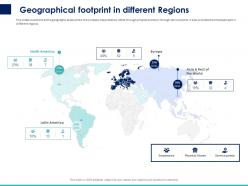
The slides covers the all the geographic areas where the company has presence, either through physical stores or through service points. It also provides the employee split in different regions.
People who downloaded this PowerPoint presentation also viewed the following :
Geographical footprint in different regions ppt powerpoint presentation slides designs with all 2 slides:
Institute an innovative curriculum with our Geographical Footprint In Different Regions Ppt Powerpoint Presentation Slides Designs. Formulate fresh courses to cater for the day.

FAQs for Geographical footprint in different regions ppt powerpoint
Honestly, start with where your customers are and work backwards from there. Target markets matter most, but don't forget about supply chain stuff and whether you can actually find good people to hire. Costs vary like crazy between locations - infrastructure, regulations, all that. Tech companies have it easier since they can basically set up anywhere with decent internet. Manufacturing? Not so much. Oh and political stability is huge - learned that one the hard way when a client's factory got caught up in some mess overseas. Really depends on your industry though, so map out what's actually critical for your specific business first.
Honestly, your geographic spread pretty much dictates how messy your supply chain gets. More regions = more distribution centers, different regulations, longer shipping times. Currency swings will screw with your budgets constantly - learned that one the hard way. You'll need local suppliers everywhere to stay competitive and cut shipping costs. Each market has its own labor laws and customs headaches too. Cultural stuff varies wildly between regions, which people don't think about enough. My take? Go regional first, then expand. Always have backup suppliers lined up.
So geographical footprint analysis is basically mapping where your competitors are killing it versus where they're barely present. Look for those gaps - that's where you want to jump in. I'd start by plotting your top 3 competitors' locations on a map, then hunt for the obvious holes. You'll spot underserved areas pretty quickly, plus you can see where they're spread too thin to really dominate. It also helps you figure out the best spots for warehouses or stores based on where customers actually are. Honestly saves you from some expensive screw-ups down the road.
Oh man, this is huge for marketing. You literally can't use the same message across different cultural groups anymore - even in the same city! What works amazing in one community will totally bomb in another. Language, values, humor, shopping habits... everything's different. Honestly learned this lesson the expensive way when my campaign crushed it in one area but was a disaster everywhere else. Now I map out cultural segments first, not just demographics. Test different approaches with each group. It's way more work but makes such a difference. Start small with a few key segments and see what sticks.
Honestly, start with whatever data you've got and layer stuff on top. Google Analytics will show you where your users are coming from geographically - that's usually the easiest starting point. For the fancy visual stuff, QGIS is free and does heat maps pretty well (ArcGIS is better but costs a fortune). GPS tracking works if you need physical location data. The real magic happens when you throw demographic info into the mix with your location data. Don't just rely on one source though - I learned that the hard way. Satellite imagery is overkill for most people but can be useful for coverage gaps.
Ugh, environmental regs are all over the place depending on where you're working. Europe's crazy strict - think GDPR but for environmental stuff. Meanwhile some developing countries barely have oversight. The US is probably the worst though because it changes completely state to state. Texas lets you get away with way more than California or anywhere in the Northeast. Germany's another beast entirely. I'd start by figuring out which locations have the toughest rules, then just plan everything around those standards. Way easier than trying to customize for every single place.
Technology's basically your secret weapon here - you can test new markets digitally before dropping serious cash on physical locations. E-commerce platforms and cloud stuff let you reach customers everywhere without the crazy overhead. I'd start with digital marketing and analytics to see which regions actually want what you're selling (seriously, some of the data will surprise you). Once you've got that intel, logistics software and automation help maximize your existing spots. The whole approach is pretty smart: go digital first to prove demand exists, then only build physical presence where the numbers back it up. Way less risky than just guessing.
Look, don't just think "we have offices everywhere" - that's missing the whole point. Play to each location's strengths instead. Put your customer service where response times matter most. Manufacturing works great in lower-cost areas while you keep R&D in places known for innovation. Different regions have different talent pools too, so tap into that. I mean, why wouldn't you optimize where you put what? The whole idea is being smart about location strategy so competitors can't just copy what you're doing. Makes way more sense than randomly spreading stuff around.
Honestly? The operational chaos is brutal. Supply chains get disrupted, you'll lose good people, and serving customers from fewer locations without tanking service quality is a nightmare. Regulatory stuff across regions will drive you insane - I'm not even exaggerating there. You're also kissing goodbye all that local market knowledge and relationships that took forever to build. My advice? Phase it slowly and map out customer impact before you do anything stupid. Test your approach on the locations that matter least first. Oh, and budget way more time than you think you need.
Where you are really does limit who you can hire - it's pretty obvious when you think about it. Remote work changed everything though. You're stuck with whoever happens to live near your office otherwise. Different regions have tons of great people you'd never find locally. I'd start by figuring out where the talent you want actually is, then work backwards from there. Even just opening up remote hiring (which honestly most companies should be doing anyway) gets you way more diverse candidates. Your pipeline will thank you.
Honestly, three things will save your ass here. Spread your revenue across different regions - if one market crashes, you won't be totally fucked. Local partnerships are clutch too, hire people who actually get the culture and regulations in each area. I can't stress this enough - those monitoring systems for tracking political and economic risks? Total game changer. Oh and flexible supply chains that can switch directions fast when shit hits the fan. I'd probably start by figuring out where you're most exposed risk-wise and tackle those spots first.
Geography totally changes how people shop - it's wild how different regions can be. Urban folks love convenience and buying stuff online. Rural customers? They're way more about getting good value and sticking with brands they trust. Weather plays a huge role too (nobody in Miami's shopping for parkas in summer, obviously). Income differences matter, plus population density and local rules all mess with what people actually buy. Honestly, trying to market the same way everywhere is pretty much setting yourself up to fail. I'd pick your top 3-5 markets and study each one separately first.
Dude, geopolitics can completely flip your business plans overnight. Trade wars and sanctions force companies to bail from entire regions - Russia being the obvious recent example. Currency swings, data laws, local manufacturing requirements... it all adds up fast. Political drama between countries matters way more than people realize when you're trying to expand. Build some flexibility into your strategy because honestly, things change so damn quickly. Having backup plans isn't optional anymore. Short version: don't put all your eggs in one geographic basket.
Start by making a list of all your locations - offices, warehouses, stores, whatever you've got. Grab energy usage data from your utility companies (they're usually pretty helpful with this). Convert those numbers to CO2 using EPA conversion factors. Business travel and commuting matter too, honestly more than people think. Focus on your biggest sites first since that's where you'll see the real impact. Oh, and don't forget heating/cooling costs - those can be brutal depending on your climate. It's tedious work but you need the baseline before you can improve anything.
Look at Starbucks - they're obsessed with putting stores everywhere you can walk in cities. McDonald's does the opposite, going for highway spots with easy drive-thru access. Amazon's distribution thing is crazy good though, they position warehouses so you can get stuff same-day in big cities. Walmart clusters their stores around distribution hubs to cut shipping costs. Toyota's smart too - they build plants close to both suppliers and customers. You'll want to study how they balance being close to customers vs keeping operations cheap when you're planning your expansion.
No Reviews