

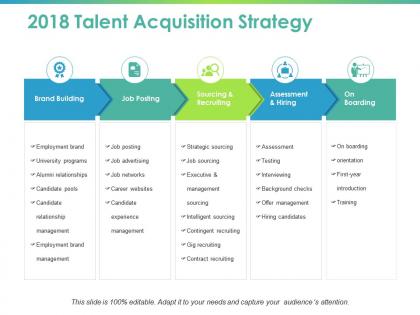
2018 talent acquisition strategy ppt powerpoint presentation layouts summary




Try Before you Buy Download Free Sample Product
 Impress Your
 Audience
 100%
100% Editable
 Save Hours
 of Time


Bring about a higher degree of awareness with our 2018 Talent Acquisition Strategy Ppt Powerpoint Presentation Layouts Summary. Elaborate on cases of fraud.
People who downloaded this PowerPoint presentation also viewed the following :
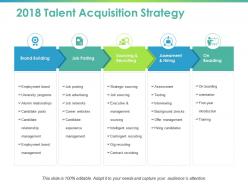
2018 talent acquisition strategy ppt powerpoint presentation layouts summary with all 5 slides:
Highlight the clarity of your concept with our 2018 Talent Acquisition Strategy Ppt Powerpoint Presentation Layouts Summary. The imagery it contains has a definite impact.
FAQs for 2018 talent acquisition strategy ppt powerpoint
So you'll need four key things: employer branding, sourcing strategy, candidate experience, and tracking your data. Most companies absolutely bomb the employer branding part - it's literally how people see you as a place to work. Don't just rely on job boards either. Employee referrals, social recruiting, talent communities - mix it up. Your interview process shouldn't be torture and should actually show what working there is like. Track stuff like how long hiring takes and if you're getting good people. Oh, and do this - apply to your own jobs. Seriously. You'll probably hate it and that tells you everything.
Honestly, data analytics is a game-changer for hiring - though I'll admit it felt pretty intimidating when I first started looking into it. Track which job boards actually deliver good candidates instead of just throwing money everywhere. You'll spot where people drop out of your process and can even predict who might work out based on your successful hires. Time-to-hire is huge to monitor too. The whole diversity thing becomes way clearer when you see the actual numbers. I'd say start basic - just pick two metrics like source effectiveness and how long things take, then add more once you get comfortable with it.
Dude, employer branding is honestly a game changer for getting good people to apply. Like, quality candidates have choices - they're gonna pick companies that look legit and share their values over places that seem meh online. Strong company reputation pulls in people who actually care about your mission, not just whoever needs any random paycheck. Google your own company real quick - whatever pops up is what candidates see first. Trust me, top performers check that stuff before they even think about applying. It's basically the difference between attracting people who want to be there versus people who'll bounce the second something better comes along.
Honestly, you've gotta branch out from just posting on LinkedIn - hit up job boards that actually reach underrepresented communities and partner with orgs that serve those groups. Your job descriptions matter too - ditch the corporate speak and mention your diversity efforts right up front. Here's something most people overlook: make sure your interview panels aren't all white dudes. Candidates notice that stuff immediately. Also check your website photos real quick - do they actually show diversity or is it all stock photos of the same three people? The whole thing comes down to being super intentional about sourcing instead of just crossing your fingers.
Oh totally! Combine your screening calls with first interviews - saves so much time. Build up a talent pipeline before you actually need people (wish I'd done this earlier, spent weeks scrambling for urgent hires lol). Get your hiring managers to agree upfront on must-haves vs nice-to-haves or you'll debate forever. Set tight feedback deadlines too - like 48 hours max between stages. Also hit up good candidates from old searches. Async video interviews work great for initial rounds instead of scheduling hell.
Dude, start with resume screening software - it'll save you hours filtering through applications. Chatbots are great for handling basic candidate questions too, though some people find them annoying (I personally don't mind them). You can try video interview platforms that analyze communication skills, or use analytics to predict which hires will actually stick around. The time savings are honestly insane. Don't go crazy with everything at once though. Pick one tool first, maybe automated scheduling, then add more as your team gets used to it. Way less overwhelming that way.
Track speed stuff like time-to-fill and time-to-hire first. But honestly, speed means nothing if you're hiring duds - so measure quality through performance reviews and how long people actually stick around. Cost-per-hire matters too unless you've got unlimited budget (lucky you). Don't forget candidate experience scores because people talk, especially in smaller industries. Which sources are actually bringing in good candidates vs just eating your money? The tricky part is balancing fast hiring with good hiring. Most companies swing too far one way.
Yeah so passive candidates aren't job hunting at all - you're literally interrupting their Tuesday to pitch something they didn't ask for. Makes it way trickier than dealing with people who are already applying everywhere. You gotta lead with the good stuff right away: better pay, cooler projects, actual career growth. Don't just rattle off job requirements because honestly, why would they care? The whole thing works better when you build some kind of relationship first instead of immediately being like "hey want this random job?" It's harder but way more satisfying when someone actually bites.
Start with what they'll actually *do* day-to-day, not some boring requirements list. Action verbs are your friend here. Throw in your company vibe too - honestly, people want to know if they'll hate coming to work. Just don't call them ninjas or rockstars, that ship sailed years ago. Keep requirements realistic (why do "entry-level" roles need 5+ years experience?). Growth opportunities matter more than you think. Oh, and actually tell them how to apply - you'd be surprised how many job posts forget this basic step.
Don't treat onboarding like some separate HR thing that kicks in after you hire someone. Plan it while you're still recruiting - trust me, candidates can tell when everything flows together vs when it's all disjointed. During interviews, walk them through what their first week actually looks like. Get a buddy assigned before they even start. Your hiring manager needs to be ready to pick up where the interview process left off. Those first 90 days are make-or-break, so map them out now. You want that "we want you" energy to smoothly become "we're thrilled you're here."
Honestly, your company culture is like a magnet for the right people. Top candidates don't just want a job - they want to feel like they actually belong somewhere. If your values match theirs, they'll stick around way longer instead of bouncing after six months. Nobody wants to fake who they are at work every single day, right? Just be real about what working there is actually like. Don't oversell it with some fancy corporate BS because that'll backfire when people realize it's not true. The candidates worth having can smell fake culture from a mile away.
Honestly, don't use agencies as a crutch for every hire. They're great when you're slammed or looking for senior execs - those hard-to-fill spots where you actually need the help. But here's the thing: be super clear about what you want upfront. I've watched so many partnerships crash because nobody bothered setting real expectations. Treat them like part of your team, not some random vendor you hired. Give feedback on their candidates, set actual deadlines, and call them out if they're just throwing bodies at you instead of quality people. The good ones will appreciate the honesty.
Honestly, the hardest part is reading people through a screen - you miss so much body language and those random moments where someone actually shows their personality. Video fatigue hits everyone hard too. Building real connections feels forced when you're staring at boxes all day. Cultural fit becomes this guessing game since you can't see how they vibe with the team naturally. Oh, and onboarding remote people? Total nightmare compared to having them physically there. I'd say create tons of different touchpoints with various team members. Also, tell actual stories about your company culture instead of just listing values - way more effective.
Honestly, just treat people like humans! Reply fast when someone applies - even a quick "got it" email works. Give realistic timelines and don't ghost people (I hate when companies do that). Your interviews should feel like conversations, not interrogations. Nobody wants to be grilled for an hour straight. Make sure whoever's interviewing actually knows what they're looking for beforehand. Show candidates what working there is really like, not just the glossy stuff. And seriously, close the loop with everyone. A rejection email is way better than wondering forever what happened.
Mix hard and soft skills training for your team. Monthly lunch-and-learns work great - cover sourcing techniques, new recruiting tools, interview best practices. The bias and communication training is honestly where you'll see the biggest difference though. Role-playing tough hiring manager conversations really helps too. Don't skip the industry knowledge sessions so they actually get what roles they're filling. Mock interviews are clutch. Quarterly workshops hit different than cramming everything into one session. Your team will thank you later when they're not fumbling through calls with candidates.
No Reviews