


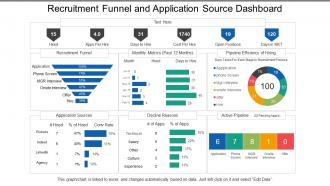
Recruitment funnel and application source dashboard






Try Before you Buy Download Free Sample Product
 Impress Your
 Audience
 100%
100% Editable
 Save Hours
 of Time


Enlighten folks about iconic individuals with our Recruitment Funnel And Application Source Dashboard. Explain how they improved our existence.
People who downloaded this PowerPoint presentation also viewed the following :
Recruitment funnel and application source dashboard with all 6 slides:
Encourage an inclusive approach with our Recruitment Funnel And Application Source Dashboard. Advise folks to cater for different concerns.

FAQs for Recruitment funnel and
Honestly, just track five things and you'll be golden. Time-to-fill and cost-per-hire are obvious ones - how fast you're hiring and what it's costing you. Quality of hire is harder to nail down but super critical. I usually look at 90-day and one-year retention plus performance reviews. Source effectiveness tells you which job boards actually work (spoiler: most don't). Oh, and candidate experience scores matter way more than people think. Start there and you'll catch problems before they blow up your whole process.
So recruitment analytics tracks where your good hires actually come from - then you can focus your energy there instead of wasting time on dead-end channels. Look at which job boards or referral programs bring quality people, not just tons of applications (honestly, volume means nothing if they're all duds). The data shows timing patterns too, like when developers are most likely to respond versus sales people. You can spot where candidates drop off in your process and fix those bottlenecks. I'd start by checking your cost-per-hire for each source - might surprise you which ones are worth it.
Honestly, turning your recruiting data into charts and graphs is a game changer. Those messy spreadsheets suddenly make sense when you can actually *see* the patterns - like why nobody applies in December or which job sites are total duds. I love how easy it becomes to show your boss what's working without boring them to death with numbers. You'll spot where candidates are dropping out of your process way faster too. Track stuff like how long it takes to hire someone and what each hire costs you. I'd start simple - maybe just a bar chart of your best recruiting sources. Then go from there once you get the hang of it.
So predictive analytics is basically taking all your old hiring data - turnover rates, seasonal patterns, growth stuff - and using it to figure out what's coming next. You can spot skill gaps before they bite you in the ass, predict which departments will hemorrhage people, that kind of thing. Way better than panic-hiring when someone quits unexpectedly (been there, it sucks). Start tracking your current patterns first though - can't predict the future if you don't know your past. Then you can actually plan your recruiting budget and time everything better instead of just winging it.
So basically, you can run sentiment analysis on all the feedback candidates give you during hiring - like survey responses, emails, whatever. The tool scans for emotional words (think "frustrating" vs "smooth") and gives you scores. Pretty cool because it catches negative vibes you'd probably miss otherwise. Short sentences work great here. It'll flag problem spots in your process before they tank your reputation. Honestly, I'd start small - just run it on your post-interview surveys first and see what patterns pop up. You'll be surprised what candidates actually think but don't say directly.
Oh man, bias is the big scary one - your algorithm can totally discriminate without you realizing it. Privacy's huge too obviously. Like, you think you're just finding patterns in hiring data but whoops, now you're accidentally filtering out women or whatever. Get proper consent before grabbing sensitive info, be upfront about what data you're collecting. Audit that stuff regularly for discriminatory outcomes because lawsuits are expensive lol. Also give candidates some control over their information - people hate feeling powerless about their data these days.
So basically these algorithms can scan through tons of resumes and rank them based on what actually matters for your job. They look at your best hires and figure out which keywords, skills, and experience levels usually work out. Honestly, it's kinda scary how good they've gotten at this stuff. You can set filters to pull up the top people automatically, plus they'll catch bias you might not even realize you have. The best part? You'll stop wasting hours reading through random resumes and actually spend time talking to candidates who don't suck.
Honestly, recruitment analytics is where it's at for D&I work. The data shows you bias patterns that are easy to miss otherwise - like where diverse candidates are dropping out or which job posts actually attract varied applicants. Numbers make such a stronger case than gut feelings when you're pushing for changes. Track your hiring managers too because unconscious bias is real. Compare your diversity stats to industry benchmarks and set actual targets. Oh, and definitely audit your current data first - I bet you'll find some surprising patterns that could lead to quick fixes.
Start with standardizing how everyone inputs candidate data - validation rules in your ATS will save you headaches later. Monthly audits are a must for catching duplicates and weird formatting issues. Seriously, I've watched entire reports fall apart because half the team wrote "NYC" and half wrote "New York City." Train your recruiters on consistent entry (they'll thank you eventually), and get someone doing weekly spot-checks. The trick is finding this stuff early before it snowballs into a complete mess that ruins your insights.
Workday, Greenhouse, and Lever are your best bets - their built-in analytics actually don't suck. Check what reporting your current ATS offers first though. Might save you from a painful conversation with procurement later. Tableau and Power BI work great if you want fancier dashboards that pull from your recruitment data. But honestly? I'd start simple with whatever you have now. Figure out which metrics actually matter to you first. You can always add the bells and whistles once you know what insights you're hunting for. No point overcomplicating things right off the bat.
Honestly, recruitment analytics is a game changer for this stuff. Start by tracking how long each hiring stage takes - sourcing, screening, interviews, the whole deal. You'll quickly see where things drag or where candidates bail. Job boards are usually the worst for speed, by the way. Most companies find their fastest hires come from other channels. Look at your current time-to-hire numbers first, then break it down stage by stage. That's where the real bottlenecks show up. Oh, and analyze your best performers' profiles - helps you write better job descriptions and target the right people from the start.
Start by digging into your recruiting data - seriously, it's like a treasure map. Where are your best people coming from? Which job posts actually get decent applications? Pay attention to what candidates keep asking about in interviews too. Exit interviews are honestly where the real insights live. People tell you what actually mattered when they're walking out the door. Once you connect all these dots, you'll see patterns emerge. Then just focus your employer brand around those genuine strengths instead of generic corporate fluff that sounds good but doesn't mean anything.
Okay so social media analytics are actually super useful for finding where your good candidates spend time online. You can see which platforms bring in quality applicants and what posts people share most. Honestly, checking out what your competitors are doing for hiring is pretty smart too. The whole point is optimizing where you spend your recruitment budget - why waste money on channels that don't work? I'd definitely start with UTM codes on job posts so you can track conversions properly. Oh, and A/B testing different messaging will show you what actually gets people's attention.
So candidate engagement metrics are basically how you figure out if your hiring process actually works from their end. Track stuff like email open rates, how many people finish applications, time on job pages - honestly, I was shocked when I first looked at our numbers. You'll spot exactly where people bail out or get frustrated. Then you can fix those annoying parts before losing good candidates. My advice? Pick 2-3 metrics that match your biggest headaches right now and just track those consistently. Don't overcomplicate it.
Honestly, recruitment analytics is a game-changer for figuring out what's actually working. Start by checking which job boards are bringing you decent candidates - maybe LinkedIn crushes Indeed for your type of roles. Also look at where people drop off during interviews (that's usually telling). I get weirdly excited about this data stuff, it's like solving a puzzle. Track how long your best hires took from application to offer too. Once you spot patterns, shift your budget toward what's working. Test one thing at a time though - job posting times, salary ranges, whatever. Just don't change everything at once or you'll never know what moved the needle.
No Reviews