

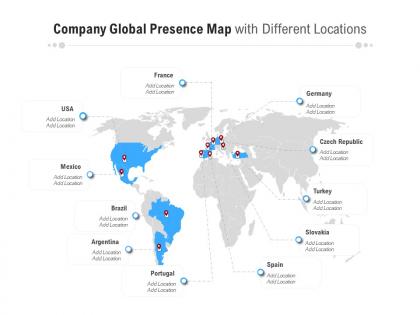
Company global presence map with different locations




Try Before you Buy Download Free Sample Product
 Impress Your
 Audience
 100%
100% Editable
 Save Hours
 of Time


Convince folks you are fully in charge with our Company Global Presence Map With Different Locations. It helps you hold the baton firmly.
People who downloaded this PowerPoint presentation also viewed the following :
Company global presence map with different locations with all 5 slides:
Handle the inflow with our Company Global Presence Map With Different Locations. Give due consideration to all good ideas.



FAQs for Company global presence map
Honestly, diversification is huge - if one market tanks, you've got others backing you up. Access to way bigger customer bases too, plus the talent pool thing is real. Some of my favorite devs are literally everywhere except here lol. Different time zones can work in your favor for round-the-clock stuff. Strategic locations usually mean lower costs, which doesn't hurt. But seriously, figure out which markets actually make sense for your product first. Don't just pick random countries because they sound cool.
Oh dude, you absolutely can't just translate stuff and hope for the best - cultural differences will make or break your campaigns. Colors mean different things, humor doesn't translate, even basic product positioning has to change. McDonald's gets this right - they do rice burgers in Asia and tons of veggie options in India because they actually pay attention to local customs and religious stuff. Honestly, I'd probably invest in real local market research first. Then hire regional teams who grew up there, not just people who speak the language. Trust me, what kills it in one country might completely flop (or offend everyone) somewhere else.
Honestly, tech is what makes global expansion doable without losing your mind or going broke. Cloud platforms handle operations across different time zones. Video calls help you actually connect with international partners - way better than just emails back and forth. Digital payment systems are clutch for handling multiple currencies without the headache. Translation tools help adapt your stuff for different markets, but seriously don't just rely on Google Translate for anything important. E-commerce platforms let you start selling worldwide immediately. Analytics show you what's actually working in each region. Figure out which tools match your expansion goals first though.
Track revenue by region, obviously, but also look at market penetration and how well locals actually know your brand. Customer acquisition costs are all over the map - seriously, what crushes it in Germany might be a total disaster in Brazil. I'd also watch operational stuff: how fast you're adapting products locally, staying compliant with regulations, and whether your teams in each region are actually happy. Don't use the same metrics everywhere though. Pick 3-5 key ones per market and check them every quarter. Way more useful than trying to force universal standards.
Honestly, the cultural stuff will trip you up more than you think. Local regulations are a nightmare to figure out, and supply chain logistics get messy fast. Currency swings can totally wreck your pricing too. What works for marketing here? Probably won't work there at all. Plus local competitors know their turf way better than you ever will - that's just reality. My take: pick one market and really dig into the research first. Oh and definitely find a local partner if you can. Starting small saves you from expensive mistakes later.
Honestly, you've gotta dig deep into what each market actually wants - not just surface-level stuff. McDonald's nails this by doing rice burgers in Taiwan and way more veggie stuff in India. Colors, messaging, even how your product works might need to change based on local culture or infrastructure. Don't just translate your content either, that's amateur hour. Actually adapt it. Your pricing strategy will probably be different everywhere too. The tricky part is staying true to your brand while being flexible enough that locals connect with it. It's like... being yourself but speaking their language, you know?
Honestly, start small with Amazon or Shopify - way easier to test if people actually want your stuff before dropping serious cash. Social media and influencer collabs work great for getting noticed quickly. Here's what saved me: hire locals who get the culture and weird regulations instead of trying to figure it out yourself. Oh, and partnerships with companies already there? Game changer. I can't stress this enough though - don't try conquering the world at once. Pick maybe 2-3 markets max, crush those first, then use what you learned to expand. I've seen too many people spread themselves thin and fail everywhere.
Dude, localization will totally make or break you when going global. Don't just translate stuff and think you're done - that's amateur hour. Everything needs tweaking: your messaging, cultural references, payment options, even customer service hours. Product features too, honestly. I've watched companies crash hard because they skipped this step. Your customers should feel like you actually get their market, not like some random foreign brand trying to muscle in. Oh, and definitely study your local competitors first before launching. Sounds obvious but you'd be surprised how many skip that part.
Honestly, it's a total mess of different rules everywhere. Employment laws change, tax stuff is completely different, and don't even think about data privacy without checking local requirements first. GDPR alone will give you nightmares if you're dealing with European customers. IP protection varies wildly too - what works in the US might be useless somewhere else. Contract laws, business registration, dispute processes... literally everything changes by country. I learned this the hard way with a project last year. Just get local lawyers before you do anything. Seriously, it's so much cheaper than cleaning up legal disasters later.
Honestly, partnerships are like having a cheat code for new markets. Your local partner already gets the regulations, knows what customers actually want, and has distribution figured out. That's years of trial-and-error you just skip. They've got relationships and street cred that would take you forever to build. Splitting costs and risks while combining expertise? Yeah, you'll scale way faster that way. I learned this the hard way trying to go solo first. Just make sure they complement what you're good at and can open doors you'd never reach otherwise.
Honestly, going global is huge for credibility - people just assume you're legit when they see you in multiple countries. It's wild how that works. You'll get access to way more markets too, which spreads out your risk nicely. But here's the thing - you absolutely have to understand each local market or you'll look completely out of touch. I've seen companies totally bomb because they didn't bother learning cultural differences first. So yeah, definitely worth it, just don't half-ass the research part.
Dude, the stuff happening right now is crazy fast. Digital-first operations are huge - companies going fully online basically. Supply chains are getting chopped up into smaller regions instead of global ones. COVID totally wrecked that just-in-time delivery thing, so now everyone's doing more local production. Hybrid work isn't going anywhere either. Climate rules are forcing businesses to completely rethink how they operate, and AI's automating things I didn't think were possible like two years ago. Oh, and sustainability? It's not optional anymore - it's literally becoming law in tons of places. I'd honestly start checking your operations against this stuff now before you're playing catch-up.
Look, you gotta adapt your messaging to different cultures if you want to actually connect with people. It's not just about translating words—you're showing you respect their values. Builds trust way faster than those generic campaigns that flop everywhere (seriously, I've watched companies mess this up so badly). Short sentences work. Longer ones need to flow naturally when you're explaining cultural nuances to your audience. Research communication norms in whatever markets you're targeting. Maybe hire local content people who get the subtleties? Oh, and this saves you from embarrassing miscommunications that tank your reputation. Worth the investment.
Honestly, you can't even get into half the markets out there without solid sustainability practices anymore. EU carbon regs will straight up block you. Consumers are picking brands based on green credentials too - it's wild how much this stuff matters now for staying competitive. I've watched companies get dropped from huge contracts just because their ESG scores sucked. Here's the thing though: map out sustainability requirements for your target markets way early in the process. Trust me on this one - trying to retrofit everything later will cost you a fortune compared to just building it in from day one.
Honestly, geopolitical stuff will mess with your international plans constantly. Trade wars hit overnight - learned that when tariffs killed our pricing in three markets! Currency swings from political drama, sanctions blocking access, new governments changing rules... it's exhausting but you adapt. Build flexibility into everything from day one. Supply chains especially need backup options because political tensions can wreck them fast. Having contingency plans ready isn't optional - when things shift (and they will), you need to pivot immediately or you're screwed. The whole landscape changes so quickly now.
No Reviews