

Global Presence Samsung Company Profile CP SS




Try Before you Buy Download Free Sample Product
 Impress Your
 Audience
 100%
100% Editable
 Save Hours
 of Time


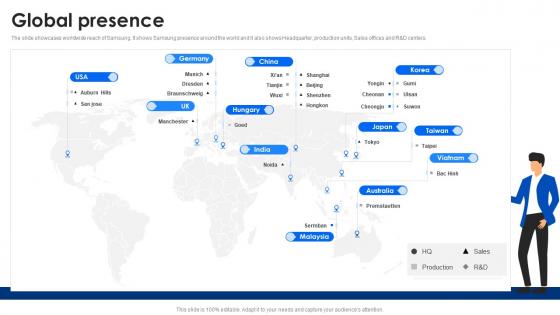
The slide showcases worldwide reach of Samsung. It shows Samsung presence around the world and it also shows Headquarter, production units, Sales offices and RandD centers.
People who downloaded this PowerPoint presentation also viewed the following :
Global Presence Samsung Company Profile CP SS with all 9 slides:
Use our Global Presence Samsung Company Profile CP SS to effectively help you save your valuable time. They are readymade to fit into any presentation structure.








FAQs for Global Presence Samsung Company
So Samsung actually started way back in 1938 as just a trading company - wild, right? The electronics thing didn't happen until the 60s. What's crazy is how they completely flipped their image in the 90s. They were basically known for cheap knockoffs before that, but then said "screw it, we're going premium." Worked out pretty well lol. By the 2000s they're going head-to-head with Apple and Sony, throwing tons of money at R&D. Now? They're the biggest smartphone company in the world. It's honestly one of the best rebrand stories ever.
Samsung's pretty smart about this - they let each region run their own show instead of micromanaging from headquarters. So like, their Asian teams can launch totally different products than what Europe gets, based on what people actually buy there. Each area has their own R&D and marketing people who don't need to wait for Seoul to sign off on every tiny decision. It's honestly refreshing compared to other big companies that make everything go through corporate first. When you're dealing with Samsung internationally, you'll usually talk to regional folks who can actually make decisions happen fast.
So most people think Samsung = phones, but plot twist - their biggest chunk of money actually comes from semiconductors and memory chips. That's like 60% right there. Phones and tablets bring in maybe 25%, then TVs and appliances round out the rest. Here's the crazy part though - they're literally making chips for Apple while competing against iPhones. Wild, right? Everyone focuses on the Galaxy launches, but honestly their chip business is what keeps the lights on. If you're tracking their stock or whatever, semiconductor sales are where the real action is.
So Samsung's got this crazy network of R&D centers everywhere - Korea, US, Europe, China, you name it. Each one tackles different tech stuff based on what that region needs. They're dropping like $20 billion a year on research with 80,000+ people working on it. Wild numbers, right? The cool part is they're not just tweaking existing products. They're diving deep into AI, 6G, quantum computing - all that futuristic stuff. If you're thinking about partnering with them, definitely figure out which regional center matches your project first. Makes the whole process way smoother.
Samsung's actually gone all-in on sustainability - like, way more than I expected. They're targeting carbon neutrality by 2050 and pouring money into renewables. What's smart is they're not treating it as some PR thing on the side. Instead, they're baking sustainability metrics right into business decisions across everything - phones, chips, fridges, you name it. They're redesigning stuff for that whole circular economy approach too. Honestly, if you're dealing with Samsung at all, their sustainability reports are worth checking out. It's becoming a real competitive edge for partnerships and market positioning.
So Samsung basically spreads their bets across tons of different stuff - phones, yeah, but also chips, TVs, fridges, you name it. Smart move honestly. They dump crazy money into R&D every year and have factories everywhere to keep prices down. What's clever is how they cover every budget level. Want cheap? Galaxy A series. Want premium? They've got flagships too. Manufacturing globally helps them compete with anyone. Oh, and different regions get different approaches - they're not doing one-size-fits-all marketing. It's actually pretty genius when you think about it.
So Samsung basically does three big things. First, they're obsessed with looking innovative - always shouting about their cameras, screens, AI stuff, whatever's newest. Second, they throw crazy money at sponsorships like the Olympics to seem premium. Third - and this is pretty smart actually - they totally change their ads for different countries. What works in Seoul won't work in São Paulo, you know? They also partner with major sports events constantly. The whole point is making sure you see them as the tech company that's always ahead, not just some random phone maker.
So Samsung does this smart "glocal" thing where they keep the main brand consistent but totally switch up the local execution. Different celebrities, cultural references, even product features depending on where you are. Their Korean ads have a completely different vibe than US ones for the exact same phone. They partner with local agencies too since those people actually know what'll offend someone or what references will land. Oh, and honestly? If you're ever doing anything global, just assume you'll need to adapt everything locally. That cookie-cutter approach never works across cultures.
Oh man, Samsung's partnerships are actually wild when you look into it. Google and Microsoft are obvious ones - Android stuff and productivity tools. They work with AMD too for processors, plus all the major carriers like Verizon pushing 5G everywhere. What's kinda cool is they don't just stick to tech though. Fashion brands help design their Galaxy Watches, and there's Netflix integration for their TVs. Makes sense since going solo against Apple would be brutal. You should check out their developer conferences if you're curious - that's usually where they drop hints about what's coming next.
Samsung spreads their manufacturing around - Vietnam, India, Brazil, you name it. Smart move honestly, since putting everything in one place is asking for trouble. They've got solid relationships with local suppliers in each spot too. The digitization thing is huge for them - gives them way better visibility into what's happening across the whole chain. Oh, and they're constantly tweaking their sourcing based on whatever regulations or trade stuff is going on. If you're dealing with similar headaches, maybe start mapping out backup suppliers in different regions now? Way easier than scrambling when things go sideways.
So Samsung gets hit from all angles with this trade stuff. Tariffs between the US and China jack up their manufacturing costs big time. Remember those chip shortages that delayed phone launches? Trade restrictions on semiconductor materials make it even worse. They also can't access certain markets when export controls kick in, plus moving tech between their facilities gets complicated. Currency swings from trade wars mess with how they price everything too - honestly it's kind of a nightmare trying to stay competitive. They're constantly shuffling around suppliers and moving production based on whatever political mess is brewing.
Dude, Samsung's diversity strategy is actually genius. They've got people from like 70+ countries, so they're not just guessing what markets want - they have locals who actually get it. Different cultural backgrounds mixing together? That's where the real innovation happens. You can see it in how quickly they adapt products for different regions compared to their competitors. Short sentences work. But here's the thing - most companies mess this up by just sending their home team everywhere instead of hiring locally. Don't be those companies. Local hiring beats transplanting every time.
So Samsung's going all-in on AI stuff right now - like integrating it into everything from phones to fridges. Their chip business is where the real money is though, so definitely watch those semiconductor moves. They're also pushing hard into 6G development and healthcare tech. Oh, and sustainability's huge for them too - batteries, solar panels, that whole green energy thing. Honestly feels like they're trying to dominate every tech space at once, which is kinda their style. But yeah, if you're following their strategy, the AI accessibility push across all products is probably the biggest story.
So Samsung uses this Global Profile system to track customer satisfaction - basically region-specific surveys, Net Promoter Scores, and social listening stuff. What's smart is they tailor their metrics by location since Korean customers care about totally different things than Brazilian ones, right? They run quarterly audits and use AI to spot feedback patterns. Post-purchase support calls and warranty claims also give them satisfaction signals. Honestly, this whole approach makes sense - if you're handling customer feedback, definitely break it down by market. Cultural differences are huge when it comes to what actually makes people happy with a product.
Samsung's biggest headache? They're everywhere globally but have to nail expectations in each local market. Quality issues blow up fast - that Note 7 battery disaster spread like crazy on social media. Competition's brutal too. Apple dominates premium while Chinese brands crush the budget space. Then there's navigating different regulations and cultural stuff region by region - honestly such a mess to coordinate. One screw-up goes viral instantly and tanks their reputation worldwide. They really need bulletproof quality control and solid crisis plans because there's zero room for error when you're that big.
-
Out of the box and creative design.
-
Excellent Designs.