

Global presence Walmart company profile CP SS




Try Before you Buy Download Free Sample Product
 Impress Your
 Audience
 100%
100% Editable
 Save Hours
 of Time


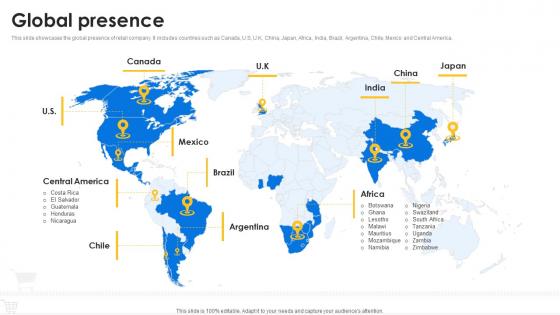
This slide showcases the global presence of retail company. It includes countries such as Canada, U.S, U.K, China, Japan, Africa, India, Brazil, Argentina, Chile, Mexico and Central America.
People who downloaded this PowerPoint presentation also viewed the following :
Global presence Walmart company profile CP SS with all 9 slides:
Use our Global presence Walmart company profile CP SS to effectively help you save your valuable time. They are readymade to fit into any presentation structure.








FAQs for Global presence Walmart company
So Walmart crushed it globally through three key moves: they got massive scale to slash costs, bought up local chains everywhere, and actually adapted to different markets instead of just copy-pasting their US model. Started in Arkansas and now they're literally everywhere - wild when you think about it. Their supply chain is insane, plus the low-price thing works no matter where you are. But here's what's smart: they'll totally switch up their product mix and store layouts depending on the country. Honestly one of the best examples of going big while staying nimble. Worth studying if you're into retail strategy stuff.
So Walmart basically studies each country first instead of just copying their US approach everywhere. In places like the UK, they can use fancy automated warehouses since the infrastructure's already there. But somewhere like India or Mexico? They're dealing with sketchy transportation and have to work directly with local suppliers - which honestly makes sense when you think about it. They also partner with regional vendors and adapt to whatever weird regulations each country throws at them. Pretty smart strategy, even if it sounds like a headache to manage.
Honestly, Walmart's tech game is insane - that's how they manage stores in like 24 countries without everything falling apart. Their supply chain systems track inventory everywhere in real-time, which is pretty crazy when you think about it. Data analytics help them figure out pricing and staffing. The automated warehouses are wild too, though I've never actually seen one in person. AI does their demand forecasting now, plus all that customer personalization stuff you see online. Their e-commerce platform ties all the international markets together. Without all this tech, there's no way they'd coordinate globally like they do.
Oh yeah, Walmart totally learned this lesson the hard way! They used to just plop down their American stores everywhere and wonder why they flopped. Now they're way smarter about it - different products for different countries, local brands on shelves, fresh produce sections that actually make sense for each market. Store layouts change too depending on shopping habits. The key thing? They hire local managers instead of sending Arkansas executives who don't get the culture. It's honestly pretty fascinating how they balance keeping costs down while still fitting into each place.
So Walmart's got three big sustainability things going on: zero emissions by 2040, no waste to landfills, and nature protection stuff. They're already running a bunch of stores on solar and wind, which is pretty cool. The supply chain work is where it gets interesting though - they're getting all their vendors to cut emissions too, and that's like... a ridiculous number of companies. Oh, and they want to protect 50 million acres by 2030. If you're doing research on this, definitely look up Project Gigaton - that's their main supplier program for cutting emissions.
So Walmart learned the hard way that their "lowest prices ever!" thing doesn't work everywhere. Different countries have totally different ideas about what counts as cheap. In India and Mexico, they had to compete more with local stores instead of just being the cheapest option around. Then in places like the UK and Japan - honestly, super cheap prices made people think the stuff was garbage quality. They started doing value bundles and fancier store brands instead. You really can't just take what works in America and slap it everywhere else, you know?
Dude, e-commerce totally flipped Walmart's whole game plan. They dropped billions on digital stuff, same-day delivery, grocery pickup - basically had to or Amazon would've eaten their lunch. The speed they moved was honestly impressive for such a huge company. Now they bought Jet.com, rolled out curbside pickup everywhere. What's smart though is how they turned their stores into mini warehouses and pickup spots. Amazon might dominate online but Walmart's got like 4,000 physical locations - that's their secret weapon right there. Pure online retailers can't touch that kind of reach.
So Walmart basically hires local legal experts in each country who know the specific rules and labor laws inside and out. They partner with regional suppliers and government agencies too. Honestly, managing compliance across 24+ countries sounds like a nightmare - there's constant auditing and policy updates since laws keep changing. Each market has totally different requirements, which is why their regional compliance teams are so important. Oh, and definitely bring them in early on any international projects. Trust me on that one - I've seen people get burned by assuming regulations are similar between countries when they're really not.
Honestly, Walmart's international expansion is pretty messy. They can't just copy their US strategy - local consumers want totally different things. Regulatory stuff varies wildly between countries, which is such a headache. Then you've got established local competitors who obviously know their own turf way better. Supply chains? Complete overhaul needed. Currency risks mess with profits constantly. Finding good local managers who get both Walmart's vibe AND the local market is harder than it sounds. Oh, and don't even get me started on the cultural missteps they've made over the years. Bottom line: success means going local, not global cookie-cutter approach.
So Walmart basically plays it smart - they don't try to force their Arkansas way of doing things on everyone. Instead they hire local HR people who actually know the rules in each country. Like in Germany they work with those works councils, and Mexico has totally different vacation setups. Makes sense when you think about it, right? Core values stay the same but execution changes completely. Oh and if you're ever thinking global expansion (random but maybe someday?) - definitely get local HR experts first. They'll save you from making expensive mistakes that seem obvious in hindsight.
Walmart's doing really well globally - they go super local with their marketing, like actually understanding what people want in each region. Smart move partnering with local suppliers too, builds way more trust than just importing everything. Their whole omnichanch— wait, basically they let you shop however you want. Order online, pick up in store, same-day delivery, all that stuff works together pretty smoothly. They're also getting scary good with data analytics for recommendations. Honestly their whole thing is staying "Walmart" but adapting to local markets. That balance is probably the key lesson if you're studying them.
Honestly? Walmart's impact is all over the place. Sure, they create jobs and people save money shopping there. But man, local businesses get crushed - can't compete with those prices. Small retailers end up closing, which kinda sucks for community character. Really depends on the specific place though. Some areas handle it better than others, especially if there's good regulations or if local shops find their own niche. You doing research on this? I'd check out what happened in different countries since the results vary so much based on local stuff.
So Walmart's pretty clever about going global - they don't just bulldoze into new markets. Instead they buy up local companies that already know the territory. Like when they grabbed Flipkart in India or that Cornershop thing in Latin America. Smart move honestly, since building everything from zero would be insane. They also partner with delivery companies and payment apps instead of creating their own (which... good call). If you're watching their expansion, acquisitions are usually the first hint they're eyeing a new country.
So Walmart's got three main things they focus on globally: sustainability, opportunity, and community stuff. They're going pretty hard on renewable energy and cutting waste - which honestly seems like a smart business move too. Local suppliers get priority to help boost regional economies, plus they do workforce training programs. What I think is cool is they actually tailor things to each country instead of just copy-pasting the same approach everywhere. Oh and their ESG report has decent data if you need benchmarks for anything you're working on.
Walmart's pouring crazy money into e-commerce and automation right now - like billions across all their international stuff. Mobile shopping is absolutely exploding in emerging markets, so they're going all-in on that omnichannel thing. Plus sustainability's becoming a real priority since customers actually care about that now (and governments are cracking down too). They're also doing more local partnerships instead of just bulldozing into new markets like they used to. Honestly, if you listen to their earnings calls, they pretty much give away their strategy months before they announce anything major.
-
Use of icon with content is very relateable, informative and appealing.
-
Excellent products for quick understanding.