

Green Marketing Guide For Sustainable Business Powerpoint Presentation Slides MKT CD




Try Before you Buy Download Free Sample Product
 Impress Your
 Audience
 100%
100% Editable
 Save Hours
 of Time


Green marketing, also known as sustainable marketing, refers to practices aiming at promotion and trade of Eco friendly Products. Grab our insightfully designed PowerPoint presentation on Green marketing guide for sustainable business. Eco-friendly marketing PPT deck provides comprehensive guidelines for companies to implement green marketing techniques and offers various examples and components of eco-friendly products. This Green campaign launch PPT Template covers multiple reasons and benefits to invest in green marketing practices. The Green promotional initiatives PPT guide will assists organizations to integrate green marketing initiatives at workplace. It showcases comparison of greenwashing and green marketing business practices. Moreover, it constitutes various stages of environmental marketing campaign, launch process and strategies which include identifying operational issues, determining impacted areas, formulating objectives of green marketing campaign, allocating budget, specifying roles and responsibilities, evaluating sustainable marketing efforts, etc. Furthermore, Environmental promotion PPT slides provides key insights into industry case studies and KPI dashboards. Lastly, it comprises of metrics such as energy consumption, power usage, minimized carbon footprints, campaign costs, brand value, conversion rate, customer lifecycle value, etc. Get access to this 100 percent editable template now.
People who downloaded this PowerPoint presentation also viewed the following :
Content of this Powerpoint Presentation
Slide 1: This slide introduces Green Marketing Guide for Sustainable Business. State your company name and begin.
Slide 2: This is an Agenda slide. State your agendas here.
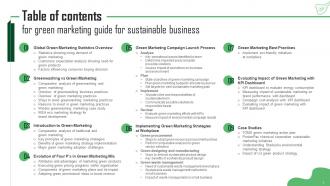
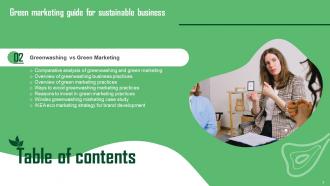
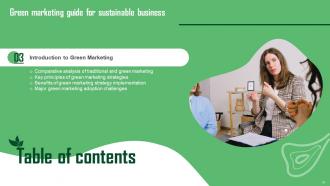
Slide 3: This slide shows Table of Content for the presentation.
Slide 4: This slide shows title for topics that are to be covered next in the template.
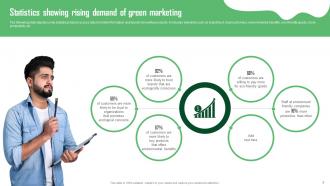
Slide 5: This slide depicts some statistical data to access latest market information and launch innovative products.
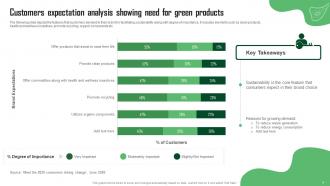
Slide 6: This slide depicts the features that customers demand to their brand for facilitating sustainability along with degree of importance.
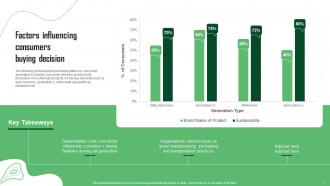
Slide 7: This slide depicts purchasing pattern by consumer generation to analyze consumer behavior and promote production of eco-friendly products.
Slide 8: This slide shows title for topics that are to be covered next in the template.
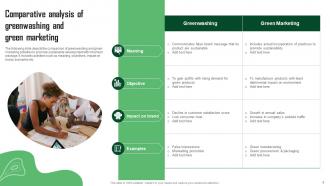
Slide 9: This slide depicts the comparison of greenwashing and green marketing activities to promote sustainable development with minimum wastage.
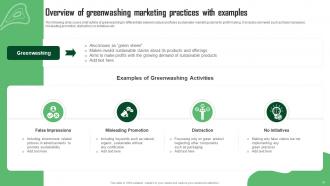
Slide 10: This slide covers brief outline of greenwashing to differentiate between actual and false sustainable marketing claims for profit making.
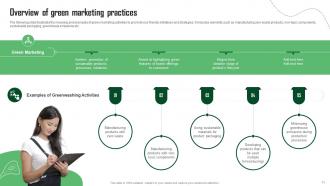
Slide 11: This slide illustrates the meaning and examples of green marketing activities to promote eco-friendly initiatives and strategies.
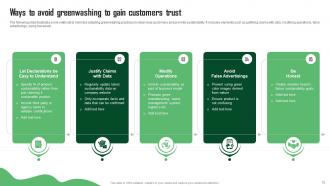
Slide 12: This slide presents some methods to minimize adopting greenwashing practices to retain loyal customers and promote sustainability.
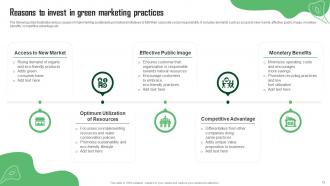
Slide 13: This slide presents various causes of implementing sustainable promotional initiatives to fulfil their corporate social responsibility.
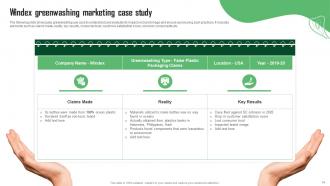
Slide 14: This slide showcases greenwashing use case to understand and evaluate its impact on brand image and ensure avoid using such practices.
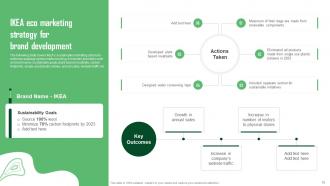
Slide 15: This slide covers IKEA’s sustainable marketing actions to minimize wastage and promote recycling.
Slide 16: This slide shows title for topics that are to be covered next in the template.
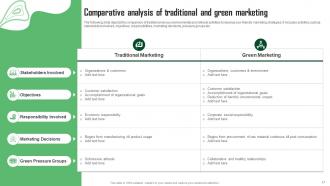
Slide 17: This slide depicts the comparison of traditional versus environmental promotional activities to develop eco-friendly marketing strategies.
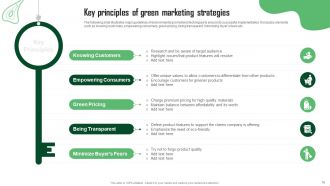
Slide 18: This slide illustrates major guidelines of environmental promotional techniques to ensure its successful implementation.
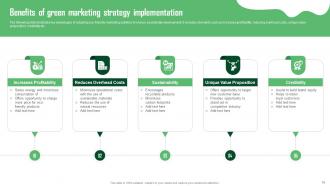
Slide 19: This slide presents key advantages of adopting eco-friendly marketing activities to ensure sustainable development.
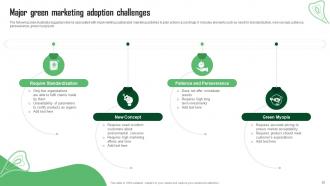
Slide 20: This slide presents biggest problems associated with implementing sustainable marketing activities to plan actions accordingly.
Slide 21: This slide shows title for topics that are to be covered next in the template.
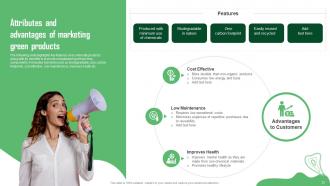
Slide 22: This slide highlights key features of eco-friendly products along with its benefits to promote manufacturing of toxic-free components.
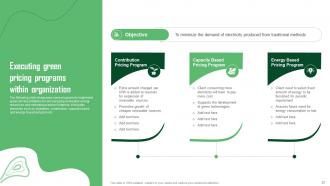
Slide 23: This slide showcases some programs to implement green pricing initiatives for encouraging renewable energy resources and minimizing carbon footprints.
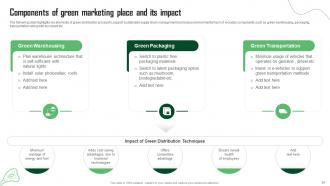
Slide 24: This slide presents key elements of green distribution process to support sustainable supply chain management and reduce environmental harm.
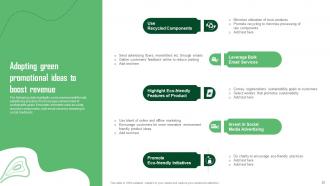
Slide 25: This slide displays some environment friendly advertising practices to encourage achievement of sustainable goals.
Slide 26: This slide shows title for topics that are to be covered next in the template.
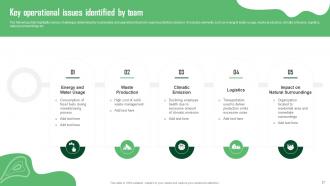
Slide 27: This slide shows key operational issue identified by team.
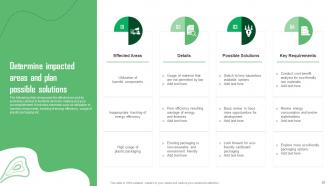
Slide 28: This slide presents the affected area and its probable solution to facilitate decision making and goal accomplishment.
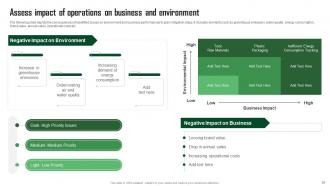
Slide 29: This slide depicts the consequences of identified issues on environment and business performances to plan mitigation steps.
Slide 30: This slide shows title for topics that are to be covered next in the template.
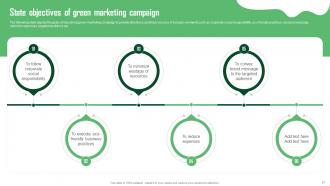
Slide 31: This slide depicts the goals of launching green marketing campaign to provide directions and track success.
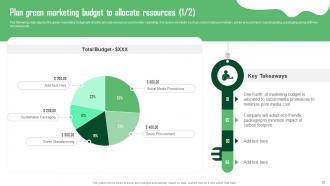
Slide 32: This slide depicts the green marketing budget pie chart to allocate resources and monitor spending.
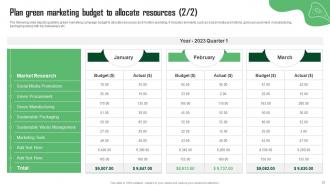
Slide 33: This slide presents quarterly green marketing campaign budget to allocate resources and monitor spending.
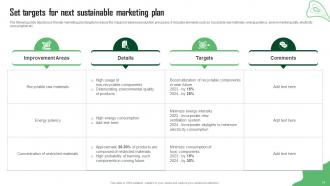
Slide 34: This slide depicts eco-friendly marketing plan targets to reduce the impact of adverse production processes.
Slide 35: This slide shows title for topics that are to be covered next in the template.
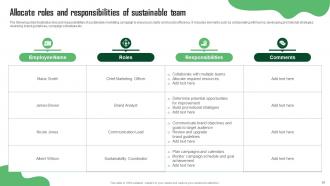
Slide 36: This slide illustrates roles and responsibilities of sustainable marketing campaign to ensure job clarity and boosts efficiency.
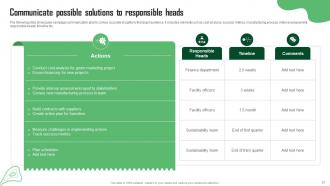
Slide 37: This slide showcases campaign communication plan to convey accurate insights to the target audience.
Slide 38: This slide shows title for topics that are to be covered next in the template.
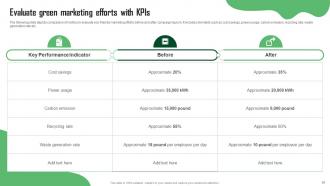
Slide 39: This slide depicts comparison of metrics to evaluate eco-friendly marketing efforts before and after campaign launch.
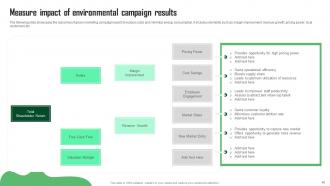
Slide 40: This slide showcases the outcomes of green marketing campaign launch to reduce costs and minimize energy consumption.
Slide 41: This slide shows title for topics that are to be covered next in the template.
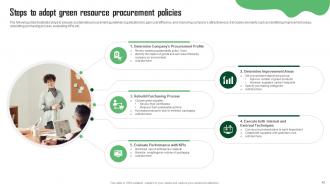
Slide 42: This slide illustrates steps to execute sustainable procurement guidelines organizations to gain cost efficiency and improving company’s attractiveness.
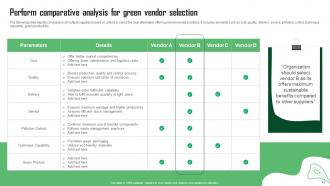
Slide 43: This slide depicts comparison of multiple suppliers based on criteria to select the best alternative offering environmental solutions.
Slide 44: This slide shows title for topics that are to be covered next in the template.
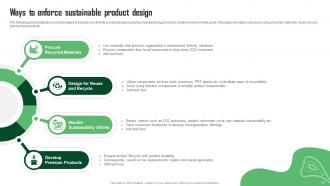
Slide 45: This slide presents some techniques to execute eco-friendly product designing during manufacturing process to achieve environmental goals.
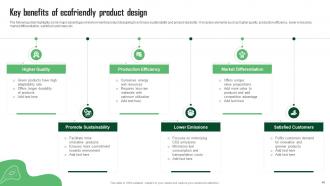
Slide 46: This slide highlights some major advantages of environmental product designing to embrace sustainability and product durability.
Slide 47: This slide shows title for topics that are to be covered next in the template.
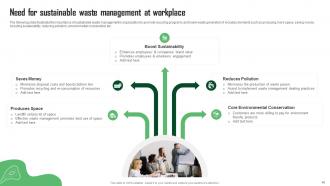
Slide 48: This slide illustrates the importance of sustainable waste management in organization to promote recycling programs and lower waste generation.
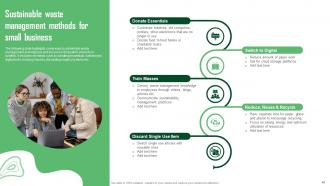
Slide 49: This slide highlights some ways to administer waste management at workplace and ensure no disposition of waste in landfills.
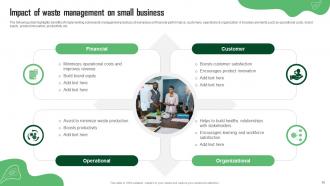
Slide 50: This slide presents benefits of implementing solid waste management practices at workplace.
Slide 51: This slide shows title for topics that are to be covered next in the template.
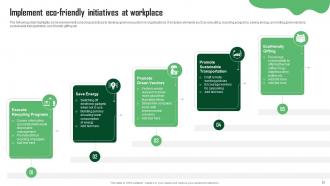
Slide 52: This slide highlights some environment conscious practices to develop green ecosystem in organizations.
Slide 53: This slide shows title for topics that are to be covered next in the template.
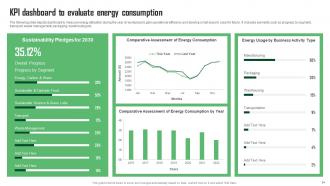
Slide 54: This slide depicts dashboard to measure energy utilization during the year at workplace.
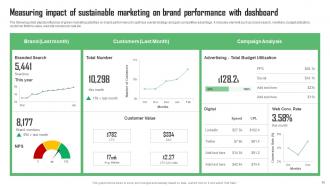
Slide 55: This slide displays influence of green marketing activities on brand performance to optimize overall strategy and gain competitive advantage.
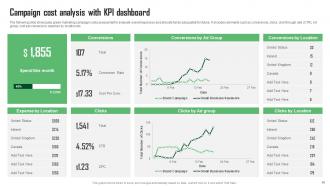
Slide 56: This slide showcases green marketing campaign costs assessment to evaluate overall expenses and allocate funds adequately for future.
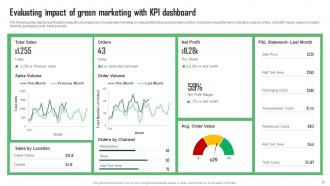
Slide 57: This slide depicts dashboard to evaluate consequences of sustainable marketing on sales performance and plan future actions.
Slide 58: This slide shows title for topics that are to be covered next in the template.
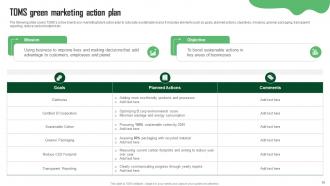
Slide 59: This slide covers TOMS’s (shoe brand) eco-marketing future action plan to advocate sustainable brand.
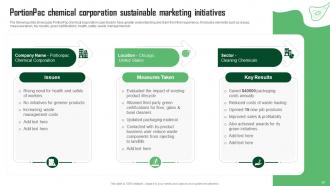
Slide 60: This slide showcases PortionPac chemical corporation case study to have greater understanding and learn from their experience.
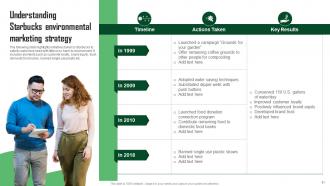
Slide 61: This slide highlights initiatives taken by Starbucks to satisfy customers need with little or no harm to environment.
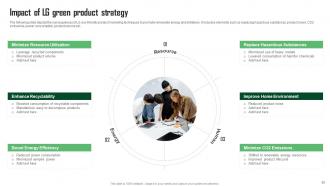
Slide 62: This slide presents the consequences of LG eco-friendly product marketing techniques to promote renewable energy and initiatives.
Slide 63: This slide shows all the icons included in the presentation.
Slide 64: This slide is titled as Additional Slides for moving forward.
Slide 65: This is Our Mission, Vision & Goal slide.
Slide 66: This is Our Team slide with names and designation.
Slide 67: This is About Us slide to show company specifications etc.
Slide 68: This slide presents Roadmap with additional textboxes.
Slide 69: This slide depicts Venn diagram with text boxes.
Slide 70: This slide provides 30 60 90 Days Plan with text boxes.
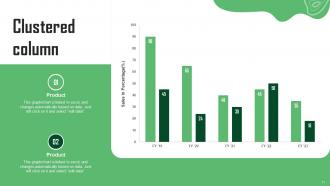
Slide 71: This slide provides Clustered Column chart with two products comparison.
Slide 72: This is Our Target slide. State your targets here.
Slide 73: This slide shows Post It Notes. Post your important notes here.
Slide 74: This is a Location slide with maps to show data related with different locations.
Slide 75: This is a Thank You slide with address, contact numbers and email address.
Green Marketing Guide For Sustainable Business Powerpoint Presentation Slides MKT CD with all 80 slides:
Use our Green Marketing Guide For Sustainable Business Powerpoint Presentation Slides MKT CD to effectively help you save your valuable time. They are readymade to fit into any presentation structure.








FAQs for Green Marketing Guide For Sustainable Business Powerpoint Presentation
Honestly, it all comes down to three things: be transparent, authentic, and think long-term. Don't just slap green messaging on top of regular operations - that's greenwashing and people see right through it. Your products need to actually make a measurable environmental difference first. Then build your messaging around real benefits you can prove. I'd start by looking at what you're already doing right environmentally, even small stuff. Education works better than just making claims too. Oh and integrate this into your whole business model from the start. Treating sustainability like some marketing afterthought never works out well.
Honestly, skip the generic "eco-friendly" stuff - people see right through that BS. Give them actual numbers instead, like "cut water usage by 30%." Way more convincing than vague green claims. Your customers aren't stupid; they'll call out greenwashing in a heartbeat. I'd hit multiple channels - packaging, website, social media - but don't contradict yourself across platforms. That's marketing suicide. Third-party certifications help too since people can actually verify what you're saying. Oh, and make your sustainability reports easy to find, not buried somewhere on page 47 of your site.
Honestly, consumer perception can totally make or break your green marketing. People are super skeptical these days - they'll call out greenwashing in a heartbeat. I've watched brands get absolutely destroyed on Twitter for fake sustainability claims, it's brutal. You need people to actually believe your environmental stuff is real, not just marketing fluff. Back everything up with actual improvements and be transparent about what you're doing. Oh, and here's the thing - start with genuine environmental changes first, then build your marketing around that. Don't just slap green messaging on whatever you're already doing.
So honestly, I'd start with brand sentiment surveys - see if people actually think you're legit sustainable or just talking. Sales numbers are obvious but check if your eco stuff is actually moving. Social engagement on green content tells you a lot too. The environmental metrics are huge though - track real waste/energy reductions because getting called out for greenwashing is brutal. Compare your green campaign costs to regular ones for ROI. Don't go crazy measuring everything at once. Pick like 2-3 that match what you're actually trying to achieve.
Patagonia killed it with that "Don't Buy This Jacket" campaign - total reverse psychology that boosted their sales. Tesla's approach was smart too, making electric cars feel cool rather than just preachy about the environment. Dove went plastic-neutral and Ben & Jerry's won't shut up about climate change (love them for it though). The key thing? These brands actually changed how they operate first, then marketed it. You can't just slap green stickers on stuff anymore - people see right through that BS. Start with real changes, then tell your story authentically.
Basically, regulatory policies are cracking down hard on greenwashing now. Companies can't just slap "eco-friendly" on stuff anymore without real proof. The FTC Green Guides are getting way stricter, and don't even get me started on the new EU rules - they're brutal but honestly needed. You'll need actual data backing up any green claims, plus mandatory carbon footprint disclosure. My marketing friend just went through this nightmare last month. Here's what I'd do: audit your current sustainability messages ASAP. Make sure your marketing and product teams are actually talking to each other about what you can legitimately claim. Better to fix it now than get slammed with penalties later.
Honestly? The upfront costs will hit you hard - sustainable materials and certifications aren't cheap, and you're still trying to make money. Consumers are brutal about greenwashing too. They'll roast you online if your claims seem fake. Supply chain stuff gets messy fast since you need to check every single vendor. Your marketing team will have to figure out all these sustainability metrics they've never dealt with before. Start with just one product line though - get that dialed in perfectly before you go crazy and try to change everything at once. Way less stressful.
Oh totally doable on a shoestring budget! Look at what you're already doing - even tiny stuff like going paperless or buying local counts. Post that on social media for free. Honestly, people eat up authentic green content way more than polished ads anyway. This little coffee shop near me went viral just showing their compost bin lol. Skip expensive certifications for now and just tell your story. Maybe team up with a local environmental group? They're usually down to cross-promote. The key is being real about it - don't oversell what you're doing. Just pick one green thing you do and start posting about it this week.
Honestly, start with social media analytics like Hootsuite - you need to track what people are actually saying about sustainability and see if your green content resonates. Carbon calculators are clutch for backing up your claims with real numbers. Trust me, greenwashing backlash is brutal these days. Canva's perfect for creating those authentic behind-the-scenes videos showing your actual practices. There are also sustainability reporting platforms that turn boring data into shareable stories, though I'd pick just one platform first and really master it. Adobe's great too if you want something more advanced for video content.
Look, partnering with NGOs is basically instant credibility - people trust them way more than whatever your marketing team says. You'll tap into their audience and expertise, which is gold for green marketing. They can also call you out if you're heading toward greenwashing territory (honestly, probably good to have that reality check). It shows you actually care about the environment, not just profits. My advice? Research NGOs in your space first, then hit them up with real partnership ideas. Don't just send some generic "we should collaborate" email - that's lazy and they get those constantly.
Dude, packaging is literally the first thing people see, so it's your best shot at showing you actually give a damn about the environment. Switch to biodegradable stuff or reusable containers - customers notice that immediately. Plus you'll save money on shipping costs, which is nice. I mean, nobody wants to pay extra for wasteful packaging anyway. The trick is making it obvious what you're doing sustainability-wise. Don't make people guess whether your packaging is eco-friendly or not. Make it clear so they get that you put real effort into it.
Look, you really need those third-party certifications if you want people to believe your green claims. Everyone's calling themselves "eco-friendly" now, so consumers are skeptical as hell. Energy Star, USDA Organic, Fair Trade - those logos actually mean something because they're verified independently. Your own sustainability promises? Not so much. Honestly, most people want to buy green but they don't have time to research every company's practices. Makes sense, right? Certifications do that heavy lifting for them. Without recognized third-party backing, you'll have a tough time building trust in this space.
Honestly, just show the real stuff you're already doing behind the scenes. Post videos of your actual sustainable practices, get your employees involved in sharing their eco-efforts. Instagram and TikTok are perfect for this - way better reach than other platforms. Get customers to post how they're using your eco products too. Partner with environmental influencers, but make sure they actually care about the cause (you can usually tell). The biggest thing? Don't just slap "green" stickers on everything and call it a day. People see right through that. Start with whatever sustainable stuff you're already doing and build stories around those real examples.
Oh man, greenwashing is the absolute worst thing you can do - like, don't make claims you can't actually prove with real data. I see companies all the time focusing on these tiny tweaks while completely ignoring their massive environmental problems. Consumers aren't stupid, they'll call you out. Also avoid those meaningless buzzwords like "eco-friendly" without explaining what that actually means for your specific product. You can't just throw green messaging onto your existing campaigns either - your whole brand story needs to match up. And definitely have all your documentation ready because people will ask for proof!
Look, different age groups care about totally different green stuff. Millennials are all about climate change and sustainable packaging. Gen X? They want to save money and stay healthy. Baby boomers actually hate trendy eco-speak - stick to classic conservation talk or you'll lose them completely. My neighbor's a perfect example of this lol. Survey your customers first to see what environmental issues they actually give a damn about. Then match your messaging and product features to what they told you. The channel matters too - don't try reaching boomers on TikTok.
-
Good research work and creative work done on every template.
-
SlideTeam is a great place for PPT templates. They have many templates on a single topic. It has made my life a lot easier.