


Hospitality Industry Business Plan Powerpoint Presentation Slides




Try Before you Buy Download Free Sample Product
 Impress Your
 Audience
 100%
100% Editable
 Save Hours
 of Time


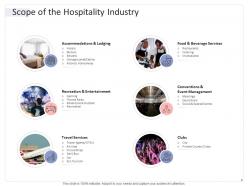
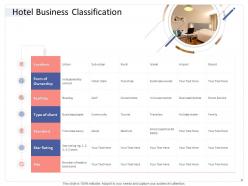
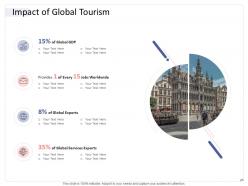
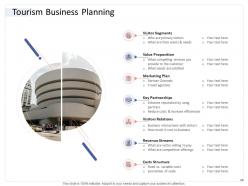
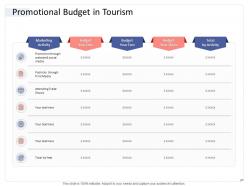
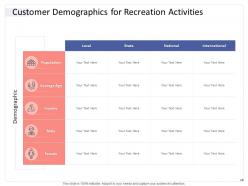
SlideTeam presents Hospitality Industry Business Plan PowerPoint Presentation Slides, designed explicitly to cater to your unique business needs. Select our service industry PPT templates to mention the category of fields that your company deals with, such as hotels, restaurants, lodging, event planning, transportation. Highlight the growing market of the hospitality industry in a well-structured format through this tourism sector PPT slideshow. Create a plan of action for establishing a firm foundation for your hotel industry by taking the aid of these business strategy PPT layouts. Elaborate on the global travel services industry and the promotional budget in tourism by taking the aid of this hospitality sector PPT presentation. Display the customer demographics, geographics, and psychographics in a tabular format with the assistance of our leisure sector PPT themes. Choose the right target market segment and target customer for your services by employing these service sector PowerPoint slides. Download this invigorating content-specific customer service PowerPoint deck and develop a roadmap for recreational business development.
People who downloaded this PowerPoint presentation also viewed the following :
Hospitality Industry Business Plan Powerpoint Presentation Slides with all 59 slides:
Use our Hospitality Industry Business Plan Powerpoint Presentation Slides to effectively help you save your valuable time. They are readymade to fit into any presentation structure.



FAQs for Hospitality Industry Business Plan
Hit the basics first - exec summary, market analysis, operations, marketing, financials, and management team. Hospitality is brutal if you don't nail your target demographics and competition research. Operations is honestly where I see most plans crash and burn, so really focus there - staffing, service standards, tech systems, all that stuff. Financial section needs startup costs, revenue forecasts, break-even timeline. Oh and everything should connect back to guest experience somehow. That's what actually matters in this industry. Don't skimp on the competitive landscape part either.
Look, market analysis is basically your safety net so you don't crash and burn. It tells you who'll actually buy from you and what they're willing to spend. Otherwise you're just throwing money at a wall and praying something sticks. Do your homework first - survey people in your area about what they want. Check out similar businesses too. What are they doing right? Where are they screwing up? Honestly, I've seen too many people skip this step and then wonder why their trendy coffee shop failed. You need to know if there's real demand before you invest everything. Price things right from the start.
Okay so you'll need five main projections. Revenue forecasts first - break those down by room rates, occupancy rates, plus any restaurant/bar income. Operating expenses come next: staffing, utilities, maintenance, marketing, all that stuff. Cash flow projections are huge because seasonal swings will absolutely wreck you if you're not ready. Break-even analysis and P&L statements for three years minimum. Oh, and seriously - lowball your occupancy estimates. I've seen too many people get burned being overly optimistic with those numbers. Better to surprise investors than disappoint them.
Start by checking out every competitor within 5 miles - hotels, B&Bs, Airbnbs, the whole deal. I'm weirdly addicted to reading their reviews but trust me, it's where you find the best insights. Note their pricing and what they're offering. Document everything: their strengths, weak spots, what guests complain about. Then figure out your angle. Maybe you're cheaper? Better location? Cooler amenities? Whatever it is, make sure your business plan shows you actually get what you're up against and aren't just winging it.
Your customer service strategy is basically the heart of your hospitality plan - without it, you're just another hotel or restaurant. Map out every touchpoint from booking to checkout and how you'll wow guests at each one. Bad service kills even the fanciest places, trust me. Include your training protocols, service standards, and complaint processes. Don't forget staff-to-guest ratios and satisfaction metrics so you can actually pull off what you're promising. Those "wow" moments are what get you 5-star reviews and repeat customers. It's honestly what separates you from everyone else competing for the same guests.
Honestly, just bake sustainability into every section of your plan. Operations-wise, think energy-efficient systems, waste reduction, local sourcing - that kind of stuff. Marketing should totally play up these green initiatives since travelers actually care now (and they'll pay extra for it too). For financials, include both your upfront costs for sustainable upgrades AND the long-term savings you'll get from lower utility bills. Oh, and set concrete sustainability goals with deadlines - investors eat that up because they can actually track your progress. It's way easier than people think once you start planning it out systematically.
Dude, reviews are literally everything now. Travelers won't book anywhere without checking them first - I learned that the hard way when my cousin's B&B got slammed last year. Good reviews build trust and bring in money. Bad ones? They spread like wildfire and kill your bookings fast. You've gotta stay on top of what people are saying about you. Set up Google Alerts for your business name and check your review sites every week. Oh, and always respond to feedback - both good and bad. People actually notice when you don't.
Start with who you're actually trying to attract - business folks, families, couples, whatever. Then figure out your channels: social media, booking sites, local partnerships. Honestly, budgeting for marketing is where most people mess up because those costs sneak up on you. Map out your pricing and what makes you different from that other place down the street. Set real numbers you can track - occupancy rates, daily revenue, stuff like that. Oh, and create a timeline for rolling everything out. You'll want to see what's actually bringing in guests vs. what's just burning money.
Dude, the licensing stuff is brutal but you gotta nail it. Liquor licenses and food permits are obvious ones. Health department regs will be your biggest headache if you're doing food. Then there's zoning laws, fire codes, ADA compliance - honestly feels like death by a thousand cuts sometimes. Labor law is massive too since you'll have tons of staff. Oh and occupancy certs! Can't forget those. Look, I'd just bite the bullet and hire a hospitality lawyer upfront. Yeah it costs money but way cheaper than fixing screwups later.
Dude, you absolutely need solid tech in your business plan. Guests expect mobile check-ins, contactless payments, all that stuff now. Your operations will tank without automated inventory and analytics to track what people actually want. Short sentences work. But you also need longer flowing thoughts about how this connects to your bottom line and guest satisfaction. I stayed at this place last month that still used paper keys - total nightmare! Budget around 15-20% of startup costs for tech systems. Oh and don't forget ongoing updates, that's where people usually mess up.
Your training section needs to cover onboarding, ongoing development, and cross-training - the whole deal. Budget around 2-3% of payroll for this stuff upfront. Map out timelines for each role, from basic front desk training to advanced guest relations. Performance metrics are key too. You'd be shocked how many places skip proper training and wonder why their service sucks. Better trained staff = happier guests and more repeat customers, so make that connection clear in your plan. Oh, and don't forget to show how you'll actually measure if the training's working.
Start by listing all the crazy stuff that could go wrong - staff calling out sick, equipment breaking, slow seasons, natural disasters, you name it. The list gets nuts but don't panic. Next, figure out which risks are most likely and would hurt your revenue the worst. For the big ones, make actual backup plans. Cross-train your team, find backup suppliers, keep some emergency cash around - boring stuff but it saves your butt later. Write it all down and have someone check on it regularly. Trust me, you don't want to wing this part.
Focus on the major trends hitting hospitality right now. Tech stuff is everywhere - mobile keys, contactless everything, AI handling customer questions. Sustainability matters way more than it used to; guests actually care about eco-certifications now. The staffing crisis is still a nightmare (seriously, when will this end?). Plan for paying more, automating what you can, and getting creative with keeping people around. Remote work totally changed travel patterns too - longer stays, that whole "bleisure" thing. Pick 2-3 of these trends and really dig into how you'll handle them specifically.
Honestly, just start reaching out to businesses around you that aren't direct competitors. Restaurants are gold for cross-referrals - you send them guests, they send you diners. Tour operators love doing package deals too. I'd also hit up local suppliers since buying local usually saves money anyway. Your guests will eat this stuff up because everyone wants that authentic local vibe, you know? Event venues, car services, even little boutiques can offer your guests discounts. Just make a list of like 5-10 places nearby and pitch something simple to see what sticks. No need to overcomplicate it at first.
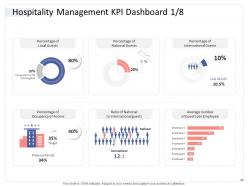
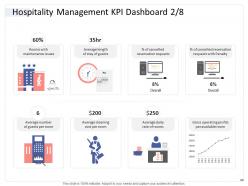
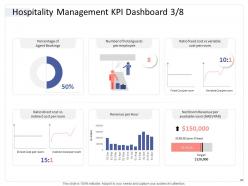
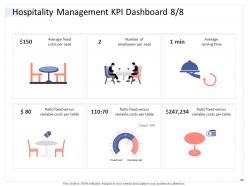
Look, you gotta watch RevPAR, occupancy rates, and average daily rate - those are your bread and butter numbers. Guest satisfaction scores matter huge though, because honestly? One pissed off customer on Google can tank your whole week. Track your customer acquisition costs too, plus employee turnover (high turnover = you're bleeding money). If you've got a restaurant, definitely monitor food costs. Oh and set up a dashboard you check weekly, not every damn day or the constant ups and downs will make you nuts. Trust me on that one.
-
Unique research projects to present in meeting.
-
Amazing product with appealing content and design.