


Hotel Management Industry Powerpoint Presentation Slides




Try Before you Buy Download Free Sample Product
 Impress Your
 Audience
 100%
100% Editable
 Save Hours
 of Time


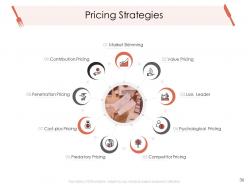
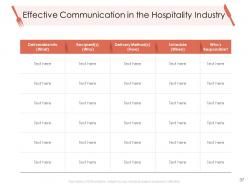
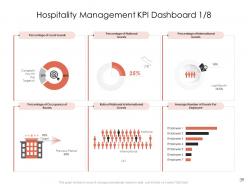
Select our Hotel Management Industry PowerPoint Presentation Slides to acquaint your audiences with the crucial hotel industry trends. Highlight the wide-range of the services like accommodations, travel services, and event management that you offer for the best customer experience by employing our hospitality sector PPT presentation. Display the key considerations of the company like beverages & restaurants, tourism, clubs & gaming with our service industry PPT templates. Focus on the managerial areas of the hospitality industry with these hotel industry PPT layouts. Prepare a suitable business plan for pricing strategies and effective communication in the industry with our adaptable slides. Engage in displaying the KPIs dashboard for your organization with our high-quality editable and adaptable icons, charts, columns, images hospitality management PPT deck. It allows you to measure every element necessary for expanding your business and keeping your customers satisfied. Download and take advantage of these professionally crafted content-specific templates to formulate an industry model best suited for the development of your company.
People who downloaded this PowerPoint presentation also viewed the following :
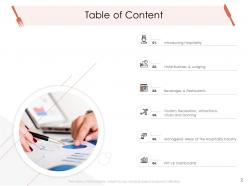
Content of this Powerpoint Presentation
Hotels, restaurants, catering operations, and many other businesses are part of the hospitality industry. It is one of the world’s fastest growing and geographically-varied industries as well. There are over 187,000 hotels globally, with a staggering 17.5 million guest rooms available. The global hotel market is expected to generate US$446.50 billion in sales by 2024.
The Ritz-Carlton, Four Seasons Hotels and Resorts, Hilton Worldwide, Marriott International, and more are among the world’s most well-known hotel groups offering luxurious lodging and other guest services.
Explore SlideTeam’s Hotel Management Contract Proposal to bring managerial expertise to a hotel facility.
Hospitality is also one of the oldest enterprises, dating back to the time of innkeepers. The leisure travel phenomena of the late 1800s gave rise to hospitality management schools, which aid in understanding the administration of elements of a hotel’s operations.
Hotel management comprises operations related to a hotel’s day-to-day functioning. This promotes more efficient processes. This blog provides information on aspects of hotel management. Use it to learn about hotel management, including staffing, building upkeep, payroll, and housekeeping. This also aids in the discussion of hotels’ key features, customer duties, and strategies to deliver excellent guest service.
Having problems managing day-to-day operations in a hotel? Check out this exclusive deck about Hotel Management Systems.
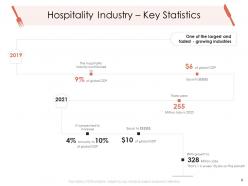
Template 1: Hospitality Industry- Key Statistics
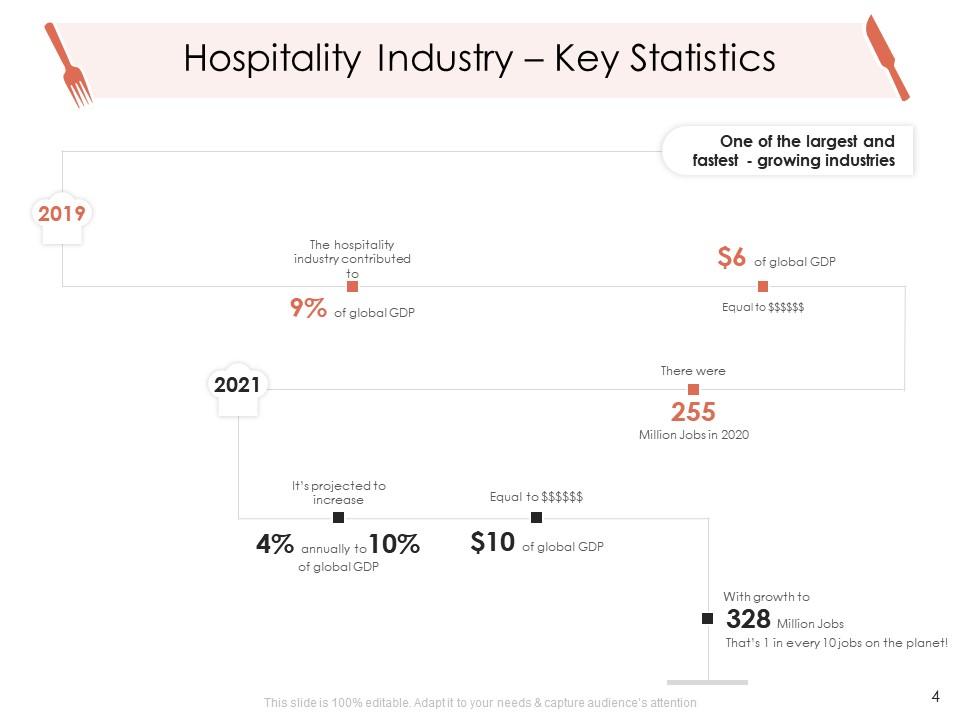
The hospitality industry is a major employer worldwide. Use this PowerPoint Template to demonstrate statistics of the hospitality business. It shows the contribution to GDP, total employment, and growth rate. This highlights the hospitality industry’s favorable growth rate.
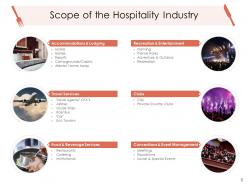
Template 2: Scope of the Hospitality Industry
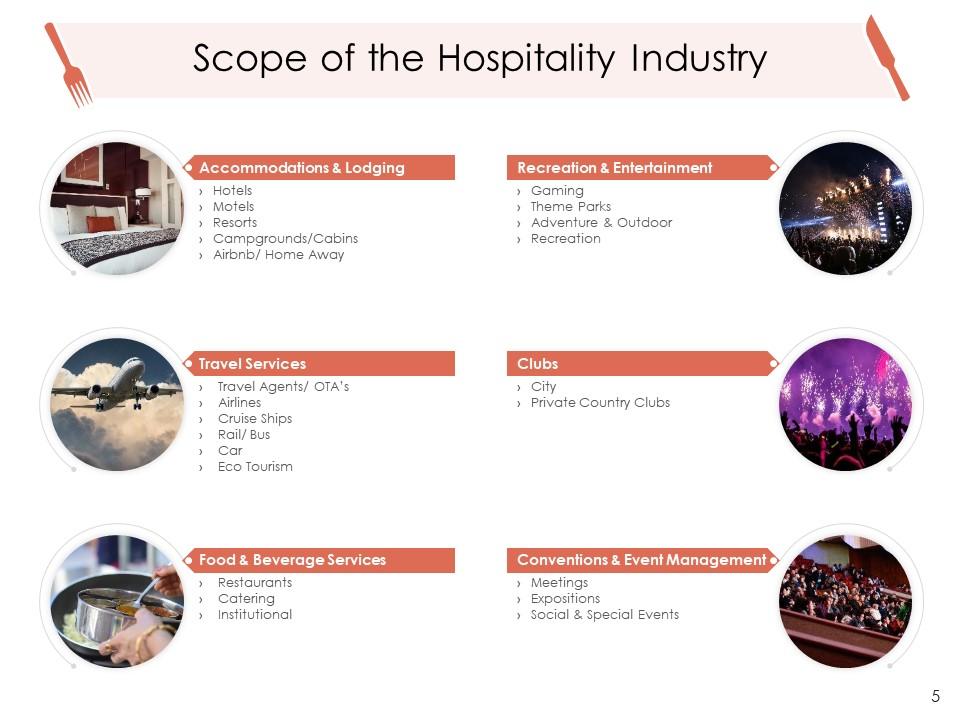
Use this PPT Slide to learn more about the scope of hospitality management. This industry includes lodgings and housing, food and beverage services, clubs, travel services, and more. This will support the administration and operational management of the hospitality sector. This suggests that there is a great deal of promise and possibility for the future.
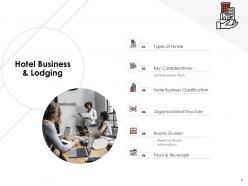
Template 3: Hotel Business & Lodging
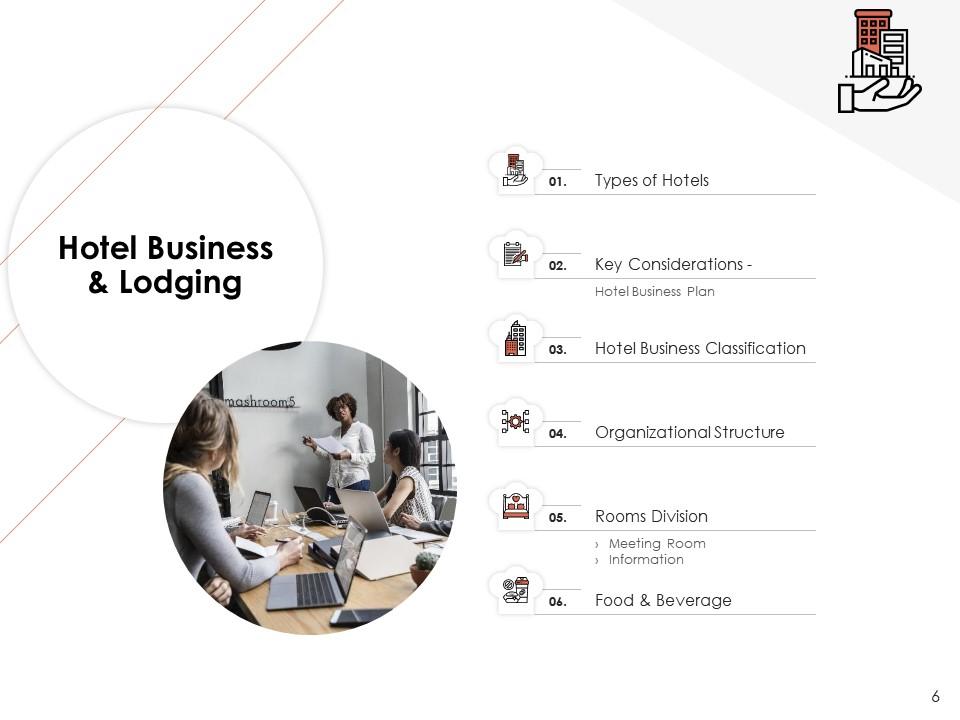
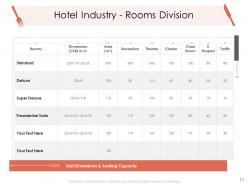
This PowerPoint Presentation is a great tool for learning about the essentials required for hotel and lodging businesses to succeed. It discusses hotel types, hotel business plans (important considerations), classifications, organizational structures, room divisions, and more. This detailed analysis provides a comprehensive overview of global hospitality business. Use it to get acquainted with the industry.
Template 4: Types of Hotels
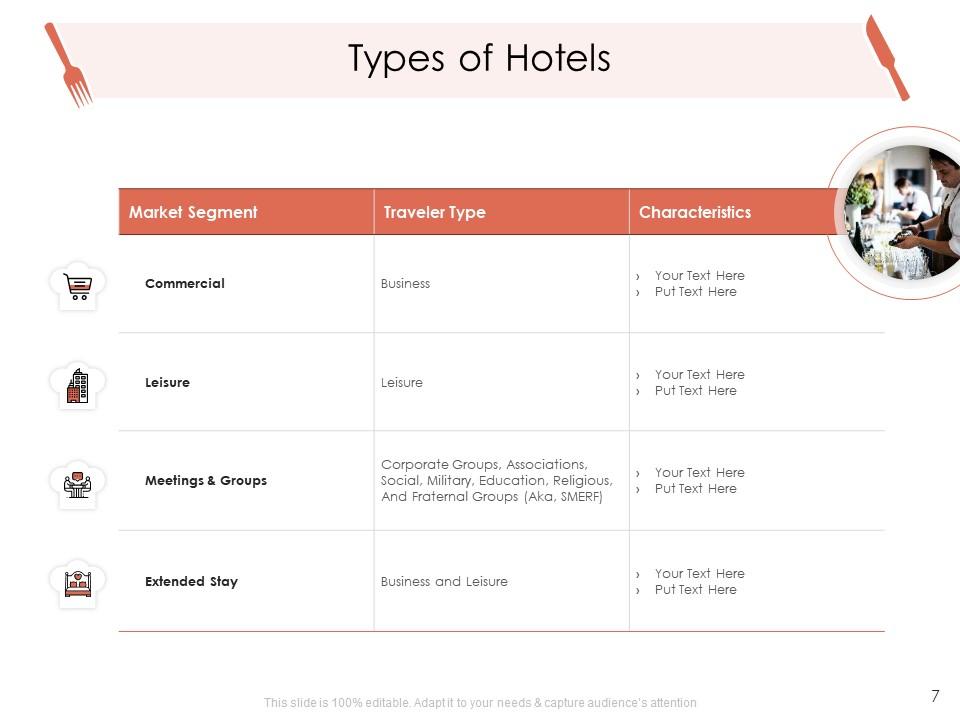
Hotels are classified based on their type and service offerings. Use this PPT Preset to explain market segmentation, traveler types, and hotel characteristics. This helps you in comprehending a hotel’s characteristics, cost, and amenities. Use this presentation to target a certain audience with greater effectiveness and accuracy.
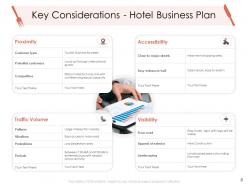
Template 5: Key Considerations- Hotel Business Plan
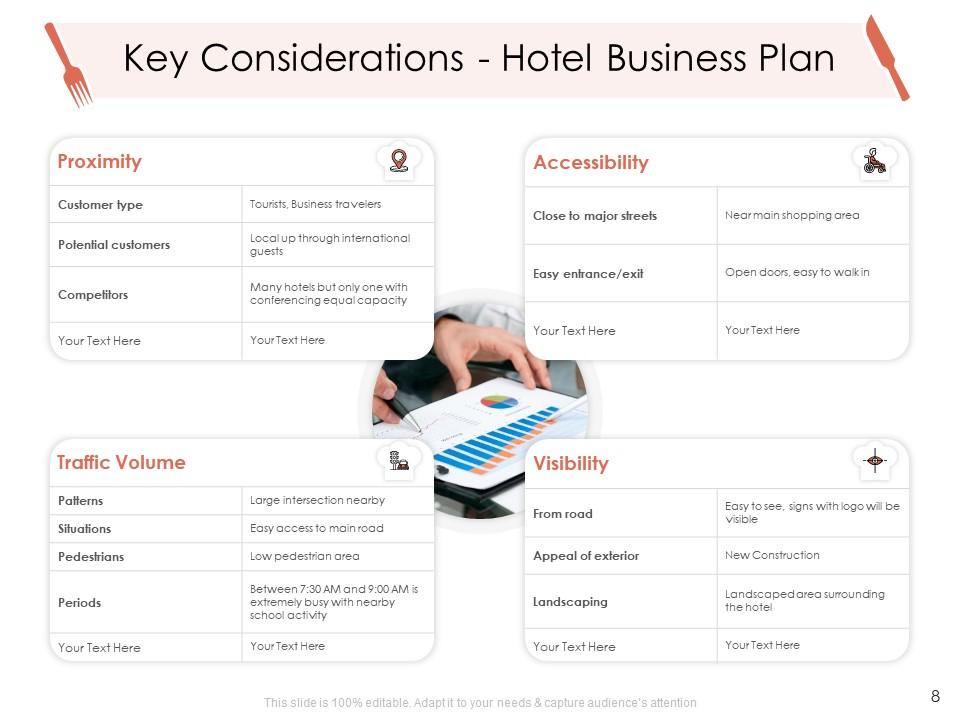
Use this PPT Layout to examine the components of a business plan for a hotel. It takes into account location, accessibility, traffic volume, and visibility to help you acquire an in-depth understanding of your hotel’s industry. Employ this presentation as a foundational tool to create a precise roadmap for a hotel project.
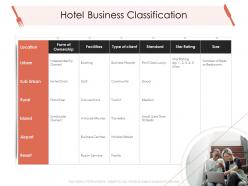
Template 6: Hotel Business Classification
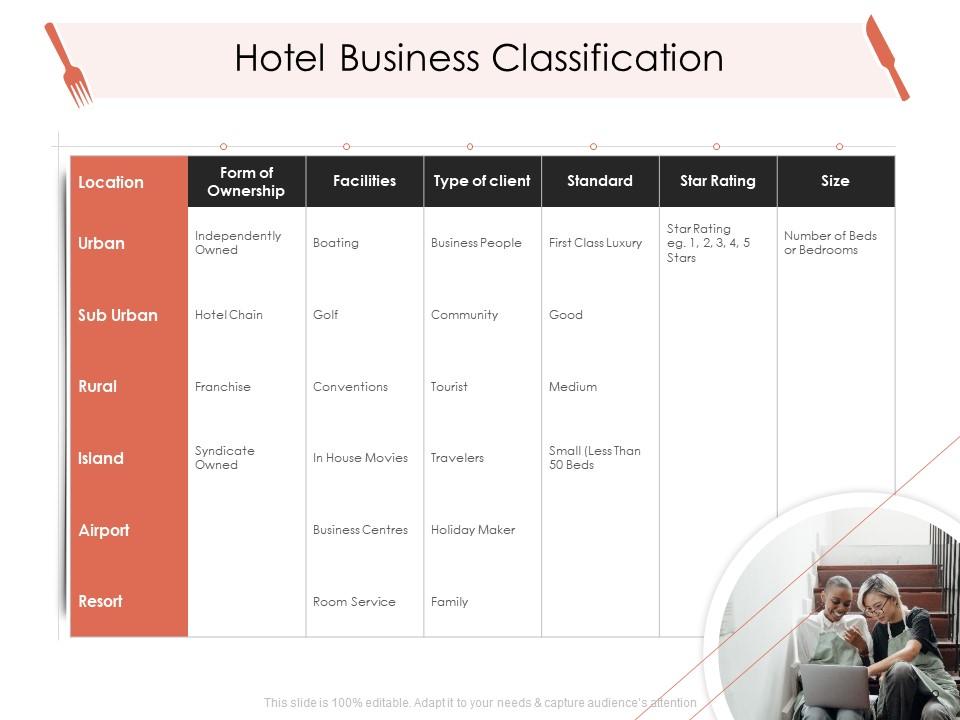
Do you want to know what variables contribute to hotel classification? Grab this exclusive PPT Template to learn about hotel classification and ownership of hotels. It shows classification based on location, ownership, amenities, customer categories, standard, star rating, and more. This helps to understand target markets for each category.
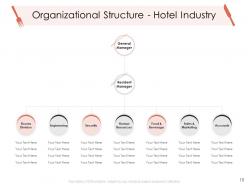
Template 7: Organization Structure- Hotel Industry
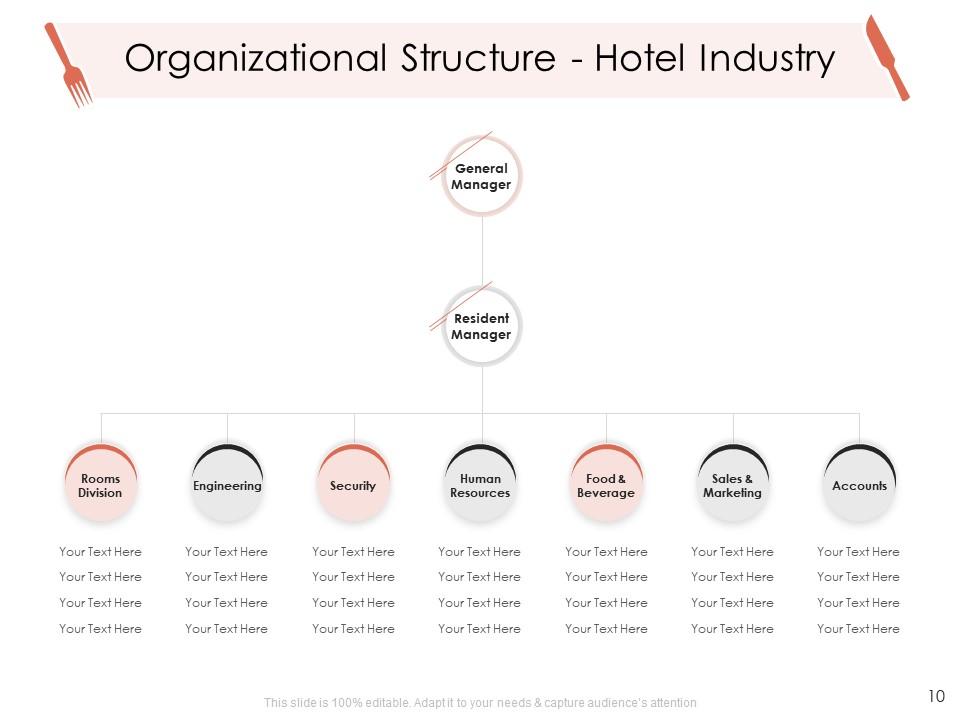
This PPT Framework illustrates the organizational structure of the hotel sector. This chart provides a high-level overview of the hotel, from general manager to accounts. Use this slide to divide duties and delegate responsibility inside and across departments.
Template 8: Beverages Business Plan
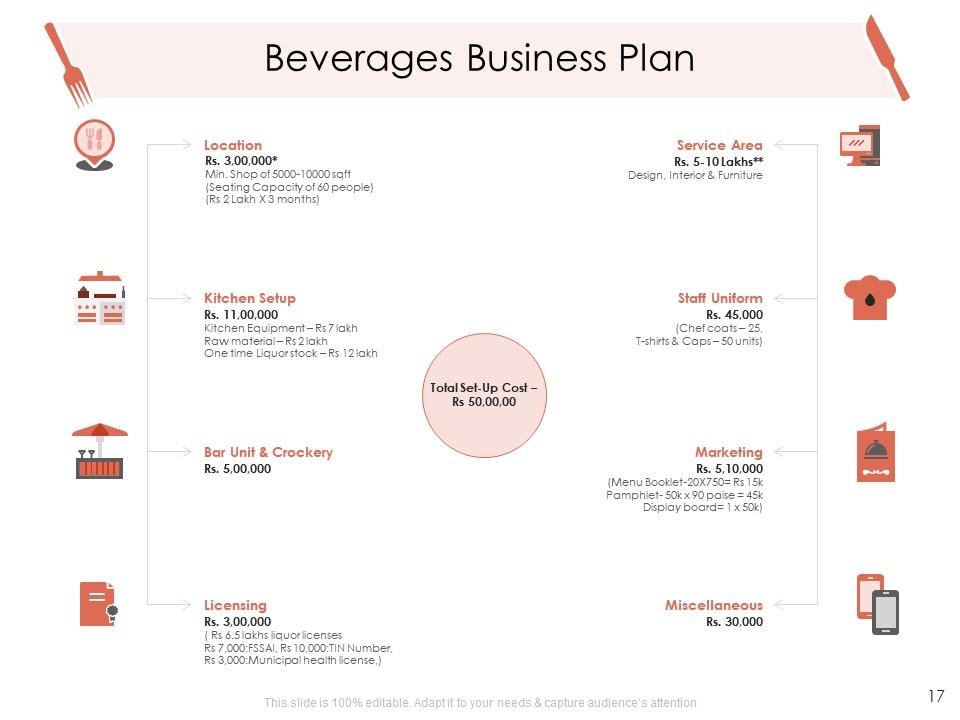
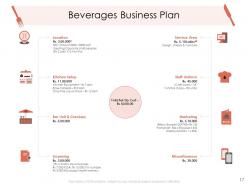
Use this PPT Template as an example to create your beverage business plan. It comprises location, service area, kitchen setup, marketing, and license. This critical step toward company success is a must-have tool for anyone trying to start or operate a profitable beverage business.
Template 9: SWOT Analysis- Beverages Industry
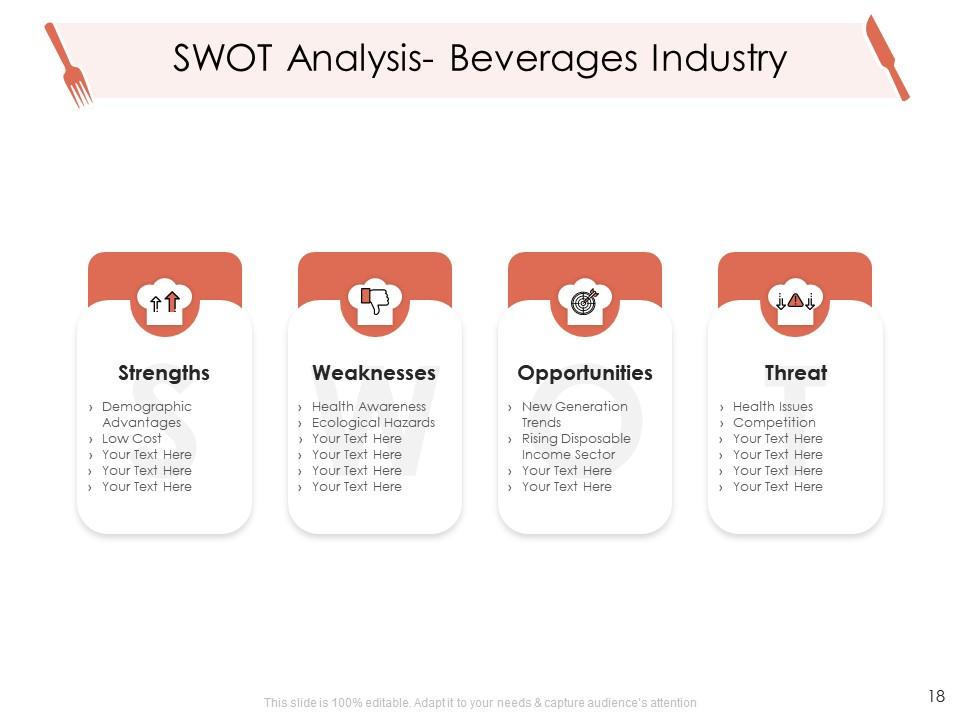
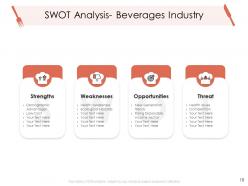
SWOT analysis is an important tool for making strategic decisions in the highly competitive food and beverage business. Use this PPT Template to assess your status and prospects. This will help you in identifying your company’s strengths and weaknesses, minimizing dangers and capitalizing on opportunities.
Template 10: Restaurant Operating Expenses
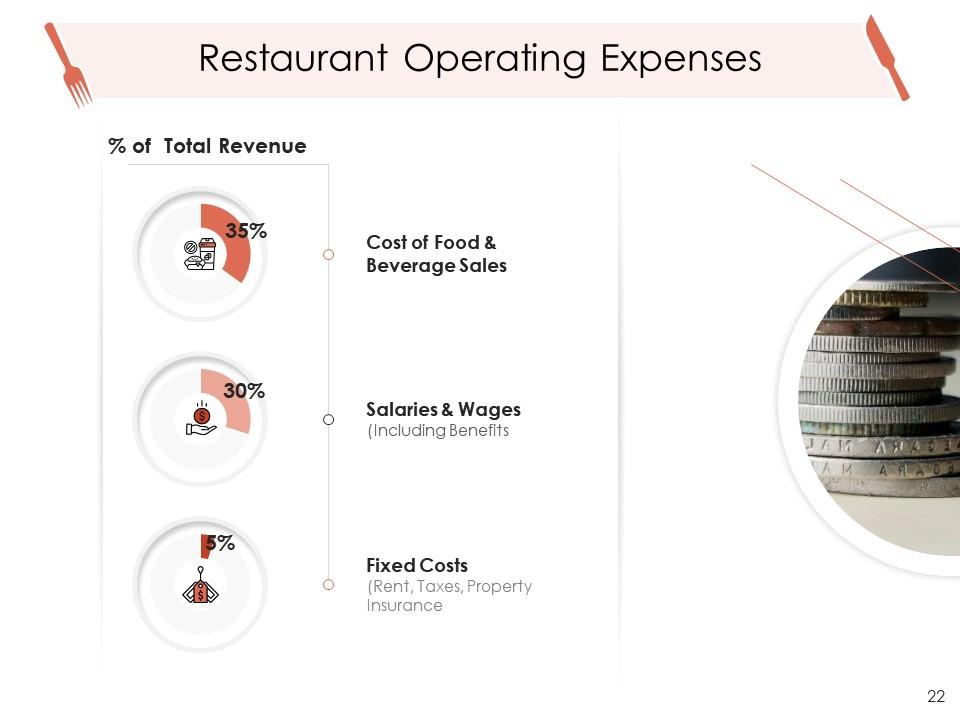
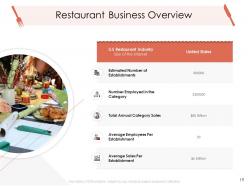
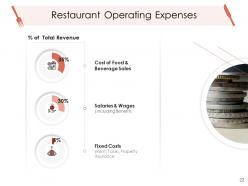
Are you thinking of opening a restaurant? Check out this PPT Template to learn more about its operational expenses. This depicts the cost of food and beverage sales, salaries and wages, fixed costs, etc., allowing you to gain insight on expenditure incurred in the day-to-day operation of a restaurant. This will help to keep the restaurant’s finances stable.
Overall task management within a hotel.
The global hotel business is expanding, providing possibilities for skilled employees. Use SlideTeam’s PPT Template to get insight into the technical aspects of running hospitality-related businesses.
P.S. Use this pre-made PPT Deck to arm yourself with the skills and knowledge needed to manage and run a hotel.
Hotel Management Industry Powerpoint Presentation Slides with all 55 slides:
Use our Hotel Management Industry Powerpoint Presentation Slides to effectively help you save your valuable time. They are readymade to fit into any presentation structure.



FAQs for Hotel Management Industry
Honestly, it all comes down to three things: cleanliness, how fast your staff responds, and whether the rooms are actually comfortable. Your front desk people are everything - a grumpy check-in ruins the whole vibe. Make sure the basics work: wifi that doesn't suck, decent beds, spotless bathrooms. Broken AC in July? Game over. I'd probably focus most on training housekeeping and front desk since guests interact with them the most. Oh, and if you've got food service, that definitely affects reviews too. Temperature control sounds boring but it's huge for satisfaction scores.
Honestly, start with whatever's driving you crazy first - like if booking management is a nightmare, tackle that. Mobile apps are clutch because guests can adjust room temp and order stuff without bugging your front desk (saves everyone time). Those automated check-in kiosks help too, especially during busy periods. Property management systems are worth it since they handle reservations, billing, and housekeeping all together. Data analytics sounds fancy but it's just using numbers to figure out better pricing and predict when you'll be busy. Don't try to do everything at once though - pick one system and go from there.
Dude, you HAVE to stay on top of your online reviews - seriously, it's make-or-break for hotels these days. People check TripAdvisor, Google, Booking.com before they book anything. I've watched places tank because they ignored bad reviews and let them pile up. Respond to everything, good and bad, but keep it professional. Also, ask happy guests to actually leave reviews (most won't unless you nudge them). Don't just wait around hoping for the best - check those review sites regularly and jump on issues fast. One angry guest can really mess things up if you're not paying attention.
Honestly, local regs are gonna control pretty much everything you do - fire codes, ADA stuff, zoning, how many people you can fit. Permits for literally everything, plus inspections that could shut you down if you mess up. Health dept will be all over your kitchen and pool areas. The annoying part? Rules are totally different city to city, so don't assume anything from your last place applies here. Oh and tourism boards sometimes have weird requirements about signage or parking too. Just hit up your local business licensing office first - they'll tell you exactly what hoops you need to jump through for your specific spot.
Honestly, start with paying people what they're actually worth - check what competitors are offering because good employees will leave for better money, period. Career stuff matters too though. Give them ways to grow and learn new skills so they don't feel stuck. Open communication is huge - do regular check-ins and actually listen to feedback. Oh, and recognition programs are great but skip the cheesy corporate stuff. Here's what I'd do first: just ask your current team what they want most. Their answers might totally surprise you and save you from guessing wrong.
Three big areas to hit: energy, waste, and water. LED lights and smart thermostats are no-brainers - you'll actually save money. Ditch single-use plastics, set up recycling programs. Partner with local suppliers too (cuts down on shipping). Low-flow fixtures help with water, or go fancy with greywater systems if you're feeling ambitious. Honestly, guests expect this stuff now anyway. Oh, and definitely start with an energy audit first - shows you exactly where you're bleeding money. The sustainability angle is just a bonus at that point.
So everyone's obsessed with hyper-personalization right now - like using AI to remember if someone prefers extra towels or hates cilantro. Sustainability matters too, guests actually care if you're trashing the planet. Social media's where it's at though, especially that authentic stuff showing your actual staff (not just pretty lobby shots). Loyalty programs are getting weird and creative beyond basic points now. Oh, and people want emotional connections, not just "thanks for staying here" emails. Honestly? Start by figuring out what guest data you're already sitting on and how you can actually use it to make people feel special.
Honestly, it's all about nailing your pricing and staffing game. Peak season? Jack up those rates and have everyone working. But off-season gets messy - you're slashing prices just to fill rooms while trying not to hemorrhage money on labor costs. I'd focus on keeping just the essential services running. Cross-train your remaining staff so they can jump between roles when needed. The real trick is forecasting demand way ahead of time - like 3-4 months out - so you're not panicking at the last second trying to figure everything out.
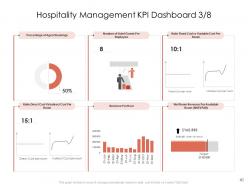
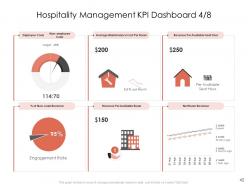
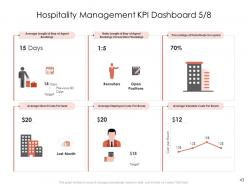
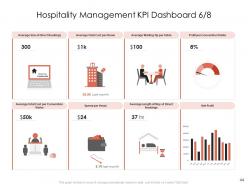
Okay so definitely track RevPAR, ADR, and occupancy rate first - those are your bread and butter for revenue. Guest satisfaction scores matter a ton too since bad reviews kill future bookings. Labor costs as a percentage and energy costs per room are huge operationally. Honestly, GOPPAR is sometimes way more useful than RevPAR because it actually shows if you're making money, not just bringing it in. Also track online review ratings obviously. Set up weekly dashboards for all this stuff and you'll catch issues early. Trust me, waiting for monthly reports is too slow in this business.
Your PMS and CRM are sitting on a goldmine of guest info. Track stuff like their preferred room temp, pillow types, what they order for dinner - even their usual check-in times. Honestly, some hotels get crazy detailed with this and use analytics to figure out housekeeping schedules based on whether guests are night owls or early birds. Booking patterns tell you tons about what amenities people actually want. I'd start simple though - maybe just personalize welcome amenities using your existing guest history. You can always build from there with targeted offers based on spending habits.
Honestly, get your crisis plan sorted NOW before chaos hits. Learned this during that crazy summer blackout - we were totally unprepared! Pick your crisis team and make sure everyone knows their role. Front desk needs to know exactly who to call and what scripts to use. Communication protocols are huge - both for guests and staff. Have backups for literally everything... power, booking systems, the works. Oh and practice regularly or people forget everything when stuff actually goes wrong. Keep those emergency contacts updated too. Trust me, you'll thank yourself later when something inevitably breaks at 2am.
Skip the boring promotional posts - nobody cares about those anymore. Instead, show off your hotel's actual personality! Behind-the-scenes content works amazing, plus guest photos if they're cool with you reposting them. Your staff deserves the spotlight too. Stories are honestly where it's at - sunset shots from the rooftop, chef making breakfast, that kind of stuff. People love that real-time vibe way more than polished ads. Oh, and definitely connect with local spots and travel influencers for cross-promotion. Just stay consistent and don't try to be something you're not. Guests can tell when content feels fake.
Feedback is honestly your best tool for figuring out what guests actually want - and trust me, it's usually different from what you think they want. Collect it through surveys, reviews, casual conversations, whatever works. Then actually do something with it! Complaints are obvious fixes, but positive feedback shows what you're nailing and shouldn't mess with. I'd set up a monthly thing where you look for patterns and make real changes based on what people are saying. It's crazy how much hotels miss by not listening to their guests properly.
So basically you team up with local spots to give guests cool stuff you can't do yourself, plus make extra money. Think exclusive dinner deals with restaurants, custom tours, brewery tastings - honestly craft beer partnerships are always a hit for some reason. Map out what your guests actually want first, then find businesses that match your vibe. You'll get referral cuts or revenue splits without having to build everything from scratch. Way easier than trying to become a tour company AND a hotel. Just focus on places that feel authentic to your area.
Honestly, mobile check-in is where I'd start - guests just expect it now. AI chatbots are huge too, they handle requests around the clock so your staff doesn't have to. Smart rooms are pretty cool, letting people control lights and temp from their phone. Oh, and those IoT sensors? They'll catch maintenance issues before stuff breaks down on you. Revenue management has gotten insane - prices adjust automatically based on demand. Cloud-based systems make everything more flexible too. I know it sounds like a lot, but even just getting mobile check-in going will make a difference.
-
Editable templates with innovative design and color combination.
-
Wonderful templates design to use in business meetings.
-
Awesome presentation, really professional and easy to edit.
-
Understandable and informative presentation.