


Hotel Security And Safety Department Functional Areas Training Ppt




Try Before you Buy Download Free Sample Product
 Impress Your
 Audience
 100%
100% Editable
 Save Hours
 of Time


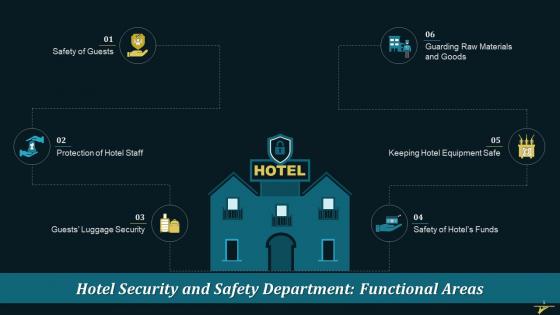
This slide highlights functional areas of hospitality industrys safety and security department. These areas are safety of guests, protection of hotel staff, guests luggage security, safety of hotels funds, keeping hotel equipment safe and guarding raw materials and goods.
People who downloaded this PowerPoint presentation also viewed the following :
Hotel Security And Safety Department Functional Areas Training Ppt with all 19 slides:
Use our Hotel Security And Safety Department Functional Areas Training Ppt to effectively help you save your valuable time. They are readymade to fit into any presentation structure.










FAQs for Hotel Security And Safety Department Functional
Effective hotel security training programs include emergency response procedures, guest safety protocols, threat identification techniques, incident reporting systems, and surveillance equipment operation. These components work together by enhancing staff preparedness, streamlining communication during crises, and ensuring consistent security standards, with many hospitality organizations finding that comprehensive training ultimately delivers improved guest confidence and reduced liability exposure.
Hotels can assess their current security training needs through comprehensive security audits, staff competency evaluations, incident analysis reviews, guest feedback assessments, and regulatory compliance checks. These evaluations enable properties to identify knowledge gaps, update protocols for emerging threats, and enhance staff preparedness, with many hospitality organizations finding that systematic assessments ultimately deliver improved guest safety and operational confidence.
Technology revolutionizes hotel security training through virtual reality simulations, AI-powered threat detection systems, mobile learning platforms, and real-time monitoring tools. These technologies enhance training effectiveness by creating immersive emergency scenarios, automating incident response protocols, and enabling continuous skill development, with many hospitality organizations finding that tech-integrated training delivers faster response times and improved guest safety outcomes.
Hotel staff should participate in comprehensive security training sessions quarterly, with specialized roles requiring monthly updates and all employees completing annual certification renewals. This frequency ensures teams stay current with evolving threats, emergency protocols, and guest safety procedures, while many hospitality organizations find that regular training significantly reduces incident response times and enhances overall guest confidence and operational security.
Best practices for emergency evacuation training include conducting regular drills, establishing clear communication protocols, designating floor wardens, creating visual evacuation maps, and implementing role-specific responsibilities for different staff positions. These comprehensive training approaches enhance guest safety, minimize response times, and ensure regulatory compliance, with many hospitality organizations finding that well-trained employees significantly reduce evacuation confusion and improve overall emergency outcomes.
Hotels create security awareness culture through comprehensive training programs, regular briefings, clear incident reporting protocols, reward systems for vigilant behavior, and leadership modeling. By implementing scenario-based drills, cross-departmental communication systems, and ongoing education updates, hospitality organizations enhance guest safety, reduce liability risks, and build staff confidence, ultimately delivering superior guest experiences and operational efficiency.
Hotels face security challenges including guest safety threats, theft prevention, emergency response protocols, cybersecurity risks, and access control management. Training addresses these by equipping staff with incident recognition skills, proper communication procedures, and threat assessment capabilities, with many hospitality organizations finding that comprehensive security programs significantly reduce liability while enhancing guest confidence and operational efficiency.
Hotels should customize security training by role-specific responsibilities, with front desk staff focusing on guest verification and incident reporting, housekeeping on room security and suspicious activity detection, and management on emergency coordination and threat assessment protocols. This targeted approach ensures each department develops relevant expertise while maintaining comprehensive security coverage, with many hospitality organizations finding that role-based training significantly improves response times and guest safety outcomes.
Hotels can evaluate security training effectiveness through incident reduction rates, response time measurements, staff certification completion rates, guest satisfaction scores, and security audit results. These metrics enable management to identify training gaps, track improvement trends, and demonstrate ROI, with many hospitality organizations finding that comprehensive measurement systems ultimately enhance both staff confidence and guest safety experiences.
Scenario-based training enhances staff preparedness by simulating realistic security incidents, emergency evacuations, theft situations, guest confrontations, and crisis management scenarios. Through immersive practice sessions, hotel staff develop quick decision-making skills, improve response coordination, and build confidence in handling actual threats, ultimately delivering faster incident resolution and enhanced guest safety across all property areas.
Hotels must consider privacy laws, liability frameworks, data protection regulations, employment standards, and guest rights legislation when developing security training programs. These legal requirements vary by jurisdiction, with hospitality organizations finding that comprehensive compliance training ultimately reduces operational risks, enhances staff confidence, and delivers stronger guest protection while minimizing potential litigation exposure.
Hotels can incorporate guest safety by training staff on emergency procedures, threat recognition, suspicious activity reporting, communication protocols, and protective response techniques. Through comprehensive programs covering fire safety, medical emergencies, and security incidents, hospitality teams enhance guest confidence, minimize liability risks, and create safer environments, with many properties finding that well-trained staff significantly improve both guest satisfaction and operational security outcomes.
Simulations enhance hotel security training effectiveness by providing realistic, hands-on practice with emergency scenarios, threat response protocols, and crisis management situations without real-world risks. Through interactive training modules, hotels can prepare staff for incidents like evacuations, suspicious activity, and guest safety emergencies, ultimately delivering faster response times and improved security outcomes.
Hotels can ensure engaging security training through interactive simulations, role-playing scenarios, gamification elements, virtual reality exercises, and hands-on demonstrations. These methods transform traditional lectures into immersive experiences, with many hospitality organizations finding that interactive approaches significantly improve knowledge retention, employee participation, and real-world application of security protocols.
Inadequate security training leads to increased theft, guest safety incidents, regulatory violations, and compromised emergency response capabilities. Hotels experience higher liability costs, damaged reputation, staff turnover, and potential lawsuits, with many properties finding that poor training ultimately results in lost bookings, reduced guest confidence, and significant competitive disadvantage.
-
Thank you for offering such helpful pre-designed templates. They are really beneficial to me in my job.
-
Love the template collection they have! I have prepared for my meetings much faster without worrying about designing a whole presentation from scratch.