

Organization Charts For Hotel Kitchen Department Training Ppt




Try Before you Buy Download Free Sample Product
 Impress Your
 Audience
 100%
100% Editable
 Save Hours
 of Time


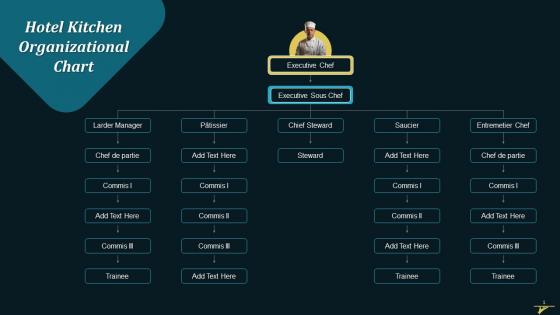
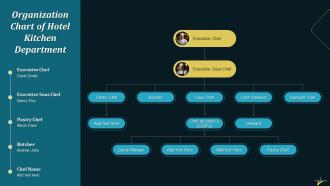
These slides represent the organizational chart of a hotels kitchen department. It also contains information about chefs names.
People who downloaded this PowerPoint presentation also viewed the following :
Organization Charts For Hotel Kitchen Department Training Ppt with all 20 slides:
Use our Organization Charts For Hotel Kitchen Department Training Ppt to effectively help you save your valuable time. They are readymade to fit into any presentation structure.











FAQs for Organization Charts For Hotel Kitchen
Food safety and knife skills are absolute musts - can't mess around with either. Basic cooking techniques too, obviously. Your team needs to nail portion control and timing since hotel volumes are insane. Equipment training is key. Communication gets tricky because you're coordinating with servers, room service, maybe multiple restaurants. Speed develops naturally, but accuracy? That's gotta be perfect from the start. I always have new people shadow experienced cooks for a week first. Then slowly add responsibilities. Station checklists are lifesavers during rushes - trust me on that one.
Definitely start with your local health department - they usually have free training stuff or can point you to the good materials. Focus on the basics: food temps, cross-contamination, hygiene, cleaning protocols. The rules change way more than you'd expect (super annoying honestly), so I'd review everything quarterly. Document all your training because inspectors eat that stuff up. Oh, and get your head chef certified as a trainer if possible. Saves you from calling in consultants constantly, plus they know your kitchen better anyway.
Dude, you absolutely need hands-on training - there's no substitute for it. Reading about knife skills is one thing, but working a crazy Friday rush while juggling orders and dealing with servers freaking out? Totally different beast. Your staff won't develop the muscle memory and timing without real practice under pressure. Theory's nice and all, but it only goes so far. Set up mock scenarios that feel like actual service - time crunch, interruptions, the works. That's where they'll actually learn if they can handle the chaos. Trust me on this one.
Just build it into what you're already doing! Waste reduction's a good starting point - show them portion control, how to use leftovers creatively, basic composting stuff. Equipment training should cover energy efficiency too. Oh, and definitely get into seasonal menus and working with local suppliers - that's where you'll see real impact. Honestly the hardest part is picking where to start because there's so much you could cover. Don't make it feel like a lecture though. I'd add sustainability checkpoints to your regular assessments so it just becomes part of how they think.
Dude, hotel kitchens are insane compared to regular restaurants. Your staff has to juggle room service, banquets, multiple restaurants, maybe a little cafe too - all completely different menus and timing. One minute they're plating 200 identical wedding dinners, next they're sending up a single fancy room service order at 2am. The volume swings are crazy depending on how booked you are. Honestly, hotel kitchen staff don't get enough credit for how versatile they have to be. Cross-train everyone between departments so they can handle whatever chaos hits. Flexibility is everything in that environment.
Dude, cross-training is everything in hotel kitchens. When rush hits and someone calls in sick, you're screwed if only one person knows the grill. I've watched places completely fall apart over this. Make sure everyone learns 2-3 stations minimum. Your prep cook should know pantry, grill person needs to handle sauté - whatever makes sense for your setup. Hotel dining is so unpredictable too, like suddenly you'll get slammed with a last-minute event. Having flexible staff who can jump around? That's what keeps you from losing your mind during service.
Honestly, mystery diners are your best bet for checking if service training actually worked. Do before/after tests to see if people learned anything real. Watch your kitchen numbers too - less food waste and faster prep times usually mean training stuck. I'd also keep tabs on complaints and do regular check-ins with staff. Sometimes they'll nod along in training but have no clue what they're doing on the floor. Oh, and retention rates matter - people don't bail as much when they feel properly trained. Set up some way for your team to tell you what's still not clicking so you can fix gaps.
Dude, VR for knife skills is actually pretty sick - your team can practice without, you know, accidentally chopping fingers off. Mobile apps work great too for recipe training and food safety stuff. I'd skip the fancy learning management systems unless you really need compliance tracking (corporate kitchens love that). Video tutorials are honestly game-changers compared to just explaining how to clean equipment properly. Don't go overboard though - tech should complement hands-on training, not replace it. Start with maybe one app, see what sticks with your crew, then expand from there.
Give them a full week shadowing your best cook - don't just stick them with whoever's free. Food safety comes first since health inspectors will destroy you if that's sloppy. Then work on your recipes and how you want plates to look. Honestly, hotel kitchens are chaos, so let them get comfortable with prep before you throw them into the dinner rush. Make a basic checklist they can look at during their first month when they're panicking. Check in around week two and four to fix problems before they turn into bad habits.
First thing - figure out what each position actually needs to know, then build modules around food safety, equipment, recipes, all that stuff. Hands-on practice is huge because people learn better by doing than just reading manuals. The trickiest part? Getting everyone to stick with the program once you roll it out. Cross-training is smart too since you'll inevitably have call-outs and need people to jump between stations. Keep it standardized but don't make it so rigid that it doesn't work with your specific menu - learned that one the hard way! Regular check-ins help you see who's actually getting it.
Pair your newbies with experienced cooks for actual tasks, not just watching. Cross-training works wonders - prep needs to get what line cooks deal with. Those pre-shift huddles? Honestly game-changing for keeping everyone on the same page. During slow periods, throw in team challenges where they collaborate on dishes or practice rush scenarios together. The goal is making good communication automatic, you know? Not something they scramble for when orders start backing up. Hands-on stuff beats lectures every time.
Get multilingual training stuff and use lots of visual demos - way easier when people can actually see what you're doing. Your diverse team is honestly a goldmine for this. Have them share their traditional techniques during training sessions. Some of the coolest fusion ideas I've seen came from exactly these moments. Set up mentorship pairs with different cultural backgrounds. Translation apps work great for tricky concepts. Oh, and themed training days celebrating different food traditions? Your staff will love those. Communication protocols that work for everyone are key, especially if English isn't their first language. Just ask your team what'd help them succeed most.
Knife skills and food safety are your foundation - can't skip those. Hotel kitchens are beasts compared to regular restaurants, so train everyone on speed and consistency over fancy presentation. During breakfast rushes, you'll need identical plates flying out fast. Cross-train people on multiple stations too, otherwise you're screwed when someone calls out sick. Honestly, inventory management is where most places mess up - portion control keeps your food costs from going insane. Volume cooking is its own skill entirely. Build these basics first, then worry about whatever specialized stuff your particular dining concepts need.
Your kitchen staff are gonna tell you exactly what's missing from training if you just ask them. After each module, do quick feedback sessions - they'll probably say half the stuff they learned doesn't match what happens during actual service. Listen to what scenarios they're dealing with that weren't covered. Use that info to redesign future sessions around real situations, not just theory. Short feedback sessions work better than long surveys honestly. Their input helps you spot skill gaps and update procedures that are probably outdated anyway. Make it hands-on based on what they're actually telling you.
Dude, mentoring programs seriously work wonders. Your experienced cooks can actually show techniques instead of just describing them, so skills transfer way faster. New hires build confidence quicker and don't screw up as much during the dinner rush - which honestly saves your ass on food costs. It builds this whole support network thing too. Mentors feel appreciated for knowing their stuff, while the newbies aren't drowning alone. Retention gets better since people actually feel connected. Oh, and pair your best cooks with fresh hires during slow periods so they can focus without the chaos.
-
This design is not only aesthetically pleasing but it has many uses making the cost worthwhile. The graphics look stunning, and you can edit them as per your needs.
-
SlideTeam, Please don’t stop sharing discount coupons! I love your occasional discounts and tend to buy your products around that corner.